
You've got a gate that looked fine on install day, then a few storms, a stretch of cold weather, and suddenly it drags, sticks, or won't line up with the latch. That's usually not a “gate problem” so much as a hinge selection problem. The right hardware keeps the gate moving cleanly through seasonal change, wind, and daily use, while the wrong choice turns a simple opening into a maintenance job.
Why Your Gate Hinge Choice Matters
A gate rarely fails all at once. It starts with a little sag at the latch side, then the closing action feels off, then the bottom edge scrapes the ground or the latch needs to be lifted by hand. On Canadian jobs, that's often where freeze-thaw movement, wet seasons, and heavy use expose a hinge that was chosen for appearance instead of load.
Commonly, gate hinges are categorized into three main styles, half surface, butt, and full surface. A butt hinge is typically suited for gates up to 4 ft x 7 ft with an opening angle up to 120°, which shows how hinge geometry has to match the gate's dimensions and intended motion (Home Depot Canada). That matters because a hinge isn't just a fastener, it's the pivot point that controls sag, swing, and latch alignment.
What goes wrong when the hinge is undersized
A hinge can look sturdy and still be the wrong tool. If the leaf is too short, the pin isn't suited to the load, or the mounting style doesn't match the post and gate frame, the hardware starts carrying stress it wasn't meant to handle. In practice, that shows up as binding, loosening screws, and a gate that changes behaviour every time the temperature swings.
Practical rule: the gate should feel balanced on the hinges, not like it's hanging from one stressed corner.
The cheapest hinge often costs more in the end because it fails in service. A proper match saves time on adjustments, reduces callbacks, and keeps the latch where it belongs. That's why professionals don't just ask, “Will it fit?” They ask, “Will it keep the gate square through a Canadian winter?”
The Anatomy of a Gate Hinge
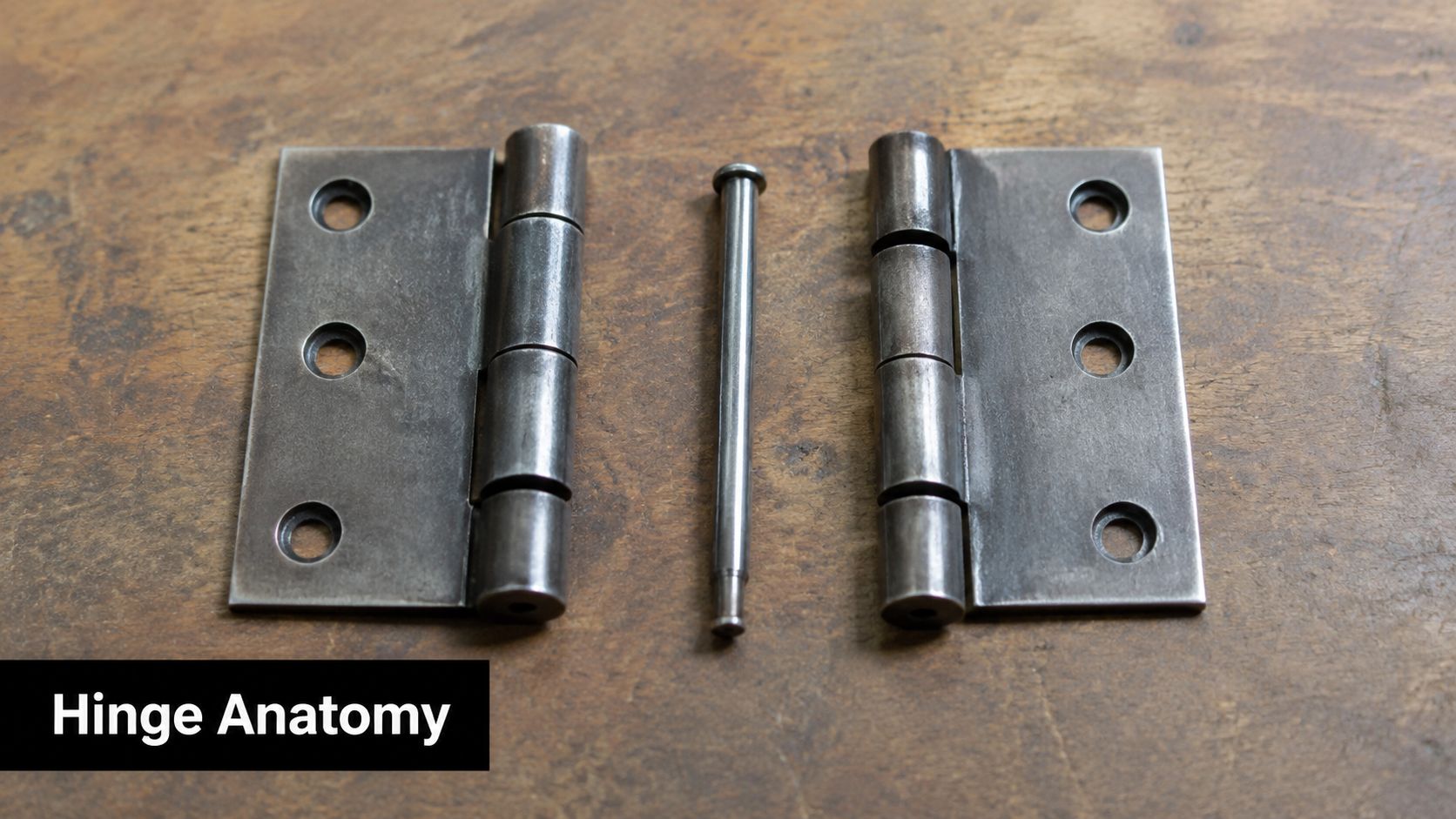
A gate hinge looks simple until you break it down. The leaf is the flat part that attaches to the gate or post. The knuckle is the rolled barrel that forms the pivot, and the pin runs through that barrel to hold the joint together.
Think of the knuckle as the engine block and the pin as the crankshaft. The leaves are the mounting plates that transfer the load into the frame, while the knuckle and pin let the gate move without grinding itself apart. If any one of those parts is undersized or badly aligned, the whole system feels it.
Why the parts matter in real use
On a wooden gate, the leaf has to spread force across the timber instead of concentrating it at one screw line. On a metal gate, the pin and knuckle need to handle repeated movement without loosening or wearing into slop. That's why two hinges that look similar in the bin can perform very differently once they're carrying an actual gate.
A good hinge gives you three things at once, smooth movement, stable alignment, and enough bearing area to resist wear. A poor hinge gives you squeaks, tilt, and hardware that starts asking for attention long before the gate should need it.
The simplest way to judge a hinge is to ask whether each part matches the job. Short leaves on a wide wood gate usually invite sag. A light pin on a gate that gets daily use usually turns into play in the joint. The best choice is the one whose anatomy matches the load path.
A Visual Guide to 8 Common Gate Hinge Types
Heavy-duty gate hardware is usually chosen from strap hinges, ball bearing hinges, adjustable hinges, and weld-on hinges, with each type selected for the gate's material and weight (Call Fantastic Fence). That's the practical lens to use here, because the hinge should suit the frame, not the other way around.
Quick comparison guide
| Hinge Type | Best For | Typical Load | Pros |
|---|---|---|---|
| Strap Hinge | Wide wooden gates | Spreads load across timber | Strong support, good sag resistance |
| Butt Hinge | Smaller gates and doors | Lighter residential use | Compact, familiar, simple to install |
| T-Hinge | Sheds, fences, timber gates | Moderate residential use | Combines strap and butt traits, easy to recognise |
| Weld-On Hinge | Metal gates | Heavy-duty applications | Very strong, permanent attachment |
| Continuous Hinge | Full-length support and security | Long-span support | Even load distribution across the full edge |
| Spring Hinge | Self-closing gates | Light to moderate use | Automatic closing when released |
| Adjustable Hinge | Gates that may sag over time | Variable | Lets you correct alignment after installation |
| Concealed Hinge | Clean, modern look | Usually lighter-duty gates | Hidden hardware, cleaner appearance |
Strap hinges are the classic timber-gate choice because the long leaves spread load over a larger area. That's why they show up on rural and residential wood gates where movement and weathering are part of the job. For a simple example, a T hinge blends features of a standard butt hinge and a strap hinge, which makes it useful on doors, fences, and cabinet doors (YouTube explainer).
Weld-on hinges make sense when the gate frame is steel and permanence is the goal. Ball bearing hinges suit frequent use because the internal bearings reduce friction, and spring hinges are the answer when self-closing matters. Adjustable hinges are the practical choice when alignment may need tuning after the post settles or the frame moves slightly.
Practical rule: choose the hinge for the gate you actually have, not the one you wish you had after the build is done.
Aesthetics matter too, especially on front entries and decorative side gates. Concealed hinges keep the hardware out of sight, while strap and T-hinges lean traditional and visibly structural. In the field, that visual style should never override fit, because a beautiful gate that sags is still a failed gate.
Choosing the Right Hinge Material and Finish for Canadian Weather
Canadian weather changes the hinge decision. Coastal salt air, wet seasons, freeze-thaw cycles, and road splash all punish exposed metal, so the finish matters almost as much as the hinge style. A hinge that looks right on day one can start binding or rusting if the base material and coating don't match the environment.
Most hinge guides focus on style and load, but region-specific material selection is the part people miss most often. Coastal areas demand stainless steel or heavily galvanized finishes to fight salt air corrosion, and that material choice can determine hinge life more than the hinge shape itself (Maxave Group). For projects where mixed metals are part of the assembly, it's worth pairing the hinge choice with compatible fasteners, like the options discussed in the section on installation hardware and the stainless steel fasteners resource.
What works in harsh Canadian exposure
For exterior gates, galvanized steel is a solid practical choice when the coating is intact and the gate isn't sitting in a severe salt environment. Stainless steel is the safer call where corrosion risk is persistent, especially near coasts or in places that stay wet for long stretches. Bronze can also be useful in some applications, but the key consideration is whether the finish resists the environment where the gate lives.
The mistake I see most often is buying the right hinge style and the wrong finish. A strong hinge that seizes from corrosion isn't a strong hinge for long. In cold weather, that matters because a stiff hinge can turn into a gate that drags, sticks, and puts extra force into the post.
Match the hinge finish to the site, not just the look. If the gate is decorative but fully exposed, beauty still has to survive moisture and temperature swings. If the gate is functional and heavily used, smooth operation and corrosion resistance should outrank cosmetic preference every time.
How to Size Hinges and Calculate Gate Load
A gate can look light and still overload a hinge line once wind, snow, and everyday use start working on it. In Canadian builds, I size the hardware for the gate's actual behavior, not just its weight on paper. A solid privacy panel, wet snow buildup, or a gate that catches strong gusts can all raise the load enough to cause sag if the hinge choice is too small.
A Canadian wooden-gate guide gives three useful rules. Exactly two hinges are standard for most gates, a third hinge becomes structurally mandatory when the gate exceeds 2100 mm in height, and the combined hinge load capacity should be at least 1.5 times the gate's total weight so the hardware can handle wind and movement. For a 900 mm-wide gate, the same guide calls for a strap hinge length of at least 450 mm so the pull spreads properly across the frame (Xtreme eDeals gate hinge guide).
A simple sizing mindset
Start with the gate size, then add the site conditions. A neutral buying guide notes that installers should estimate lateral load from gate area, with example design pressures of 20 psf for moderate and 30 psf for high wind exposure (Alibaba buying guide). That matters in Canadian weather because wind pressure is only part of the problem. Freeze-thaw cycles can tighten a stiff gate, snow can add weight, and repeated binding can work fasteners loose.
For wooden gates, longer strap-style hardware helps spread the pull across more of the frame. For heavier or taller gates, band-and-gusset or offset-style hardware can make more sense than forcing light hardware to carry too much load. A practical Canadian approach is to size for the gate you have after rain, frost, and snow get involved, not the dry gate you measured in the shop.
A gate that is tall, wide, or solid enough to catch wind should be treated like a structural load, not a cosmetic detail. That is where good hinge geometry and enough bearing surface keep the post from twisting and the latch from drifting out of line.
Installation and Maintenance Essentials
Good hinges fail when the install is sloppy. If the hinge line isn't plumb, the spacing is uneven, or the fasteners are wrong for the post material, even expensive hardware starts binding. I've seen plenty of good gates made awkward by one bad setup detail.
Alignment matters more than most DIYers think. A jig or temporary spacer keeps the gate gap consistent while you set the hinges, and that helps the latch stay true after the hardware is tightened. The hinge should sit where the load transfers cleanly into the frame, not where it's convenient to drill.
Fasteners, spacing, and long-term care
Use fasteners that suit the post and the gate frame. For many exterior builds, a proper metal-to-wood fastener matters more than people expect, and durable pancake head metal screws are a useful example of the kind of low-profile fastening choice that can keep hardware seated cleanly without creating awkward protrusions. On the other hand, the wrong screw on the wrong substrate will loosen, twist, or corrode before the gate has had a proper service life.
The long-term routine is simple:
- Clean the hinge line regularly: Remove dirt and grit before it works into the joint.
- Inspect for movement: Check for loose fasteners, sag, and twisting at the post.
- Lubricate moving parts: Keep the pin and bearing surfaces moving freely.
- Watch for rust or seizing: Address corrosion early before the hinge starts binding.
- Correct small alignment shifts promptly: Small adjustments are easier than rebuilding a sagged gate.
For installation details, the gate hinge installation guide is a useful reference point when you want a cleaner first fit and fewer adjustment headaches later. The goal is a gate that swings without forcing, because forced movement wears hardware fast.
Your Practical Gate Hinge Selection Checklist
A hinge that suits the gate and the site gives you a clean swing, a square latch, and less seasonal trouble. In Canadian weather, that means checking how the hinge will handle freeze-thaw movement, wet conditions, coastal corrosion, and heavy snow loads before you buy. I always look at the gate like a builder would, not like a shopper choosing the cheapest box on the shelf.
- Gate Material: Wood, metal, or composite changes the hinge shape and mounting style.
- Gate Weight and Size: Heavier and wider gates need stronger, longer, or more numerous hinges.
- Opening Frequency: Daily-use gates deserve smoother hardware than a gate opened once in a while.
- Security Needs: If keeping the gate secure matters, favour stronger attachment and less exposed hardware.
- Aesthetic Preference: Rustic, modern, or hidden hardware all point to different hinge families.
- Climate Exposure: Coastal, wet, or freeze-thaw environments call for better corrosion resistance.
- Installation Type: DIY and professional installs don't always use the same fasteners or hinge geometry.
The right answer is usually the one that fits the site without forcing compromises. On a wooden gate, that may point to a strap or T-hinge. On a metal frame, a weld-on or adjustable option often makes more sense. If the gate needs to close itself, a spring or self-closing hinge should move to the front of the list.
Use the checklist to narrow the field, then buy for the actual conditions on site, not for the catalogue photo. Getting that choice right upfront saves you from callbacks and headaches down the road. If you're ready to source hardware that will stand up to the job, visit XTREME EDEALS INC. and match the hinge to the gate before you start drilling.