Fence & Deck Guide: Planning, Building, and Finishing
A lot of fence & deck projects start the same way. You get tired of looking at a leaning gate, splintered deck boards, or a backyard that never feels finished. You want privacy, a cleaner layout, and something solid enough that you’re not repairing it every season.
The catch is that many individuals spend nearly all their time choosing surface materials and almost none on the parts that decide whether the project still looks good a few years later. Boards and panels get the attention. Post bases, anchors, screws, brackets, hinges, and caps do most of the long-term work.
That matters in a category that keeps growing. The U.S. fencing market was valued at USD 9.33 billion in 2024 and is projected to reach USD 14.86 billion by 2033, with a CAGR of 5.3% from 2025 to 2033, driven by demand for boundary security and property aesthetics, according to the U.S. fencing market outlook from Research and Markets. More people are building. More people are upgrading. The difference between a project that lasts and one that starts failing early usually comes down to planning and hardware discipline.
Your Dream Fence and Deck Project Starts Here
A good backyard doesn’t need to be oversized or complicated. It needs to work.
That might mean a privacy fence that blocks the neighbour’s direct sightline without making the yard feel boxed in. It might mean a deck that carries outdoor furniture without bounce, keeps fasteners from staining the boards, and has rail details that look intentional instead of pieced together from whatever was left at the supplier.
Most failed builds don’t fail because the owner picked the “wrong colour.” They fail because somebody rushed layout, guessed at the footing approach, mixed incompatible metals, or used indoor-grade fasteners outside. Small choices stack up.
What usually goes wrong first
The first weak point is often below eye level. Posts move. Bases trap water. Concrete anchors loosen because the wrong type was used for the slab or pier. On decks, ledger and joist connections get all the structural pressure, but many DIY plans still focus more on board pattern than frame integrity.
Then the visible problems show up:
Wobble at the post: usually a footing, anchor, or bracket issue
Rust bleed on lumber: often the wrong screw coating
Sagging gate: undersized hinges or poor latch alignment
Premature rot: trapped moisture at post bottoms or post tops
A patchwork look: mismatched caps, balusters, and connectors
Practical rule: If the hidden hardware is underspecified, the finished project only looks done for a short time.
What a durable project needs
A durable fence & deck build comes from getting five things right:
PurposePrivacy, pets, pool separation, outdoor dining, traffic flow, or all of the above.
LayoutProperty lines, elevations, clearances, stairs, gates, and swing paths.
Material matchWood, composite, and metal all build differently and age differently.
Hardware matchPost bases, joist hangers, lag bolts, deck screws, hinges, sleeve anchors, wedge anchors, and post caps all need to suit the material and exposure.
Finish disciplineClean cuts, consistent spacing, aligned hardware, and water-shedding details matter as much as the material itself.
The projects that hold up well usually aren’t the most elaborate. They’re the ones where every connection was chosen on purpose.
Planning Your Perfect Outdoor Space
Before anyone digs a hole or orders a panel, the layout needs to make sense on paper. That’s where expensive mistakes get avoided.
Outdoor upgrades aren’t a niche side category anymore. The Deck & Patio Construction industry in the US reached an estimated $1.3 billion in 2025, with 6,808 businesses operating nationwide, according to IBISWorld’s deck and patio construction industry data. That tells you two things. Homeowners keep investing in outdoor space, and there are plenty of contractors in the market. It does not tell you whether a specific design works for your lot. That part still comes down to planning.
Start with use, not materials
The strongest plan starts with one question. What does this structure need to do every week?
A fence for privacy gets laid out differently than a fence meant mainly for marking a boundary. A deck for dining needs different dimensions than one built mostly for a barbecue and a pair of chairs. A side-yard gate used every day needs stronger hardware than a decorative garden gate.
Ask these first:
Who uses the space: children, pets, guests, tenants, or just the homeowner
What matters most: privacy, security, entertaining, appearance, or low upkeep
Where does traffic move: from the back door, garage, laneway, or pool area
What needs clearance: gates, bins, furniture, planters, stairs, and service access
When owners skip this step, they often overspend in one area and underbuild another. A wide staircase nobody uses is common. So is a narrow gate that becomes a problem the first time someone moves equipment through it.
Map the site thoroughly
A quick hand sketch is fine if it includes the important things. Measure the house wall, corners, utility locations, slopes, existing concrete, trees, and any point where the grade changes.
For fence work, mark every turn and termination. For deck work, mark doors, thresholds, downspouts, and where water already collects. If there’s a difficult corner or awkward grade, deal with it on the plan, not during installation.
A simple planning checklist helps:
Checkpoint
Why it matters
Property lines
Keeps posts and footings out of disputes
Finished height
Affects privacy, views, and code compliance
Grade changes
Changes post length, stair need, and panel layout
Surface below
Determines anchors, footings, and drainage approach
Access path
Controls how materials and tools reach the site
Verify bylaws before ordering parts
Municipal rules can affect fence height, setbacks, railing requirements, gate placement, and permit thresholds. Don’t rely on a neighbour’s project from a few years ago. Rules change, and even where they don’t, enforcement can differ.
Call the local municipality and ask specific questions, not general ones. Get clear answers on:
Maximum fence height
Setback from property lines or easements
Deck height rules
Railing requirements
Footing requirements
Permit triggers
Rules around pools, corner lots, and sightlines
A build can be structurally sound and still fail the approval process if the layout ignores local rules.
Plan the hardware at the same time
Many individuals plan boards and panels first, then scramble for the right fittings later. That usually creates delays and substitutions.
If you know where your posts go and what material you’re using, you can already identify much of the hardware list. That includes post base brackets, carriage or lag bolts, structural screws, joist hangers, gate hinges, latches, and post caps. It’s easier to keep the project organised when that list exists before the first delivery arrives.
Choosing Your Core Building Materials
Material choice shapes everything after it. It affects the frame, the fasteners, the maintenance routine, and the final look. If you get this decision right, the rest of the project gets simpler.
Wood still works, but it asks more of you
Wood remains popular because it’s familiar, workable, and visually forgiving. If a board needs to be scribed to a slightly uneven line, wood handles that well. It also suits traditional yards where homeowners want a warmer finish.
Pressure-treated pine is often chosen where budget matters most. Cedar is usually selected for appearance and natural resistance to decay. Both can produce excellent results if the build details are right.
What doesn’t work is pretending wood is low-maintenance. It moves with moisture, checks over time, and shows neglect quickly.
Wood tends to make sense when:
You want a natural grain look
You’re comfortable with ongoing sealing or staining
You need a material that’s easy to cut and customise on site
Wood creates problems when:
Post tops are left exposed
Fasteners aren’t corrosion-resistant
Boards sit where water and debris collect
The owner expects it to stay unchanged with little upkeep
Composite reduces maintenance, but it needs cleaner detailing
Composite solves some of wood’s biggest frustrations. It doesn’t ask for the same finishing cycle, and it can hold a more consistent appearance over time. It also changes how you think about framing and fastening.
High-quality composite systems have real structural value. Trex composite systems report a compression strength perpendicular to the grain of 1944 PSI ultimate, which is part of why they perform well in demanding climates, according to the Trex fencing technical information sheet.
That doesn’t mean every composite product is interchangeable. Some lines are capped, some aren’t, and installation tolerance matters. Composite can look sharp, but sloppy gapping and poor edge treatment stand out more than they do on wood.
If you’re comparing budgets, this breakdown of composite fencing cost is a useful read because it frames the decision in terms of total project planning, not just panel price.
Composite usually rewards precision. The cleaner the frame and the straighter the lines, the better it looks.
Metal offers strength and a different visual style
Metal changes the character of a project immediately. Aluminum tends to suit modern privacy systems, railings, and lighter visual profiles. Steel suits applications where higher rigidity and impact resistance matter.
The advantage of metal isn’t only strength. It’s also consistency. Straight lines stay straight. Narrower profiles can still carry load well. That makes metal useful when you want privacy or security without a bulky appearance.
The trade-off is that metal exposes poor layout fast. Out-of-plumb posts and uneven spacing are harder to hide. Matching hardware also matters more. Wrong fasteners, poor coating choices, or careless cuts can undermine the whole installation.
Side-by-side trade-offs
Material
What it does well
What to watch
Wood
Natural appearance, easy field adjustments, broad style range
Needs ongoing care, sensitive to water, fastener choice is critical
Composite
Lower upkeep, consistent finish, good for privacy systems
Cleaner framing required, expansion and spacing details matter
Metal
Strong profiles, modern appearance, long-term stability
Layout has to be precise, hardware and coating compatibility matter
Let the hardware follow the material
A common mistake is choosing one generic fastener approach for every material. That’s how you get rust streaks on treated wood, loose connections in composite assemblies, or incompatible metal pairings.
Use the material decision to narrow the hardware list early:
For wood: exterior-rated screws, carriage or lag bolts where needed, protective post caps, and brackets that don’t trap water
For composite: manufacturer-compatible fasteners, clean post hardware, stable base connections, and trim details that hide framing well
For metal: matched connectors, anchors suited to concrete or masonry, and hardware coatings appropriate to exposure
If the material is the skin of the project, the hardware is the skeleton. You need both working together.
Building a Foundation That Lasts
Posts and footings don’t get much attention after the build is done. They still decide whether the structure stays straight.
A deck can have expensive boards and still feel weak if the supports shift. A privacy fence can have premium panels and still lean because the footing strategy was wrong from day one.
Posts fail from movement and moisture
Most post problems come from one of two issues. The first is lateral movement because the footing or anchor system isn’t right for the load. The second is moisture exposure where wood sits in the wrong condition for too long.
Direct-set posts in concrete can work in some applications, but they aren’t always the best long-term choice. Once wood stays trapped at the wrong moisture point, deterioration starts at the area nobody notices until the fence or deck begins to move.
That’s why many builders prefer concrete piers with post base brackets above the surface where the application allows it. Keeping the post separated from standing moisture usually improves service life and makes replacement more manageable later.
California builds need extra attention
This matters even more in higher-risk regions. Over 80% of Californians live in earthquake-prone areas, yet many guides still don’t explain how to pair the structure with compatible seismic-rated brackets and anchors, as noted by the Freedonia Group reference on U.S. residential fencing.
That gap shows up in real projects. Homeowners ask about boards and rails. The more important question is often whether the post base, anchor type, and bracket connection are suited to movement, exposure, and local requirements.
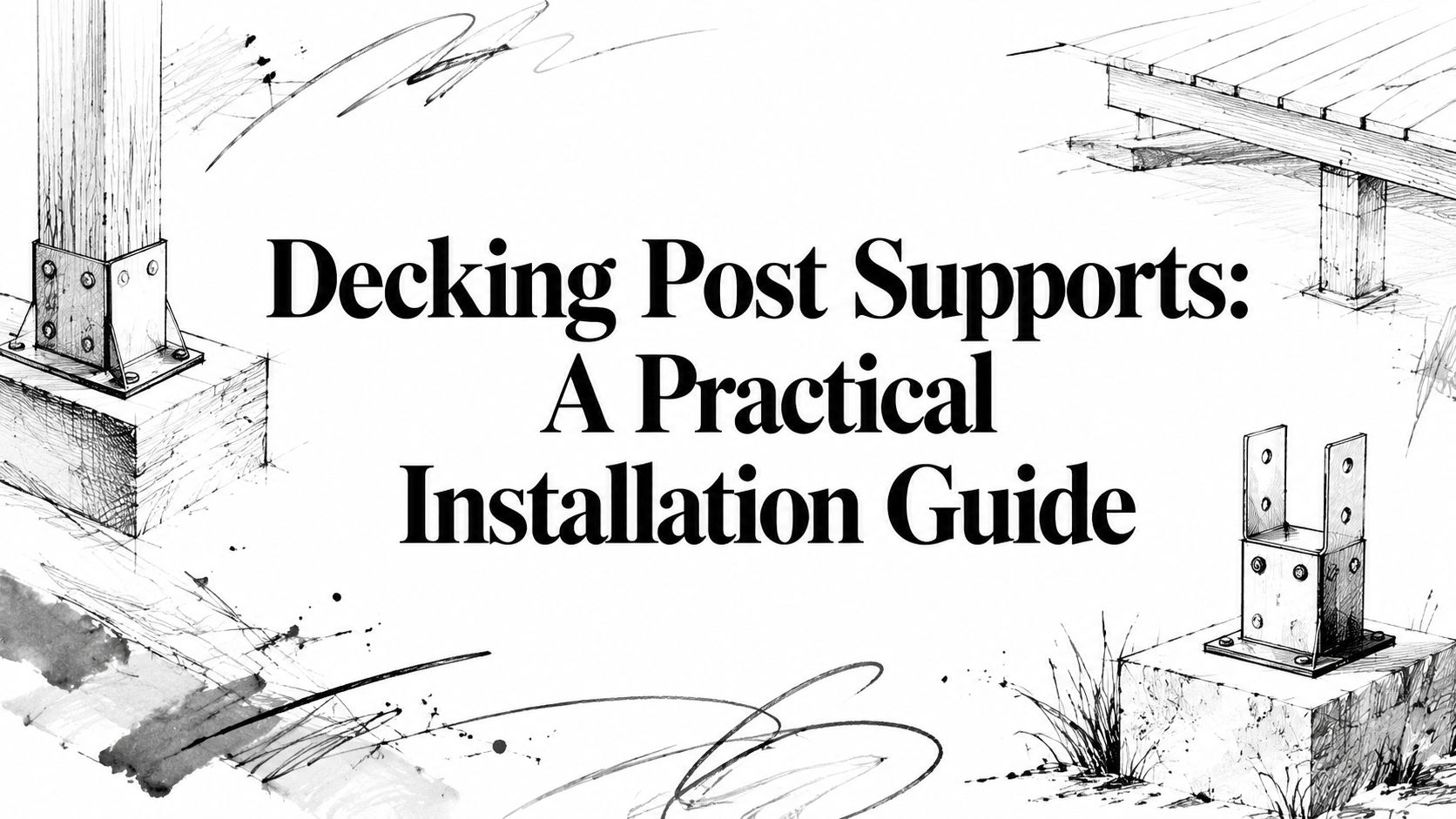
For deck framing support details and connector selection, this guide on deck support hardware is a practical place to compare the kinds of brackets and support pieces typically used in the field.
Two foundation approaches that behave differently
Direct-set posts
This approach is straightforward and common for many fences.
It can be effective where the post, concrete work, drainage conditions, and use case all line up. It’s often chosen for speed and simplicity. The risk is that future repair is harder, and moisture exposure at the embedded section can shorten service life.
Piers with post bases
This method takes more planning but gives a cleaner structural connection in many builds.
It works especially well when you want:
Better separation from moisture
Clear hardware access
Simpler future post replacement
A more engineered connection at grade
The strongest-looking project above ground can still be the weakest one if the post connection at grade was treated as an afterthought.
A visual walkthrough helps if you’re sorting through post installation options:
What matters at footing stage
Don’t think only in terms of hole size. Think in terms of load path.
The structure transfers force from rails, joists, and panels into posts, then into brackets or embedded sections, then into concrete, then into soil. If one point in that path is undersized or poorly installed, the whole assembly suffers.
Focus on these decisions:
Anchor type: wedge anchors and sleeve anchors serve different conditions
Bracket fit: a loose post base creates movement from the start
Drainage: water should move away from the connection, not sit around it
Post alignment: correcting plumb after the concrete cures is limited
Future serviceability: some systems are easier to inspect and repair than others
Foundation work isn’t glamorous. It’s still where durable fence & deck projects separate themselves from temporary-looking ones.
Selecting the Right Hardware and Fasteners
At this stage, the project either gets assembled like a structure or assembled like garden furniture. The parts may look small in the box, but they control load, movement, corrosion, and the feel of the finished job.
Fasteners and connectors are not the same thing
People often lump everything together as “hardware.” In practice, two categories matter.
Fasteners are screws, nails, bolts, washers, and anchors. They clamp or secure parts together.
Structural connectors are the shaped pieces that carry or direct load. Think joist hangers, post bases, angle brackets, tension ties, and gate strap hardware.
If you try to substitute one category for the other, the build gets weaker. A few extra screws do not replace the right joist hanger. A decorative bracket does not replace a structural post base.
Choose by job, not by habit
A strong build usually mixes several hardware types because different joints do different work.
Deck screws
Use these for board installation and many exterior wood-to-wood connections where a structural connector is not required.
The screw coating matters. Treated lumber can be hard on the wrong metal, and the result is often visible corrosion or staining. For exposed deck surfaces, square-drive deck screws tend to give more control than cheaper alternatives when you’re driving hundreds of fasteners in a day.
Lag bolts and carriage bolts
These are not interchangeable just because both are bolts.
Lag bolts are useful when you need strong withdrawal resistance into wood and have the correct pilot hole and embedment. Carriage bolts suit through-bolted assemblies where both sides of the connection are accessible. In gate framing and heavier post attachments, the choice affects both strength and serviceability.
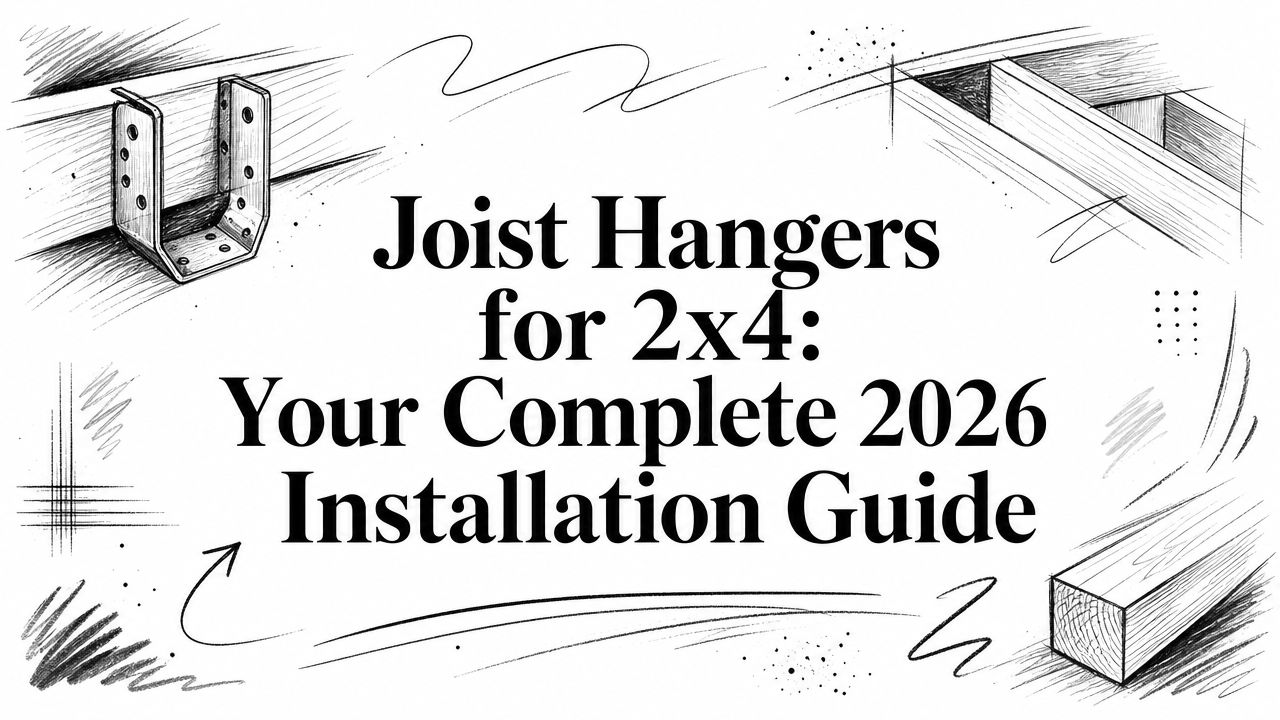
Joist hangers and framing connectors
These create repeatable, supported framing joints. They’re especially important where joists meet beams or ledgers and where guard or stair framing needs clearer load transfer.
Trying to “site-build” these connections with random screws usually looks acceptable until movement starts.
Match hardware to the structure around it
High-strength systems prove why this matters. FenceTrac steel posts have a tensile strength of 58,000 PSI, allowing wider spans while resisting demanding wind conditions, according to the FenceTrac specifications. A post with that kind of strength still needs the surrounding anchors, brackets, and fasteners to be chosen properly. Strong posts don’t cancel weak connections.
If your project includes piers, slabs, or masonry, it helps to understand how the concrete side of the assembly behaves. This overview of residential concrete foundation solutions is useful background for thinking through what the hardware is attaching to.
A practical hardware list for common fence and deck work
Project stage
Typical hardware focus
Post installation
Post base brackets, wedge anchors, sleeve anchors, washers
Frame assembly
Structural screws, lag bolts, carriage bolts, joist hangers
Surface installation
Deck screws, trim screws, concealed or exposed board fasteners
Gate setup
Hinges, latches, stiffeners, through-bolts
Finish details
Post caps, balusters, inserts, decorative connectors
Buy hardware as a system. Mixing random leftovers from different jobs is one of the fastest ways to create corrosion issues and inconsistent fit.
For builders who want one place to compare categories like brackets, bolts, anchors, screws, and fittings, XTREME EDEALS INC. carries deck and fencing hardware in the kind of sizes and pack options that suit both repairs and full builds.
What works and what doesn’t
What works
Exterior-rated screws matched to the lumber or system
Through-bolting where the connection carries real load
Joist hangers installed with the correct compatible fasteners
Anchors chosen for the base material, not whatever is on the truck
Gate hardware sized for weight and use frequency
What doesn’t
Drywall screws outdoors
Undersized hinges on wide gates
Generic indoor bolts at exposed structural points
Decorative caps installed on wet, unsealed post tops
Treating every bracket as if it’s structural
Hardware isn’t glamorous. It’s still the part that decides whether the fence & deck build feels tight and dependable when somebody leans on it.
Finishing Touches That Define Your Project
This is the stage where a project stops looking like a jobsite and starts looking like part of the property.
Two fences can use the same posts and rails and look completely different at the end. Same for decks. The structure carries the load, but the finishing accessories decide whether the result feels plain, polished, traditional, or modern.
Post caps do more than dress up the top
A post cap is often treated like decoration. It is decoration, but it’s also protection.
When a wood post top is left open, water sits, soaks in, and starts the long cycle of swelling, cracking, and deterioration. A proper cap helps shed that exposure while also finishing the line visually.
Some owners want a simple pyramid profile because it suits almost any style. Others want ball caps, finials, or a more substantial decorative top for a formal fence line. On deck builds, cap choice often sets the tone for the whole railing package.
Balusters and inserts change the personality fast
Balusters are one of the clearest style signals on a deck. Straight square profiles feel clean and quiet. Twisted or decorative designs read more custom. Metal balusters sharpen the look. Wood balusters soften it.
The same applies to gate inserts and accent panels. A basic gate can become a focal point with the right insert or a well-chosen latch and hinge set. If the house already has a design language, black metal details, warm wood, or more ornate trim, these accessories can echo that without rebuilding the entire structure.
Hardware can be visible and still look intentional
Visible hardware isn’t a flaw if it matches the project. On some builds, exposed black hinges, decorative straps, or heavier latches add character. On others, the right move is to keep the hardware quiet and let the boards or rail pattern lead.
A few combinations tend to work well:
Traditional wood fence: cedar tone, simple cap, sturdy black gate hinge, classic latch
Modern privacy fence: clean horizontal lines, metal accents, low-profile cap
Deck with decorative railing: shaped balusters, coordinated post caps, consistent connector finish
Utility side gate: stronger hinge and latch package, less ornament, more durability
The finish details should look chosen, not accumulated.
Brands such as Nuvo Iron and Decorex Hardware fit well in this stage because they cover the visible pieces that change the feel of the build without pretending decoration can replace structure. When the finishing parts are consistent in style and finish, the whole project reads as custom even if the footprint is straightforward.
Maintenance Tips to Protect Your Investment
A fence & deck project doesn’t stay in good shape because it was built once. It stays in good shape because somebody checks it before small issues become repairs.
The good news is that maintenance is usually simple when the original hardware and detailing were chosen well. You’re not rebuilding. You’re inspecting, cleaning, tightening, and protecting.
What to check once a year
Walk the entire project with a drill, a wrench, and a careful eye.
Look for:
Loose fasteners: especially on gates, railings, and deck surfaces
Post movement: any wobble at the base or top connection
Water traps: debris around posts, caps, stairs, or board edges
Surface wear: finish breakdown on wood, scuffs or residue on composite, coating damage on metal
Gate function: sagging, latch misalignment, hinge wear
If your deck framing includes exposed tops of joists or vulnerable horizontal framing surfaces, adding or replacing protective tape where needed can help keep water off the framing. This guide on joist tape for deck framing is a useful reference for that maintenance step.
Material-specific habits that pay off
Wood needs the most attention. Keep it clean, recoat when the finish has clearly worn down, and don’t let leaf litter hold moisture against surfaces.
Composite needs a gentler approach than many people assume. Wash it according to the product’s care guidance, avoid harsh abrasion, and keep gaps clear so drainage and airflow still work.
Metal fencing and rail components should be inspected for coating damage, especially around cuts, hardware points, and high-contact areas such as gates.
Treat maintenance as part of the build
The easiest projects to maintain are the ones built with serviceability in mind. Accessible bolts, properly fitted caps, quality hinges, and correct exterior screws save time every year after installation.
Skip those details, and routine maintenance turns into recurring repair. Get them right, and annual care becomes a short checklist instead of a full weekend.
If you're lining up a new build or replacing worn-out parts, XTREME EDEALS INC. offers practical deck and fencing accessories, including post caps, balusters, hinges, joist hangers, post base brackets, screws, bolts, anchors, and other hardware that fits the parts of the project that usually determine how long it lasts.
Read More
0
Categories:
Uncategorized