Ships across Canada from Vaughan, ON | Mon–Thu 9am–5pm | Fri 8am–Noon

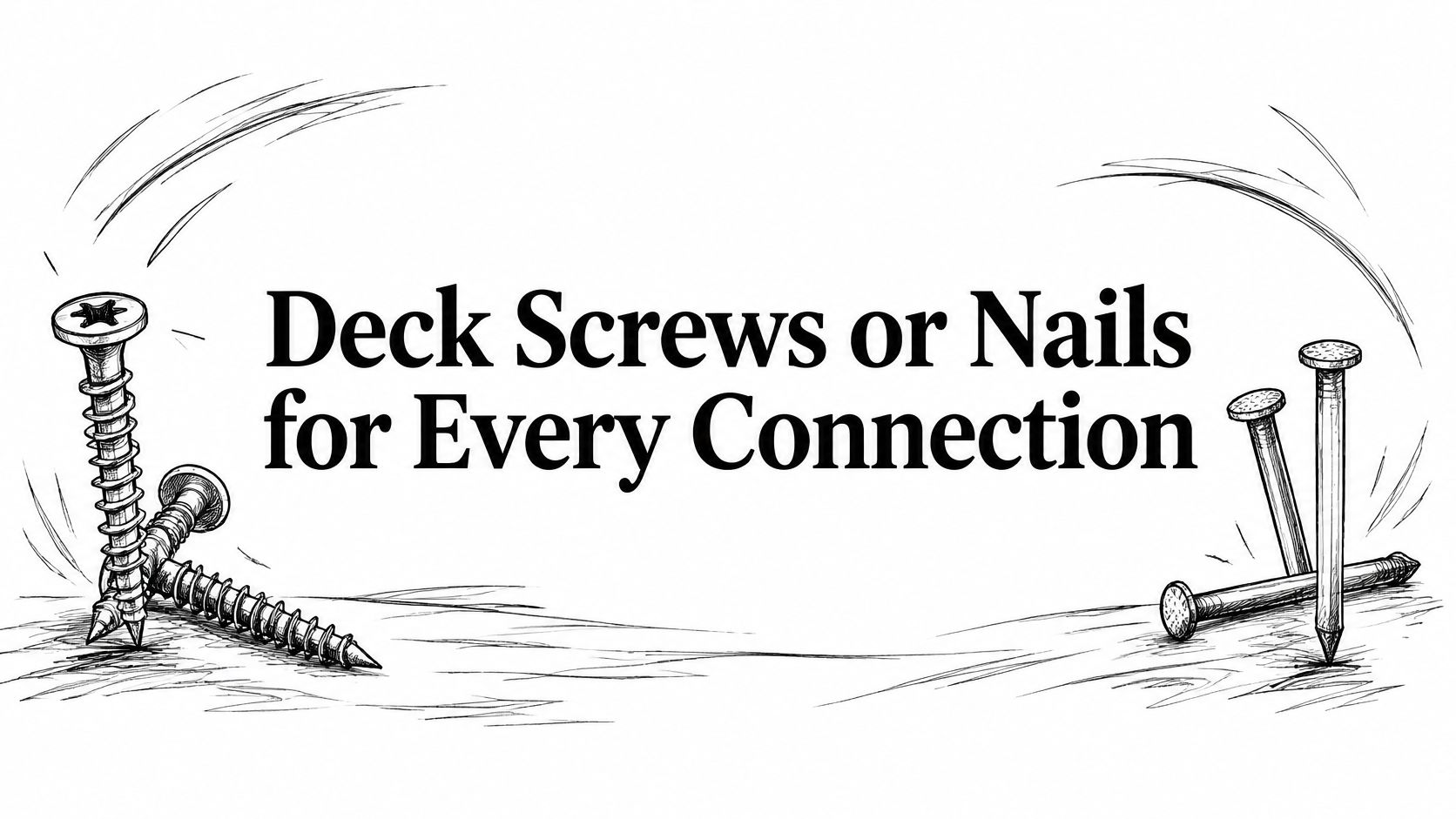
Deck Screws or Nails for Every Connection

The most popular deck advice is simple, and it is wrong. Swap every nail for a screw and the frame will stay tight. A fatter thread and a bugle head do not make a fastener legal, or even strong, in the joint you are building. Boards, beam bearings, hangers, guards and the ledger each see […]

Joist Hanger Heavy Duty: How to Choose Right

Buying the thickest joist hanger on the shelf isn't a safe shortcut. A substantial bracket can still leave a ledger connection unsafe if someone squeezed a doubled joist into it, bent a flange for clearance, or drove deck screws through holes intended for connector nails. The useful question isn't how heavy the bracket feels. It's […]

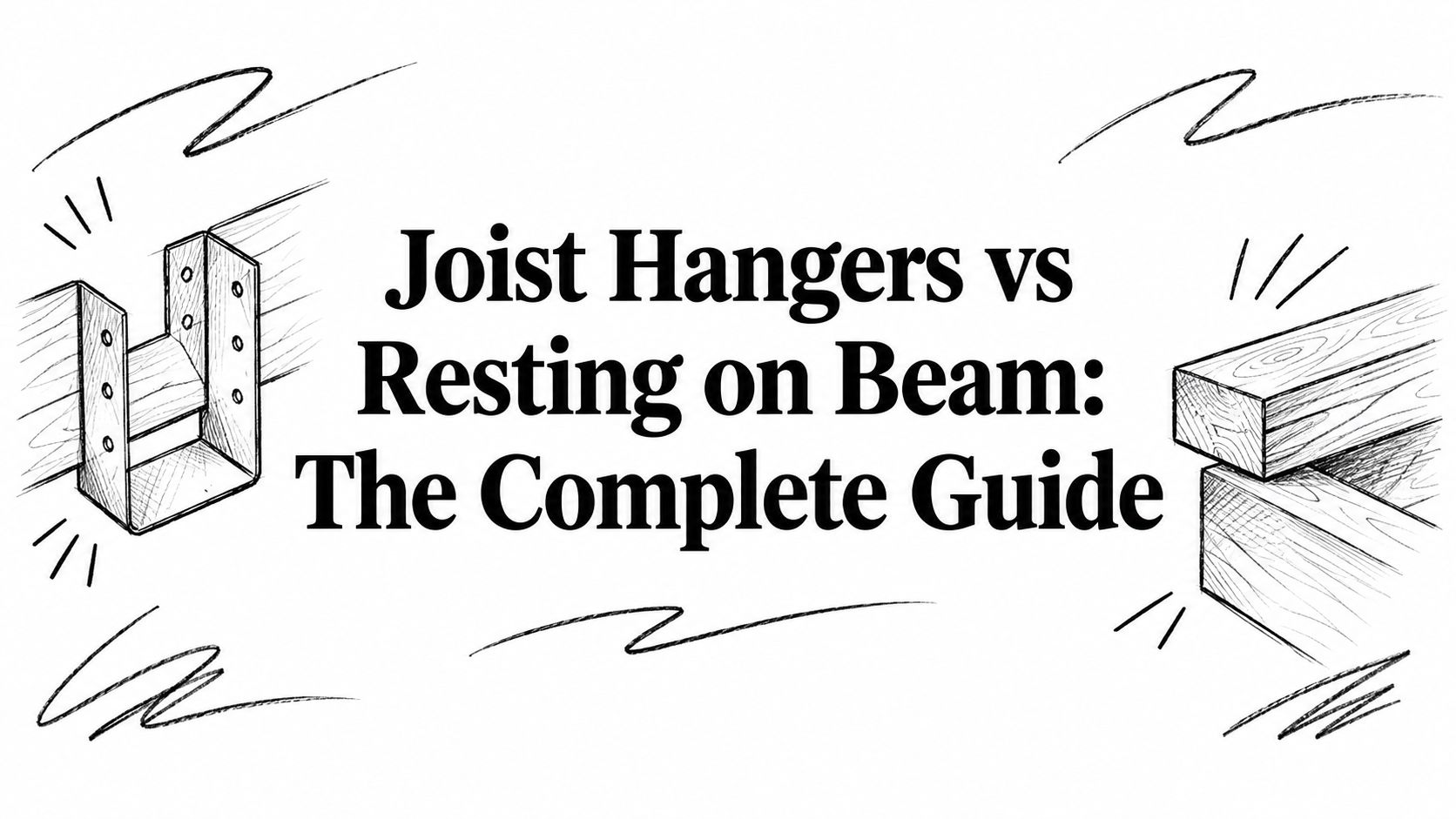
Joist Hangers vs Resting on Beam: The Complete Guide

The popular advice is simple: if a joist sits on top of a beam, you can skip the hanger. That advice is incomplete, and in California it can lead to a connection that looks solid but fails inspection or moves under real service conditions. Bearing carries vertical compression. It doesn't automatically resist sliding, uplift, rotation, […]

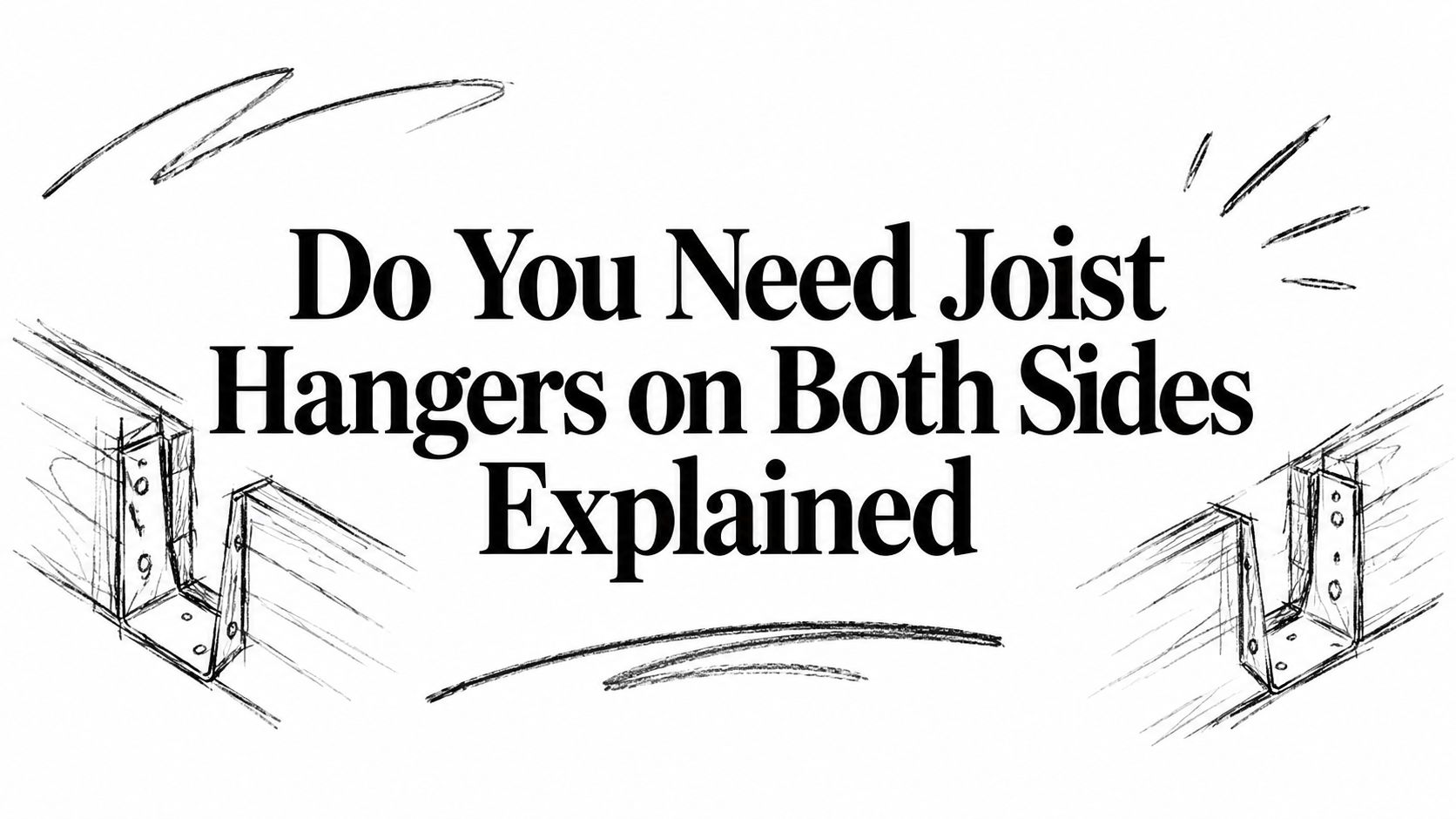
Do You Need Joist Hangers on Both Sides Explained

A joist end bearing on wood or metal needs at least 1.5 inches, while masonry or concrete requires at least 3 inches. If that bearing isn't available, an approved joist hanger is the code-backed alternative, but you don't automatically need hangers on both sides of every joist. So, do you need joist hangers on both […]

What Size Joist Hangers Do I Need a Complete Sizing Guide

You're on the deck with a tape measure in one hand and a hanger in the other, and the box says 2×8, but the joist you just measured is 2×10. That is the point where the simple question, what size joist hangers do I need, turns into a real jobsite decision, because the answer is […]

Easy 30 days returns

100% Secure Checkout

PayPal / MasterCard / Visa