
You're usually standing in front of the problem before the problem announces itself. The door looks perfect, the reveal is even, the swing feels smooth, and everyone walks away thinking the job is done. Then a few months pass, the slab moves a touch, the header settles, the weather changes, and the door starts kissing the floor or loading up on the strike side.
That's the trap with pivot hinge installation. The hardware looks simple because the hinge itself hides the work, but the tolerances are unforgiving and the structure underneath matters more than the finish trim. On heavy entry doors, shower panels, gates, and commercial openings, the difference between a clean install and a callback is often a few fractions of an inch, or the wrong anchoring choice in the wrong substrate. For readers comparing systems before they start, it also helps to compare aluminium door options locally because door material and frame behaviour change the installation approach.
Why Pivot Hinge Installation Demands Precision
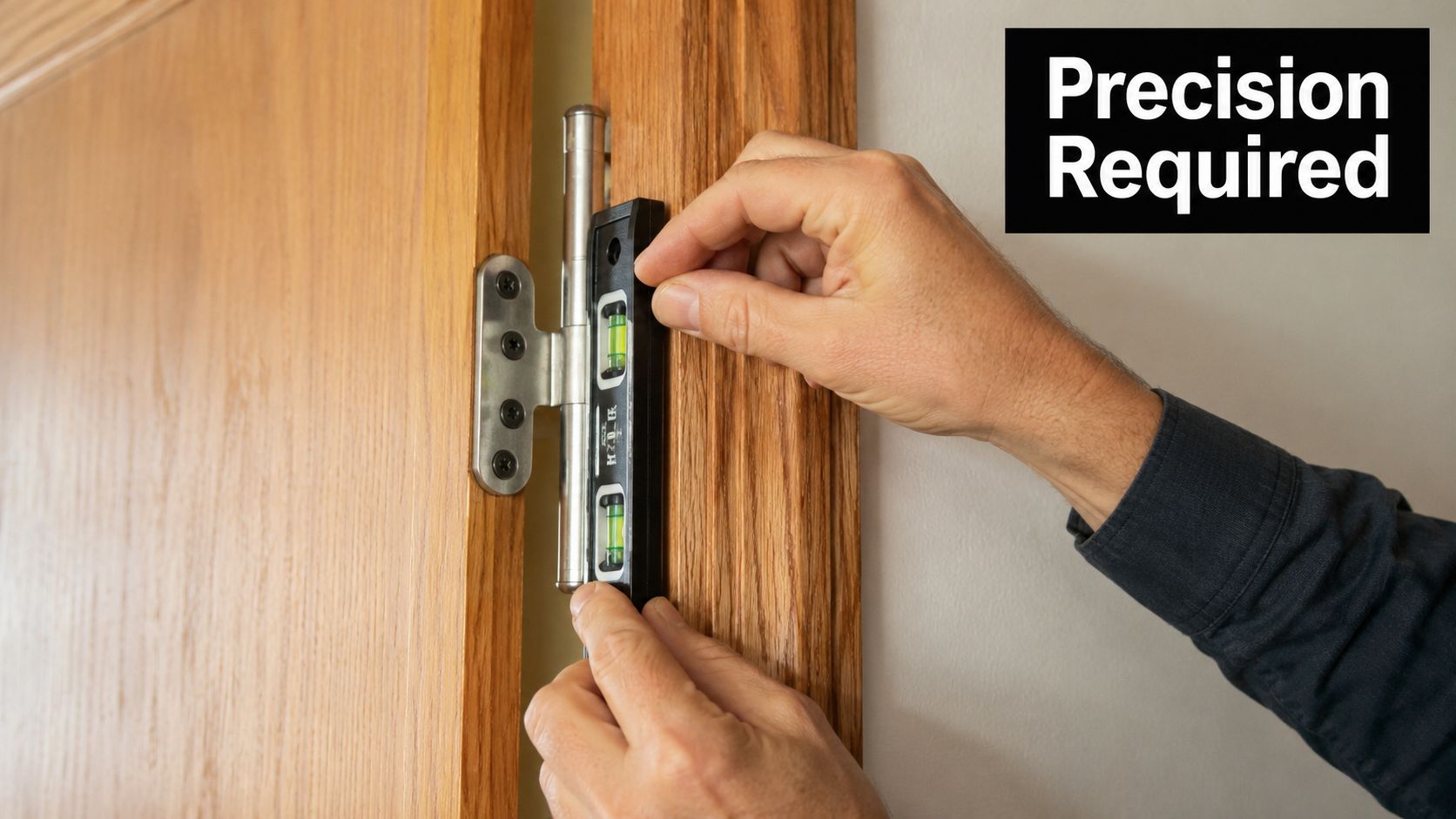
A pivot door doesn't behave like a normal hinged door, and that's where a lot of installs go sideways. The load is carried through a top and bottom pivot point rather than spread across multiple butt hinges, so alignment has to be right from the start. A technical guide notes that heavy-duty pivot systems can support 600+ lbs per door leaf, while specialised floor-spring systems can be built for 800–1,000 lbs per leaf, which is exactly why oversize doors demand tighter workmanship than standard openings do. That same guidance also says the bottom pivot housing is typically set in a floor pocket 3 to 4 inches deep and 4 to 6 inches in diameter, with the top receiver directly above it, and a misalignment greater than 1/16 inch can cause binding Waterson USA.
Practical rule: if the door swings perfectly on day one but starts dragging later, the hardware probably wasn't the only issue. The opening, slab, and header all have a vote.
What changes after the installer leaves
The first day can hide a mediocre install. Fresh adjustments, dry weather, and a door that hasn't seen real traffic yet can make the opening feel better than it is. Three months later, slight movement in the floor, thermal change, or a reveal that was only barely acceptable will show up as rubbing, drift, or a stubborn self-closer.
That's why the work is more than hanging a panel. You're managing load path, clearances, and movement over time, especially on large-format doors in high-end retail, hospitality, and institutional projects where tolerances are tight. The bigger the leaf, the less forgiving the assembly becomes, and the more the installer has to think like a carpenter, a hardware fitter, and a risk manager at once.
Where DIY tutorials fall short
Most online walkthroughs stop at “line up the plates and adjust until it feels right.” That advice works only on the friendliest openings. It doesn't cover what happens when the slab isn't perfectly flat, the header isn't true, or the door is so heavy that a tiny error compounds into visible sag.
For anyone planning a project with a premium finish, a clean-looking hinge system is only half the job. The hidden work is making sure the structure can carry the door without forcing the hardware to fight the building. That's why careful pivot hinge installation looks obsessive to casual observers, but saves time and money when the door is used every day.
Choosing the Right Pivot Hinge Type for Your Project
The right hinge choice comes before the first drill bit touches the surface. A lightweight interior panel, a glass shower door, a commercial entry leaf, and a gate on exterior hardware all ask for different pivot behaviour. The global pivot hinge system market was valued at $2.1 billion in 2025 and is projected to reach $3.1 billion by 2034 at a 5.2% CAGR, with North America accounting for 35.2% of revenue, or about $738 million in 2025, and floor-mounted pivot hinges holding the largest share at 28.5% MarketIntelo. That scale matters because the category is mature enough that selection mistakes aren't hard to find, but the wrong choice still shows up quickly in the field.
Match the hardware to the opening
A top-and-bottom pivot set is the most familiar format for interior and decorative doors, especially when appearance matters and the door needs to rotate cleanly with minimal visible hardware. Floor-mounted pivot systems suit heavier leaves and the kind of openings that need serious support under traffic, but they need stronger substrate discipline and better layout accuracy. Surface-mounted pivots are easier to retrofit in some cases, yet they usually sacrifice the clean look that drives many pivot-door projects in the first place.
Offset pivot configurations are the ones that catch people by surprise. They can create a dramatic swing path and help with clearance on wide doors, but they're less forgiving if the opening is tight or the wall build-up is inconsistent. For exterior applications, the question is often less about looks and more about whether the system can tolerate weather, movement, and repeated use without drifting out of line.
Pivot Hinge Types at a Glance
| Hinge Type | Typical Load Capacity | Best For | Installation Complexity |
|---|---|---|---|
| Top-and-bottom pivot | Varies by system | Interior doors, decorative panels | Moderate |
| Floor-mounted pivot | Heavy-duty applications | Entry doors, commercial openings | High |
| Surface-mounted pivot | Lighter to medium-duty use | Retrofits, simpler installs | Lower |
| Offset pivot | Project-specific | Large doors, clearance-sensitive layouts | High |
For readers sorting through hardware options, the hinge style should follow the door weight, the substrate, and the finish expectations, not the other way around. If you want a broader hardware comparison before you commit, the gate hinge installation guide is a useful companion when the project moves beyond standard interior work.
What to buy for the job
For a light interior panel or shower-style setup, a simpler pivot set makes sense if the door is centred accurately and the opening is forgiving. For a heavy entrance leaf or a door that will see frequent daily cycling, floor-supported hardware is the safer choice because it spreads the responsibility more intelligently. The wrong call usually shows up later as friction, noisy operation, or a door that never quite closes the same way twice.
Tools, Materials, and Layout Measurements
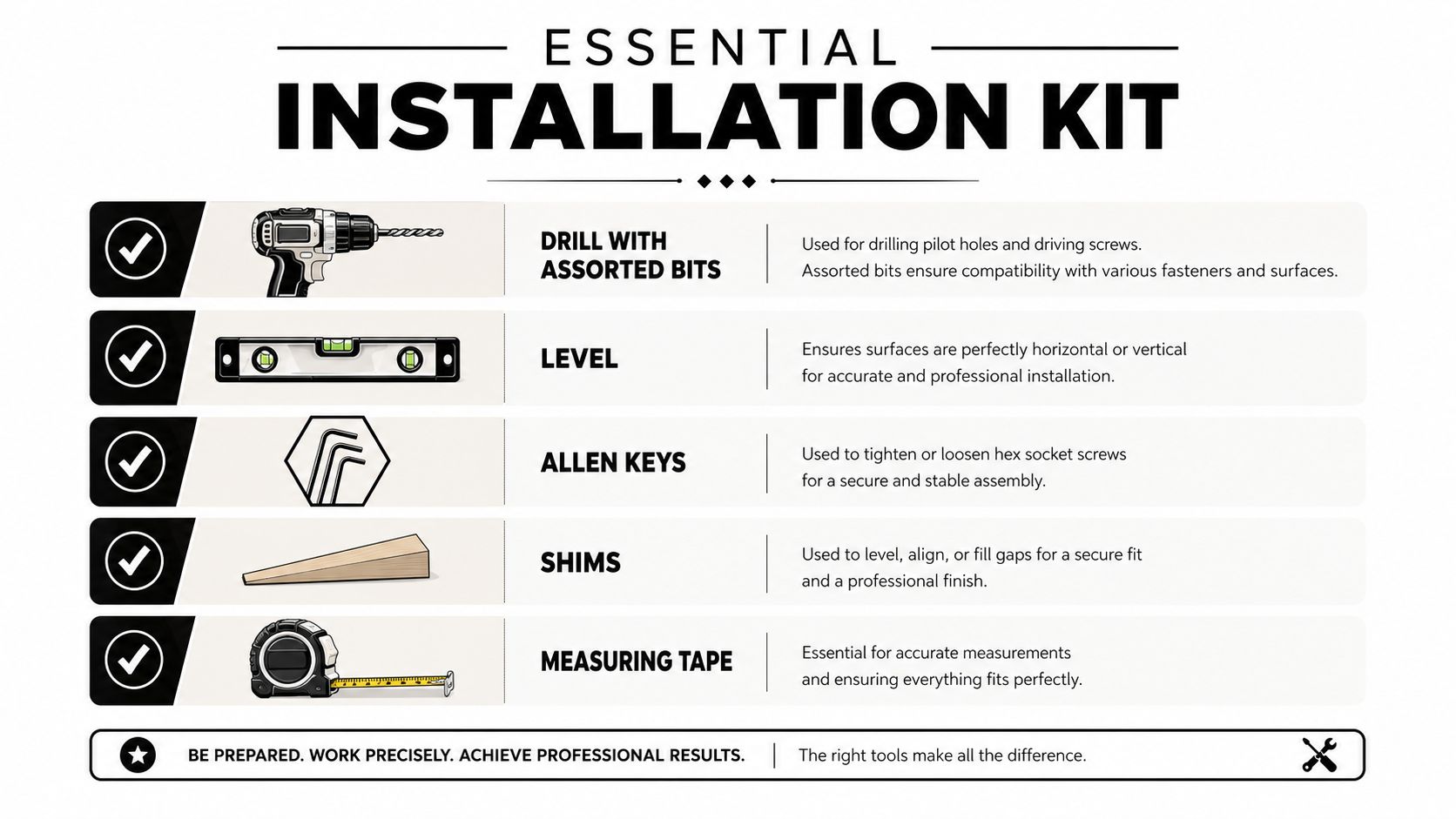
Good pivot hinge work starts on the floor, not with the drill. You need the right tools in hand, because once the first hole is drilled, correction gets expensive fast. For most jobs, that means a quality drill, the right bits for the substrate, a long level, shims, an 8 mm Allen key where the hardware calls for it, a measuring tape, and a template material such as cardboard or MDF for repeatable layout.
Measure the line before you drill the hole
The pivot-point centreline has to be marked clearly on both the floor and the header or ceiling receiver. If the top and bottom pivots aren't directly aligned, the door will tell on you quickly, usually by binding or drifting out of its reveal. On frameless shower-style work, manufacturer instructions call for centring the hinge on the threshold or header centreline, marking two mounting holes, drilling 3/16-inch holes about 2 inches deep, adding a small amount of silicone, and then fastening the bottom hinge with two #10 x 2-inch flathead screws Basco Shower Door.
For mortised work, Brusso's documentation says to leave 1/8 inch of material on either side of the pivot hinge after mortising, and to keep at least 50% of the pivot pin visible after installation Brusso. Those are the kinds of tolerances that separate a clean fit from a door that binds because the hinge is fighting the woodwork.
Mark twice, drill once still isn't enough if the centreline is wrong. The pivot has to be centred, level, and checked before the first fastener goes in.
Use a template when the opening has more than one door
A simple cardboard or MDF template saves time on repeated installs, especially in multi-unit work or paired openings. Cut one accurate sample around the pivot footprint, then transfer that layout to each opening instead of re-measuring every time. That reduces drift between units and keeps the visual reveal more consistent from door to door.
Pick the drill bits for the substrate
ArchDaily's pivot-door guide notes 7.5 mm drill diameter for wood and 8 mm for aluminium, with the floor plate fixed using 8 mm pins and four holes drilled 8 mm deep ArchDaily. That substrate-specific difference matters. Wood gives you a different bite than aluminium, and treating them like the same material is how installs loosen later or start pulling out under traffic.
Mounting, Hanging, and Fine-Tuning the Door
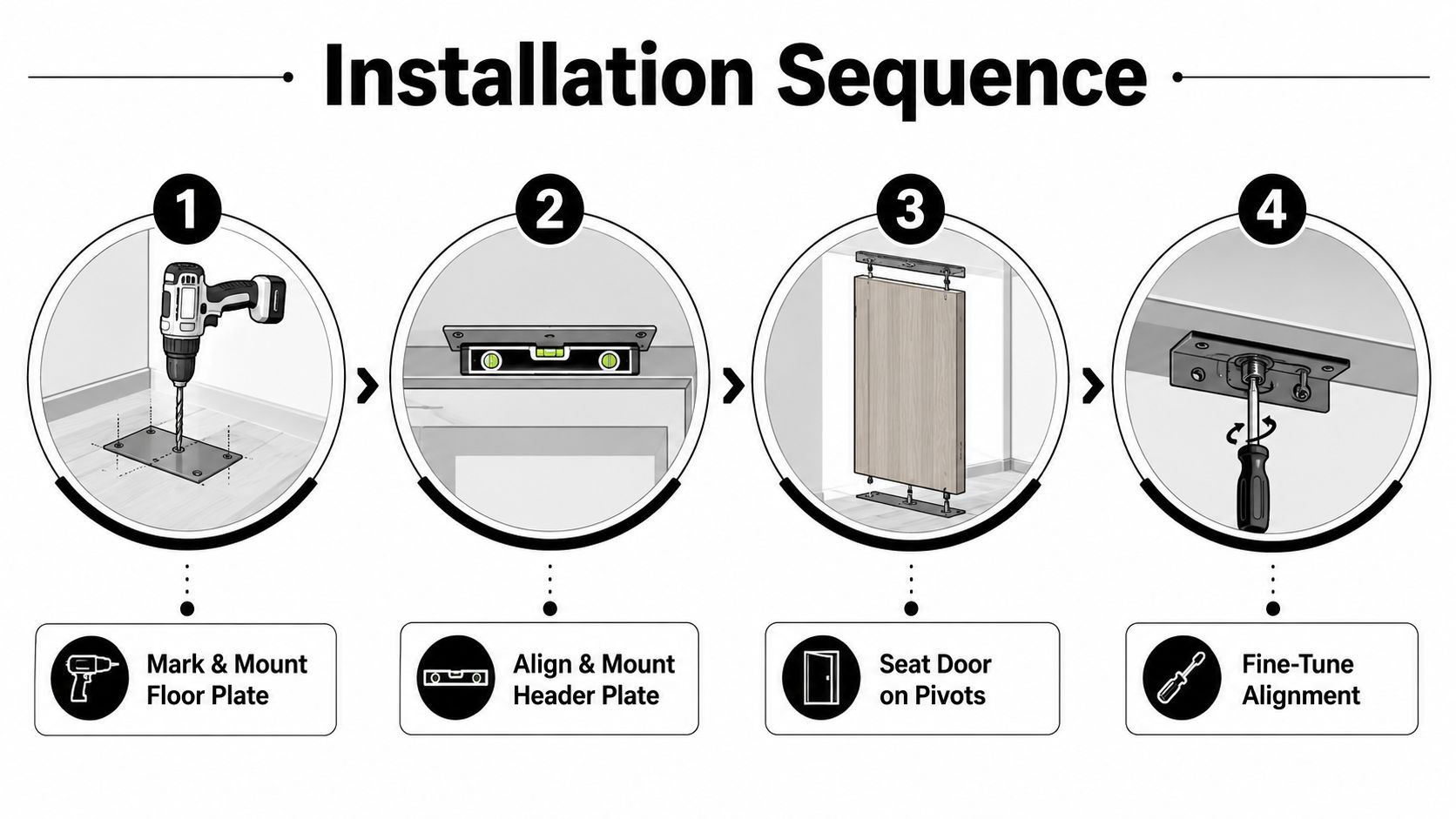
The cleanest installs follow a sequence, and skipping the sequence usually creates a problem that shows up during final adjustment. The heavy-door manuals break the work into four practical phases, mount the floor plate, mount the ceiling plate, place the door, then fine-tune the alignment. That order matters because it lets the hardware settle under load before you lock in the final reveal.
Seat the hardware in the right order
Start with the floor plate and make sure the anchor pattern matches the substrate. Then mount the ceiling or header plate directly above it, checking plumb as you go, because any sideways offset turns into friction at the pivot. Once the plates are in place, set the door onto the pivots and verify that the weight is fully carried before you start trimming the adjustment.
For frameless and glass-panel work, the safer method is to secure the bottom hinge first, then hang the door once the bottom is stable. That sequence reduces the chance of throwing the top out of line during final tightening, which is a common reason seal gaps and binding appear on shower-style installations. If you're looking for a related hardware swap workflow in another category, the cabinet hinge replacement guide is a useful contrast because it shows how much more forgiving conventional hinge layouts can be.
Fine-tune without chasing the reveal
Some pivot cartridges need spring pre-load to behave properly. One installation guide instructs rotating the square pin or bracket about 120 degrees clockwise to pre-load the spring to a neutral position before final fastening, because that helps the door self-close consistently and seat properly Sugatsune. The same family of instructions stresses securing the lock rings with an 8 mm Allen key and eliminating clearance at the upper acceptor as the key success criterion.
For vertical adjustment, an ARLU fitting guide sets a measurable clearance of 6 mm to 10 mm between the top of the door panel and the ceiling. It ties that adjustment to spindle holes, with the first hole visible for 6 mm and the second hole for 10 mm, then tells installers to open and close the door several times before locking the pin in place ARLU. That repeat-test step matters because a door can look right while still carrying load unevenly.
Test the swing before you call it done
Open and close the door several times, slowly and then at normal pace. Listen for scraping, feel for drag, and check whether the top acceptor remains fully seated. If the door feels different from one cycle to the next, stop and correct the alignment before the hardware is locked permanently.
A pivot that feels “close enough” on the last turn of the Allen key usually isn't close enough. If the door only works when you baby it, the install isn't finished.
You can also compare this workflow with the gate hinge installation process when the opening involves a heavier exterior leaf, because the same habit applies there, rough openings don't forgive shortcuts.
Common Mistakes and How to Troubleshoot Them
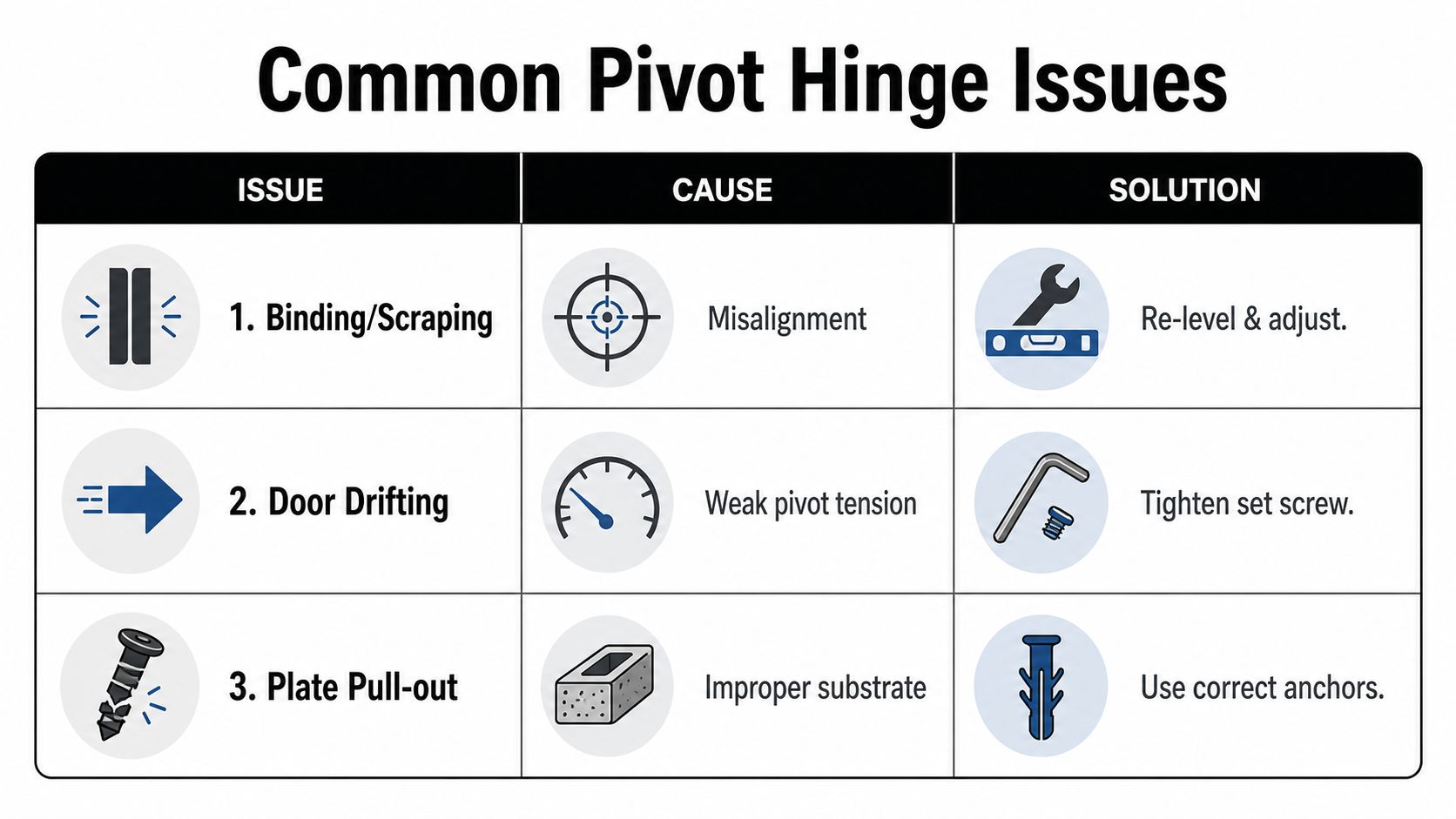
Most pivot hinge failures don't start with bad hardware. They start with small errors that nobody notices until the door has been used for a while. The most common issues are binding, sagging, drifting, and plate pull-out, and each one usually points back to a different part of the install rather than a mysterious hinge defect.
Read the symptom before you touch the screw
Binding usually means the top and bottom pivots are no longer perfectly aligned, or the opening was drilled off-centre to begin with. The fix is to re-check plumb, inspect the floor pocket, and adjust the lock rings or shims before the door starts chewing itself against the frame. The technical benchmark that matters here is the 1/16 inch alignment tolerance noted earlier, because once you're past that line, the door can start to tell on you fast Waterson USA.
Door drifting is a different problem. If the leaf won't hold its position or slowly walks away from the intended closed line, the pivot tension or spring pre-load is usually off. That's where the lock ring and adjustment screw work matters, because the issue is less about hanging the door and more about making the cartridge behave under real use.
When the substrate is the real failure point
Plate pull-out is usually a substrate problem, not a hinge problem. Too little support under the bottom pivot, the wrong anchor, or drilling into an unsuitable slab can all let the hardware loosen under load. In commercial storefront work, the frame-setter guide warns that too little support beneath the bottom pivot hinge can cause pivot failure, which is why the floor structure matters as much as the hardware itself CDF Distributors.
This becomes a bigger issue on finished slabs and post-tensioned concrete. In those cases, the question isn't just whether the hinge fits, it's whether the anchoring plan belongs in that structure at all. California jobs especially deserve a structural review when the opening is constrained, because the risk is often in the slab or surrounding assembly, not the visible hinge body.
Don't ignore seasonal movement
Exterior doors move. Wood expands, metal shifts, and coastal or high-UV conditions can alter clearances over time. The best installers leave enough breathing room to avoid seasonal drag, then return later to check the reveal before a complaint becomes a service call.
If you're doing replacement work rather than a fresh install, the door replacement resources for builders are useful background because they show how often the opening itself drives the problem, not just the new hardware.
Long-Term Maintenance and Climate Durability
A pivot door should not need constant attention, but it does need deliberate maintenance. The small habit of checking the pin, the lock ring, and the reveal saves a lot more time than waiting for a door to scrape the floor or lose its self-closing feel. Regular lubrication and inspection are especially important on exterior installations where weather, salt air, and UV exposure accelerate wear.
Build a simple maintenance routine
Check the pivots after the door has been in service for a while, then again after seasonal temperature changes. Look for early signs that the pin isn't fully seated, that the reveal is changing, or that the upper acceptor no longer feels tight. If the door starts behaving differently, don't assume it will settle back on its own.
For stainless environments and hardware exposed to moisture, using the right fasteners matters as much as the lubricant choice. That's why installers often pair pivot hardware with corrosion-resistant components, and the stainless steel fasteners selection is the kind of supply detail that makes sense when the door lives outdoors or near the coast.
Think like the climate will test the door
Coastal air, strong sun, and temperature swings are rough on moving hardware. The hinge might still function after a season, but if the reveal shifts or the pin starts to ride differently, the door is telling you the environment is winning. Seasonal inspection should include checking that the pin is fully engaged, the lock ring is snug, and the door still closes without forcing the seal or scraping the threshold.
Seismic and structural concerns also stay part of the picture in California. Heavy pivot doors need substrate suitability, anchor selection, and a real check on whether the opening deserves engineering review before the hardware goes in. The easiest install on paper can become the wrong one on site if the structure can't support the load path cleanly.
Keep this checklist in mind
Inspect the pivots for looseness, wear, or pin movement.
Check the reveal at the top and sides after seasonal changes.
Re-tighten lock rings if the door starts to drift or lose its seating.
Confirm the substrate still supports the load, especially on exterior or high-traffic openings.
Treat movement as a warning, not a nuisance, because early correction is cheaper than a full reset.
XTREME EDEALS INC. offers the kind of hardware support that keeps projects moving, from fasteners and anchors to practical door and gate components that matter when tolerances are tight. If you're planning a pivot door, a gate retrofit, or a hardware refresh, visit XTREME EDEALS INC. to find the parts that help you do the install once and do it right.