
You're halfway through a deck repair when the carriage bolt starts spinning. The nut won't tighten, the domed head twists against the finished board, and the hole you drilled now looks too loose to save. On a fence gate, the same mistake leaves a joint that shifts, crushes the timber, or lets water sit around the hardware.
The reliable method is simple, but the details matter. Choose the right diameter, length, grade, and finish, clamp the members securely, drill straight with the correct clearance, seat the square shoulder with a light tap, then tighten the washer and nut only until the joint is snug. For Canadian decks and fences, material matching matters just as much as installation technique because moisture, treated lumber, seasonal movement, and coastal air all affect hardware life.
Why Carriage Bolts Work So Well for Decks and Fences
A carriage bolt earns its place on a deck rail, fence post, or gate frame by combining a clean finished side with reliable clamping. The rounded, domed head sits against the visible timber, leaving no projecting hex head to catch clothing, hands, or tools. Beneath it, the square shoulder engages the wood and resists rotation while the nut is tightened from the opposite side.
That connection works well where a rail meets a post, a gate frame is assembled, or two structural members must stay aligned. If the joint loosens, movement enlarges the hole and reduces the value of later tightening. Proper material matching matters in Canadian conditions too. Galvanized hardware suits many exterior treated-lumber projects, while stainless steel is a better choice where salt air, persistent moisture, or incompatible metals could shorten hardware life.

The square shoulder does the holding
The square section under the head provides the anti-rotation action, but only after it is seated correctly. A hole that is too tight can split the timber or prevent the shoulder from reaching the surface. A hole that is too loose lets the bolt spin before the nut develops clamping pressure. Canadian carriage-bolt guidance from Canadian carriage-bolt guidance describes the relationship between clearance, wood movement, and installation stress.
Seat the shoulder with a light tap rather than drawing it into the wood by force. Crushing the fibres under the domed head can mark the finished face and leave a joint that relaxes as the timber changes with moisture. Keep the members aligned, insert the bolt from the finished side, then fit the flat washer and nut on the accessible side.
The nut should finish the connection, not compensate for a poorly drilled hole.
A firm, even clamp is the goal. Over-tightening can crush soft or treated wood, while insufficient tightening allows the joint to work under load. For a larger fence replacement or gate rebuild, fencing services in St. Charles can help assess the structure before hardware is selected.
How to Choose the Right Size Grade and Finish
A deck ledger, fence rail, or gate joint tells you which carriage bolt to buy. Measure the combined thickness of the members, then allow space for the washer, nut, and useful thread engagement. The bolt should extend beyond the nut without leaving a long projection that can snag or complicate maintenance.
Diameter controls bearing area and the amount of wood left around the hole. Common Canadian stock includes 1/4 inch, 5/16 inch, and 1/2 inch carriage bolts, as shown among these standard carriage-bolt options at Home Depot Canada. Match the bit to the bolt's actual shank diameter, and test the fit on scrap before drilling the finished joint. A hole that is too tight can split wood or stop the square shoulder from seating. Too much clearance lets the bolt spin while you tighten the nut.
The Fast-Rite technical fastener chart lists square-neck carriage bolts from 1/4 inch to 3/4 inch inclusive, with short square-neck versions from 1/4 inch to 5/8 inch inclusive. Use that range as a selection reference, not as a substitute for checking the joint and the material.

Compare finish and grade before you buy
Grade must suit the load, while finish must suit the exposure. Plain steel works where corrosion is controlled, but it is a poor choice for an exposed Canadian deck or fence. Galvanized steel is a practical general outdoor option when wet weather, availability, and cost all matter. Stainless steel suits coastal air, persistent moisture, and repairs expected to remain serviceable for a long time. You can compare stainless steel carriage bolt options from Xtreme eDeals with the matching washers and nuts.
Pressure-treated lumber keeps moisture against the fastener, so material compatibility matters as much as bolt strength. Avoid mixing hardware casually, especially where dissimilar metals can accelerate corrosion.
For structural work, select the required grade from the applicable design standard rather than by appearance. Canadian structural design includes CSA S6 for road bridges and CSA S16 for buildings and other structures where it applies. The bolt, washer, nut, and connected material must work as one assembly.
Drilling and Seating the Bolt Without Splitting or Spinning
A carriage bolt can look properly installed while the joint is already compromised. A wandering bit leaves the members misaligned, while an oversized hole gives the square shoulder nothing firm to grip. Careful drilling and controlled seating prevent both problems, especially in wet Canadian conditions where wood movement can open a marginal fit.
Clamp first and drill straight
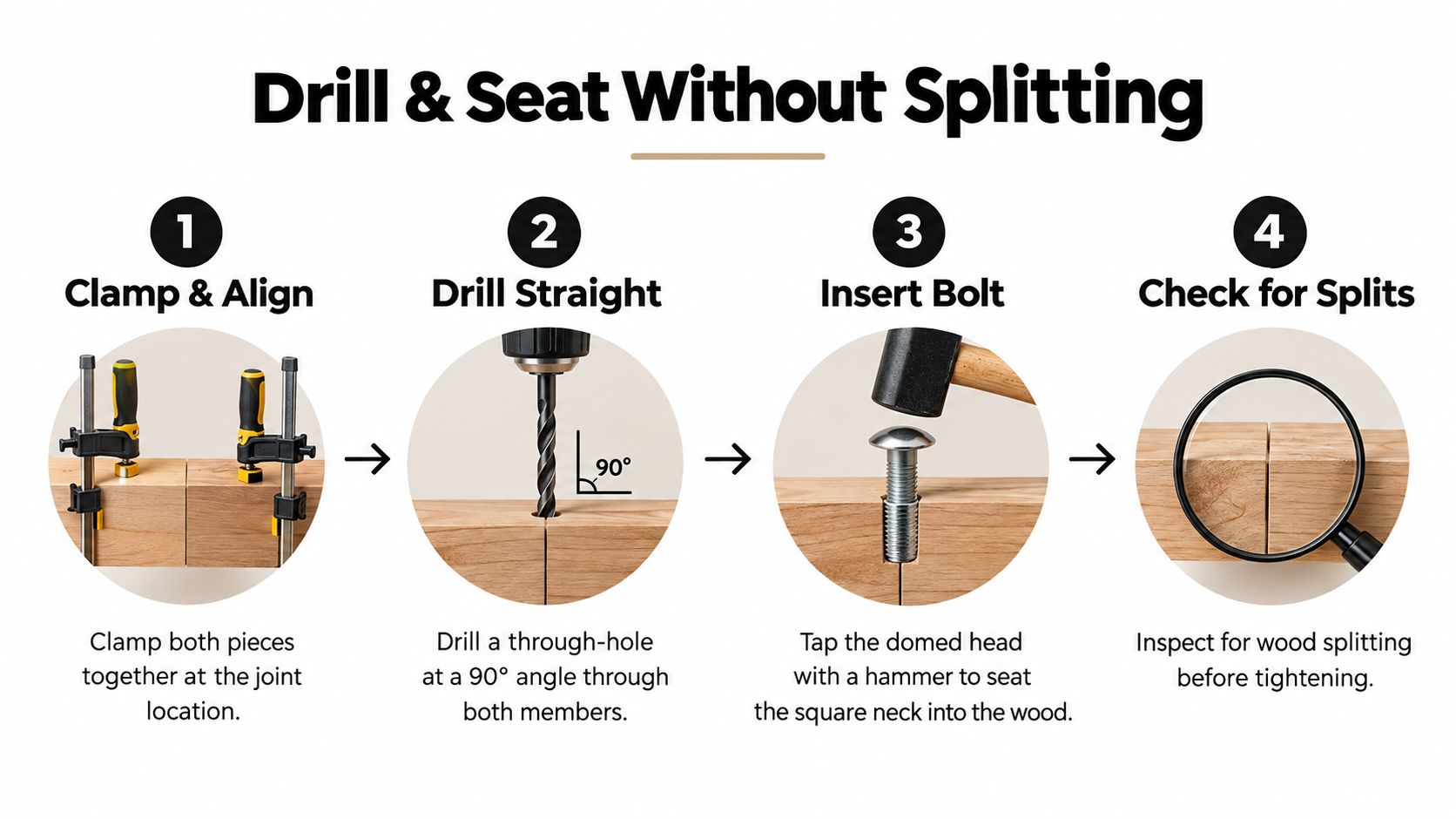
Set the rail, post, or gate member in its final position. Clamp the pieces so they cannot shift when the bit enters the second member. Mark the hole centre on the finished face, then drill through both pieces in one operation whenever access allows. Keep the drill at 90 degrees to the surface.
A straight hole keeps the bolt centred and stops the nut from pulling one member sideways. If you must drill from both sides, align the two holes carefully and clear chips as you go. Dense or pressure-treated timber can hold debris that pushes the bit off line or prevents the bolt from seating fully.
Allow enough clearance for the bolt to pass without forcing it, while keeping the hole tight enough for the square shoulder to engage. A hole made too close to the bolt diameter can split as the shoulder enters. A loose hole allows the shoulder to spin, particularly after seasonal moisture changes enlarge the fibres around the opening. Match the hole to the bolt and wood rather than relying on wrench force.
Seat the shoulder with the head
Insert the carriage bolt from the finished side. Keep the domed head flat against the surface and align the square neck with the hole. Tap the head with a hammer until the shoulder is seated. Use firm, controlled taps. Heavy blows can crush the fibres beneath the head, especially in softer cedar or moisture-softened treated lumber.
The shoulder should bite into sound wood without sinking into it. If the hole is oversized, the nut can turn while the bolt turns with it. That spin-out leaves the joint loose and may require removing the fastener or creating a new hole.
Check three things before fitting the washer and nut:
- Check the surface: Look for splits radiating from the hole or crushed fibres under the head.
- Check the fit: Confirm that the square shoulder has engaged the wood instead of floating in the bore.
- Check alignment: Make sure the members remain flush and the bolt has not shifted the joint.
A published size chart lists matching nominal hole sizes for examples including 1/4 inch bolts in 1/4 inch holes and 5/16 inch bolts in 5/16 inch holes. The Regal Sales carriage-bolt size chart helps distinguish a clean through-hole from an undersized pilot hole. In wood, the practical fit still depends on the species, moisture condition, and how cleanly the hole was drilled.
Installing Washers Nuts and Getting the Torque Just Right
Once the square shoulder is seated, the connection becomes much easier to finish. Put a flat washer over the exposed shank on the back side, then hand-start the nut. The washer spreads the load over a larger area and helps prevent the nut from pulling into the wood.

Tighten until the joint is snug
Use a wrench on the nut and watch the joint as you tighten. The bolt head should remain seated against the finished face, the washer should lie flat, and the members should draw together without bowing or crushing the timber. You shouldn't need to hold the domed head if the square shoulder has engaged properly.
Hand-starting the nut protects the threads from cross-threading. If the nut feels rough immediately, remove it and inspect the threads rather than forcing it with a longer handle. A second wrench can help when you're working with a stubborn connection or when the assembly needs careful control, but routine tightening shouldn't depend on excessive force.
Watch the wood, not just the wrench. A joint can feel tighter while the washer is sinking into a soft board or the fibres beneath the head are crushing.
The practical Canadian installation sequence is to clamp and align the joint, drill straight through both members, insert the bolt from the finished side, tap the head to seat the square shoulder, then install the flat washer and nut and tighten until snug. Canadian Wood Council installation guidance specifically notes that the seated shoulder grips the wood, allowing the nut to be tightened without holding the bolt.
After tightening, test the joint by hand. It should feel stable, with no visible gap opening as you apply normal pressure. Don't keep tightening because more thread is available. Over-tightening can crush wood fibres, pull the nut or washer into the timber, and weaken the joint you're trying to secure.
Wood Versus Metal Applications and Corrosion Protection
A carriage bolt locks differently in timber and metal. In wood, the square shoulder bites into the surface as the domed head is seated. A round hole in metal does not provide that same anti-rotation grip. Metal framing may need a square-punched opening, a formed recess, or a separate arrangement that stops the neck from turning.
Wood connections need controlled seating
For a wood-to-wood or wood-to-metal joint, clamp the pieces firmly, drill through the complete assembly, and keep the hole aligned. The opening should be slightly larger than the bolt body, with enough tolerance for the bolt to pass without forcing it off line. Too much clearance, however, leaves the square shoulder without sound material to engage and increases the chance of spin-out.
Insert the bolt from the finished side, then seat the shoulder with light hammer taps. The head should finish flush or evenly against the surface. Pulling the square neck into the timber by tightening the nut can crush fibres, draw the washer into soft wood, and leave the joint misaligned.
Metal framing requires a separate check. Confirm that the component is designed for a square-neck fastener before drilling. If it has only a round hole, the carriage-bolt head can still give a clean appearance, but an anti-spin feature or access to a second tool is needed to hold the bolt while tightening.
Match the finish to exposure
Galvanized and stainless hardware suit different conditions. Galvanized bolts are usually practical for ordinary outdoor exposure, while stainless steel is a stronger choice where corrosion would be difficult to control. Coastal air, persistent dampness, and pressure-treated lumber all call for closer material matching. This galvanized vs stainless steel comparison can help narrow the choice.
| Exposure Scenario | Recommended Finish | Why It Matters |
|---|---|---|
| Covered exterior joint with limited wetting | Galvanized | Provides a practical barrier for general outdoor use. |
| Exposed deck or fence in a wet climate | Hot-dip galvanized or stainless steel | Moisture can accelerate corrosion, so rust-resistant hardware is appropriate. |
| Coastal or salt-air location | Stainless steel | Salt exposure raises corrosion concerns and favours a more resistant material. |
| Pressure-treated lumber with long service expectations | Stainless steel, or a compatible galvanized system | The hardware and wood remain in a damp, chemically active environment, so compatibility matters. |
Canadian retail guidance recommends rust-resistant finishes for outdoor deck and fence carriage bolts and identifies stainless steel as preferred where corrosion or rust is a concern. Canadian outdoor fastener guidance helps determine whether standard galvanized hardware fits the exposure or stainless steel is more suitable.
For structural assemblies, finish and appearance do not replace engineering requirements. Use the applicable Canadian code regime and follow controlled installation practices rather than relying on informal tightening habits.
Final Checks and Long Lasting Results
A carriage bolt is installed properly when the joint looks clean and behaves as one piece. Check the domed head first. It should sit flush or evenly against the finished surface, with no split wood or crushed area spreading from the square shoulder.
Then inspect the back side. The flat washer must sit fully against the wood or metal, and the nut should be properly started on the threads rather than perched at an angle. Confirm that the members stayed aligned during tightening and that the joint doesn't shift under ordinary hand pressure.
Use this short inspection routine before leaving the project:
- Head: Confirm the square shoulder is seated and the head hasn't spun.
- Washer: Check that it isn't tilted, buried, or missing.
- Nut: Tighten only until the joint is firm and the wood remains sound.
- Alignment: Verify that rails, posts, braces, and gate members remain in their intended positions.
- Finish: Look for exposed, unprotected hardware where a more corrosion-resistant choice would be appropriate.
Exterior hardware deserves occasional inspection, particularly after wet weather and seasonal wood movement. Replace hardware that shows serious corrosion, damaged threads, or a washer pulled into the timber. Keeping matching carriage bolts, washers, nuts, and related anchors together also makes future fence and deck repairs faster. XTREME EDEALS INC. offers these categories in multi-pack formats, so you can source replacement hardware without mixing incompatible finishes or sizes.
XTREME EDEALS INC. supplies carriage bolts, washers, nuts, anchors, deck hardware, and fencing accessories for repairs and new builds. Visit XTREME EDEALS INC. to match the fastener finish and pack size to your next deck, fence, rail, or gate project.