
You're probably standing at a workbench, or scrolling through a fastener page, with a simple question that turns messy fast. You need to join two pieces of lumber for a deck, gate, or fence, and the choices start multiplying. Zinc or galvanized. Stainless or standard steel. Flat washer, lock washer, both, or none.
That small hardware decision matters more than generally perceived. A clean-looking carriage bolt connection can hold tight for years, resist weather, and keep a project looking organised. The wrong bolt, the wrong washer, or the wrong installation can crush wood fibres, loosen over time, or leave you reworking something that should have been finished once.
In Canadian outdoor builds, that matters even more. Freeze-thaw cycles, wet lumber, seasonal movement, and corrosion exposure all punish weak fastening choices. If you want a deck or fence that still looks straight and feels solid after a few winters, carriage bolts and washers need to be selected and installed with intention.
Your Blueprint for Stronger Outdoor Projects
A lot of deck and fence jobs begin the same way. The framing is laid out, the posts are cut, and the structure looks straightforward until it's time to lock major pieces together. That's where many DIYers slow down. Screws seem easier. Lag bolts look heavier. Carriage bolts sit in the middle, and people aren't always sure when they're the right call.
For many wood-to-wood connections, they are. The smooth rounded head gives a clean finished face, especially on visible rails, gates, and fence assemblies. The nut-and-washer side stays accessible for tightening, inspection, and future maintenance. That's one reason demand remains strong. The global carriage bolts market was valued at $4.8 billion in 2025 and is projected to reach $7.6 billion by 2034 according to market data on carriage bolts demand.
Why this hardware choice changes the result
A carriage bolt isn't just another piece of steel. In outdoor wood construction, it can help you solve three problems at once:
- Appearance: The domed head looks cleaner than an exposed hex head on a visible face.
- Holding power: A nut-and-washer connection gives you controlled clamping pressure.
- Serviceability: You can retighten or replace parts later without destroying the joint.
Practical rule: If the connection is visible, load-bearing in shear, and built from lumber thick enough for a through-bolt, a carriage bolt is often the tidier and more dependable option.
The washer is part of that equation, not an afterthought. On a deck or fence that moves through wet springs and frozen winters, proper load spread at the nut matters. A missing washer can sink the nut into the wood and weaken the connection long before the bolt itself becomes the problem.
The Anatomy of a Carriage Bolt
A carriage bolt works because each part has a specific job. Once you understand that layout, it's easier to choose the right bolt and install it without fighting it.
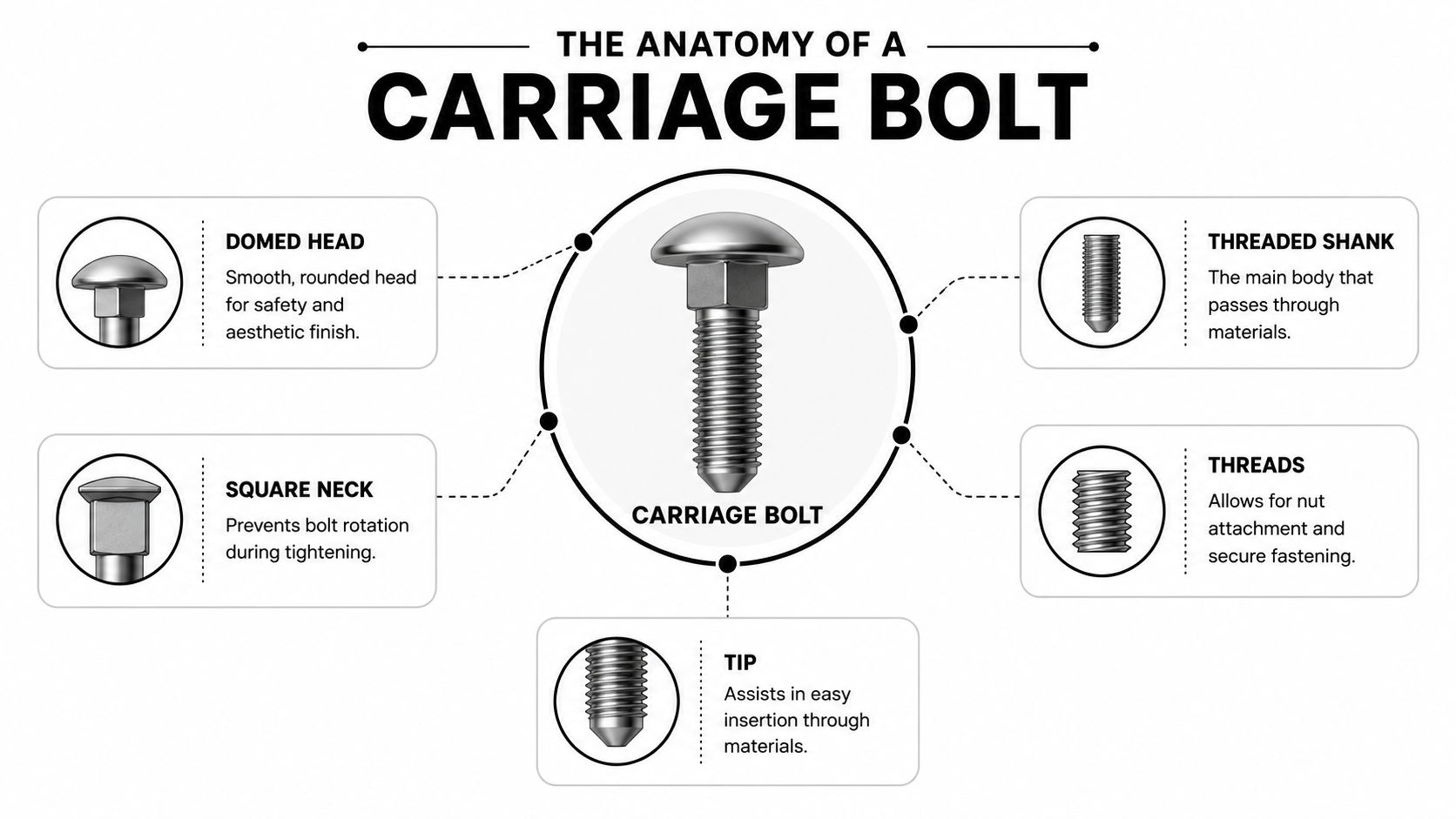
Domed head and square neck
The first thing you notice is the domed head. It's smooth, rounded, and has no drive slot or hex flats. That's why it gives a cleaner finish on the face side of a deck rail, gate frame, or fence section. It also removes a snag point where hands or clothing might catch.
Right below that is the part that makes the whole design work. The square neck sits under the head and bites into the wood when you seat the bolt. As explained by Fastener SuperStore's description of carriage bolt design, the square neck located just under the rounded head bites into wood upon installation, preventing the bolt from turning while the nut is tightened, which is essential for secure fastening in wood framing, decks, and fences.
Think of that square neck like a key setting into a lock. Once it's seated properly, the bolt resists rotation so you can tighten the nut from the back side without needing a second tool on the head.
Shank, threads, and strength standard
The shank is the body that passes through the material. At the end, the threads allow the nut to draw the joint tight. That's where your washer comes into play, because clamping force gets transferred into the wood through the nut side.
Most carriage bolts you'll use in deck and fence work are made to ASTM A307. That matters because it gives you a common baseline for general-purpose wood connections. In practical terms, it means you're dealing with a bolt commonly used where dependable fastening matters, but not a specialty high-strength structural fastener for every possible engineered load case.
A few field notes matter here:
- Good fit matters: If the drilled hole is oversized, the square neck may not bite well.
- Wood matters: Softer wet lumber seats the neck easily. Hard dry stock may need a cleaner hole and firmer tap.
- Application matters: Carriage bolts are excellent in many shear-style wood joints, but they aren't a cure-all for every code-sensitive structural connection.
A carriage bolt succeeds when the square neck locks into the wood and the nut side clamps the joint without crushing the fibres.
That's why carriage bolts and washers should always be treated as a system, not as separate items grabbed off the shelf.
Choosing the Right Bolt Material and Size
Material choice decides how long the connection stays trustworthy. Size choice decides whether it fits the job. Get either one wrong and the joint can look fine on day one but disappoint later.
Which material belongs where
For Canadian outdoor projects, I sort carriage bolt materials by exposure first, not price.
- Zinc-plated steel works for lighter-duty or more sheltered use, but it's not my first choice for permanently exposed deck or fence hardware.
- Hot-dip galvanized is the usual workhorse for backyard framing and exterior wood assemblies where weather exposure is normal.
- Stainless steel makes sense when corrosion pressure is higher, especially around coastal conditions, consistently damp sites, or builds near pools and water features.
If you're comparing options for damp or exposed builds, browsing a dedicated selection of stainless steel fasteners for outdoor hardware helps narrow down whether the added corrosion resistance is worth it for your site.
What ASTM A307 tells you
Most standard carriage bolts used in wood applications are typically supplied in ASTM A307 specification, according to Kad Fasteners' carriage bolt product information. For a contractor or capable DIYer, that tells you these bolts are aimed at the kind of general wood connections found in fences, gates, deck framing components, and other non-specialty outdoor assemblies.
That doesn't mean “use them everywhere.” It means they're a normal and established option where the connection design suits a carriage bolt.
Size ranges and practical selection
Standard carriage bolts for wood connections are available in diameters from 3/16 inch to 3/4 inch and lengths from 1/2 inch to 16 inches, as shown in Lowe's carriage bolt size listings. That range covers most deck and fence work using common lumber such as 2x4s and 4x4s.
A simple rule helps when picking length. You want enough bolt to pass through both materials, leave room for the washer, and still give the nut full thread engagement without an excessive amount sticking out. Too short is unusable. Too long looks sloppy and can become a snag point.
Common carriage bolt sizes for deck and fence projects
| Bolt Diameter | Common Applications |
|---|---|
| 3/16 inch | Light-duty trim assemblies, small gates, non-structural wood connections |
| 1/4 inch | Light fence components, bracing, lighter wood-to-wood connections |
| 5/16 inch | Medium-duty gate frames, fence rails, utility connections |
| 3/8 inch | Common choice for deck details, railing assemblies, post and brace connections |
| 1/2 inch | Heavier post-to-beam style wood connections where the design calls for a through-bolt |
| 3/4 inch | Large timber-style assemblies and heavier outdoor wood construction |
Don't size by habit. Size by the lumber thickness, the load path, and whether the connection needs clamping without deforming the wood.
If a connection is engineered, follow the drawing. If it isn't, stay conservative and choose a bolt that fits the materials cleanly without overbuilding a simple joint or underbuilding a critical one.
The Critical Role of Washers
The most common washer mistake is putting too much thought into the head side and not enough into the nut side. With carriage bolts, that's backwards.
Where the washer goes
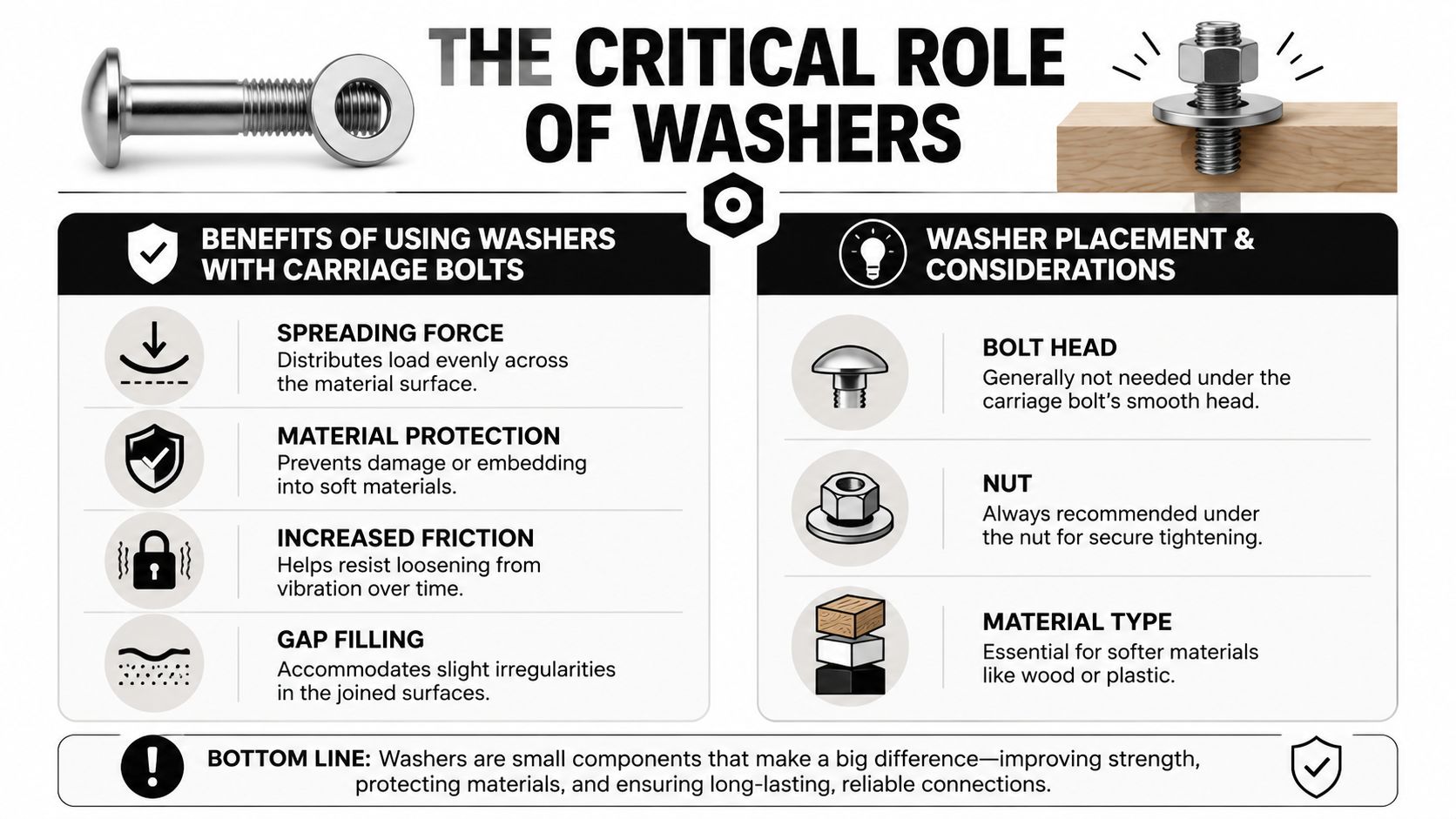
In most wood applications, you don't need a washer under the carriage bolt head. The head is meant to sit against the wood, and the square neck is meant to embed directly beneath it. Putting a washer there can interfere with seating and defeat part of the bolt's design.
On the nut side, the washer is nearly indispensable. Industry data shows that 85% of carriage bolt installations in residential deck and fence projects include a single washer on the nut end, as noted earlier in the market data used above. That lines up with what works in the field.
If you need the right hardware for that side of the joint, a dedicated range of flat washers for fastening applications makes it easier to match washer size to the bolt you're using.
What the washer actually does
A flat washer has two main jobs:
- Load distribution: It spreads the clamping force from the nut over a wider area.
- Surface protection: It reduces the chance of the nut digging into the wood fibres.
Without a washer, the nut can crush into softer lumber as you tighten. That weakens the bearing surface, makes the joint harder to tension properly, and can leave the connection looking rough.
Flat washer or lock washer
For most deck and fence wood joints, a flat washer is the default choice. It solves the main problem, which is protecting the wood while spreading the load.
A lock washer is a different tool. It's intended to help resist loosening in situations where vibration matters. In typical outdoor wood construction, I'd only consider one if the connection details and hardware stack-up call for it. Even then, the flat washer remains the main player in wood-bearing applications.
The washer belongs where the nut bears down. That's the side where the wood needs protection and the clamp load needs control.
When people say carriage bolts and washers are simple, they're right. Simple doesn't mean optional.
A Step by Step Installation Guide
Good installation is mostly about fit, sequence, and restraint. If the hole is clean, the square neck seats properly, and the nut is tightened without crushing the wood, the connection usually comes together smoothly.
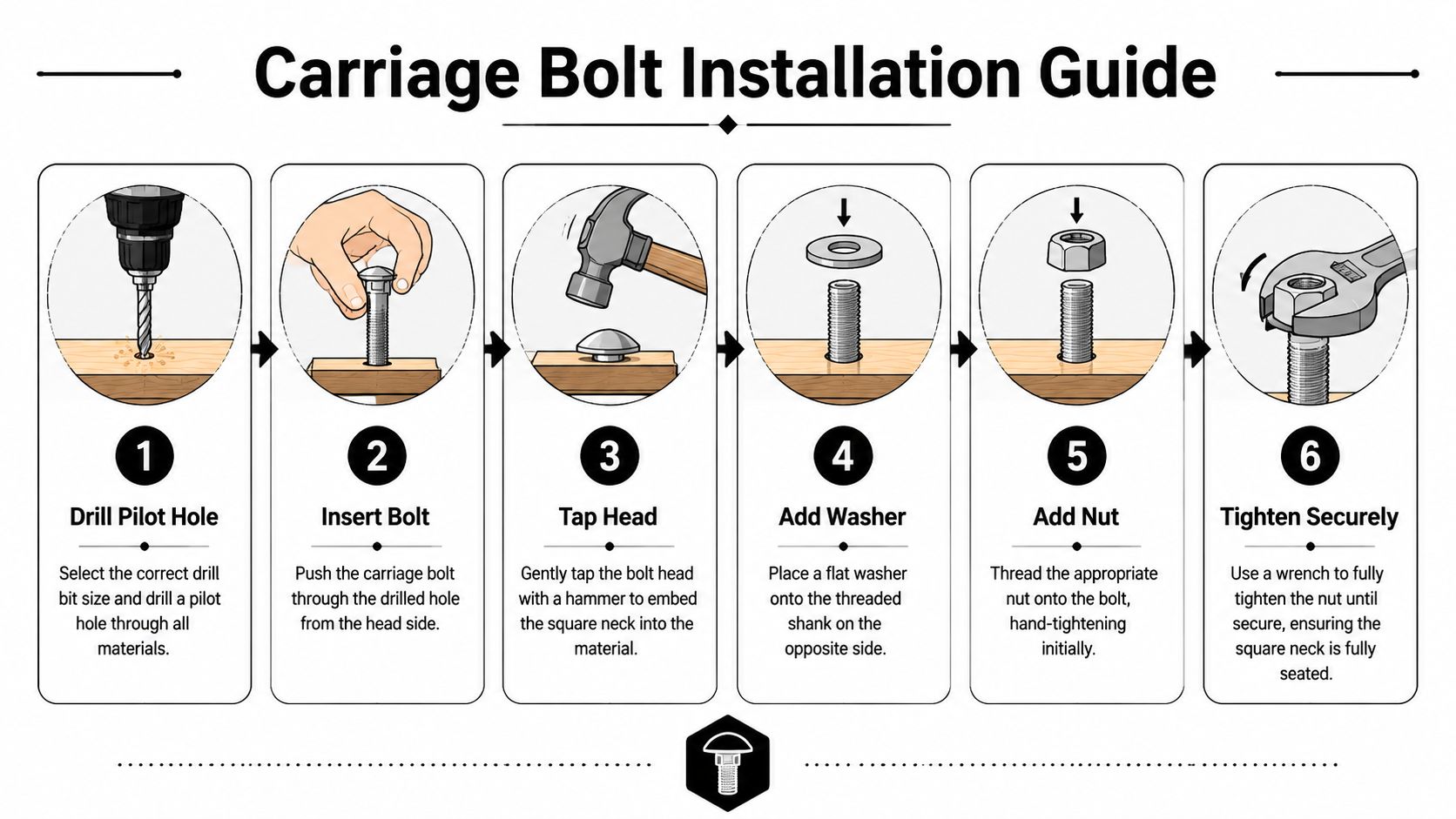
Start with the visual guide below, then use the steps that follow when you're at the bench or on site.
Drill, insert, and seat the bolt
- Mark and clamp the joint. Keep the pieces from shifting before you drill.
- Drill a straight hole through both members. The goal is a clean hole that matches the bolt properly, not a loose oversized opening.
- Insert the carriage bolt from the finished side. Put the domed head where you want the cleaner appearance.
- Tap the head gently with a hammer. You're seating the square neck into the wood, not driving a spike.
That seating step matters. If the neck doesn't bite, the bolt may spin when you try to tighten the nut.
Standard carriage bolts are typically manufactured to ASTM A307 and provide a minimum tensile strength of 60,000 psi, according to Marsh Fasteners' carriage bolt overview. For most residential deck and fence post-to-beam connections, that's adequate for the shear loads these bolts commonly handle.
Add the washer and tighten correctly
Once the bolt is seated, finish the hardware stack in order:
- Place a flat washer on the threaded end
- Thread on the nut by hand first
- Tighten with a wrench until snug
- Finish with a controlled final turn
The feel matters more than brute force. Tighten until the joint closes firmly and the washer is seated flat, then give it a modest final turn. If the washer starts burying into the wood or the fibres begin to crush noticeably, you've gone too far.
Before fastening into masonry nearby, or when combining wood framing with concrete-supported details, it helps to understand when wedge anchors in concrete are the better hardware choice for the material you're fixing into.
Here's a useful cross-trade comparison. If your project also includes exterior cladding details, this expert guide for siding installers is worth reading because it shows the same principle that applies here: fastener choice and installation method both affect long-term performance.
A quick visual can help if you're teaching someone else on site or double-checking your sequence before assembly:
Carriage Bolts in Deck and Fence Construction
Carriage bolts make the most sense where you want a through-bolted wood connection that looks clean on one side and tightens reliably from the other. That shows up all over deck and fence work.
Where they work well
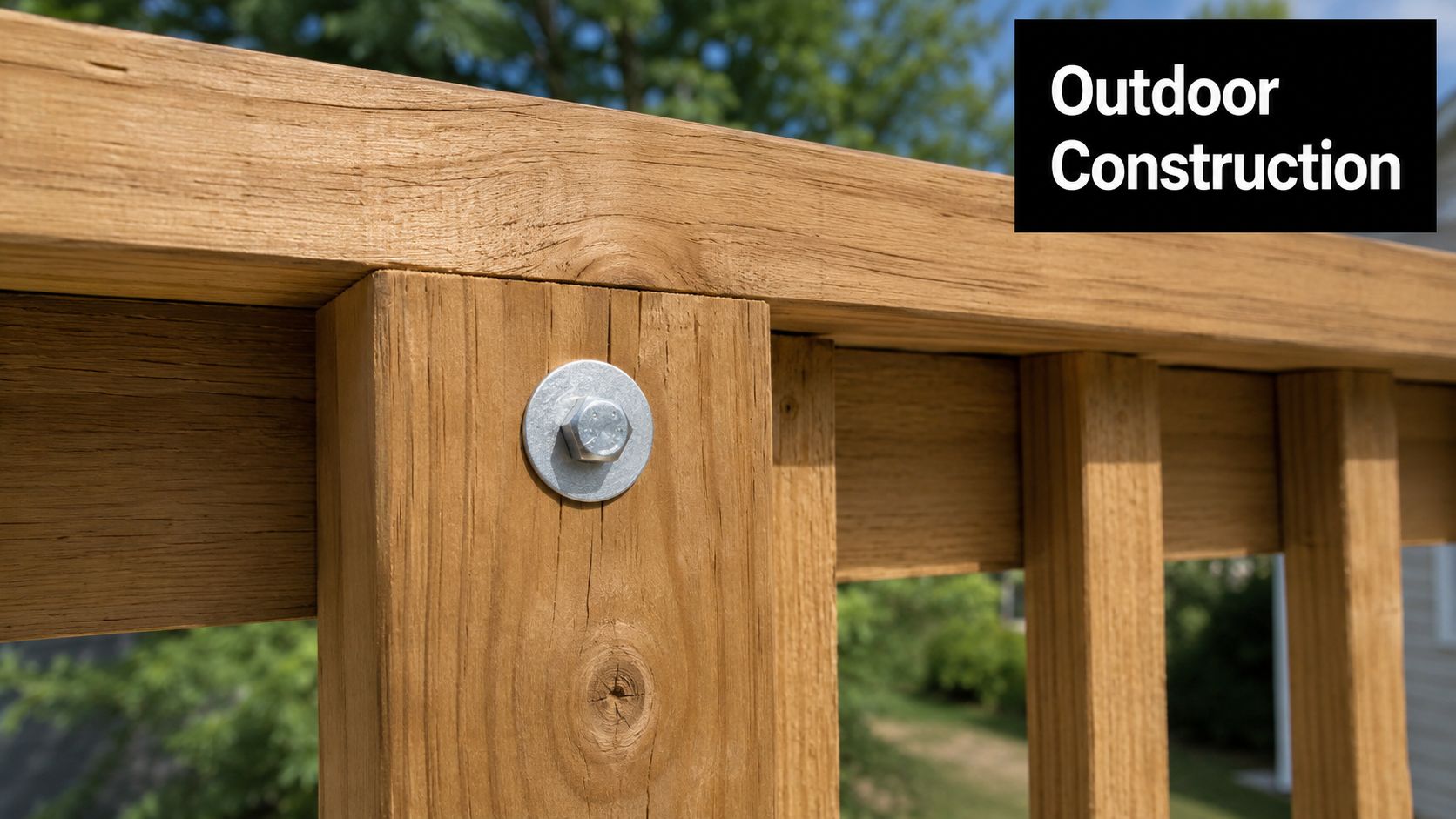
On decks, I commonly see carriage bolts used in visible railing and post-related assemblies where the rounded head gives a neater finished look. On fences, they're a strong choice for gate frames, brace connections, and heavier wood joints where screws alone may not give the same clamped connection.
Typical examples include:
- Gate construction: Through-bolting key corners and braces helps fight sag over time.
- Fence post and rail details: A properly selected bolt can create a durable, serviceable joint.
- Visible deck wood connections: The domed head leaves a more polished face than a hex-head alternative.
One practical benefit is consistency. Once you drill the holes accurately and use the right washer on the nut side, the finished hardware looks intentional instead of improvised.
Product fit matters
This is also where product availability matters. XTREME EDEALS INC. carries carriage bolts, flat washers, and related deck and fencing hardware, including products suited to common outdoor wood projects and Decorex Hardware items for matching the connection to the build.
If you're building beyond a basic fence line, layout matters too. For readers planning pet-safe enclosures or durable yard partitions, this guide to Modern Yard Landscapes pet areas gives useful context on how outdoor structures get used in real life, which often influences hardware choice as much as appearance does.
Use carriage bolts where you want a visible wood connection to stay tight, look clean, and remain serviceable later.
That doesn't mean every deck connection should use them. Some municipalities and some structural details call for different hardware. But in the right place, they're still one of the most practical fastening choices in outdoor woodwork.
Troubleshooting Common Installation Problems
Even well-planned installs can go sideways. Most carriage bolt problems come from hole fit, bolt length, corrosion mismatch, or over-tightening.
Quick fixes for common issues
The bolt spins when tightening
The hole is often too large, or the square neck never seated properly. Remove the nut, tap the head to try seating the neck, and if that fails, move to a properly sized hole and a new bolt if the neck has been rounded off.The bolt is too short
If there aren't enough threads for the washer and nut to seat fully, don't force it. Replace it with the correct length. Skipping the washer to “make it fit” is the wrong fix.The nut is crushing into the wood
You're either missing a washer or overtightening the joint. Back it off, add the proper flat washer, and retighten only until the assembly is firm.
Repair and reuse questions
Can you reuse carriage bolts?
Sometimes, but inspect the threads, nut fit, and corrosion first. If the hardware came out of a weathered exterior assembly, replacement is often the safer call.How do you deal with a rusted nut?
Penetrating oil and patience help. If the nut is seized badly, cutting it off usually causes less damage than fighting it and twisting the bolt in the wood.Carriage bolt or lag screw?
Use a carriage bolt when you can through-bolt the assembly and want a clamped connection. Use a lag screw where only one side is accessible and the design permits it.
If the joint feels wrong during tightening, stop and inspect it. Fasteners usually give warning before they fail. Wood fibres crushing, spinning bolts, and uneven washer seating are all signals to correct the setup.
If you're gathering hardware for a deck, fence, gate, or repair job, XTREME EDEALS INC. offers carriage bolts, flat washers, anchors, and related outdoor building hardware in one catalogue, which makes it easier to match the fastener to the material and finish the job right the first time.