
The most popular advice on black stair spindles starts with a photo. Pick the profile you like, copy the spacing in the picture, and order enough to fill the run. That's backwards. A tidy run can still fail on handrail height, a wide triangular opening at the tread, or a rail that flexes under load. I would treat this as a measuring project first and a styling choice second, because colour is easy to change and a failed inspection isn't.
Spacing and Height Limits Your Spindles Must Meet
Name the jurisdiction and the adopted code edition before you touch a tape. California and Ontario do not use the same figures, and mixing them produces a layout that satisfies neither. Inspectors measure the finished opening, not the centre-to-centre spacing on your sketch. Shoes, brackets, trim and the rake of the stair all change the clear gap.
Under the California residential building code, spindles are part of a guard that must stop a 4-inch-diameter sphere from passing through general openings. Where the guard top also works as a handrail in a dwelling unit, that handrail sits 34 to 38 inches above the tread nosing. Other qualifying guards generally need 42 inches. Design the openings to the 4-inch sphere, then confirm the edition your city has adopted.
Code Dimensions for Black Stair Spindles
| Requirement | California reference | Ontario reference | What it means for spindles |
|---|---|---|---|
| Maximum opening between spindles | 4-inch sphere must not pass | 100 mm maximum clear spacing | Set spacing so no gap passes the limit |
| Triangular tread, riser and bottom rail opening | 6-inch sphere limit | Governed by the 100 mm clear opening check | Check the whole assembly, not only repeating gaps |
| Handrail height above stair nosing | 34 to 38 inches | Set with the 1,070 mm guard reference for the run | Sets spindle length and handrail position |
| Guard height | 42 inches minimum in general, 34 to 38 inches where it doubles as a handrail in a dwelling | 1,070 mm | Sets the top of the spindle run |
| Minimum spindle size | Sized to pass the guard load test | 32 mm by 32 mm | Rules out thin decorative stock |
| Handrail sides | One side for flights of four or more risers | One side under 1,100 mm wide, both sides at 1,100 mm or wider in a dwelling | Decide handrail sides before ordering parts |
Ontario readers get their numbers from a different document. The Ontario Building Code Compendium supplementary standard for guards sets the interior guard at 1,070 mm high, with 100 mm maximum clear spacing and a minimum picket size of 32 mm by 32 mm. That minimum size matters when you shop. A slim decorative spindle that looks right online may already be too small for the standard, before spacing even enters the discussion.
A Worked Spacing Example
Take a 2,400 mm run between newel posts in Ontario and 32 mm square spindles. You need at least 18 spindles, because (2,400 minus 100) divided by 132 is about 17.4. Eighteen spindles leave 19 clear gaps of roughly 96 mm each, inside the limit with a small margin for cutting tolerance. Model your own run the same way using the baluster spacing code guide before you order, and include the gaps at each post.
I would run three checks before buying:
- Confirm the jurisdiction and code edition with your building department.
- Measure heights from tread nosings, vertically, never from the finished floor below.
- Work out the spindle count from the finished opening, then test the layout with physical gauges, including the triangular opening at each tread where the bottom rail meets the riser.
Wood, Metal and Composite Spindles Compared
Start with the room, not the catalogue. A traditional closed stair, a modern open rail and a damp coastal entry each punish a different material. Wood is forgiving on site and paints up warm, but every cut end is a wear point. Powder coated steel stays slim and stiff, yet one deep scratch opens a path for rust. Your choice of black stair spindles should follow those trade offs, not the other way round.
The photo below shows the mixing approach many homeowners land on, alternating a decorative profile with a plain bar.
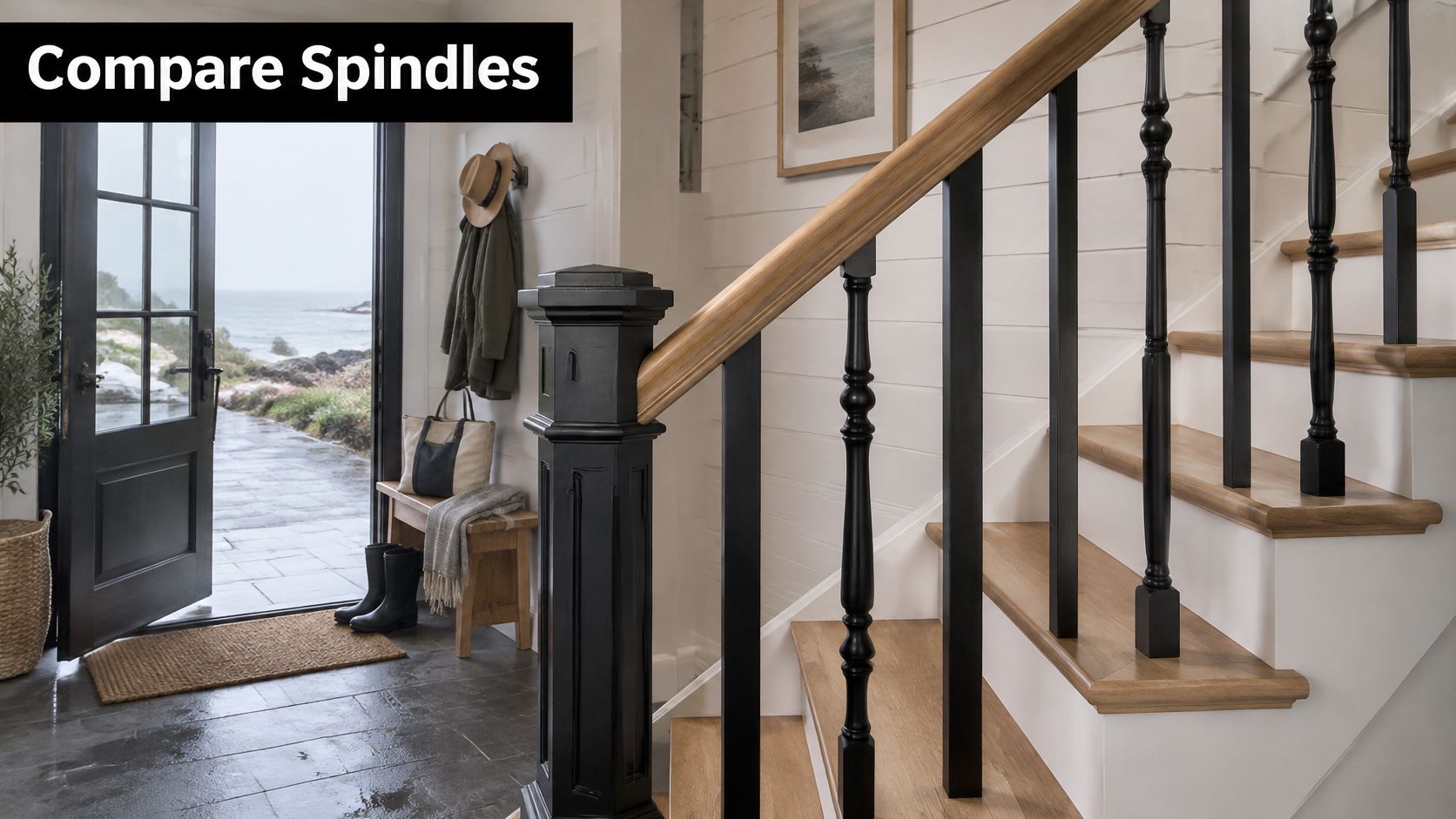
Black Spindle Materials Compared
| Material | Typical strength | Main limitation | Best fit |
|---|---|---|---|
| Wood painted or stained black | Warm look, easy to cut and trim on site | Paint and stain wear at ends and cuts, needs refinishing | Traditional stairs and DIY installs |
| Steel or iron, black powder coated | Slim profiles with high strength for code spacing | Cuts and scratches expose bare steel to rust | Modern and classic open rails, wrought iron looks |
| Aluminum, black finish | Light and does not rust | Less stiff, check the load rating | Lightweight retrofits and coastal homes |
| Composite or PVC, black | Low upkeep and steady colour | Lower stiffness, confirm load capacity before structural runs | Humid rooms and wet locations |
The Load Test Behind the Choice
Looks don't hold a guard together. The San Diego County guidance citing the California Building Code requires intermediate rails, balusters and panel fillers to resist a 50-pound horizontal load over 1 square foot, openings included, and residential handrails to withstand at least 200 pounds. A spindle that feels solid in your hand can still fail as part of a flimsy assembly. The spindle section, fastener type, depth of each end's anchorage, stiffness of both rails, and whether your newel posts transfer force into the stair framing determine what carries the load.
The black finish protects the metal. It never adds strength.
Anchor every spindle into sound top and bottom rails. Don't rely on trim, shoe moulding or adhesive alone to hold a guard together, because those parts are there to finish the joint, not carry it. If you're retrofitting into old pine rails chewed up by previous screws, replace the rail or add proper blocking. A new spindle in a stripped hole is decoration.
I would pick the material whose upkeep you will do. Steel suits most interiors if you seal cuts promptly. Aluminum earns its place near salt air. Wood suits a traditional stair where you can cut and fit on site. Composite belongs in humid rooms where a structural guard is handled by the framing around it. Whichever you choose, confirm the assembly against the load figures before the finish colour gets a vote.
Design Ideas for Black Spindle Stairs
A modern stair is the easiest to picture. Slim square or round black steel spindles run at a tight, even rhythm under a flat wood or metal cap rail, and the whole flight reads as one clean line. The view through the stair stays open, which suits a small entry. Compare the three looks side by side before you commit to a pattern.
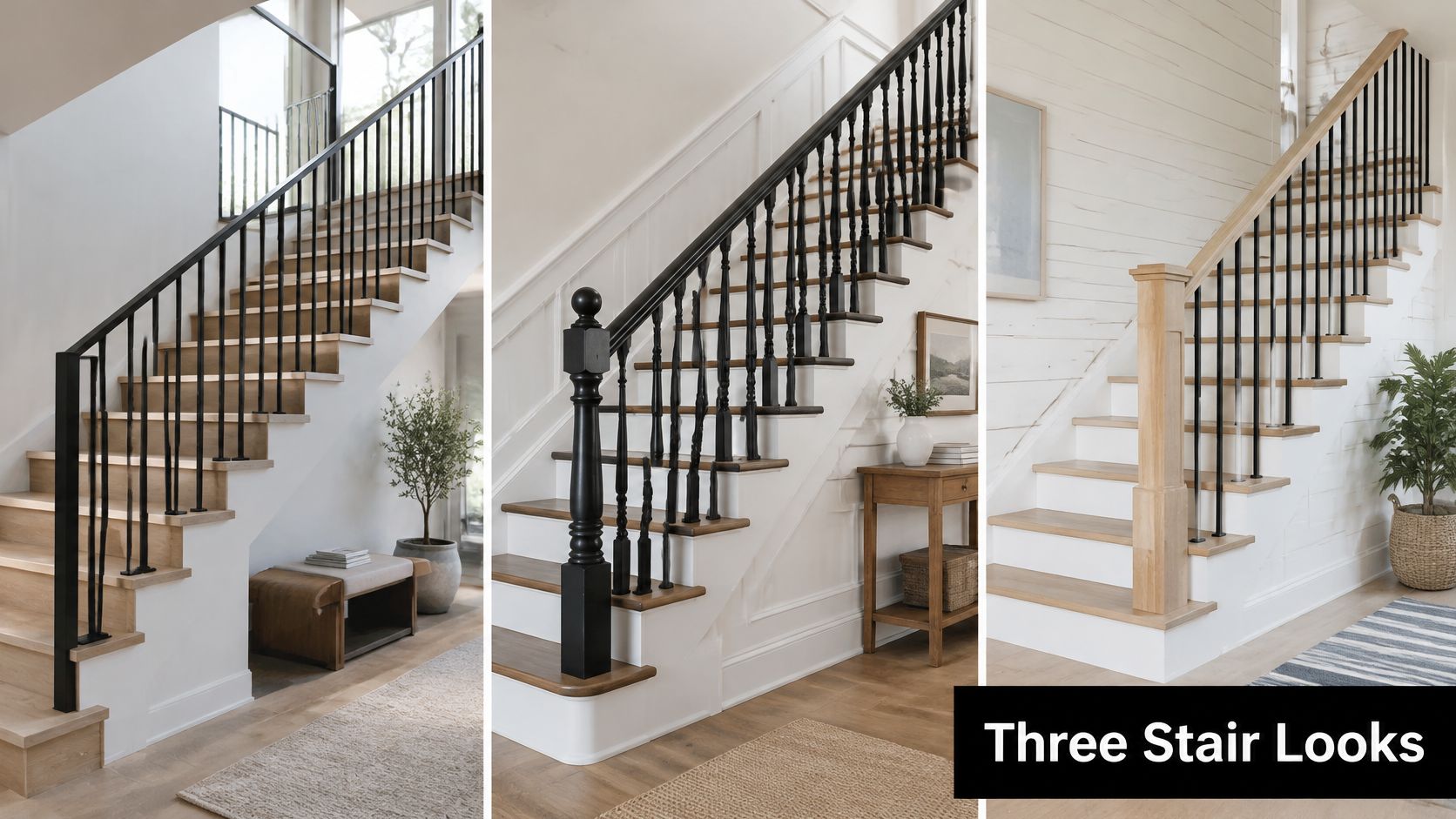
A classic stair works differently. Black turned or round spindles sit under a dark stained handrail with painted newel posts, so the black reads as a deliberate accent against white risers. Nothing about it chases a trend. Say a hallway already has black door hardware and a black framed mirror. Black stair spindles in a turned profile tie those pieces together without repainting a thing, and the warmth of the stained rail keeps the run from feeling cold.
The farmhouse version pairs black wrought iron with a natural wood rail and light walls. Contrast does the work there. Keep the spindle rhythm consistent across the whole flight, match the black tone to your newel caps and hardware, and save any pattern change for the landing. Homeowners who like that contrast outdoors often carry it through with black aluminum deck railing so the entry and the deck speak the same language.
Lighting decides whether a dark run looks sharp or murky. A light wall behind the spindles and warm light from above the stair keep each profile readable. This short video shows how different profiles change the feel of a flight before you spend anything.
Check every look against your spacing limit first. A pattern with a wide decorative feature every third spindle can push the clear gap at its narrow waist or its widest belly past the limit. Sketch the pattern at full scale on cardboard, tape it to the stair, and measure the largest opening the pattern creates. If the picture doesn't fit the gauge, the picture loses.
Matte Black, Powder Coat and Upkeep
Two terms get tangled constantly. Matte black describes a sheen level. It tells you how much light the surface reflects and nothing about durability. Powder coat describes a process, where dry powder is applied to metal and baked into a hard protective layer at the factory. A powder coat can be matte, satin or gloss. A matte finish can be powder coat, spray paint or a cheap lacquer. When a listing says only matte black, ask what's underneath.
After a year of hands, school bags and vacuum cleaners, the difference shows. Matte paint hides fingerprints better than gloss, which is why people choose it, but it scuffs at the shoe line and burnishes shiny where palms slide along it. Touch ups on matte paint flash visibly if the sheen doesn't match. Powder coated steel or iron resists chipping far better and holds one consistent colour along the whole run, because every spindle was coated in the same batch under the same conditions.
Why Cut Ends Rust First
Here's the catch nobody mentions at checkout. Powder coat is applied before delivery, so every end you cut on site and every hole you drill arrives bare. Bare steel in a heated hallway may sit for years. The same bare edge near a coastal entry, a damp basement stair or a wet boot room starts rusting at the cut and creeps under the coating. Wood has its own version of the problem. End grain drinks moisture faster than face grain, so unsealed spindle ends swell, crack the paint film and let more water in.
The Touch Up Routine
Do this once, at installation, and you avoid most finish failures.
- Clean the cut: Wipe the bare metal with degreaser on a lint free cloth and let it dry fully, because primer won't bond to cutting oil or metal dust.
- Prime the bare spot: Brush on a rust inhibiting primer so it laps slightly onto the sound coating around the cut.
- Match the topcoat: Apply black touch up paint, ideally from the same product line as the spindles, in two thin coats rather than one heavy blob.
- Seal before fastening: Coat the inside of drilled holes and let them cure before screws go in, so the fastener doesn't scrape wet paint off the very surface you're protecting.
The same sequence works beyond stairs. If you've got other black metalwork to revive, the prep and priming logic in this guide on how to repaint a metal gate from Tony Painting transfers directly, since gates and spindles fail at edges and fastener holes for identical reasons. Buy the primer and touch up paint with the spindles, not after the first rust spot appears. Colour batches drift, and a near black repair on a true black run stands out under hallway lighting.
Field habit: Photograph the product label and batch code before you throw the packaging away. Future touch ups get much easier.
Yearly Upkeep That Takes an Hour
Clean powder coated and painted spindles with mild soap and water on a soft cloth, then dry them. Skip abrasive pads and solvent cleaners, which dull matte finishes unevenly. Twice a year, inspect spindle ends, bottom shoes and fastener heads for chips, rust blooms and loose fixings. Those three spots collect moisture and take the knocks, so they're where failure starts.
Touch up chips within weeks, while the repair is still small. Reseal black painted wood every two to three years in a busy home, sooner at a humid entry. Tighten a loose shoe screw once. If it loosens again, the hole is stripped and needs a proper repair, not a longer screw driven into dust.
Stop using the stair as a guard and call a qualified installer if a spindle moves when pushed, a rail shifts in your hand, or a gap has grown past your code limit. Those aren't cosmetic faults. Post a simple schedule where you'll see it. Clean in spring, inspect in autumn, touch up as needed. Black stair spindles hold their colour for years when small damage gets sealed before water finds the steel.
DIY or Professional Installation Compared
The deciding question isn't confidence. It's whether you can measure, model and verify the finished openings yourself. DIY suits a straight, single flight stair with solid framing, a simple wood or painted metal spindle, and an owner who measures carefully and owns a gauge or a ball of the right diameter. If your stair turns, your rails are spongy, or your permit office wants drawings, the calculation changes.
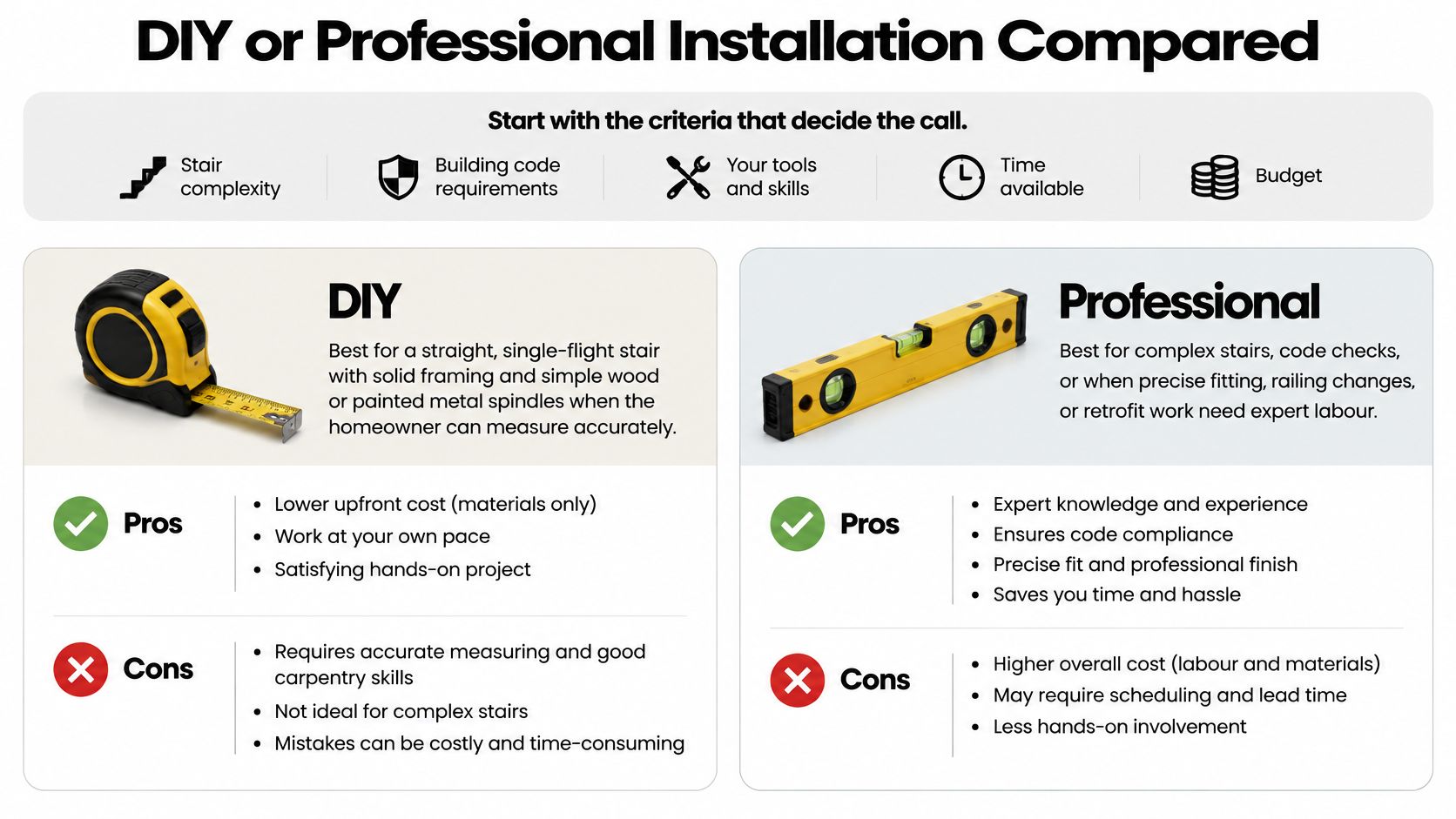
Where Each Route Wins
- DIY, lower cost: You save the labour bill and control the schedule, which suits a simple swap where rails and posts stay put.
- DIY, hidden risk: Opening and anchorage mistakes stay invisible until an inspector, a home buyer or a leaning teenager finds them.
- Professional, code knowledge: A good installer knows which code edition your municipality enforces and carries insurance if something goes wrong.
- Professional, higher price: You're paying for layout time and verification, not just screws and cuts, so quotes look steep next to the parts bill.
Hire out curved and winder stairs, rails that must fix into unknown framing, and any stair serving a rental or workplace. Those jobs combine awkward geometry with real liability. The same logic applies when spindle work is one piece of a bigger renovation. Homeowners coordinating a full lower level project through professional basement finishing services from Utah Basement Finishing, for example, usually fold the stair guard into the permitted scope rather than treating it as a weekend side job, because one inspection then covers the whole assembly.
Whatever route you take, demand the same paper trail. A proper quote names the fasteners, shows a measured drawing or model of the finished opening, and includes a gauge check at the end. If a quote lists only a spindle count and a day rate, ask what's missing. For DIY work, write those three items down for yourself before you cut anything.
If you can't verify the opening limit and the handrail height with your own tape and gauge, hire the work out.
That rule sounds blunt, but it's cheaper than rebuilding a finished run. Black stair spindles are a satisfying DIY upgrade on the right stair. On the wrong stair, professional layout is the bargain.
How to Install or Retrofit Black Spindles
A tidy spindle run can still fail inspection. Handrail height, triangular openings and the guard's connection to the framing all need to work, so measure and model the assembly before choosing where to cut. Keep a usable handrail throughout a retrofit. An open stair without one creates a fall risk, especially when someone is carrying items.
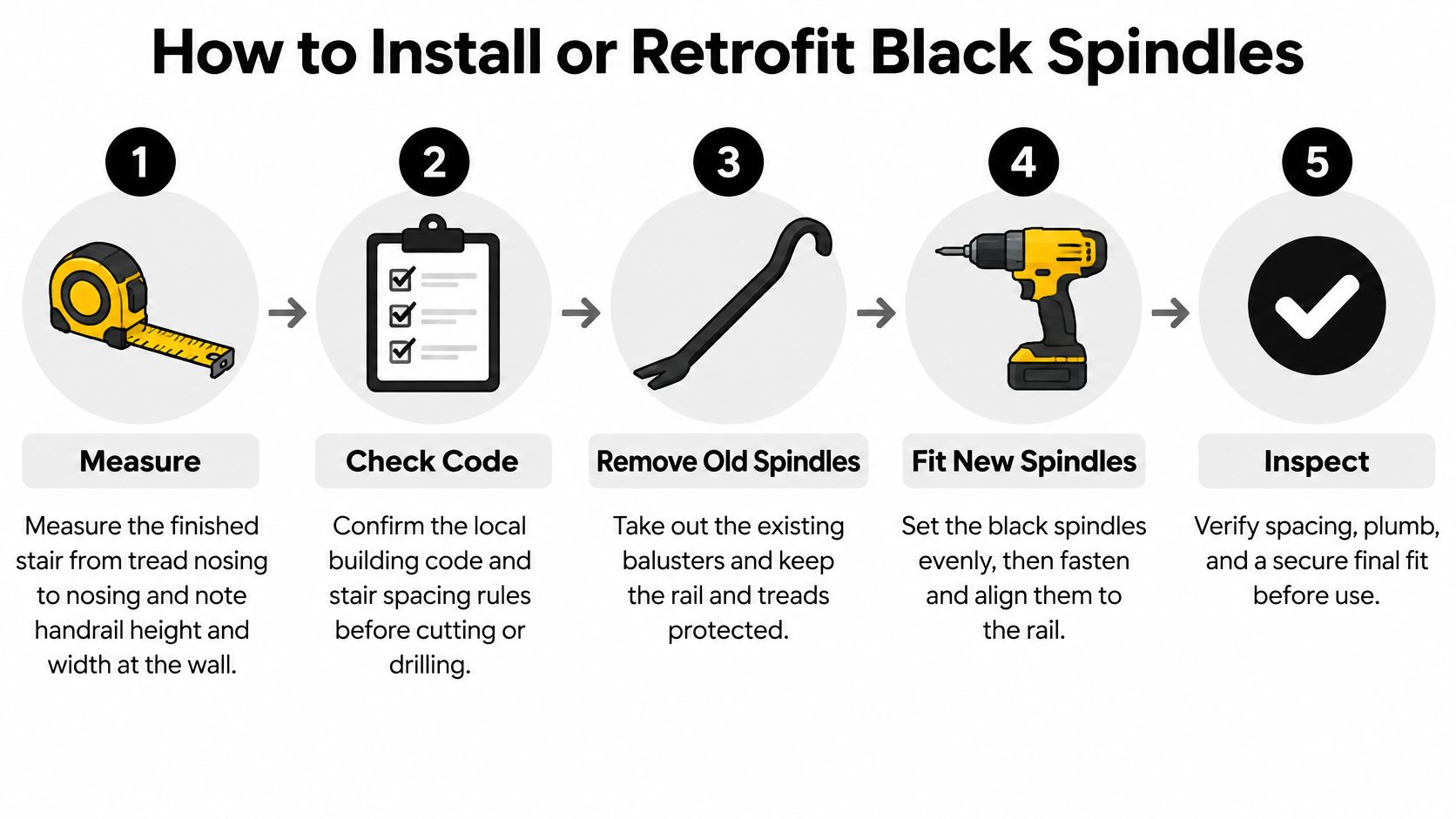
The Build Sequence
- Measure the finished stair: Record nosing-to-nosing dimensions, existing handrail height and stair width at the wall. Use finished surfaces, not framing, to determine spindle lengths.
- Confirm the rules: Check the applicable local code, guard height and handrail requirements before cutting. A layout based on an older permit may not meet current requirements.
- Model the assembly: Draw the nosing line, bottom rail, spindle profile and handrail at full scale or in a layout app. Mark the spindle count and check every opening, including those beside the posts.
- Cut and seal: Cut spindles to the stair rake, then seal cut and drilled ends using the touch-up method described in the upkeep section. Dry-fit each spindle before fastening.
- Fix rails to structure: Anchor top and bottom rails to framing or solid posts, not trim alone. The rails carry the load collected by the spindles, so a weak connection can compromise the guard.
- Fasten each spindle: Use the specified fastener at both rails, then push each spindle sideways by hand. Movement can become a rattle or a loose guard.
- Gauge every opening: Check each repeated gap and every triangular opening at the treads. No gauge should pass through an opening.
If parts arrive without instructions, check the manufacturer's fastener recommendations for your rail profile before drilling. The balusters installation guide can also help you identify the installation details to confirm with the manufacturer.
The Handrail Is a Separate Obligation
Spindles fill a guard; they do not replace a graspable handrail. Under Ontario's Building Code handrail table, a stair within a dwelling unit narrower than 1,100 mm needs a handrail on one side. A stair 1,100 mm wide or wider needs handrails on both sides. Outside a dwelling unit, requirements are stricter, including two handrails on wide stairs and narrower curved stairs. Measure finished width, including new trim and wall finishes, before settling on a one-rail layout.
During a retrofit, replace spindles in sections rather than removing them across the full flight. Keep temporary protection on any open side, and do not leave an unfinished guard overnight in a home with children. With the rails exposed, check for rot, stripped holes and soft spots. Repairing those problems before refitting spindles avoids fastening into unsound material.
Finish the work only after checking three things: no opening passes its gauge, every spindle holds firm under a lateral push, and the handrail stays within its required height band from the first nosing to the last. Black stair spindles look orderly when the layout fits the stair, not when gaps are forced or concealed with shims.
Order Black Spindles and Hardware for Your Project
Ordering is the last step, not the first. By now you should have a spindle count from your finished openings, a rail height that fits your code table, and a fastener plan. Only then does a parts list mean anything. Buying a bulk pack because the price looks good, then discovering you're three spindles short of the spacing limit, is how projects stall for a month.
Here's a concrete example from our own catalogue. Our Iron Stair Balusters are 5/8 inch round, 44 inches long, in a classic hollow profile with a black powder coated finish, sold as a 30 piece set at $125.99 CAD. Hollow iron cuts more easily than solid bar and keeps shipping weight sane, which matters on a full flight. The matching 10 pack of satin black screw down flat shoes for 5/8 inch round balusters, model DH-55, costs $28.79 CAD. Those shoes cover the bottom attachment point your load path depends on, so they aren't a cosmetic extra.
Your Order Checklist
- Confirm the count: Recalculate spindle quantity from the finished opening, then add one or two spares for cutting mistakes.
- Match the hardware: Order shoes or brackets sized to your exact spindle profile for both rails, plus the specified fasteners.
- Buy the finish kit: Add rust inhibiting primer and black touch up paint to the same order so cut ends get sealed on install day.
- Check the length: Verify that spindle length and your rail height still land inside the height band from your code check before paying.
- Keep the paperwork: Save receipts and product data sheets in one folder for your inspector or a future buyer.
Count shoes carefully. A 30 spindle flight with shoes top and bottom needs 60, and running short mid install tempts people to skip the top row. The exposed joint then collects dust, shows the fastener and lets moisture sit on bare cut edges. Order the dull parts generously. They're cheap. Return trips and mismatched black finishes aren't.
One more check before the order goes in. Measure your existing spindle profile at its widest and narrowest points if you're matching an older run, because nominal sizes drift between product lines. A 5/8 inch round spindle needs a 5/8 inch round shoe, and close enough in hardware means a wobble you will feel every day. Black stair spindles reward the buyer who measures twice. Order the matched set once, seal the cuts, gauge the openings, and the stair is finished properly.
Ready to order with your measurements in hand? XTREME EDEALS INC. stocks the black powder coated iron balusters, satin black shoes and railing hardware covered above, so your spindles, fasteners and finishing parts arrive as one matched set. Browse the baluster range, confirm your count against your layout, and get your stair project moving today.