
You've got a gate that drags in spring mud, freezes after a January chinook turns to slush, or sags just enough that the latch only catches if you shoulder it closed. That's not a latch problem. It's usually a hinge problem, and on Canadian farms and acreages, the hinge choice decides whether the gate feels solid for years or turns into a recurring repair.
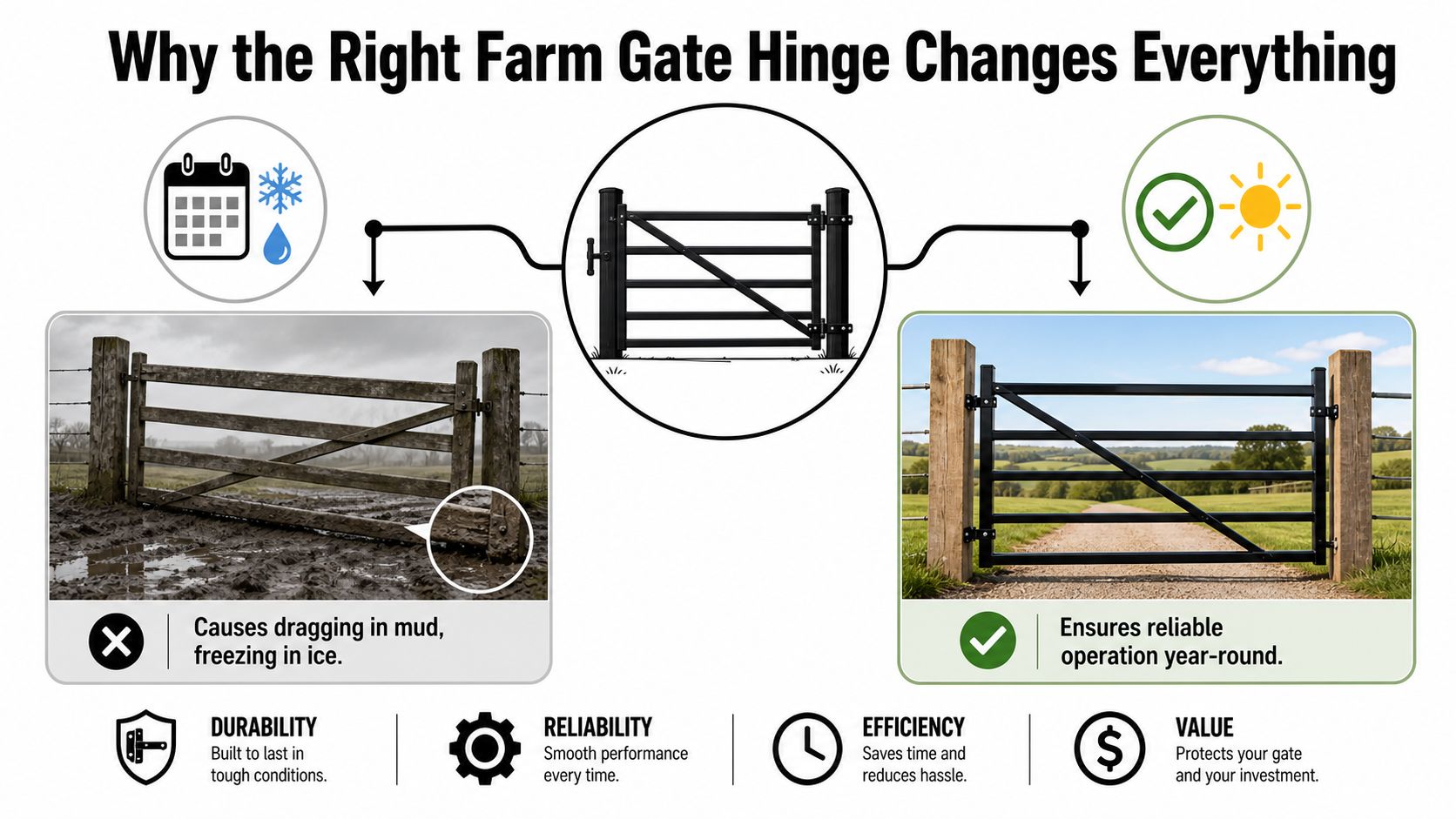
Why the Right Farm Gate Hinge Changes Everything
A gate that was fine in October can start rubbing the post by the first hard freeze. Then spring thaw softens the ground, the post shifts a touch, and suddenly the bottom rail is dragging while the top corner swings wide enough to miss the latch. That's the daily reality I see on farms and acreages, and it's why farm gate hinges are never just small hardware.
The hinge pair is the part that holds the whole geometry together. If the hinge line stays true, the latch works, the post takes load properly, and the gate swings without a fight. If the hinge pair is undersized or badly installed, the whole system starts to drift, and every season makes the problem worse.
Practical rule: Buy the hinge pair for the gate you have, not the gate you wish you had. A light hinge on a heavy gate always loses.
Canadian conditions make that rule even more important. Mud, freeze-thaw cycles, road salt on access lanes, and long wet stretches all punish weak hardware. In real use, the hinge is doing more than pivoting the gate. It is carrying weight, resisting twist, and keeping the latch line aligned when posts move a little or animals lean on the panel.
| Hinge Type Quick Reference | Best For | Mounting |
|---|---|---|
| Strap | Wood pasture gates and light utility gates | Bolt-on or screw-on to the gate frame |
| T-hinge | Narrow rails and decorative farm entrances | Surface mounted to wood members |
| Butt | Steel and aluminium gates | Mortised or attached to mating leaves |
| Pivot or pintle | Heavy tube gates and corral panels | Post-mounted, load-bearing pivot system |
| Offset | Tight-clearance posts and awkward openings | Offset mounting to improve swing clearance |
How Farm Gate Hinges Actually Work
A farm gate hinge is a pivot point built for outdoor abuse, not casual movement. It carries wind load, gate weight, livestock pressure, and the slow shifting that happens around posts and footings.
The practical rule is simple, the combined load capacity of the hinge pair should exceed the gate's weight. Heavier gates belong in heavy-duty, weld-on, or pintle hinge classes, while light strap or butt hinges suit lighter openings. That paired approach matters because the load is shared across the hinge line, not safely carried by one piece of hardware.
The terms that matter at the yard
A few words show up again and again in product listings, and they're worth knowing before you order anything:
- Strap, the long leaf that spreads load across a wider surface.
- Pintle, the post-side pivot that carries heavy vertical load.
- Knuckle, the barrel or wrapped section where the pin rotates.
- Pin, the shaft that allows the swing.
- Gate gap, the clearance between gate and post.
- Post face, the flat mounting surface or bracket area.
A gate that is too heavy for the hinge pair fails in a predictable order. Sagging starts first, then binding follows, then the latch line goes out of square and the gate stops closing cleanly. That is why I treat the pair as one load-bearing system and check both the gate mass and the opening geometry before I sell or install anything.
A gate that hangs level on day one is easier to keep level than one you try to “fix later” with latch force.
Round posts, bracketed mounting, welded plates, and bolt-on hardware all change how the hinge carries stress. The hinge still does the same job, though. It creates a controlled swing point and keeps the gate from dropping onto the post face or twisting itself out of alignment.
The Five Main Farm Gate Hinge Types and When to Use Each
The right hinge type comes down to gate material, gate weight, and how much abuse the opening takes. A wood pasture gate and a heavy corral entrance do not belong in the same hardware category, even if they look similar from a distance.
| Farm Gate Hinge Types Compared | Gate Weight Range | Gate Material | Mounting |
|---|---|---|---|
| Strap | Light to moderate | Wood | Surface mounted |
| T-hinge | Light to moderate | Wood, light farm entrances | Surface mounted |
| Butt | Light to moderate | Steel or aluminium | Mating leaves, aligned fit |
| Pivot or pintle | Heavy | Tube, steel, corral panels | Post-mounted pivot |
| Offset | Varies by opening clearance | Wood, metal, mixed builds | Offset bracket or custom fit |
Strap and T-hinges
Strap hinges suit wood gates because the long leaf spreads load across the timber. They're common on utility gates, pasture gates, and farm entrances where the gate isn't especially heavy. T-hinges show up on narrower gates or decorative farm access points, especially where a cleaner look matters and the frame is built to accept surface mounting.
Butt hinges
Butt hinges fit steel or aluminium gates when the leaves need a compact, aligned joint. They're not the first choice for very heavy livestock gates, but they work well where the frame is light, square, and accurately fabricated. If the frame is out of true, a butt hinge usually shows the problem quickly.
Pivot and pintle hinges
These are the workhorses for heavy tube gates and corral panels. They handle vertical load better because the pivot arrangement carries weight directly, which is why they're common on hard-used openings. If the gate is wide, heavy, or gets bumped by equipment, I start here.
Offset hinges
Offset hinges solve clearance problems. If the gate needs extra swing room because the post sits close to a wall, corner, or another gate, offset hardware can prevent binding before it starts. They're the right answer when the opening is awkward, not when the gate is oversized.
Materials and Coatings That Survive Canadian Conditions
A good hinge can still fail early if the coating choice is wrong for the environment. In Canada, that means looking at road salt near driveways, coastal moisture in British Columbia and Atlantic Canada, and damp freeze-thaw conditions that keep hardware wet longer than you'd like.
Hot-dip galvanised steel is the practical starting point for many farm gates because the zinc layer gives solid corrosion protection for outdoor use. Painted or powder-coated steel can look neat and work well in milder spots, but once the coating chips, moisture gets to the base steel fast. Stainless steel costs more up front, but it's the right conversation when corrosion resistance matters more than initial price.
The life-cycle view matters here. A hinge that looks cheaper on day one can become the expensive one if it seizes, rusts, or needs early replacement. If you're sorting out a build that needs matching fasteners, I'd also keep an eye on stainless hardware options such as the fastener range at XTREME EDEALS' stainless steel fasteners, because the hinge is only as good as the fixings holding it in place.
One industry guide places typical heavy-duty hinge pairs in the 300 to 800 pounds per pair range, with weld-on hinges at the high end of 500 to 800 pounds and adjustable strap hinges at 300 to 400 pounds per pair. That kind of rating range is useful because it forces the buying decision back to load, not appearance.
If you're comparing finishes for a retrofit or custom build, powder coating Kent services are worth reviewing as a finish option for steel components where colour consistency and weather resistance both matter. It's the finish system, not just the steel, that decides how long the hardware keeps moving freely.
Sizing Your Hinge Pair to Gate Weight and Geometry
Sizing starts with the gate itself, not the hinge brochure. Measure the width, the height, and then make a realistic estimate of the gate's weight based on material, frame thickness, infill, and any extra bracing. Once you've got that, choose a pair of hinges whose combined rating exceeds the gate's weight.
The lower hinge often carries more of the practical abuse, but the pair still needs to work together. As gate span and mass increase, the bending moment at the hinge line rises, so under-rated hinges accelerate sagging, binding, and latch misalignment, which is why the hinge pair must be treated as the load-bearing system. That's the part a lot of cheaper guides skip.
A simple weight-based rule
- Light utility gates under 100 pounds, use light-duty hardware only if the gate is short, narrow, and well supported.
- Standard pasture gates between 100 and 300 pounds, choose a hinge pair with comfortable excess capacity, not a bare minimum fit.
- Heavy tube or metal gates between 300 and 800 pounds, move into heavy-duty, weld-on, or pintle hardware.
- Equipment-yard gates above 800 pounds, treat the opening as a structural job and use weld-on pintle-style hardware with proper post support.
Adjustable hinges earn their price on uneven frames or gates that are likely to move over time. They give you room to re-level the gate without tearing out the whole install. If the post settles a little or the gate twists under regular use, that adjustability can save a re-build.
Buy to the next sensible load class up. If the gate is close to the top of a hinge rating, pick the stronger pair and stop the sag before it starts.
Before ordering, record the gate gap, the post face width, and the swing clearance behind the opening. Those measurements tell you whether a standard strap, a pintle, or an offset hinge will fit without rubbing.
Installing Farm Gate Hinges the Right Way
A gate can have the right hinge pair and still drag or bind if the install is out by a few millimetres. I've seen new farm gates seize up because the post was not plumb, and I've seen solid hardware start squeaking because someone cranked the fasteners down as if they were bolting on a trailer axle.
Start with the post and gate in the right position. Hang the bottom hinge first, set the gate plumb to the post, then use the top hinge to confirm the swing line before you tighten the hardware fully. Washers and spacers are not leftover parts. They let you fine-tune vertical position, keep the gate off the ground, and hold the latch line where it should be.
Latch hardware has to work with the hinge drop, not against it. A field-installation guide also notes a 50 mm bottom-hole offset when using a drop-latch kit, and that detail matters because the latch geometry and hinge position have to match the frame you are working with. If the holes, drop, and latch spacing do not line up, the gate can look close and still miss clean closure every time it is used hard.
Installation checklist that avoids most callbacks
- Check the post first. A leaning post will throw the whole gate out of line.
- Set bottom height early. Once the gate is hung, ground clearance is harder to recover than to preserve.
- Use washers and spacers deliberately. They help you tune swing and keep the gate from dragging.
- Tighten firm, not crushingly tight. Excess torque preloads the hardware and can create squeaks or drag.
- Cycle the gate by hand before walking away. If it does not swing freely now, it will not improve later.
Hardware compatibility matters just as much as hole spacing. For post base brackets, gate inserts, and other parts that need to match the hinge style and post connection, I'd point installers to XTREME EDEALS' gate hinge installation resources. The hinge, fastener, and post attachment all have to fit together, or the gate will show the weak point the first time it gets used hard.
Maintenance, Troubleshooting, and When to Upgrade
A farm gate usually fails in small ways first. The hinge starts to dry out, the fasteners ease off, the post settles, and the latch line drifts just enough that the gate no longer closes without a shove. On Canadian farms and acreages, that drift shows up faster after freeze-thaw cycles, spring mud, and wind loading on long openings, so the condition of the hinge pair is part of the life-cycle cost, not just the buy-in price.
What to check during routine care
- Lubricate moving parts. Dry pins and knuckles are where squeaks, wear, and stiff swing start. If you want a practical reference for the same basic habit on smaller hardware, find the best lubricant for door hinges and use that approach on farm hardware that lives in harsher conditions.
- Re-torque fasteners. Seasonal movement can loosen bolts enough to let the gate drift out of line.
- Inspect the pin and barrel area. Rust, scoring, or visible wobble means the hinge is wearing unevenly.
- Watch the latch line. If the latch no longer catches cleanly, the hinge line has probably shifted.
A dragging gate usually points to sag, settlement, or a hinge pair that is under-rated for the load. A squeaking hinge is often a lubrication or friction issue, but when the sound comes with resistance, alignment is usually part of the problem. If the latch misses by a little, the latch is rarely the only issue. The gate has probably dropped, or the post has moved.
When the gate frame starts twisting, the hinge is only part of the picture. At that point, hardware cannot fully cover for a structural problem, and a stronger hinge pair or a different support setup may cost less than repeated patching. A lean post, heavier livestock pressure, wider equipment access, or a spring-loaded contact point are all reasons to upgrade before the wear spreads. For gates that need a controlled return or added wheel support, the gate spring wheel guide is a useful place to compare how that hardware changes load distribution and swing behavior.
If a gate still sags after maintenance, treat that as a sizing or installation problem, not a sign to keep forcing it shut. The hinge pair should match the actual gate weight and geometry, with room to spare on both load and clearance, or the same failure pattern will come back.
Farm Gate Hinge FAQs and Sourcing in Canada
How do you match a hinge to gate weight? Start by estimating the gate's actual load, then pick a hinge pair whose combined rating clears that weight with room to spare. That paired rule matters more than a single advertised strength number, especially on long or heavily used farm openings.
Should you weld or bolt the hardware? Weld-on setups make sense on heavy steel gates and round-post assemblies that need maximum rigidity, while bolt-on or bracketed installs are better for retrofits and places where you don't want to modify the post permanently. The right choice depends on the gate material, the post shape, and how much adjustment you want later.
What about Canadian winter corrosion? Choose coating and base metal for the environment first, not for the showroom look. Galvanised, coated, and stainless options all have a role, but moisture and salt exposure decide which one pays back over the years.
Where should buyers source hardware that's in stock locally? Look for suppliers that carry Decorex Hardware and comparable lines such as Nuvo Iron, plus the matching latches, inserts, and fasteners needed to finish the job cleanly. XTREME EDEALS INC. carries those categories with CAD pricing and multi-pack options that work for DIY and contractor orders alike, which matters on a market scale where California alone had about 63,500 farms and roughly $59 billion in agricultural cash receipts in 2022 according to the USDA-linked state profile data cited in the background.
If you're comparing hardware, installation parts, and finish choices for an upcoming build, the quickest path is to order the hinge pair, the fasteners, and the matching gate components in one go. Visit XTREME EDEALS INC. to source the hardware that fits your gate, your post, and the way you use the opening.