
You've finished the deck, pergola, or fence, but one detail still looks unfinished: the 6×6 post base cover. The post is solid, the anchor is doing its job, and yet a galvanized standoff, exposed bolts, or a black metal plate is sitting in plain view at the bottom. Before you buy the first decorative sleeve that fits the search results, identify what hardware is already there, how the post is exposed to weather, and whether you need trim or a structural connection.
Why That Ugly Post Base Has You Searching in the First Place
A common job-site moment goes like this. You step back from a completed pergola and see a pressure-treated 6×6 post standing on a metal base. The post is plumb, the beam is secure, and the anchor is exactly where it should be. The problem is visual. A chunky saddle, carriage bolts, washers, and a dark bracket interrupt an otherwise clean finish.
That irritation usually combines three separate concerns:
- Appearance: exposed steel makes finished work look unfinished.
- Required hardware: the connector can't be removed because it transfers load and keeps wood off concrete.
- Weather exposure: the wrong cover can collect water around the post end instead of protecting it.
The first question is whether you're working on new construction or a retrofit. On a new deck, the structural base can be selected first, then the cover can be chosen around its dimensions. On an existing deck, the anchor is already fixed in place, so the cover must clear its plate, bolts, washers, flanges, and any surrounding trim. A wraparound cover is often the only sensible retrofit because it can be installed without dismantling the post connection.
Climate changes the choice, too. A sheltered inland pergola may tolerate a simple decorative cover, while a coastal installation needs careful attention to corrosion-resistant metal and drainage. California-facing hardware guidance recommends hot-dip galvanised or stainless-steel exterior connectors for treated lumber, with some local guidance requiring stainless steel close to the shoreline. The transition between concrete, metal, and end grain is exactly where a poorly chosen cover can create trouble, as explained in this pressure-treated wood deck framing guidance.
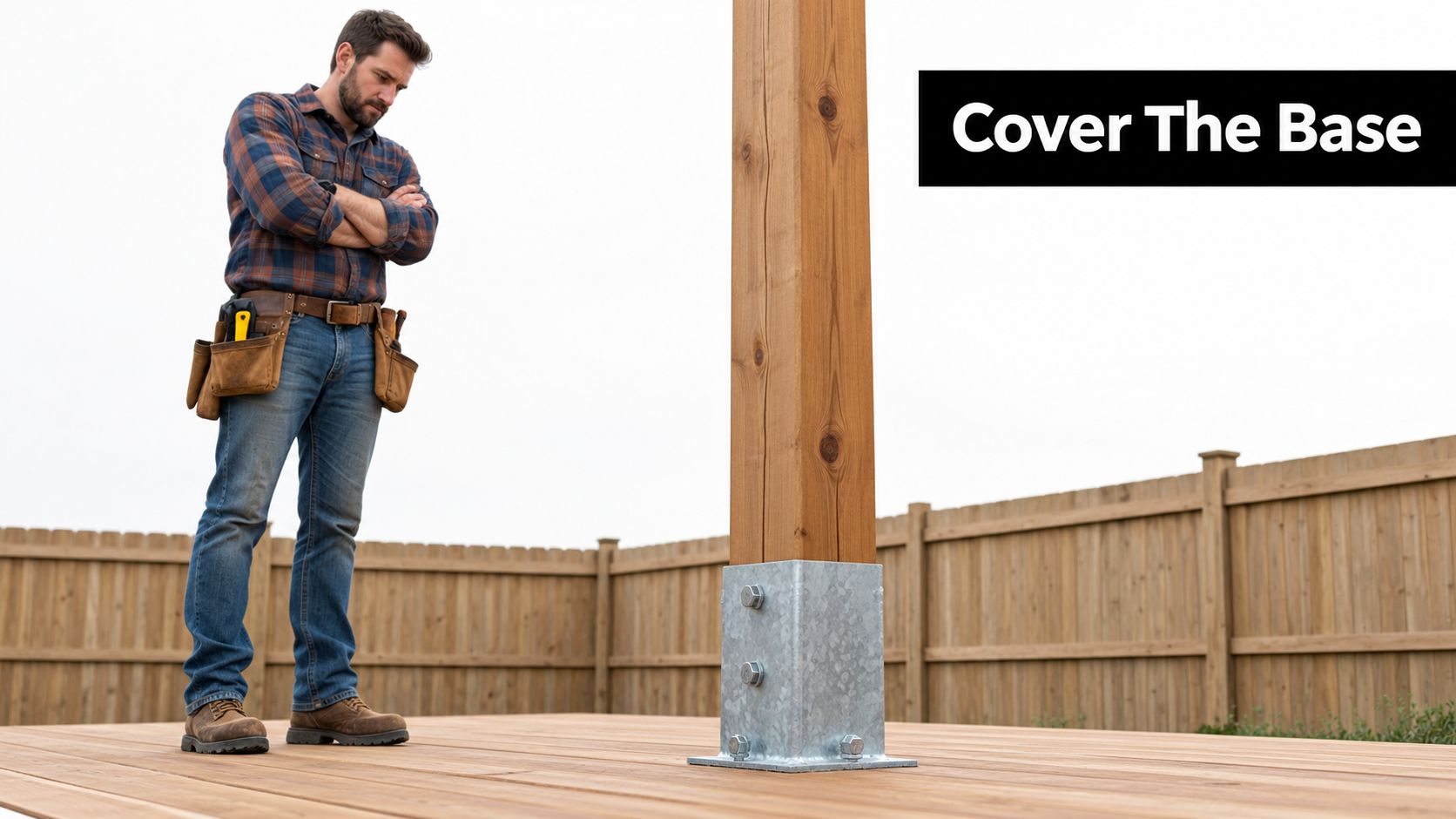
Job-site rule: Don't hide a connection until you know what the connection is doing.
A street-facing deck usually justifies a more refined finish. A rear-yard fence may only need corrosion protection and a tidy edge. The right purchase depends less on the words “6×6” in the listing than on the actual post, the anchor geometry, and the way rain can leave the assembly.
What a 6×6 Post Base Cover Actually Is
A 6×6 post base cover is trim. Think of it as an escutcheon or sleeve that hides the lower part of a post and the hardware around it. It isn't the structural anchor, and it doesn't transfer the post load into the footing.
Four parts are commonly confused:
- Post base cover: A decorative wrap that conceals the anchor zone, screws, and exposed metal.
- Post skirt: A broader, often flared trim piece that wraps the lower post and may sit close to the deck or slab.
- Structural post base: A listed connector, such as a CBSQ or ABU-style base, that transfers vertical, lateral, and uplift forces into the supporting structure.
- Standoff: The raised portion of the structural base that keeps the wood end above concrete and reduces persistent wetting.
A cover doesn't carry load, replace a listed connector, or turn an unapproved connection into an approved one. It also isn't an ICC-ES-evaluated structural substitute just because it's made from metal or fastens around a bracket. The structural base remains responsible for the connection. The cover only finishes it.
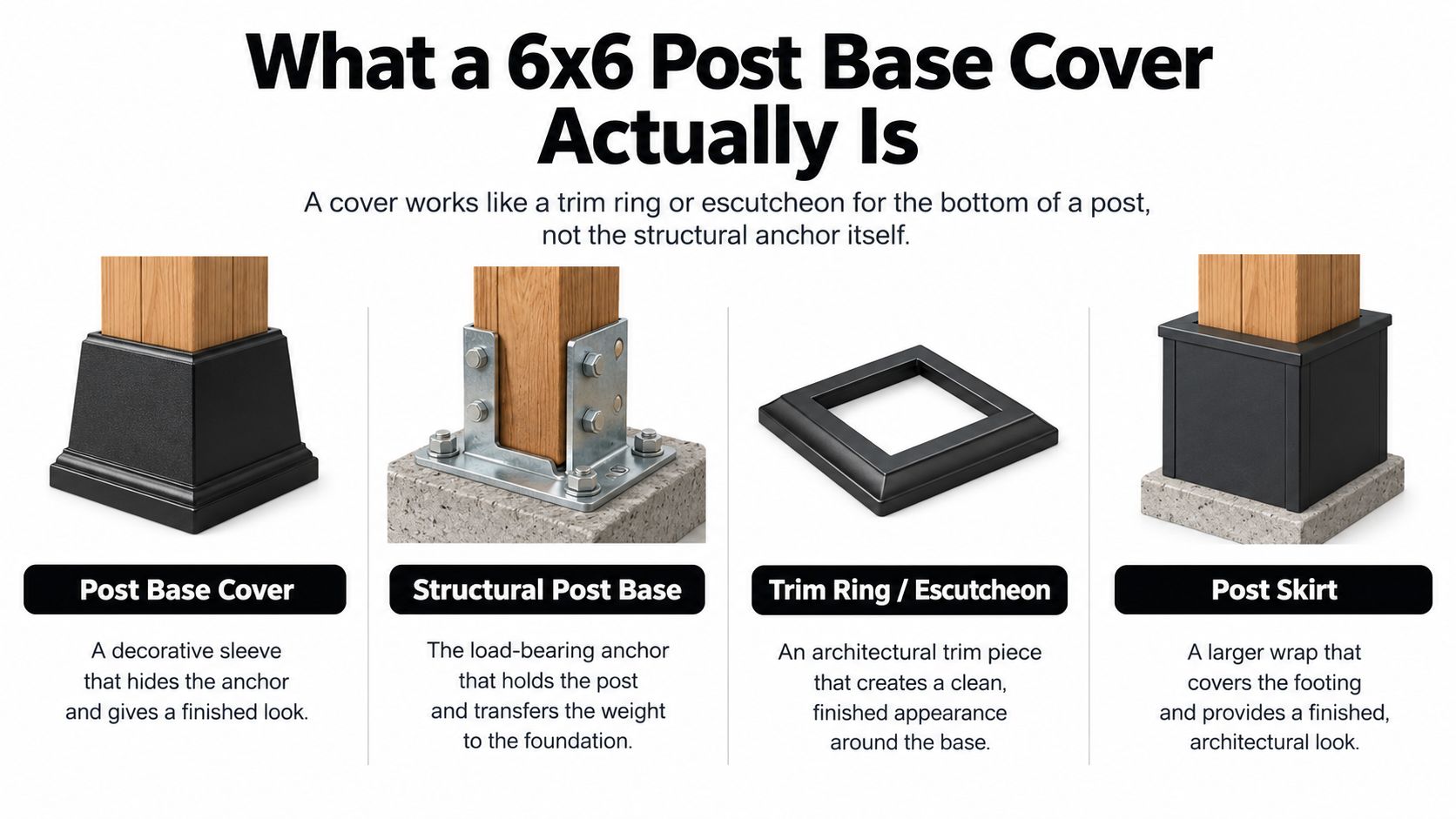
Most decorative products use a two-piece snap-fit, hinged clamshell, or multi-piece wraparound design. Many are built tall enough to cover the connection area, but the important measurement isn't the label on the package. It's the inside width, depth, height, and clearance over the hardware. A cover that fits the wood but stops below the bolt heads has solved only half the problem.
California permitting examples show why this distinction matters. San Diego's patio-cover bulletin treats a 6×6 as the minimum structural post size for certain higher applications, including cases where the floor above the slab is 8 to 10 feet high. The same bulletin allows an approved post base on a slab when installed according to the manufacturer's instructions, and it connects slab-on-grade footing alternatives to a 750-pound load threshold per supporting post. See the San Diego patio-cover bulletin before treating a decorative cover as anything more than finish work.
Materials and Finishes That Hold Up Outdoors
The finish should match the exposure, not just the colour of the railing. A black cover can look excellent on day one and fail early if the underlying metal, coating, or drainage arrangement doesn't suit the site.
| Material / Finish | Corrosion Resistance | UV & Fade Performance | Best-Fit Use Case |
|---|---|---|---|
| Aluminium | Won't rust like steel, but can oxidise or pit in harsh exposure | Generally stable, though dark finishes can weather | Wet, coastal, or budget-conscious projects where light weight helps |
| Galvanised or zinc-plated steel | Strong protection while the coating remains intact; cut edges and damaged points need attention | Bare zinc isn't chosen for colour stability | Rigid, practical installations where impact resistance matters |
| Powder-coated galvanised steel | Good combined protection, provided chips and scratches are repaired | Baked-on colour generally holds better than ordinary paint | Mainstream deck, pergola, and fence applications |
| Black-coated steel | Depends entirely on the coating system beneath the colour | Paint can chalk, fade, or peel sooner than a proper powder coat | Sheltered inland locations with modest exposure |
| Cast metal or cast aluminium | Dense construction gives good resistance, but damaged coatings still need repair | Premium finishes can hold their appearance well | High-visibility projects where shape and impact resistance matter |
Aluminium is the easy choice when you want a light, rust-resistant cover. The trade-off is stiffness. Thin aluminium can dent or crush if equipment, firewood, or a snow shovel hits it. Don't use the cover as a stop, brace, or load-bearing guard.
Galvanised or zinc-plated steel is tougher and often less expensive. If the coating gets breached at a cut edge or fastener point, corrosion can begin there. Powder-coated steel is usually the practical middle ground. The steel provides rigidity, while the baked-on finish supplies colour and an additional barrier. Touch up chips before moisture reaches the substrate.
Cast metal and cast aluminium suit a prominent entry pergola or a carefully detailed deck. They offer a more substantial appearance and resist casual impact better than thin sheet products, but the price can be several times higher than a basic cover. Buy that construction when the visual result matters, not because the cover improves the structural capacity.
For coating selection and preparation ideas, this protective coatings resource is useful background. It won't replace the product manufacturer's coating requirements, especially where treated wood, salt air, or pool chemicals are involved.
Sizing and Fit Without the Guesswork
The label “6×6” describes a nominal lumber size, not necessarily the wood you can measure with a tape. A nominal 6×6 commonly has an actual finished footprint of 5.5 by 5.5 inches, as reflected in Canadian retail listings for 6×6 caps and covers. One Home Depot Canada 6×6 metal cap listing specifically distinguishes the nominal label from the actual 5.5-inch dimensions.
Measure the post you own
Use callipers if you have them. Otherwise, use a reliable tape and record the following:
- Measure both flat sides at the bottom of the post.
- Measure both diagonals across the footprint.
- Check the post at the top and at the base.
- Note whether treatment, swelling, rounding, or splitting has changed the shape.
- Measure the hardware envelope separately, including bolt heads and washers.
The diagonal measurement matters because a rough or slightly twisted post may not be square. An inside-fit collar needs enough clearance for the largest corner. An outside-fit sleeve needs enough room to slide over the post without looking loose. An adjustable skirt is more forgiving when the timber is irregular or the base has already weathered.
| Post Type | Nominal Size | Actual Size | Notes |
|---|---|---|---|
| Finished 6×6 timber | 6×6 | 5.5 x 5.5 inches | Common dressed-post reference size |
| Rough-sawn 6×6 | 6×6 | Can be larger than dressed dimensions | Measure every side before ordering |
| Nonstandard square post | May be labelled 6×6 | May be 5.5 x 5.5 or another footprint | Confirm the product's inside dimensions |
| Damaged or treated base | 6×6 | May vary from the upper post | Size the cover around the lower section |
Don't assume the post is the same size from top to bottom. A base may be swollen from moisture, cut unevenly, or notched around hardware. A cover that fits the clean upper section can bind at the bottom.
Allow room for installation, but don't leave a large open gap that becomes a funnel for rain and debris. If the listing gives only the nominal size, ask for the actual inside opening. Measure first, order second.
Compatibility With Wood and Metal Post Bases
The base style determines whether a cover installs neatly or becomes a fight with a grinder and drill. Product photos often reveal the intended mounting method if you know what to look for.
A wood-post saddle base usually has a visible flange or plate around the post. A cover designed for that assembly may slide over the flange and rest on the surrounding surface. Some two-piece covers snap around the wood without fasteners, while others require small screws into the post or trim piece.
A standoff post base raises the wood above concrete or a slab. The cover must clear the raised plate, the standoff neck, and the fasteners while preserving drainage. Don't use a solid sleeve that presses against the concrete and seals the wood end in a wet pocket. Products with a 1-inch standoff are specifically intended to keep the post end above the slab, which helps reduce moisture-related rot when the base is properly detailed.
A concealed bracket is a different problem. Because much of the connector sits inside the post, a conventional decorative cover may have nothing useful to wrap around. A steel post anchor needs a cover made for the steel profile and its plate geometry. A cover intended for wood can look close in a catalogue photo and still fail to clear the anchor flange.
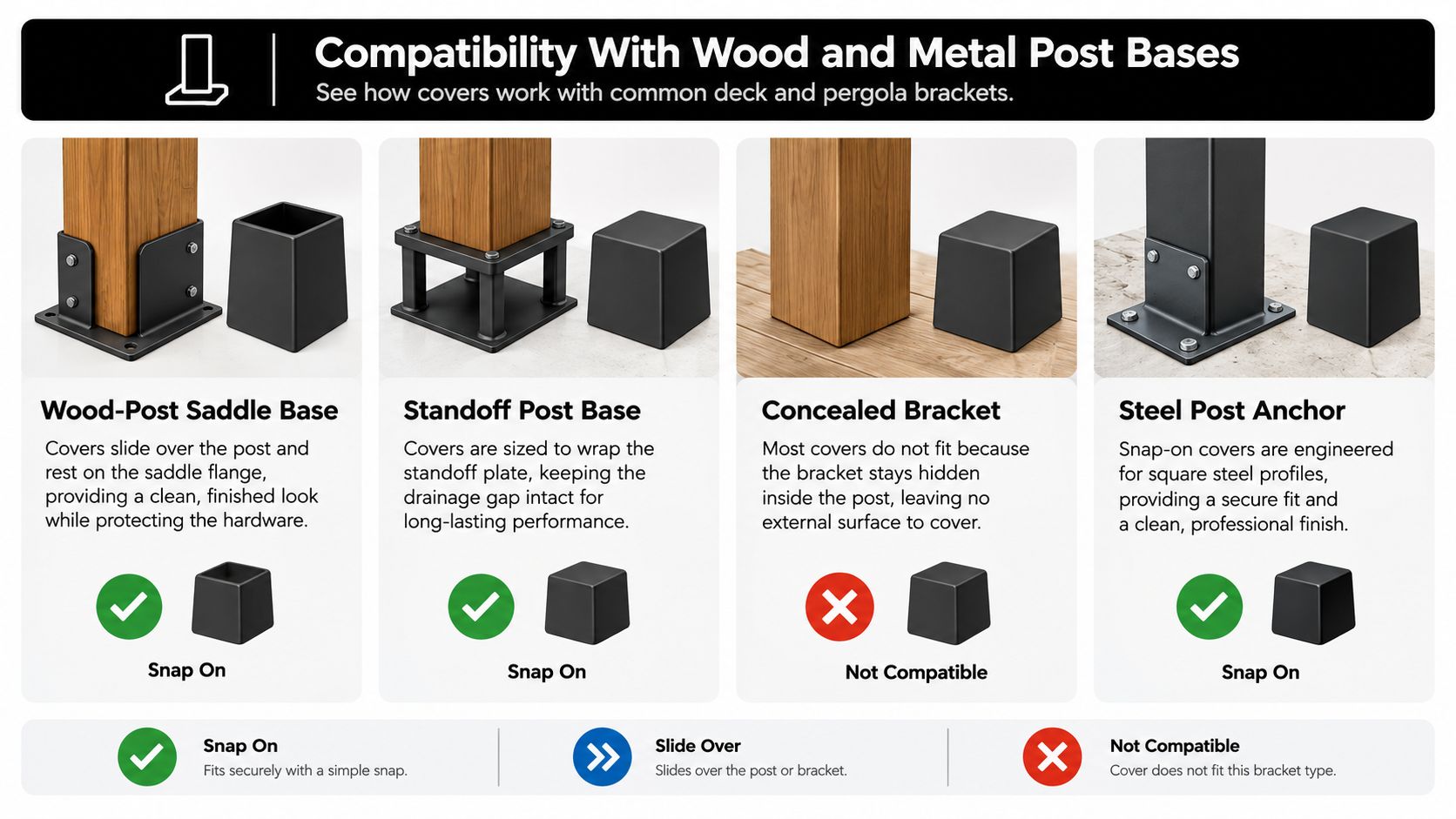
Before ordering: Look for the cover's inside opening, total height, split line, screw locations, and stated bolt-head clearance. A product that says “6×6” without those dimensions isn't enough.
Retrofit work favours two-piece wraparound covers. You can fit them around an anchored post without lifting the beam or removing the structural connection. One-piece sleeves are cleaner on new construction, but they're often impossible to install over an existing base.
For 6×6 structural brackets and related hardware, compare the connection first, then the trim. A relevant 6×6 post bracket selection can help you identify whether you're shopping for a load-bearing base or merely the cover that finishes it.
The video below shows the sort of base geometry you should inspect before choosing a cover.
Installation Considerations and On-Site Measurements
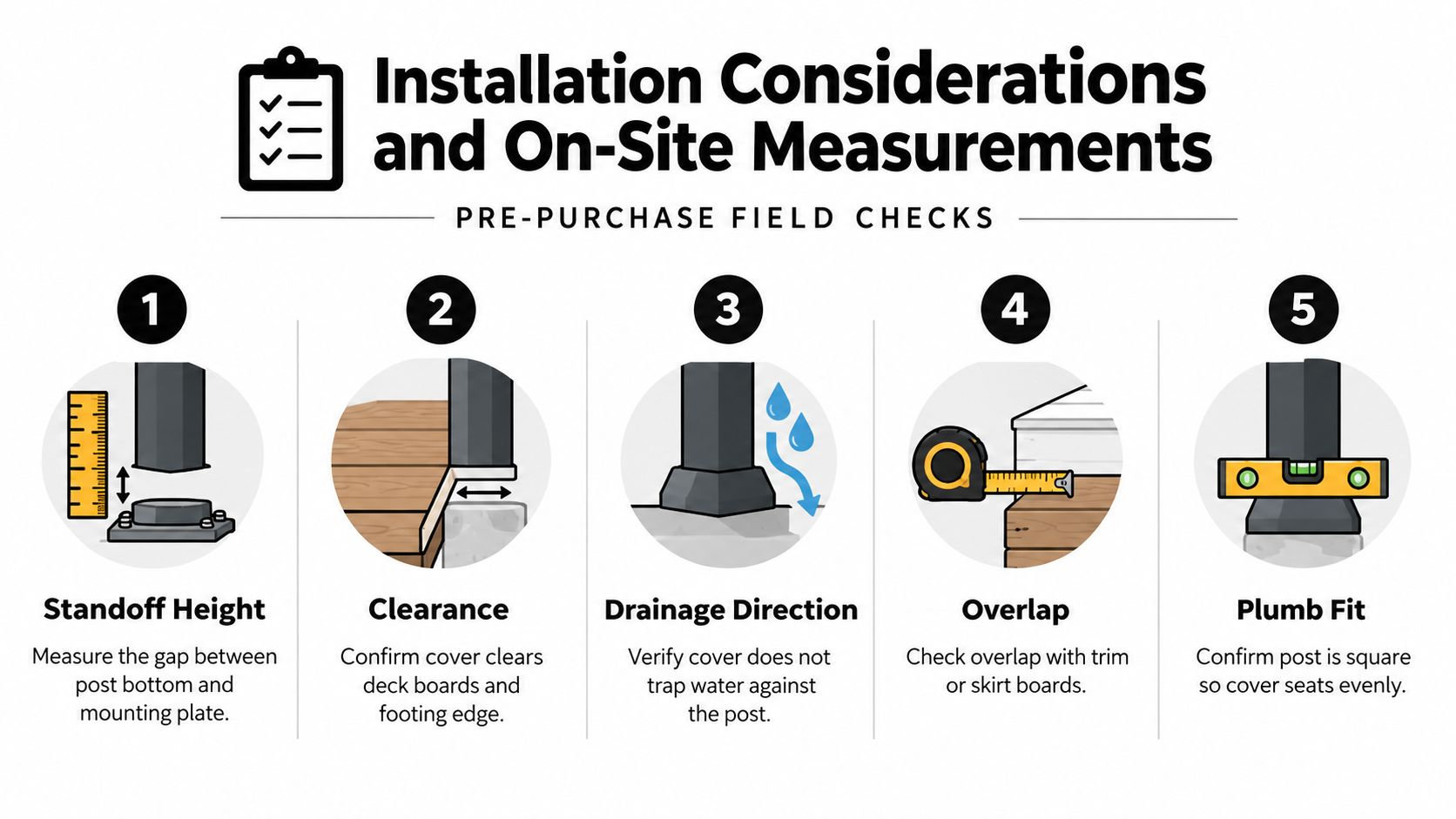
A good cover fits the site, not just the catalogue drawing. Before purchasing, measure the post footprint, the structural base, and the space around the connection.
Check the four clearances that decide the fit
- Standoff height: Measure from the bottom of the wood to the top or highest point of the mounting plate.
- Deck or footing clearance: Confirm that the cover clears deck boards, concrete edges, and nearby trim.
- Drainage direction: Make sure water can leave the cover instead of sitting against the post end.
- Overlap: Check whether the cover will collide with a skirt board, fascia, cladding, or adjacent post trim.
The bottom edge should stay at least 1 inch above grade or the deck surface to avoid wicking moisture. That clearance needs to work on the lowest side of a sloped surface, not only where you start the tape. Solid covers also need a drainage path or weep holes. If the product has no way for water to escape, it can protect the hardware visually while creating a damp enclosure around the post.
On an uneven slab, level the cover visually without forcing it to carry the post. The structural base must remain correctly installed, and the cover may need a trimmed edge, a relieved corner, or a flexible skirt. Don't pack the gap with absorbent material. That turns a drainage problem into a moisture reservoir.
A removable two-piece design earns its place on serviceable work. You can inspect fasteners, replace a damaged base, or repaint nearby trim without dismantling the post. Use fasteners compatible with the cover metal, treated wood, and exposure. Never substitute ordinary indoor screws where corrosion-resistant exterior fasteners are specified.
If the post will be wrapped in wood, plan the transition before installing trim. This guide to wrapping a 6×6 post with wood is useful for thinking through finished dimensions and trim overlap.
Record these measurements on the job:
- Post footprint: Width, depth, and both diagonals.
- Anchor height: Lowest wood point to highest obstruction.
- Surface gap: Bottom of the proposed cover to deck boards or grade.
- Obstructions: Bolts, washers, flanges, skirt boards, and nearby posts.
Common Misconceptions That Cost DIYers Money
A decorative cover can replace the structural base. It can't. A cover hides the connector, while the structural post base transfers forces into the footing and keeps wood separated from concrete. California examples treat 6×6 posts as a prescriptive benchmark for certain deck and patio applications. Auburn's deck handout specifies 6×6 nominal minimum posts for deck and spa or tub posts, while Jackson's guide permits 6×6 nominal posts up to a maximum height of 14 feet before engineering by a California-licensed design professional is required. Those thresholds come from the California deck construction reference, not from a decorative accessory listing.
Every 6×6 cover is universal. It isn't. Nominal lumber can have an actual finished footprint around 5.5 by 5.5 inches, while rough, rounded, treated, or nonstandard posts can be different. The consequence is either an ugly gap or a cover that won't slide past the lower post and hardware. Measure the actual base.
Metal bases cannot be covered. They can, provided the cover is designed around the plate, saddle, bolts, and drainage gap. Canadian retail listings warn that some decorative covers won't fit over bolt heads, which is exactly why you need the hardware measurements before ordering.
Black means powder coat. Not necessarily. Some products use paint over steel, and a painted finish can fail faster in coastal, poolside, or persistently wet exposure. Ask whether the finish is powder-coated, what substrate sits beneath it, and how the manufacturer expects scratches to be repaired.
A cover makes the connection compliant. It doesn't. In Canada, Simpson Strong-Tie describes its HBC post base as intended to meet the intent of NBC 2015 9.23.6.2.1 for uplift and lateral resistance, while warning that post bases don't adequately resist rotation and aren't recommended for non-top-supported installations such as fences or unbraced carports. Treat the structural connector and decorative cover as separate decisions.
Buying Guidance, Maintenance, and Quick Answers
Choose the cover around your actual situation.
| Reader Situation | Recommended Cover | Key Reason |
|---|---|---|
| Budget DIY project in a sheltered location | Aluminium snap-on cover | Light, simple, and easy to fit |
| Coastal or wet exposure | Powder-coated steel or cast aluminium | Better protection when the coating and drainage are maintained |
| New deck or pergola | Cover selected alongside the structural base | The hardware and trim can be designed to work together |
| Retrofit over an existing anchor | Two-piece wraparound cover | Installs without removing the post connection |
| High-visibility entry or pergola | Cast metal or cast aluminium | More substantial appearance and impact resistance |
| Rough or irregular timber | Adjustable skirt or oversize wrap | More tolerance at the actual post base |
DIYers usually get the best value from a properly sized aluminium snap-on cover. Coastal homeowners should spend more attention on the coating, fasteners, and drainage than on colour alone. Pros should specify the cover during framing, while retrofit owners need to measure the standoff height and bolt clearance before placing an order.
XTREME EDEALS INC. sells a 6×6 post skirt or base cover designed to slide over the post and base to hide hardware, along with a Decorex Hardware 6×6 post base and related brackets. Use the structural base for the connection, then choose the skirt or cover that matches the installed geometry.
Maintenance is straightforward:
- Rinse annually: Remove salt, dust, and organic debris from the cover and surrounding base.
- Inspect the bottom edge: Clear leaves and soil so water can escape.
- Touch up scratches: Repair damaged powder coat with a compatible exterior product.
- Check the connection: Look for corrosion, movement, or trapped moisture rather than assuming the cover protects everything.
- Coordinate repainting: If you're finishing nearby fencing, this practical fence painting advice from Painters North Shore offers useful preparation context.
Quick answers for common purchases
Does a nominal 6×6 cover fit every 6×6 post? No. Confirm the actual inside dimensions and measure the lower post.
Will a cover fit over an ABU66-style Simpson Strong-Tie base? Only if the cover's internal height and width clear the ABU-style plate, bolts, washers, and standoff. Don't assume compatibility from the nominal post size.
Can painting a cover void its corrosion warranty? It can, depending on the manufacturer's terms and the preparation or coating used. Check the product warranty before sanding, drilling, or repainting.
XTREME EDEALS INC. offers 6×6 post skirts and base covers, structural brackets, post caps, fasteners, and related deck and fencing hardware for DIY and trade projects. Measure your post and anchor first, then visit XTREME EDEALS INC. to match the cover and connection hardware to the installation you have.