

You're probably at the stage where the deck frame is done, the surface boards are picked, and now the railing has become the hard part. It looked simple at first. Then you started comparing styles, heights, post sleeves, hardware, code requirements, and price differences, and suddenly a “small finishing detail” turned into a major decision.
That's normal. Composite deck railing affects how your deck looks, how safe it feels, how much maintenance you'll deal with later, and whether the finished build feels polished or patched together. A good railing system makes the whole deck look intentional. A bad one stands out for the wrong reasons every single day.
Homeowners usually narrow their choice down to four questions. Does it suit the house? Will it pass inspection? Is it worth the cost? And will they still like it after a few seasons of weather and use? Those are the right questions. The answers depend less on marketing language and more on how the system is built, what hardware it needs, and how carefully the installation is planned.
Introduction What Is Composite Deck Railing
Composite deck railing is a railing system made from an engineered blend of wood fibres and plastic polymers, usually with additives that improve colour stability, strength, and weather resistance. In practical terms, it aims to give you some of the visual warmth of wood without many of wood's most frustrating habits.
A simple way to think about it is performance clothing. Cotton alone feels natural but wears differently in tough conditions. Synthetics add durability and moisture resistance. Composite works on a similar principle. It combines the familiar look of wood with materials chosen for outdoor performance.
That's why many homeowners describe it as the look of wood without the usual sanding, splinters, and repainting cycle.
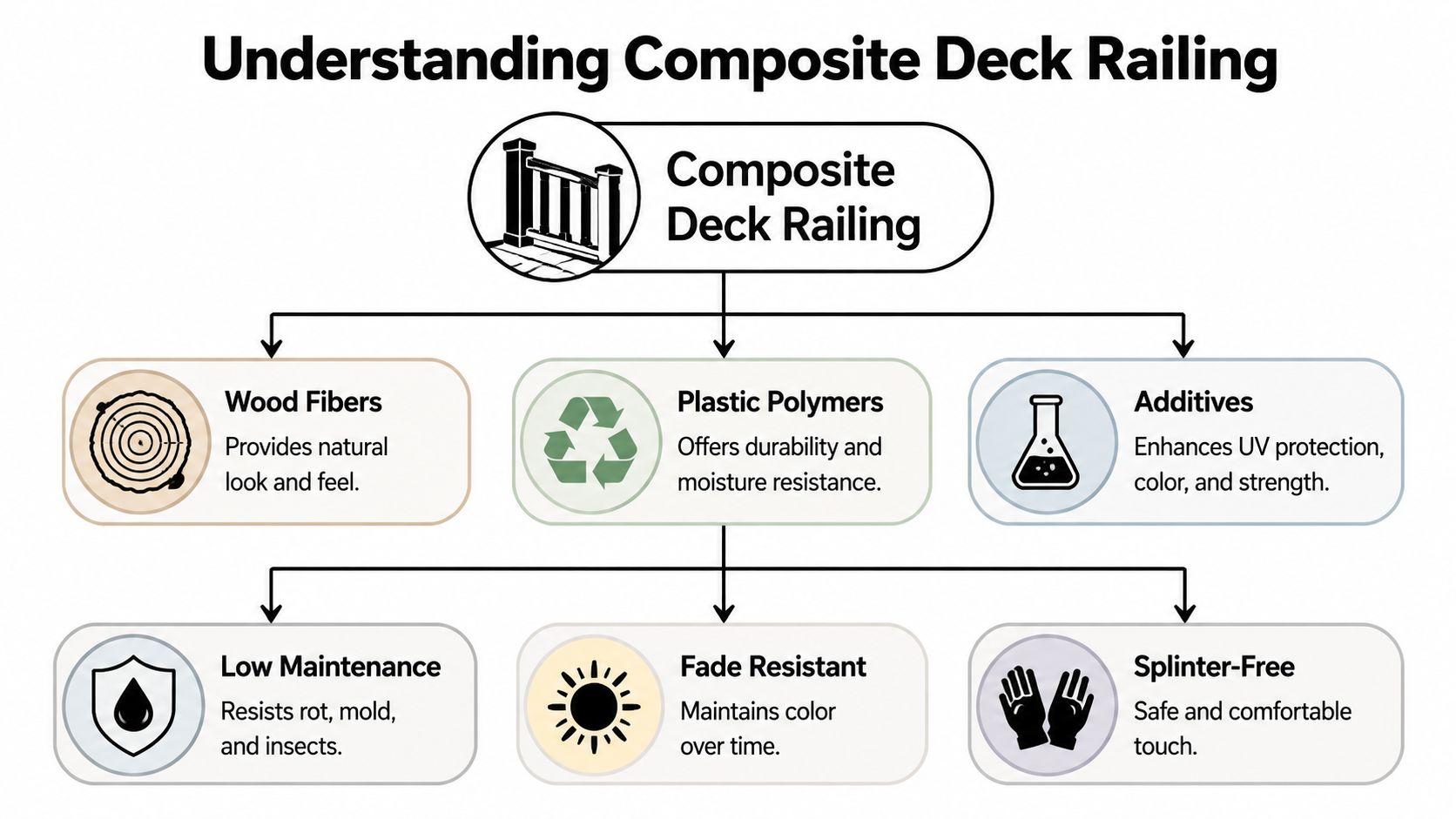
What composite means in real use
On a finished deck, you don't interact with the chemistry. You interact with the surface, the stiffness of the rails, the colour consistency, and the maintenance workload. Composite railing is popular because it stays more predictable than site-built wood railing.
That predictability matters in a few ways:
- Surface feel: Composite is usually smoother and more consistent than wood. You're less likely to deal with rough grain or splintering at hand level.
- Appearance: Factory-made components tend to match one another better than cut lumber from a yard.
- Upkeep: Most owners clean it occasionally instead of treating it like a yearly refinishing project.
Composite is not the same as vinyl
Many buyers mix up composite railing and vinyl railing because both are sold as low-maintenance options. They aren't the same thing.
Vinyl or PVC railing is typically all plastic. It often has a cleaner, lighter, more uniform appearance. Composite railing usually has more texture and a more substantial feel, which many homeowners prefer when they don't want the railing to look too glossy or hollow.
Practical rule: If you want a railing that feels closer to painted trim, vinyl may appeal to you. If you want something that reads more like a premium exterior finish with a bit more visual depth, composite is often the better fit.
Why homeowners choose it
Composite deck railing isn't typically purchased out of a fascination with material science. It's chosen because homeowners desire an attractive deck with less maintenance. They also seek a system that appears intentional, not improvised.
That's where composite does well. It suits modern decks, transitional homes, and many backyard upgrades where the owner wants a cleaner finished look than basic pressure-treated lumber usually provides. It also pairs well with other infill materials, including metal balusters, glass, and cable.
The important part is this. Composite isn't just a material choice. It's a system choice. And once you understand the system, the buying decisions get much easier.
Decoding the Composite Railing System Components
A railing only looks simple after it's installed. Before that, it's a set of parts that have to work together cleanly. When homeowners run into trouble, it's usually because they focused on colour first and component compatibility second.
Start with the anatomy of the system.
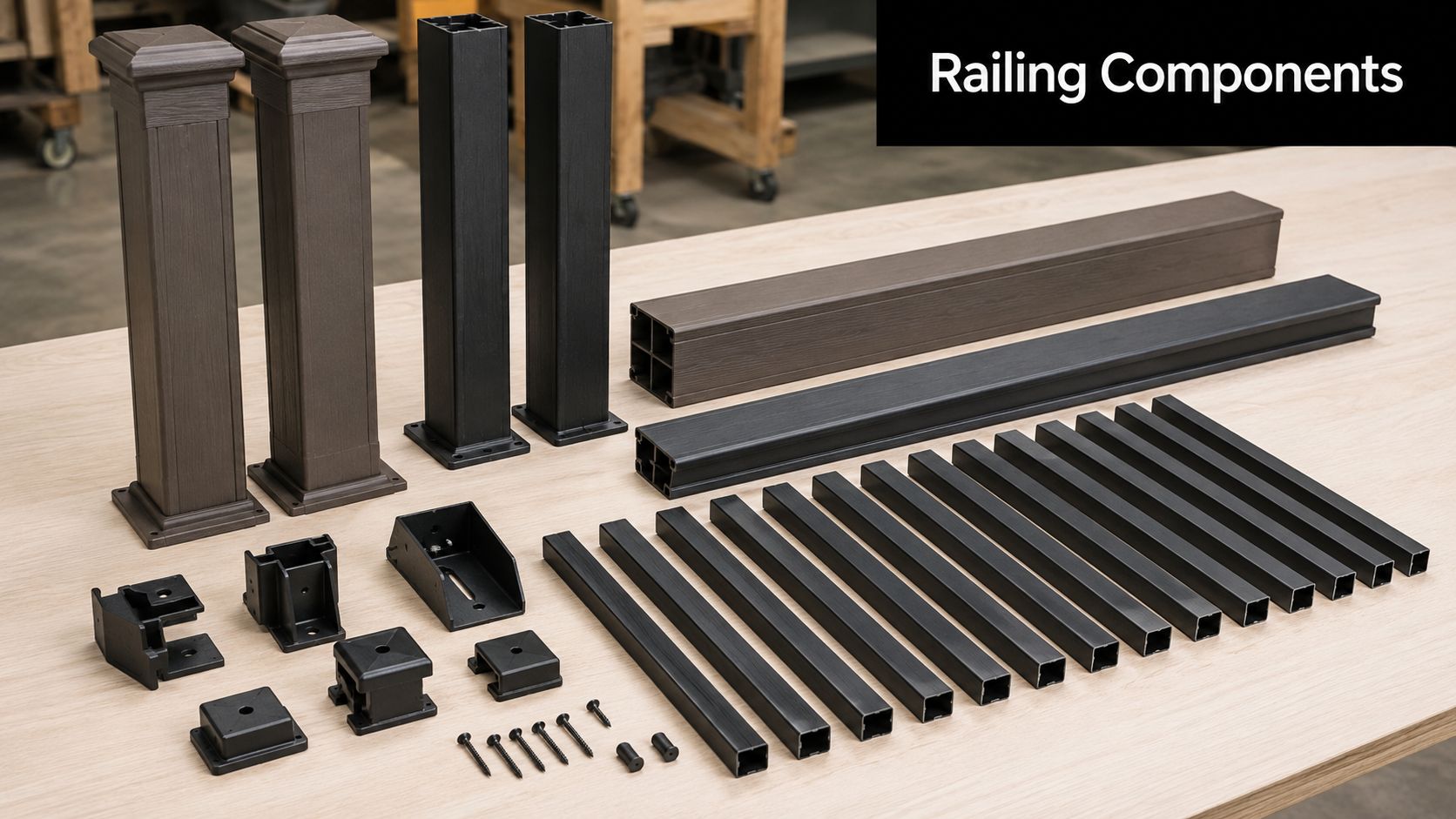
Posts are the foundation
Posts do the heavy work. They anchor the railing to the deck structure or mounting surface and carry the load through the system. If the posts are weak, poorly spaced, or fastened with the wrong hardware, the nicest top rail in the world won't save the job.
At this point, many first-time buyers make an expensive mistake. They shop by visible parts and ignore what's happening underneath. Post sleeves, post base trim, structural connectors, and anchors have to match the post type and the substrate.
For projects that need dependable fastening hardware, it helps to review composite deck fasteners and related hardware options before ordering the visible components. The finish pieces only work when the structure underneath is right.
Rails create the frame
The top rail is what people grab, lean on, and notice first. The bottom rail keeps the infill aligned and helps define the overall shape of the section. On better systems, these rails are engineered to work with brackets and inserts so the finished line stays straight and clean.
The design choice here changes the whole feel of the deck:
- Wide top rails: More substantial, often better for traditional or upscale builds.
- Slim profiles: Cleaner look, often used on contemporary decks.
- Contrasting colours: A good way to highlight the deck perimeter without changing the infill.
Infill gives the railing its personality
The infill is the part between the top and bottom rails. Within this section, style, openness, privacy, and budget all converge.
A few common directions work well:
- Composite or matching balusters: Coordinated and consistent. Good for homeowners who want a unified look.
- Metal balusters: A sharper, lighter visual line. Black metal works with a wide range of deck colours.
- Glass panels: Best when the view matters and you don't want visual interruption.
- Cable rail infill: Clean and current, but usually less forgiving during installation.
If you want to see the parts working together in a real assembly, this walkthrough gives a useful visual reference.
Small hardware choices shape the final result
This is the part homeowners tend to underestimate. Brackets, trims, caps, connectors, and decorative accents can make a railing look custom or make it look pieced together from leftovers.
Brands such as Decorex Hardware are often used for finishing details and compatible decorative elements, especially when a build needs more than a plain builder-grade appearance. Post caps, balusters, and bracket covers aren't structural afterthoughts. They're the details that make the railing match the house instead of just satisfying a checklist.
The cleanest railing jobs usually come from disciplined parts selection, not fancy improvisation on installation day.
A good system has three things sorted before the first cut is made. The posts are structurally correct, the rails are compatible, and the infill choice matches both the view and the budget.
Composite vs Wood The Real Cost and Lifespan
At this point, most homeowners hesitate. They compare the installed price of composite and wood, see that composite costs more up front, and stop there. That's incomplete math.
The better question is what the railing will cost you to own, maintain, and eventually replace.
What the installed price tells you
High-quality composite railing systems are engineered to last 25+ years with minimal maintenance, compared to wood railings that require ongoing sealing, staining, or painting and typically last 10–15 years. Pressure-treated wood railings cost $15–$25 per linear foot installed, while composite railings cost $25–$45 per linear foot installed according to the composite decks and railing market report.
That tells you two important things. First, wood is usually easier on the initial budget. Second, composite is being priced as a longer-term exterior product, not a short-term economy option.
The real difference shows up later
Wood can look great when it's new. It's also easy to customise on site. But it asks more from the owner. Over time, wood railings usually need surface maintenance and occasional repair work to stay attractive and safe. Composite asks for far less routine attention.
If you know you won't keep up with staining or painting, wood often turns into a false economy. It starts cheap, then demands labour, materials, and touch-ups. Composite starts higher, then mostly asks to be cleaned.
Bottom line: The cheaper railing at purchase isn't always the cheaper railing over the life of the deck.
Cost and Maintenance Comparison Composite vs Wood Railing
| Factor | Composite Railing | Pressure-Treated Wood Railing |
|---|---|---|
| Installed cost | $25–$45 per linear foot installed | $15–$25 per linear foot installed |
| Expected lifespan | 25+ years | 10–15 years |
| Routine upkeep | Minimal maintenance | Ongoing sealing, staining, or painting |
| Long-term ownership feel | More predictable | More hands-on and variable |
| Best fit | Homeowners who want lower upkeep and longer service life | Homeowners prioritising lower upfront spend |
Which one makes sense for your project
If this is your long-term home and you want the deck to stay presentable without becoming a recurring weekend job, composite usually makes more sense. It also works well when the deck is a visible feature from the garden, kitchen, or main living areas. A cleaner finish and colour consistency matter more in those situations.
Wood still has a place. It suits tight budgets, highly custom layouts, and homeowners who don't mind maintenance. It's also easier to modify on site when a deck has odd geometry.
A practical way to decide is to be honest about ownership style:
- Choose composite if you want durability, consistency, and less annual work.
- Choose wood if lower initial cost matters most and you're comfortable maintaining it.
- Avoid mixed expectations. Don't buy wood expecting composite-level upkeep, and don't buy composite expecting the same on-site flexibility as lumber.
The right answer isn't universal. It depends on whether you're buying for this season's budget or for the years after that.
Meeting Safety Codes for Composite Deck Railing
A railing isn't decorative trim. It's a safety barrier. If the deck is high off the ground, the railing has one job before anything else. It must protect people consistently and hold up under real use.
That means code compliance can't be treated like a final check after the materials arrive. It has to shape the product choice from the start.
The benchmarks that matter most
In California, composite deck railing systems must meet a mandatory minimum guardrail height of 42 inches for decks raised more than 30 inches above grade, and all railings must withstand a minimum force of 200 pounds applied to the top rail in an outward or downward direction, according to California composite deck railing code guidance.
Those two numbers tell you a lot about what matters in a safe railing build. Height affects fall protection. Load resistance affects whether the system stays secure when someone leans, stumbles, or grabs the rail suddenly.
For homeowners outside California, local rules may differ, but California is still a useful safety benchmark because it's strict. If you're comparing local requirements in another state, this overview of Tennessee residential building codes is a useful example of why you should confirm the rules where the deck is being built.
What passes inspection and what doesn't
Most railing failures don't happen because the top rail looked weak. They happen because the installer missed a structural detail. The post connection is underbuilt. The hardware isn't rated for the application. The mounting surface isn't reinforced. Or the railing kit was forced into a layout it wasn't designed for.
Use deck railing height code guidance as a starting point when checking basic planning assumptions, but always compare that guidance against the specific code enforced in your area.
A safe railing system usually comes down to these checks:
- Correct height: Don't assume one common standard applies everywhere.
- Proper anchorage: Posts need real structural backing, not cosmetic attachment.
- Compatible components: Mixing parts from different systems can create weak points.
- Clean installation: Even a code-rated system can fail if the assembly is careless.
A railing can look solid from six feet away and still fail where it matters most, at the post base and fastener points.
Why professional-grade parts matter
Homeowners sometimes try to save money by blending generic brackets, undersized posts, or leftover hardware into a composite system. That's where projects drift into unsafe territory. Composite railings depend on system compatibility more than site-built wood railings do.
This is not optional. When a deck guard is protecting children, guests, or older family members, “close enough” isn't a building strategy. It's a liability.
Installation Insights and Common Mistakes to Avoid
A composite railing install usually starts smoothly. Layout lines go down, posts get planned, rails are measured, and everything feels manageable. The trouble starts when the deck isn't perfectly square, the corner angle is awkward, or the installer treats composite parts like they can be forced into place the way wood sometimes can.
That's where experience shows.
The installation sequence that works
The cleanest jobs follow a disciplined order. First, confirm the layout and post positions. Then mount the posts securely. After that, dry-fit the rails before making final cuts. Only once the frame is true should the infill and finishing pieces go in.
If the posts are even slightly out, the error travels through the whole section. By the time the top rail goes on, the problem is visible.
A sensible workflow looks like this:
- Layout first: Mark post locations with the rail spans in mind, not just visual spacing.
- Build from the structure: Fasten posts to something solid and verified.
- Dry-fit every section: Composite rewards precision. It doesn't forgive rushed cuts.
- Finish last: Caps, trim, and decorative parts go on after alignment is confirmed.
The mistake that catches DIYers most often
Composite deck railing systems in California often require oversized or specialised post sleeves at angled corners due to material rigidity and thermal expansion, a detail highlighted in guidance on composite railing corner conditions.
That problem isn't limited to California. Any deck with corners, stairs, or non-standard geometry can expose the same issue. Pre-fab kits often fit straight runs well, but angled corners are where the tolerances get tight. If the sleeve, bracket, or rail profile doesn't allow enough room, the finished corner looks stressed or misaligned.
Measure the corner condition separately. Don't assume the straight-run parts will solve it.
What doesn't work on site
A few habits cause repeat problems:
- Forcing tight fits: Composite components can crack, bow, or sit under tension if they're cut too aggressively.
- Ignoring movement: Outdoor materials move. If the system requires spacing allowances, follow them.
- Treating safety as secondary: Working around deck edges calls for planning and proper access. If you're doing the work yourself, review practical guidance on mastering working on heights before starting.
For a general planning reference, deck railing installation guidance can help you map the process before materials arrive.
Where homeowners should slow down
Slow down at corners, stair transitions, and post mounting. Those are the three areas where a project usually goes from neat to frustrating. Straight sections are easy to overestimate. The details decide whether the railing feels custom-fitted or visibly compromised.
If you're hiring the work out, ask the contractor one direct question: how are you handling the corners and post connections on this exact layout? A confident answer tells you a lot.
Your Selection Checklist and Buying Guide
By the time you're ready to buy, the goal isn't to keep browsing. It's to narrow the choices so every part supports the same outcome. A composite railing project gets expensive and messy when the owner picks a style first, then discovers the hardware, infill, and post details don't line up.
A better approach is to make the decisions in order.
Start with the four buying decisions
Before adding anything to a cart, write down your answers to these:
- Style direction: Traditional, modern, or something in between?
- View and privacy needs: Do you want open sightlines or more visual separation?
- Colour strategy: Match the deck boards, contrast them, or tie into trim and exterior accents?
- Maintenance tolerance: Are you looking for the lowest possible upkeep, or are you open to more hands-on finishing?
If you need visual direction before finalising a railing look, browsing examples of inspiring front deck designs can help you decide whether your home wants a more substantial traditional profile or a cleaner modern one.
Match the parts before you buy
Once the look is clear, build the parts list from the structure outward. That usually means:
- Posts and sleeves first
- Top and bottom rails second
- Infill system third
- Brackets, anchors, screws, trims, and caps last
This order prevents a common mistake. Homeowners often buy decorative accessories before confirming the post dimensions and rail compatibility. Then they end up with nice-looking parts that don't fit the actual build.
Here's a simple buying filter that works well:
| Purchase priority | What to confirm |
|---|---|
| Structural base | Post size, mounting method, substrate |
| System fit | Rail profile, span compatibility, corner needs |
| Visual finish | Baluster style, post caps, trim details |
| Final hardware | Fasteners, anchors, brackets, replacement extras |
Finish matters more than many buyers expect
The final look often comes down to the smaller visible items. Decorative post caps, clean bracket covers, matching balusters, and properly chosen fasteners do more for perceived quality than is commonly understood.
A few product categories are worth taking seriously:
- Post caps: Pyramid, ball, and other decorative styles can shift the whole look from plain to finished.
- Balusters: Decorex Hardware options are useful when you want a more distinctive infill than basic stock pieces.
- Post base brackets and anchors: These affect stability first, but they also influence how tidy the finished post base appears.
- Structural screws, carriage bolts, lag bolts, washers, wedge anchors, and sleeve anchors: These are not glamour items, but they decide whether the railing feels trustworthy.
Buy like you already know the installation plan
The smartest buyers order as if they already know where every part goes. They don't just buy “railing stuff”. They buy the exact components needed for straight runs, corners, stairs, and finishing details.
That means checking these points before purchase:
- Count every post condition: End posts, line posts, corner posts, and stair posts.
- Separate structural hardware from decorative accessories: They serve different jobs.
- Buy compatible finish pieces: Post sleeves and post caps need to match properly.
- Keep a small margin for mistakes or changes: Especially on specialised hardware.
If you do that, you won't end up with a half-finished deck waiting on one missing bracket or the wrong post trim.
Frequently Asked Questions About Composite Railing
Does dark-coloured composite railing get hot in the sun
Yes, darker colours can feel warmer in direct sunlight than lighter colours. If the deck gets full afternoon sun, keep comfort in mind for top rails and hand-contact surfaces. If heat is a concern, medium or lighter tones are usually the safer pick.
Can composite railing be painted
It's usually better not to plan on painting composite railing. Most systems are designed to be used in their finished factory colour. Painting often creates extra maintenance and may not bond or wear evenly. If colour flexibility is the priority, choose the right railing colour from the start instead of treating paint as a backup plan.
How do you clean composite railing
Most composite railing responds well to simple periodic cleaning. Use a soft brush or cloth, mild soap, and water. Rinse thoroughly. Avoid turning routine cleaning into aggressive surface treatment unless the manufacturer specifically allows it.
If you want low maintenance, clean dirt early. Don't let buildup sit through multiple seasons.
Can composite railing be installed on a concrete patio
Yes, it can, provided the mounting method is designed for concrete and the hardware matches the application. The key issue isn't whether the railing material is composite. It's whether the post base connection is properly engineered for the slab or pad you're attaching to.
Is composite railing a good DIY project
It can be, but only if the layout is straightforward and you're comfortable working accurately. Straight runs on a simple deck are one thing. Stairs, corners, and mixed materials raise the difficulty quickly. If the deck edge is high and the geometry is complicated, many homeowners are better off hiring that part out.
What makes a composite railing project look expensive in a good way
Consistency. Matching post sleeves, well-proportioned rails, clean infill alignment, and properly chosen caps or trims do more than oversized ornament. The best-looking jobs usually aren't the flashiest. They're the ones where every component feels like it belongs together.
XTREME EDEALS INC. makes it easier to finish a deck railing project without piecing hardware together from multiple shops. You can browse XTREME EDEALS INC. for post caps in popular sizes, balusters, finials, gate hardware, joist hangers, post base brackets, deck screws, carriage and lag bolts, washers, wedge and sleeve anchors, and other deck and fencing essentials. Their catalogue includes recognizable brands such as Decorex Hardware, along with practical support resources, clear shopping categories, and straightforward CAD pricing for DIY homeowners and trade buyers who want dependable parts in one place.