
California homeowners spend about $17,338 a year on maintenance alone, so choosing the right property maintenance supplies is one of the clearest ways to control costs. With total hidden homeowner costs averaging $32,262 annually, cheap hardware that fails early isn't a saving, it's another service call.
The right buying strategy starts with exposure and failure risk, not with the lowest shelf price. California's coastal salt air, intense sun, seasonal rain, wildfire conditions, ageing homes, and high repair costs all change what belongs in a maintenance storeroom. A box of suitable screws, anchors, hinges, brackets, post caps, sealants, cleaning products, and safety gear can prevent a delayed job. A box of unsuitable hardware can create repeat labour, damaged timber, callbacks, and unhappy tenants.
Why Property Maintenance Supplies Demand a Strategy
A California-focused analysis of Verisk's repair cost index found that home repair and remodelling costs rose 67% over ten years. A project priced at $10,000 at the start of 2013 would have cost about $16,703 by late 2023 according to that California repair-cost analysis. Another California report recorded a 40% increase in single-family home repair costs from 2019 to 2024, followed by a 3% rise in the most recent 12 months, showing that the pressure has been sustained even as the pace moderated.

Those figures change the purchasing question. A contractor isn't asking whether a fastener is inexpensive. They're asking whether it will hold a deck board, gate, fence, or bracket in service long enough to avoid another visit. A property manager is weighing the price of a corrosion-resistant hinge against tenant disruption, emergency labour, and a second delivery.
Reactive buying hides the real cost
Buying only after a failure feels efficient because it keeps inventory low. In practice, it often means accepting the wrong finish, paying more for urgent delivery, sending a technician away from the site, or substituting an unsuitable product. The problem gets worse in older properties, where one failed component often reveals adjacent timber movement, rust, water entry, or loose connections.
The Federal Reserve Bank of Philadelphia housing repair report found that 27.3% of households in Riverside, California, had home-repair needs. The same report estimated $126.9 billion in nationwide housing-deficiency repair costs in 2018, with an average repair cost of roughly $2,920 among households with repair needs. California's median home was built in 1977, making it 49 years old in the cited housing-market analysis and about 4.3 years older than the national median home age, according to that report.
Practical rule: Stock the parts that fail repeatedly and buy specialist or finish-sensitive items to match the actual repair.
A workable system has three layers: routine consumables, exposure-specific hardware, and emergency replacements. Use a simple project cost estimation resource before ordering, then record what gets used, where it was used, and why it failed. For managers handling exterior assets, maintenance planning should also account for building air quality and related operational concerns, including IAQ solutions for property managers.
Essential Property Maintenance Supply Categories
A useful storeroom separates products by how often they disappear, how badly exposure affects them, and how difficult they are to source during a live repair. Fasteners and post hardware usually deserve a standing reserve. Decorative pieces and unusual replacement parts can often be bought for a specific job.
| Supply Category | Key Products | Failure Risk | Bulk Strategy |
|---|---|---|---|
| Deck and fence hardware | Pyramid and ball post caps, finials, balusters, post brackets | Medium to high outdoors, especially where water sits at joints | Keep common sizes and finishes on hand |
| Fasteners | Decorex Hardware deck screws, carriage bolts, lag bolts, nails, washers | High if the finish doesn't suit the environment | Buy multi-packs for recurring repair work |
| Structural connectors | Joist hangers, wedge anchors, sleeve anchors, post base brackets | High where loads, moisture, or concrete movement are involved | Stock standard sizes, verify each application |
| Gates and doors | Corrosion-resistant hinges, latches, brackets | High on frequently used gates and coastal properties | Keep replacement pairs, not just single pieces |
| Safety equipment | Gloves, eye protection, masks, hearing protection, high-visibility clothing | Operational risk when missing | Replenish by staff issue and inspection |
| Cleaning supplies | Exterior cleaners, brushes, squeegees, sealed containers | Medium, with environmental and finish concerns | Buy compliant products for planned cycles |
| Landscaping supplies | Hand tools, edging materials, ties, replacement blades | Medium, depending on use and storage | Keep consumables, buy specialist equipment as needed |
For coastal California, stainless steel is usually the safer choice where salt exposure and trapped moisture are persistent. Coated carbon-steel products can work in sheltered locations, but a coating is not a permanent barrier once it gets scratched, cut, or abraded. Galvanised and other coated options may offer a sensible middle ground when the exposure is moderate and the product specification matches the job.
XTREME EDEALS INC. carries property maintenance supplies including post caps for wood and metal posts, with pyramid and ball styles covering popular sizes from 2×2 to true 6×6, as well as fasteners, brackets, hinges, anchors, and deck accessories. Its fasteners and fittings range is the sort of catalogue a manager can use to consolidate recurring hardware purchases, while Decorex Hardware provides a recognisable benchmark for deck screws and related products. Nuvo Iron is the biggest competitor to Decorex Hardware, making it a useful comparison point when assessing decorative hardware, finish, and availability.
What deserves a reserve
Fasteners, washers, hinges, gate hardware, and post caps justify bulk buying when the same property type repeats across a portfolio. A broken gate hinge or missing post cap can stop a small repair, but keeping every decorative variation in stock creates dead inventory.
Cleaning is a separate decision. Exterior cleaning products used on building exteriors, roofs, hardscape, and outdoor areas should meet California's procurement expectations. The state's guidance calls for Green Seal certification or an equivalent and conformity with Environmentally Preferable Purchasing guidelines, as described in the California maintenance-product guidance. For glass-specific techniques, a practical guide to streak-free window cleaning is more useful than treating every cleaner as interchangeable.
Calculating Quantity and Pack Sizes by Property Type
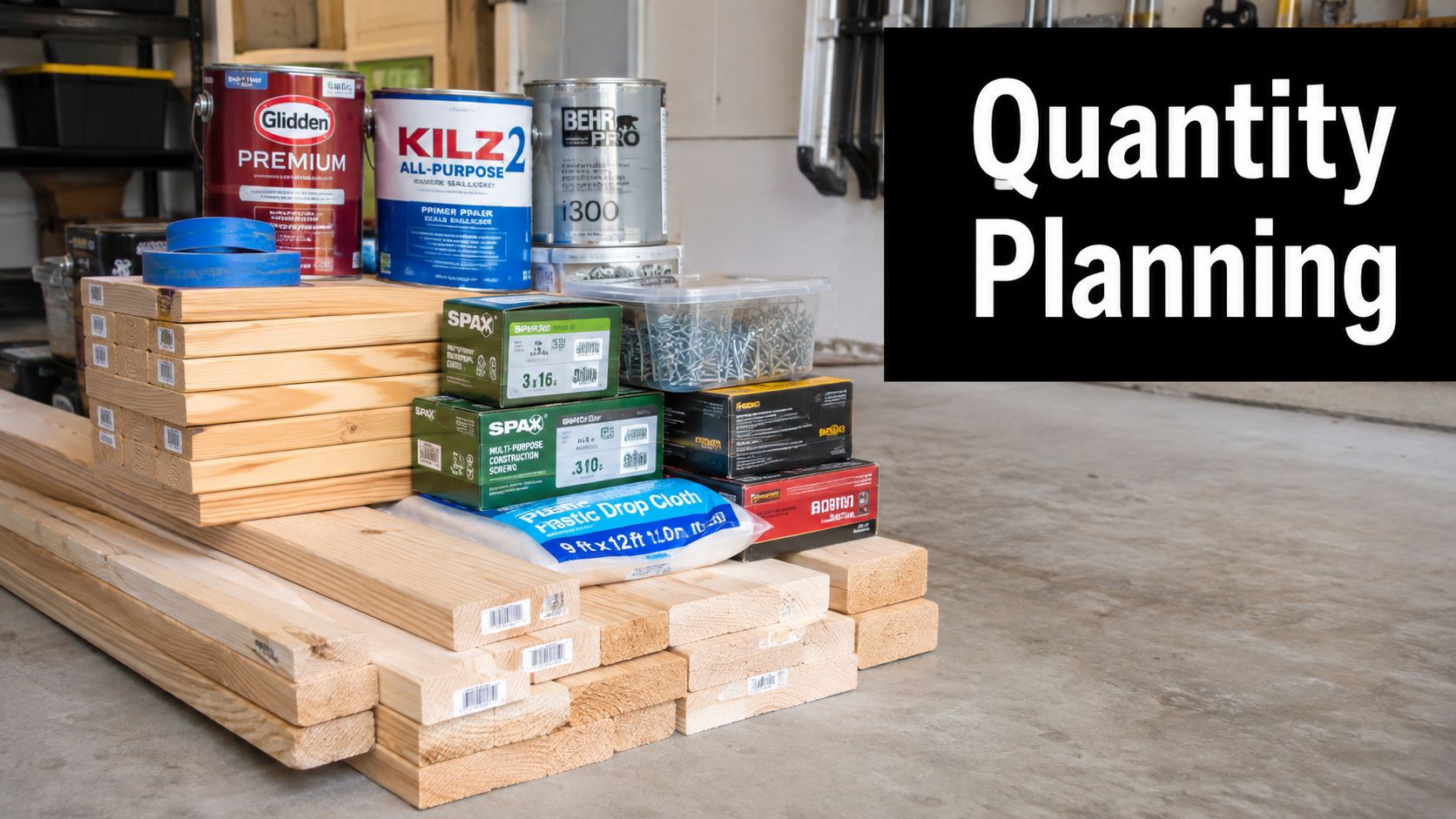
Quantity planning starts with the asset, not the supplier's pack size. Measure the repair area, identify the connection pattern, and add a modest job reserve for damaged boards, dropped fasteners, and discoveries made during removal. Don't turn that reserve into blind over-ordering.
Single-family decks and fences
For a deck, use this working formula:
Deck screws required = number of boards × number of joists × screws per board-to-joist connection.
A 1,500-square-foot deck still needs its actual board length, board width, spacing, joist layout, edge details, and fastening specification before anyone can produce a defensible order. Use the deck board spacing calculator to establish layout inputs, then count fastening points rather than guessing from floor area.
For fences, count posts first. The basic post-cap quantity is:
Number of posts × one cap per post, plus replacements for known damaged caps.
Don't order caps by fence length alone. Corners, gates, changes in grade, and shared property lines can alter post counts, and a true 6×6 post won't take the same cap as a nominally labelled smaller post. Confirm the measured post size before choosing pyramid, ball, or decorative styles.
Multi-unit and commercial properties
Multi-unit properties should use an asset register. Group supplies by building, exterior structure, gate type, and recurring repair category. If several sites use the same Decorex Hardware screw, hinge pattern, or anchor, a multi-pack can reduce packaging and purchasing friction. If each property uses a different finish or dimension, consolidate only the common items and keep project-specific products separate.
Commercial sites need two stocks. The first is an emergency reserve, containing fasteners, washers, hinges, anchors, brackets, sealants, and basic safety equipment for failures that affect access or safety. The second is a routine reserve, sized around scheduled inspections and planned replacement. Mixing these stocks makes emergency parts disappear into ordinary work.
A simple reorder trigger
Record opening quantity, issues, damaged returns, and current balance. Reorder when the balance reaches the amount needed for the next planned maintenance cycle plus the known emergency reserve. This approach works better than buying a large quantity merely because the unit price looks attractive, especially for finishes that can age, colours that change, or products that aren't used across the whole portfolio.
Budgeting and Procurement Strategies for Maintenance Supplies
A maintenance budget should measure installed cost, not just invoice cost. A low-priced screw that strips, rusts, or snaps can consume more money through extraction, replacement, travel, and surface repair than a properly specified product would have cost. The same applies to hinges that sag, brackets that bend, and anchors selected without regard to the substrate.
Start vendor evaluation with four questions:
- Can the supplier provide the exact size and finish repeatedly? Consistency matters when a portfolio uses standard repair specifications.
- Are pack sizes suited to the work? A multi-pack helps when the same fastener is consumed often, but it becomes waste when the product is rarely used.
- Are pricing and support clear? XTREME EDEALS INC. presents CAD pricing and offers toll-free support for its Ontario and New York operations, which can simplify purchasing for teams working across those locations.
- Can the supplier support a consolidated order? One-stop purchasing can reduce fragmented invoices and missed components, but only if the catalogue includes the necessary anchors, connectors, screws, hinges, caps, and accessories.
Premium versus budget hardware
Premium hardware earns its place where failure is expensive or exposure is severe. Use the higher-spec product for coastal gates, structural connections, frequently used access points, and repairs where replacement requires dismantling finished work. A budget alternative may be acceptable for a sheltered, low-load, easily accessible application, provided its finish and load suitability are verified.
Don't make brand selection by reputation alone. Compare the actual finish, substrate compatibility, dimensions, head design, thread pattern, load requirement, and installation method. Decorex Hardware and Nuvo Iron may both appear in a hardware discussion, but decorative appeal doesn't replace a proper structural specification.
Buy before the repair window
Seasonal buying is less about predicting a perfect sale and more about avoiding a labour interruption. Order routine exterior hardware before inspection cycles, replenish safety items after issue, and place consolidated orders when several properties need the same product. Keep a written record of substitutions. A product that appears equivalent can behave differently in treated timber, concrete, wet areas, or salt-exposed locations.
Canadian maintenance data supports treating upkeep as a recurring operating activity rather than an occasional event. Statistics Canada's housing maintenance and repair expenditure series provides a national and provincial framework for tracking that activity, while NRC research cites average annual building maintenance expenditure of $5.79 per m², about 0.46% of estimated replacement cost, with labour demand around 6 minutes per m² per year, excluding contract cleaning. Those benchmarks aren't a California quote, but they reinforce the procurement lesson: small, repeated omissions can erode the margin of a planned maintenance programme.
Storage Systems and Inventory Management Routines
Hardware fails in storage when managers treat a storeroom like a shed. Moisture-sensitive fasteners need a dry location, sealed packaging, and separation from wet tools, soil, cleaning chemicals, and leaking containers. Open cartons on a concrete floor invite corrosion and make it difficult to tell whether a product is unused, contaminated, or already partly depleted.

A workable storeroom layout
Place frequently issued screws, washers, hinges, and anchors at eye level. Store heavier boxes low, keep sharp items contained, and separate stainless, galvanised, coated, and plain-steel products so staff don't grab the wrong finish. Label every bin with product name, size, finish, pack quantity, approved application, and reorder point.
Use first-in, first-out rotation for sealants, coatings, adhesives, and cleaning products where shelf life or performance can change. Inspect packaging for swelling, leaks, rust staining, torn seals, and illegible labels. Quarantine questionable stock instead of returning it to the active bin.
Storage rule: If a technician can't identify the part, its finish, and its intended use without opening three boxes, the inventory system is already costing money.
Check-in and check-out control
A basic digital log works for a small portfolio. Record the property, work order, person taking the item, quantity, date, and remaining balance. For larger operations, use barcode or mobile inventory software, but don't add technology without assigning responsibility for updates.
Ontario's property-maintenance regulation provides a useful trade-practice benchmark for any maintenance team working with exposed building elements. Materials and workmanship should be accepted as good trade practice, while the envelope remains structurally sound, watertight, damp-proofed, and protected from weather, fungus, dry rot, rodents, vermin, and insects under the Ontario maintenance regulation. That supports choosing moisture-resistant fasteners, corrosion-resistant hangers and brackets, and sealed exterior hardware rather than relying on appearance at installation.
The same guidance highlights the importance of leak-free, unobstructed, non-freezing plumbing and dry, mildew-free storage areas. For larger facilities, the organisation principles used in facilities storage for healthcare can help shape labelled zones, controlled access, and auditable issue records even when the property isn't a healthcare site.
Seasonal Maintenance Planning and Safety Compliance
A property maintenance supplies programme earns its keep when it follows the calendar. California's climate varies widely, but exterior hardware still needs planned inspection because sun, moisture, movement, salt, and debris attack connections long before a resident reports a failure.
Spring is the right time to inspect decks, stairs, rails, gates, and post connections. California deck guidance commonly uses a 30-inch height trigger for guards, a 36-inch minimum guard height for many residential decks, and a 42-inch minimum for higher-deck conditions, according to the Santa Rosa deck and railing details. Measure the guard, check post stiffness, inspect brackets and fastener heads, and replace compromised components before the deck becomes a safety complaint.

A quarterly working calendar
- Spring: Inspect deck railing hardware, post bases, stairs, gates, and drainage paths. Restock screws, anchors, brackets, gloves, eye protection, and compliant exterior cleaners.
- Summer: Check fence post stability, cap integrity, gate alignment, exposed sealants, and sun-damaged finishes. Replace loose or rust-marked hardware before wildfire-season access routes become difficult to maintain.
- Fall: Clear gutters and debris, check roof and siding penetrations, inspect sealants, and prepare fasteners and hangers for increased moisture. Confirm that storage areas remain dry and that emergency stock hasn't been consumed unnoticed.
- Winter: Weatherproof exposed connections, monitor leaks and drainage, protect stored materials from dampness, and keep access hardware operational. In freeze-prone areas, inspect plumbing protection and replace supplies that can't meet the environmental exposure.
Cleaning products deserve their own compliance check. California state guidance requires exterior cleaning solutions to be Green Seal certified or equivalent and to conform to EPP guidelines, so don't substitute an unverified chemical merely because it costs less or sits closer on the shelf.
The property-management shift from reactive repairs to planned inspections also makes operational sense for HOAs and landlords. Repair histories tell you which hinges, screws, anchors, caps, and sealants deserve a permanent reserve. California community associations collectively spend over $6.6 billion annually on maintenance, according to Southern California property-management coverage. That scale makes stock discipline more than a DIY convenience. It is a way to protect access, reduce callbacks, and keep crews working.
The following video can supplement a written inspection routine, but it doesn't replace local code review or a qualified inspection where structural safety is in doubt.
XTREME EDEALS offers deck and fence hardware, post caps, fasteners, anchors, hinges, brackets, and multi-pack options for planned property maintenance work. Visit XTREME EDEALS INC. to organise dependable supplies around your property's exposure, repair history, and seasonal buying schedule.