
Reclaim Your Weekends: Fences That Work for You
A good fence should mark the property line, add privacy, and clean up the look of the yard. It shouldn't turn into a yearly maintenance project that eats up Saturdays with scraping, staining, sealing, and replacing warped boards. If you're standing in the yard right now looking at a fence that needs attention again, you're not alone.
The best low maintenance fence ideas all do the same basic job. They resist moisture, hold their shape, and don't depend on constant refinishing to stay presentable. Just as important, they use the right hardware at the start so posts stay stable, panels stay aligned, and water doesn't work its way into the weak points.
That systems approach is what separates a fence that still looks sharp years later from one that starts leaning, rattling, or discolouring long before it should. Materials matter. So do post caps, brackets, anchors, carriage bolts, lag bolts, and corrosion-resistant fasteners.
If you're also refreshing the rest of the yard, this guide to beautiful, easy-care landscaping pairs well with any of the fence styles below.
1. Vinyl Fence Panels with Decorex Hardware Post Caps
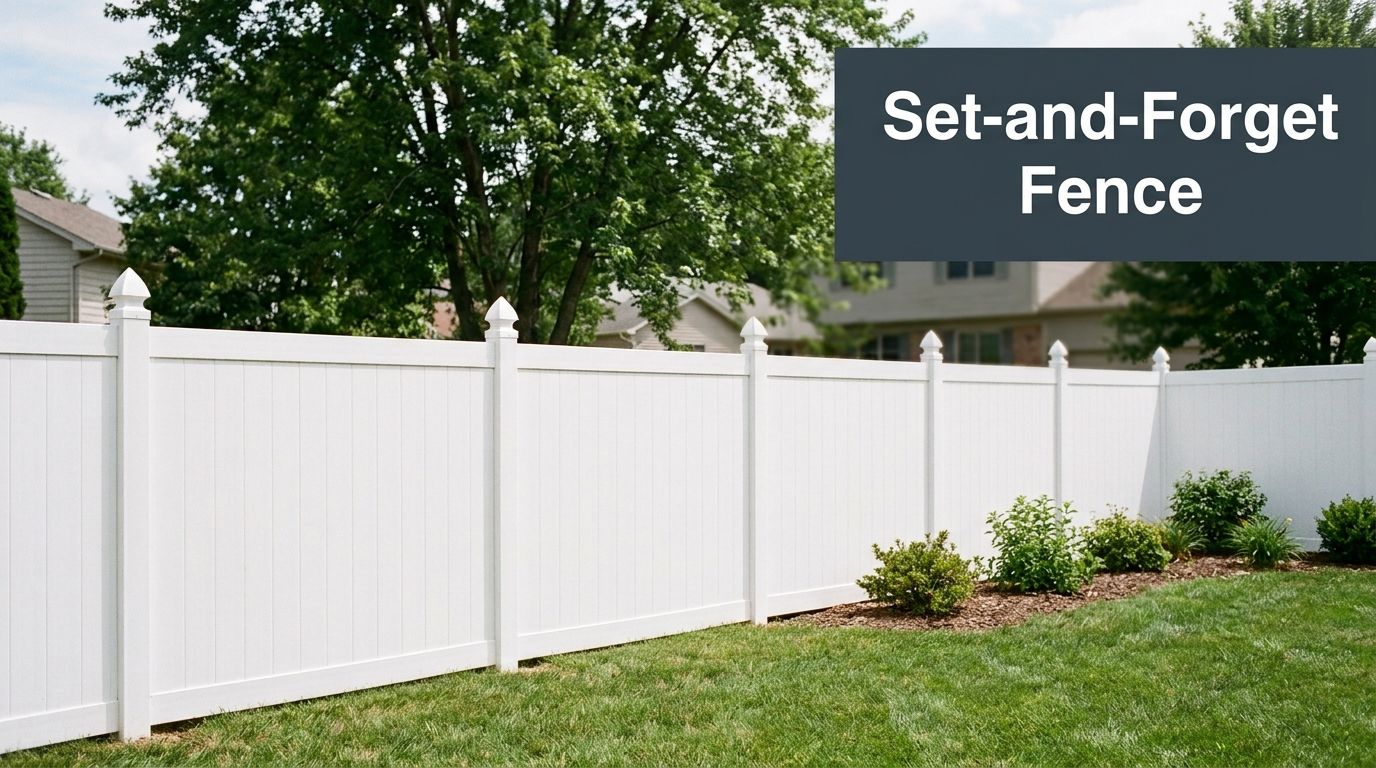
Vinyl is still one of the easiest answers when homeowners ask for low maintenance fence ideas that won't become another repainting job. It stays clean-looking with basic washing, doesn't need staining or sealing, and gives a tidy, uniform finish that works especially well in suburban backyards and HOA-controlled communities.
In California, vinyl fencing is designed to last up to 25 years, and wood fencing there often needs annual maintenance that averages about $200 per year, while vinyl cuts that upkeep to near zero for the average DIY homeowner according to this California vinyl fencing discussion and summary. That's the kind of difference people feel after a few seasons.
Where vinyl works best
A white privacy fence around a family backyard is the obvious use, but vinyl also fits waterfront properties where moisture is hard on wood and painted finishes. It's also a smart pick when you want every panel to match and stay that way.
Finish the posts properly and the whole job looks more intentional. Decorex Hardware pyramid caps or ball caps give vinyl posts a cleaner top line while helping shield the post opening from water and debris. Matching styles are easy to browse in this Decorex fence post cap collection.
Practical rule: Don't treat post caps like decoration only. On a low-maintenance build, they're part of the weather defence.
A few installation habits make vinyl stay low maintenance instead of just low effort on day one:
- Use solid post base support: Set posts straight and use proper base brackets where the system calls for them so the fence doesn't start wandering out of line.
- Clean gently: Mild soap and water are enough for most dirt. Aggressive pressure washing can do more harm than good.
- Check corners and bottoms: Leaves, mulch, and grime collect where panels meet posts. Clear those spots before they stain.
2. Metal Composite Fencing with Nuvo Iron Alternatives
If you want a fence that reads modern without feeling industrial, metal composite systems are one of the strongest options on the board. You get the rigidity of a metal frame with infill panels that don't ask for constant coatings, and the finished look suits newer homes, commercial edges, and side-yard runs where plain wood can feel dated fast.
This is also where brand comparison matters. Nuvo Iron is a familiar name in the category, but there are good alternatives when you want a broader hardware package and more finishing options in one order. For homeowners and contractors trying to build a cleaner full system, this new trend fencing selection is a practical place to start.
Why the system matters more than the panel
A lot of people choose the panel style first and only think about hardware later. That's backwards on composite-metal builds. The frame, the connectors, the post treatment, and the fastener choice do more to determine long-term performance than the colour sample.
This style works well on modern residential developments, mixed-use properties, and yards that need privacy without the heavy look of full masonry or oversized wood boards. Composite infill keeps the face cleaner over time, while the metal structure handles the load.
Use rust-resistant fasteners, stable post base brackets, and caps that shed water. That's what keeps a sleek fence from becoming a maintenance trap.
For a polished finish, pair the assembly with Decorex Hardware post caps in pyramid or ball profiles. If the design includes framed sections or gate tie-ins, use carriage bolts and lag bolts where you need mechanical strength instead of relying on undersized generic screws. Annual cleaning is simple. A light wash removes surface grime and keeps the finish from looking chalky or neglected.
3. Aluminum Privacy Fencing with Decorex Post Caps
Aluminum privacy fencing makes sense when you want a clean look, lighter material handling, and very little upkeep. It's one of the easier systems to work with on installs where labour efficiency matters, and it's especially appealing for long fence lines where heavier materials slow everything down.
A useful point in aluminum's favour is simple: it's described as virtually maintenance-free and lets homeowners preserve visibility while avoiding the rot, rust, or paint breakdown that affects other materials, as noted in this aluminum fence homeowner discussion. That benefit shows up quickly on exposed properties where painted wood starts looking tired early.
Best uses for aluminum privacy sections
Aluminum isn't just for ornamental front-yard fencing anymore. Privacy-grade panels work well on side yards, pool perimeters, low-visibility boundary runs, and coastal properties where rust resistance matters. On a DIY build, lighter panel weight also makes handling and layout simpler.
To keep the job looking professional, top the posts with Decorex Hardware pyramid caps. They sharpen the lines of the fence and protect exposed post tops at the same time. For the structure itself, use post base brackets, lag bolts, and carriage bolts from Xtreme eDeals rather than mixing in whatever's on the truck.
A few habits keep aluminum installations trouble-free:
- Pre-drill cleanly: Carriage bolts through pre-drilled holes produce a neater connection than forcing hardware through thin material.
- Support the base: A stable bracketed base prevents racking and misalignment over time.
- Rinse yearly: Dust, pollen, and road grime can dull the finish. A hose-down is usually enough.
On properties that need a refined look without a heavy visual barrier, aluminum delivers a strong balance of appearance, ease of installation, and low long-term fuss.
4. Composite Lumber Fencing with Premium Hardware Finishing
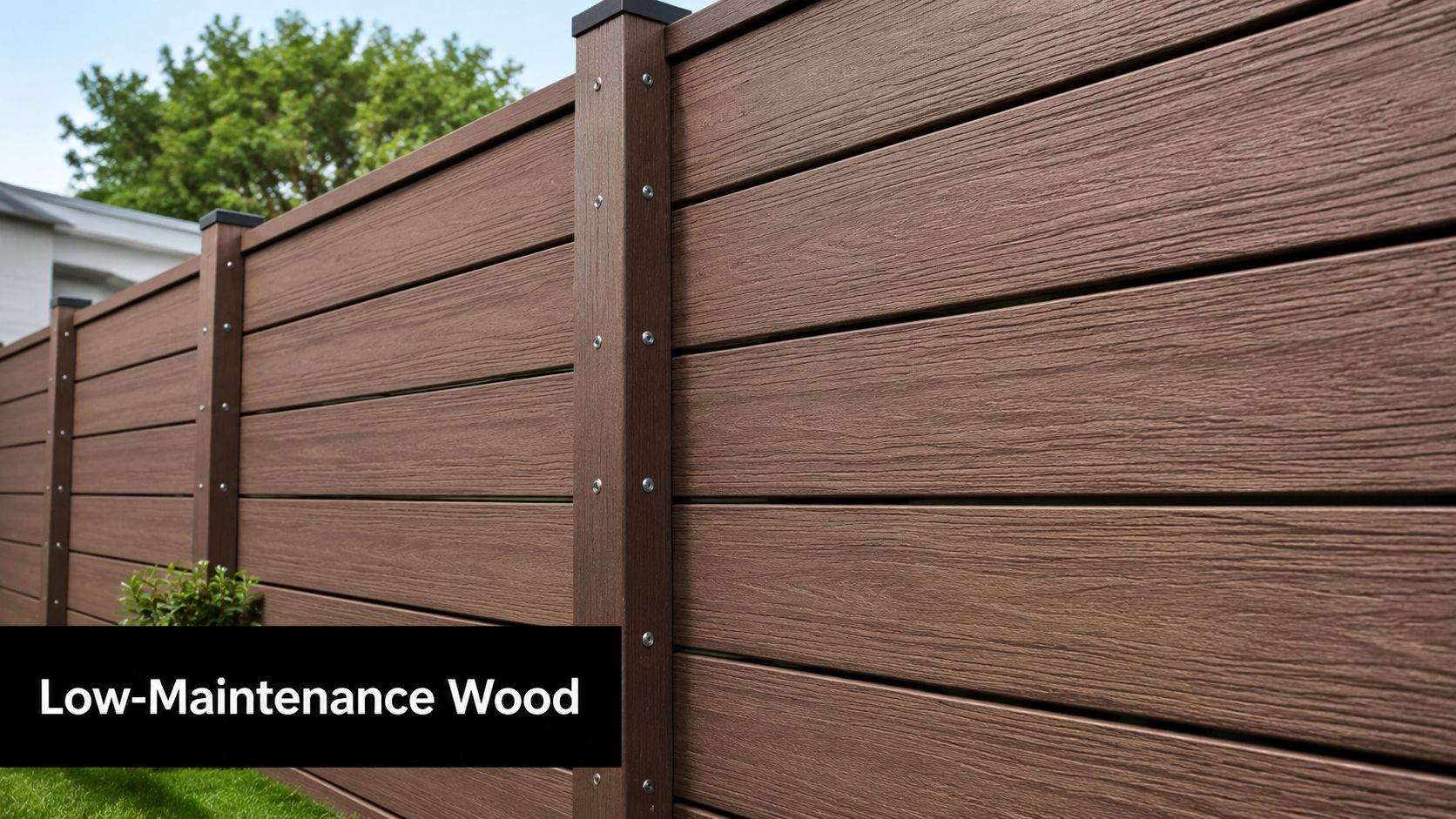
Composite lumber is the option I recommend to people who still want the warmth of a wood-look fence but are tired of wood behaving like wood. It gives you the grain-inspired appearance without asking for annual staining and without the usual cycle of splinters, cupping, and rotting at the vulnerable points.
PVC vinyl fencing is also widely recognised as lasting longer than traditional wood and needing far less maintenance, avoiding the regular staining, painting, or sealing wood requires, as noted in this Home Depot privacy fence ideas guide. Composite belongs in that same conversation for homeowners who want a less plastic-looking finish.
Hardware choices that keep composite looking good
Composite boards need support that respects their weight and movement. That means using proper post base brackets and joist hangers, not improvised framing shortcuts. Stainless fasteners are worth it here because rust streaks stand out badly on composite faces.
For finishing details, Decorex Hardware ball caps and finial-style post caps work especially well on composite builds. They soften the engineered look and make the fence feel finished rather than assembled.
- Leave breathing room: Proper spacing helps with airflow and keeps surface grime from trapping moisture.
- Choose clean fasteners: Stainless steel helps prevent staining around the connection points.
- Wash, don't blast: Mild soap and a soft wash are safer than pressure washing, which can rough up some surfaces.
Composite is a strong fit for eco-conscious builds, modern homes, and any property where previous wood fencing has been a maintenance headache. If the goal is a wood-inspired fence that doesn't keep dragging you back into repair mode, this is one of the most practical routes.
5. Steel Panel Fencing with Corrosion-Resistant Coatings
Steel panel fencing is for homeowners and contractors who want strength first and don't want to baby the finished product. It looks sharp on contemporary homes, handles hard use well, and gives you a serious structural upgrade over standard wood-panel construction.
In California, steel-based low-maintenance fencing systems average about $35 per linear foot in upkeep over 20 years, while traditional wood averages about $55 per linear foot in the same period, which reflects a 36% reduction in long-term maintenance expense according to this steel versus wood maintenance comparison. That's the sort of long-view math that makes a higher-quality install easier to justify.
Where steel earns its keep
Steel is a good answer for urban lots, security-focused side and rear boundaries, and exposed sites where weaker materials take a beating. Powder-coated black and bronze finishes usually wear well visually because they hide fingerprints and everyday dust better than brighter or glossier colours.
The weak point on steel isn't the panel. It's the damaged finish, poor water management, or the wrong hardware at the connections. Use Decorex Hardware pyramid post caps to close off exposed tops, and pair the installation with proper post base brackets, stainless lag bolts, and stainless carriage bolts so corrosion doesn't start at the fastener line.
Field note: If the coating gets chipped during installation, touch it up right away. Bare metal never improves with time.
Steel isn't the cheapest path in many cases, but it often becomes the lower-hassle path. On projects where clients are done replacing boards, repainting surfaces, and correcting lean, steel usually stays on the shortlist for good reason.
6. Corrugated Metal Privacy Panels with Decorex Hardware Caps
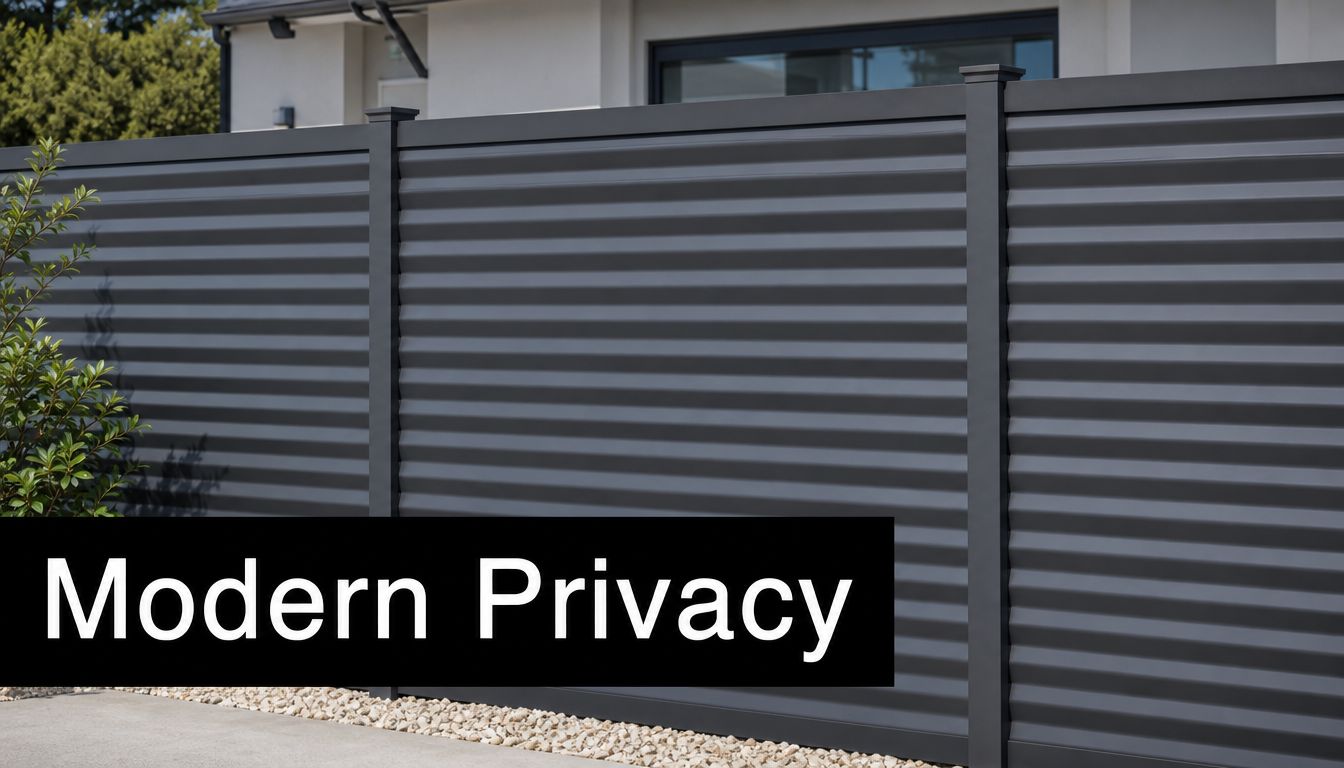
Corrugated metal privacy fencing has moved well beyond agricultural use. In the right setting, it looks intentional, crisp, and modern. I like it for side yards, courtyard enclosures, rental properties, and urban backyards where you want privacy with a tougher skin than timber.
The profile itself helps. Corrugation adds rigidity, so the panel carries itself well and resists the flimsy feel that flat sheet systems can have when they're underbuilt.
The details that separate clean installs from noisy ones
This fence style can look excellent or cheap depending on the trim work and hardware. Use Decorex Hardware ball caps or pyramid caps to finish the posts, and don't skimp on the connection hardware. Stainless hardware matters here because rust bloom around fasteners ruins the look quickly.
For builders sourcing the right connection pieces, Xtreme eDeals stocks stainless steel fasteners for fencing projects that suit this kind of assembly far better than mixed-bin hardware. If the design uses wood or metal rails behind the sheet, quality joist hangers and carriage bolts help keep the frame rigid.
A few practical choices make corrugated panels quieter and longer-lasting:
- Seal seams carefully: A compatible silicone-based sealant helps keep water from creeping into the overlap points.
- Choose the finish with care: Powder-coated panels often look cleaner in residential settings than basic galvanized sheets.
- Control hardware spacing: Even, properly tightened fasteners reduce rattling and panel oil-canning.
This style isn't for every home, but on contemporary properties and hard-working backyard spaces, it delivers privacy with very little upkeep.
7. Horizontal Slat Wood Fencing with Stainless Steel Hardware
If you want natural wood, horizontal slats are the version I'd call the most defensible from a low-maintenance standpoint. Not maintenance-free. Just smarter than a lot of old vertical-board builds when it's laid out properly and fastened with the right hardware.
The reason is simple. Horizontal slats can be detailed for airflow, drainage, and cleaner visual lines. Done badly, they sag, cup, and trap water. Done properly, they age more gracefully and are easier to service section by section.
How to make wood less demanding
Hardware plays a critical role. Use stainless steel carriage bolts, lag bolts, and other exterior-rated fasteners so you're not building stain streaks and premature failure into the fence from the start. Post base brackets also matter because wood that sits in persistent wet contact won't stay low maintenance for long.
Decorex Hardware ball caps or pyramid caps finish the top of the posts and reduce direct water entry at the end grain. Slat spacing is equally important. Small gaps allow airflow and let water drain instead of lingering between boards.
Before the next step, this installation video is worth a look:
There's also a climate reality to keep in mind. Existing content often fails to address California slope installs, frost-line assumptions, and seismic stability requirements, which leads to fence posts and assemblies that fail during minor ground shifts or erosion, as discussed in this review of fence-on-slope guidance and its gaps. On sloped sites especially, the post engineering matters as much as the slat style.
Wood can still be the right choice. It just stops being low maintenance the moment you ignore drainage, slope, and hardware quality.
If you like the horizontal look but want less upkeep, consider composite slats in the same layout.
8. Hybrid Vinyl-Metal Fencing Systems with Decorex Hardware Integration
Hybrid systems combine two things that usually compete with each other. Vinyl brings the easy-care surface. Metal brings the backbone. When the two are designed to work together, you get a fence that looks clean like vinyl but holds itself more like a structural metal assembly.
This is one of the strongest choices for homeowners who want low maintenance fence ideas without the all-or-nothing trade-off of pure vinyl or full steel. The visual side stays approachable and residential. The frame side is tougher and better suited to long service.
Best fit for demanding sites
Hybrid systems make a lot of sense on wind-exposed lots, high-end residential projects, and properties where a long fence run needs to stay straight and consistent. They also work well for owners who care about appearance but don't want to keep revisiting post movement, panel sag, or recurring finish work.
There is one caveat. Climate and site conditions still matter. Many general guides call vinyl or aluminum low maintenance but don't quantify how they perform in California heat zones where vinyl can warp and aluminum can fade faster, while also skipping practical details like thermal expansion gaps for arid climates, as outlined in this discussion of low-maintenance fence guidance gaps in California conditions. That's why installer experience matters on hybrid jobs.
For the finish package, use Decorex Hardware pyramid or ball post caps, proper post base brackets, and joist hangers where the system design calls for them. Keep every fastener stainless or properly galvanized. Then inspect the vinyl-to-metal connection points once a year to catch any movement before it turns into noise or misalignment.
This style isn't the cheapest way to fence a yard. It is one of the better ways to build something that looks residential and behaves like a more engineered system.
8-Point Low-Maintenance Fence Comparison
| Fence Type | 🔄 Implementation Complexity | ⚡ Resource Requirements | ⭐ Key Advantages / Effectiveness | 📊 Expected Outcomes / Impact | 💡 Ideal Use Cases & Tips |
|---|---|---|---|---|---|
| Vinyl Fence Panels with Decorex Hardware Post Caps | Low–Medium; straightforward panel installation, DIY possible | Moderate upfront cost; minimal ongoing labor | ⭐⭐⭐⭐ Durable, fade-resistant, low maintenance (20–30 years) | Long lifespan, uniform privacy, low lifecycle upkeep | Suburban/HOA/waterfront, choose pyramid/ball caps; annual debris check; mild soap cleaning |
| Metal Composite Fencing with Nuvo Iron Alternatives | Medium–High; modular but usually pro-installed | Higher material & installation costs; rust‑resistant coatings/fasteners | ⭐⭐⭐⭐⭐ Extremely durable in coastal/humid conditions; modular repairable panels | Sleek modern look, excellent wind/impact resistance, long service life | Modern residential/commercial/coastal, request rust‑resistant fasteners; clean annually |
| Aluminum Privacy Fencing with Decorex Post Caps | Low; lightweight panels enable DIY or faster pro install | Low–Moderate cost; powder‑coated finishes and basic hardware | ⭐⭐⭐⭐ Corrosion‑resistant, lightweight, low maintenance | Easy installation, rust‑proof performance, moderate privacy | DIY projects/coastal, use proper post base brackets; hose annually; use carriage bolts |
| Composite Lumber Fencing with Premium Hardware Finishing | Medium; heavier material requires strong posts and careful handling | Higher upfront cost; stainless fasteners and robust support required | ⭐⭐⭐⭐ Wood‑like appearance, eco‑friendly, long lifespan (20+ years) | Authentic wood look with reduced maintenance vs. timber | Eco‑conscious homes, ensure drainage, stainless fasteners, avoid pressure washing |
| Steel Panel Fencing with Corrosion-Resistant Coatings | High; professional installation recommended for structural integrity | High material & labor costs; powder‑coat/galvanize + stainless fasteners | ⭐⭐⭐⭐⭐ Exceptional strength and corrosion resistance when properly finished | Secure, industrial aesthetic; outstanding durability in harsh climates | Urban/commercial/coastal, use touch‑up coat for chips; pick dark finishes to mask marks |
| Corrugated Metal Privacy Panels with Decorex Hardware Caps | Medium; requires secure fastening to avoid rattling | Moderate cost; galvanized or powder‑coated panels and fasteners | ⭐⭐⭐⭐ Durable, self‑supporting, minimal maintenance | Strong privacy, distinctive industrial look, low upkeep | Trendy urban yards/commercial, seal seams with silicone; use stainless fasteners |
| Horizontal Slat Wood Fencing with Stainless Steel Hardware | Medium–High; precision install and drainage considerations | Moderate cost upfront + periodic sealing/maintenance | ⭐⭐⭐ Designer appearance and warm wood aesthetic, but maintenance needed | High visual impact; requires regular upkeep to maintain condition | Mid‑century/modern homes, use stainless hardware, space slats for drainage, reseal every 2–3 yrs |
| Hybrid Vinyl‑Metal Fencing Systems with Decorex Hardware Integration | High; engineered system requires experienced installers | Premium pricing; combination of vinyl panels and metal framing, stainless fasteners | ⭐⭐⭐⭐⭐ Combines vinyl durability with metal strength; very low maintenance | Superior structural integrity, excellent for high‑wind/coastal zones, long lifespan | High‑end residential/commercial, hire experienced installers, verify warranties, use Decorex caps |
Choosing the Right Fence for a Maintenance-Free Future
The right fence isn't just about material. It's about whether the whole assembly is built to avoid the problems that create maintenance in the first place. Rot starts at trapped moisture. Lean starts at weak bases and poor post anchoring. Rust starts at damaged coatings and cheap fasteners. That's why the best low maintenance fence ideas always come back to systems, not just panels.
Vinyl makes sense when you want a clean, uniform look and the least day-to-day attention. Composite works well when you want a warmer appearance without taking on wood's usual workload. Aluminum is a smart fit when lighter handling, clean sightlines, and simple care matter most. Steel earns its place when strength and long-term durability are the priority. Corrugated metal is great for modern privacy. Horizontal wood still has a place if you're willing to detail it properly. Hybrid vinyl-metal systems are often the best middle ground for owners who want a residential look with a tougher frame.
The hardware side shouldn't be treated as an afterthought. Decorex Hardware post caps help finish the fence visually, but they also help protect vulnerable post tops from weather and debris. Post base brackets, joist hangers, carriage bolts, lag bolts, anchors, washers, and corrosion-resistant fasteners all affect how long the fence stays straight, quiet, and solid. The material can be low maintenance on paper and still become high maintenance in the yard if those parts are handled poorly.
That's also why contractor judgment matters on difficult terrain and demanding climates. Slopes, drainage patterns, heat exposure, moisture, and local movement in the ground all change what works. If you're comparing options for a practical installation path, it also helps to look at adjacent projects where labour and durability are major factors, such as this guide on hiring chain link fence installers.
A good fence should free up time, not consume it. Choose the style that fits the property, then build it like a complete exterior system. Better posts, better caps, better brackets, and better fasteners always pay off. That's what keeps the fence looking good and keeps you out of the cycle of patch, repaint, replace, and repeat.
XTREME EDEALS INC. makes it easier to build that kind of fence from the start. Their catalogue includes Decorex Hardware post caps in multiple profiles and sizes, along with post base brackets, joist hangers, carriage bolts, lag bolts, anchors, washers, gate hardware, and other project essentials for DIY homeowners and trade pros. If you want one place to source the finishing details that help a fence stay low maintenance, shop XTREME EDEALS INC..