

You've hung the gate, set the hinges, checked the swing, and the project looks finished. Then you get to the latch and realise that this small piece of hardware decides how the gate feels every single day. It also decides whether the gate stays shut, whether a child can open it, and whether the setup will hold up through weather, sag, and repeat use.
That's why gate latches types matter more than is commonly assumed. A latch isn't just a closure. It's a safety device, a security point, and a wear item all at once. The right one makes the gate easy to use and hard to misuse. The wrong one gives you rattling, misalignment, call-backs, or a failed inspection.
Choosing Your Gate Latch A Guide to Security and Style
A customer walks in with a clear idea of the gate they want. Black hardware for a steel picket gate. Oil-rubbed bronze for cedar. Ornamental details for curb appeal. Then we get to the first practical question. What does this gate need to prevent, and who needs to be able to open it?
That question changes the whole decision.
A side-yard gate, a livestock gate, and a pool enclosure can all be the same width and still need completely different latch hardware. Daily foot traffic calls for easy operation and dependable closure. Farm and utility gates need hardware that keeps working after dust, sag, mud, and rough handling. Pool gates are judged by a stricter standard. They need to shut and latch on their own, every time, because the latch is part of the safety barrier, not just the finishing hardware.
Code requirements usually settle the pool question fast. In California, residential pool barriers must use self-closing and self-latching gate hardware under Title 24 pool barrier rules. That drives latch selection toward automatic engagement, child resistance, and release placement, not decoration. If a gate is protecting access to a pool, style comes after compliance.
I tell buyers to start with the failure they cannot accept. A child getting through the gate. A horse rubbing the gate open. A side gate drifting loose in the wind. A decorative front gate that looks right but feels awkward every day. The latch should solve that exact problem first.
Gate material matters too. Wood gates move with moisture and seasonal change, so a latch with some tolerance for minor shift usually causes fewer callbacks. Metal gates stay truer but often need cleaner alignment and corrosion-resistant hardware, especially near salt air or irrigation. Vinyl and composite gates bring their own limits on fastener grip and frame reinforcement. A latch that works well on one gate can be a poor fit on another.
For many backyard and side-yard installs, a spring-loaded gate latch for everyday pedestrian gates strikes a practical balance between convenience and positive closure. For larger properties, the latch may also be one small part of a broader access plan. If the gate ties into monitored entry, remote control, or managed site access, Clouddle's integrated property security shows how physical gate hardware fits into a wider security setup.
Good latch selection starts with use case, code, and gate construction. Once those are clear, the style choices get much easier.
Understanding the Main Gate Latch Mechanisms
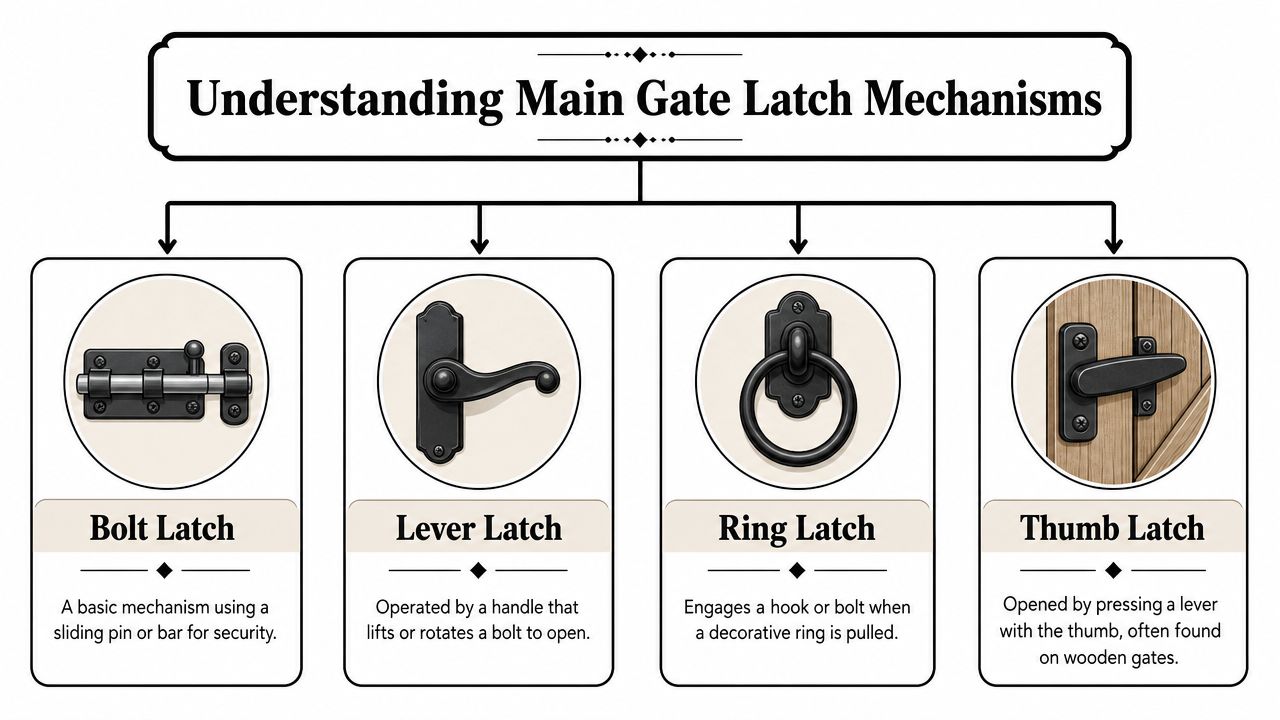
The easiest way to sort through gate latches types is to ignore marketing labels for a minute and look at the mechanics. Most gate latches fall into four functional families: bolt, lever, ring, and thumb latches. That matters because the family tells you how the latch engages, how the user opens it, and what kind of wear or misuse it handles well. Material matters too. Latch bodies are commonly made from steel, stainless steel, die-cast zinc, cast iron, bronze, or aluminum, and that choice affects corrosion resistance and service life, especially outdoors and near moisture or coastal air, as noted in Abbey Hardware's guide for fencing professionals.
Bolt latches
A bolt latch works like a sliding pin. You move the bolt into a receiver, and the gate stays put because the metal physically blocks movement. This is the straightforward mechanical approach.
That direct action is why bolt latches are common where people want a positive hold without much fuss. Slide bolts and barrel bolts sit in this family. They're easy to understand, easy to inspect, and often easy to fit if the gate and post line up properly.
The drawback is tolerance. A bolt latch usually wants decent alignment. If the gate drops, twists, or swells, the bolt may drag or miss the keep.
Lever and ring latches
A lever latch shifts the action to a handle or lever. Instead of sliding a bolt by hand, you lift or rotate the handle to retract or release the catch. These are often easier for one-handed operation, which makes sense on gates people use all day.
A ring latch does something similar through a spindle and pull ring. Turn or lift the ring, and the latch releases. Ring latches suit gates where access from both sides matters and where the appearance of the hardware is part of the finished look.
If you're pairing mechanical latch hardware with a smarter access setup, Nimbio's gate technology is a useful reference point for how physical opening hardware and managed gate access can work together.
Thumb latches and material fit
A thumb latch works a bit like a seesaw. You press the thumb piece on one side, and the latch arm on the other side lifts to release the gate. They're common on timber gates because they suit traditional joinery and look right on cottage, garden, and privacy fence applications.
Material choice matters just as much as mechanism:
- Stainless steel: Better where moisture is a concern.
- Steel: Strong and common, but finish quality matters outdoors.
- Bronze or cast iron: Often chosen when appearance is part of the brief.
- Aluminum and zinc alloys: Useful where weight and corrosion resistance matter, depending on the specific design.
For buyers comparing spring-assisted options, this spring-loaded gate latch selection shows the kind of hardware category that makes sense when a gate sees frequent movement and you want more resistance to accidental release than a basic drop-style latch provides.
A latch can be strong and still be wrong for the gate. If the mechanism fights the swing, frame shape, or user habit, it won't feel secure for long.
Comparing Common Gate Latch Types for Your Project
The quickest way to narrow the field is to ask what job the latch needs to do. Keep livestock in. Keep a side gate from drifting open. Let people open from both sides. Resist tampering. Meet pool-gate expectations. Different latch styles solve different problems.
Gate Latch Type Comparison
| Latch Type | Best For | Pros | Cons |
|---|---|---|---|
| Thumb latch | Timber garden and privacy gates | Traditional look, comfortable to use, suits decorative builds | Lower security, more moving parts exposed |
| Ring latch | Gates needing two-sided manual operation | Access from both sides, classic appearance | Not ideal where stronger retention is needed |
| Slide bolt latch | Sheds, utility gates, simple closures | Direct mechanical hold, simple operation, easy to understand | Depends on alignment, usually less convenient for frequent passage |
| Barrel bolt latch | Secondary securing point on gates and doors | Positive closure, familiar hardware | Better as a hold-fast than a main pedestrian latch |
| Gravity latch | Backyard and light farm gates | Self-latching action, simple use, good for regular traffic | Sensitive to alignment and movement |
| Spring-loaded latch | Frequent-use gates and vibration-prone locations | Better resistance to unintended release, more controlled engagement | Usually more hardware complexity |
| Bolt-secured latch | Perimeter and higher-security gates | Strong positive retention when aligned correctly | Less forgiving if the gate shifts over time |
| Key-lockable latch | Side yards, shared access, property boundaries | Adds controlled access, helps deter casual opening | More parts to install and maintain |
| Self-latching pool latch | Pool and safety-focused gates | Engages automatically, supports compliance-driven installs | Requires careful placement and setup |
| Magnetic latch | Modern safety and access setups | Clean operation, often chosen for controlled closure | Needs proper compatibility with gate and frame |
Thumb and ring latches for everyday residential use
Thumb and ring styles are usually chosen because they feel natural on traditional gates. On a stained wood gate, they often look like they belong there. They also work well where people want simple two-sided use without turning the gate into a security device.
These are good fits for:
- Garden entries: Where appearance matters and traffic is light.
- Decorative side gates: Where the gate complements the house style.
- Heritage-style projects: Where modern industrial hardware would look out of place.
What they don't do well is solve serious security or code-sensitive safety needs. They can be sturdy, but that's different from being the right answer for a pool or a high-risk access point.
Bolt latches for utility work
Bolt styles are practical hardware. If you've got a shed door, a service gate, or a gate that mostly needs to stay shut until someone deliberately opens it, they make sense.
Slide bolts are especially common because the action is obvious. The bolt travels into a receiver. Done. That simplicity is useful, but only if the gate and post stay where they're supposed to. If the opening shifts seasonally, a rigid bolt setup can become annoying fast.
On a utility gate, simple hardware usually wins. On a primary pedestrian gate, convenience starts to matter more than people expect.
Gravity and spring-loaded latches for active gates
These are the workhorses on gates people use constantly. A gravity latch closes by dropping into place, so it suits backyard gates, light agricultural settings, and family traffic where nobody wants to fiddle with a separate bolt every time.
Spring-loaded latches are a better choice when the gate sees more movement, vibration, or repeated opening and closing. They give a firmer, more controlled feel. If a gate bangs in the wind or gets used heavily by tenants, staff, or trades, spring assistance can reduce nuisance openings.
Self-latching, lockable, and magnetic options
These options solve more specific problems.
A self-latching model is the right direction when the gate must secure itself after every close. A key-lockable latch is useful when the gate separates private and shared areas. A magnetic latch often gets selected on more modern builds where buyers want clean operation and less clatter.
A useful way to judge them is to ask one question: what happens if the user does nothing? On some gates, that answer can safely be “the gate stays shut anyway.” On others, it can't.
How to Choose the Right Gate Latch
A latch should be chosen by job conditions first. A side-yard pedestrian gate, a pool gate, and a farm entrance may all look similar from a few steps back, but they fail in different ways and need different hardware for different reasons.
Match the latch to the gate itself
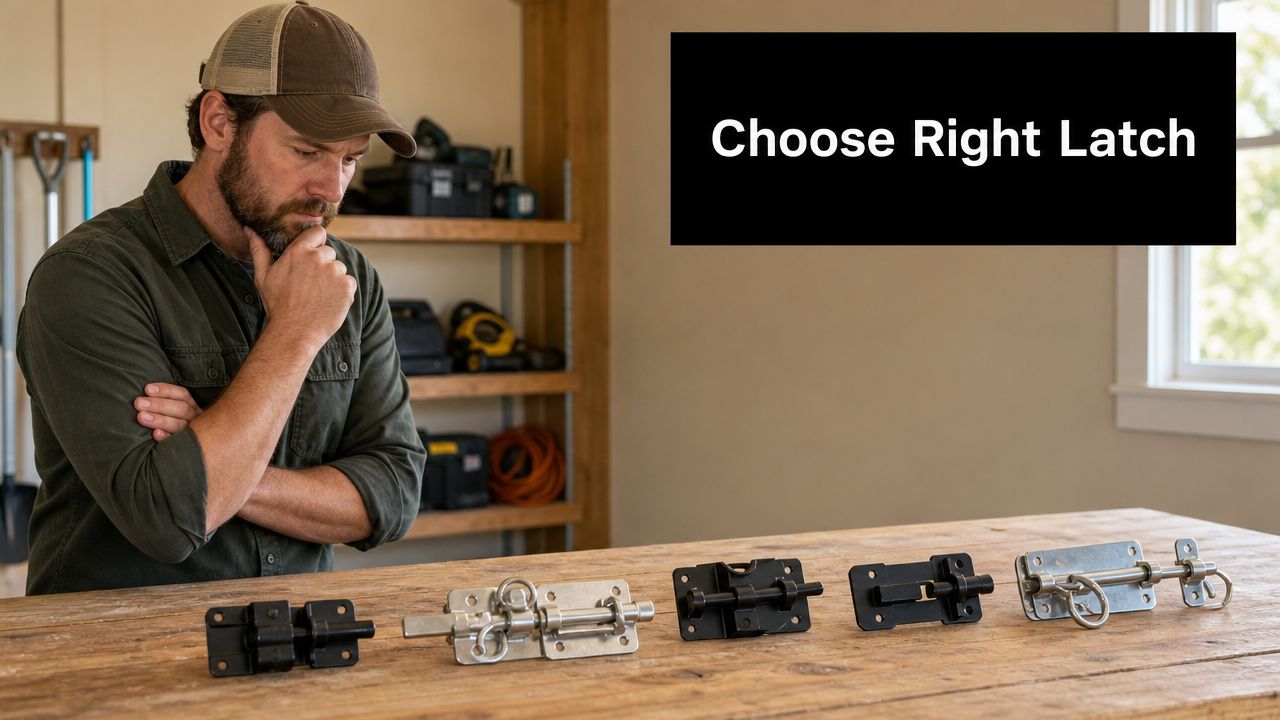
Start with the gate, not the finish board. Material, weight, frame rigidity, and post condition all affect what will keep working after a season of use.
A timber gate usually needs more tolerance because wood swells, dries, and shifts. A vinyl gate needs careful fastening so the latch does not distort the frame or loosen over time. Steel and aluminum gates stay truer, but lighter metal frames can feel sloppy if the latch has too much play.
Handing and swing direction matter too. Some latches are reversible. Others are not. That sounds minor until the gate is hung, the posts are set, and the latch body ends up on the wrong side for safe access or code compliance.
If you are sorting through materials and mounting styles, these fence and gate hardware options make it easier to narrow the field before you get into finish, lock cylinder, or trim details.
Choose by the problem you need to solve
The cleanest way to choose a latch is to ask what you are trying to prevent.
If the gate tends to sag or go out of square, avoid hardware that depends on perfect alignment every time. If the gate gets slammed by wind or used all day by tenants, staff, or kids, choose a latch that holds positively under repeated movement. If the opening separates public and private space, add keyed security or a design that is harder to defeat from the outside.
I usually break the decision down like this:
The gate moves seasonally
Choose a latch with more forgiveness in alignment and adjustment.The gate sees constant traffic
Use hardware that closes reliably and does not shake loose under repeat use.Access control matters
Choose a lockable latch or a latch that can be paired with a deadlocking function.The gate must secure itself every time
Use a true self-latching setup, not a basic latch that only works when someone closes it carefully.
That last point matters more than buyers expect.
Pool gates and other compliance-driven jobs
Pool gates should be treated as a safety and code decision first. In many jurisdictions, that means self-closing and self-latching hardware installed so the latch engages automatically and is positioned to reduce child access. On those jobs, appearance comes last. If the latch looks great but fails inspection or can be left unsecured too easily, it is the wrong product.
The same selection logic applies to daycare enclosures, shared residential access points, and commercial side gates. Choose for predictable behavior under normal human habits. People forget to pull bolts. People do not always check whether a gate caught properly. Hardware has to account for that.
For higher-risk openings, it helps to compare how other security hardware is chosen. This guide to types of container security locks shows the same principle. Match the hardware to the threat, the access pattern, and the environment, then worry about style.
Recommended Gate Latches from Our Collection
A short list helps when the choice comes down to the job in front of you. The right latch for a barn gate is rarely the right latch for a pool enclosure, and the cleanest-looking option can be the wrong one if the gate gets hard daily use.
Heavy Duty Gate Latch with Cable and Ring
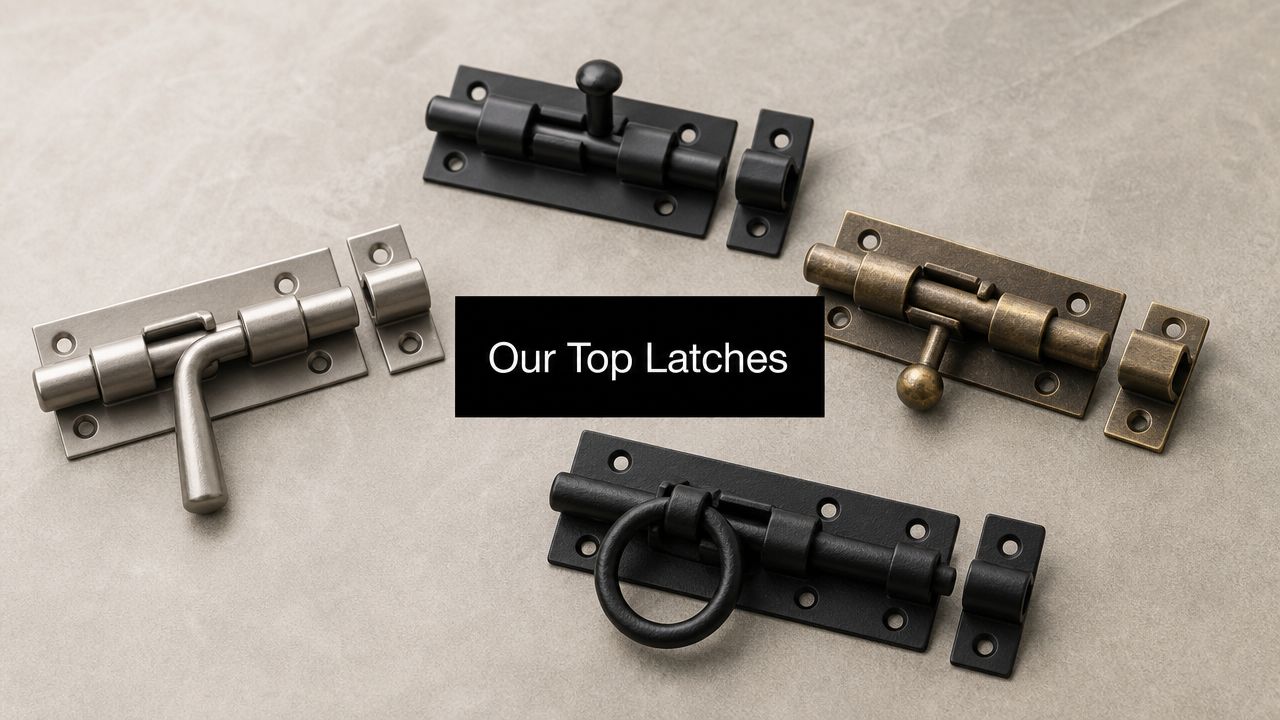
This style suits utility-focused openings where reliability and easy reach matter more than appearance. I usually point customers to a cable-and-ring latch for sheds, barn doors, garage doors, and service gates because it gives a simple mechanical pull without much fuss.
It fits best on:
- Utility doors and service gates
- Barn or outbuilding access
- Openings where a remote hand-pull release is more practical than a thumb latch
The trade-off is finish and feel. It does the job well, but it is not the latch you choose for a refined front garden gate.
Spring-loaded latch for active pedestrian gates
For side gates and backyard entries that open all day, a spring-loaded latch is often the better fit. It gives a more positive catch than a loose basic latch, which matters on gates that bounce slightly on closure or get used by kids, guests, and delivery drivers.
This type works well when you want the gate to shut and catch with less fiddling. On a lightweight timber or metal pedestrian gate, that usually means fewer callbacks for a latch that only holds when the gate is closed gently.
Key-lockable or self-latching hardware for controlled access
Shared access gates, rental properties, and child-safety areas need more than a simple catch. In those situations, the latch should match the level of control the opening requires. A key-lockable model helps limit access. A self-latching model helps the gate secure itself after normal use.
For pool surrounds and other safety-led installations, start with self-locking gate latch options and check the product details against your local code requirements, gate height, and frame material before buying.
Online retailers like XTREME EDEALS INC. make it easier to compare latch styles alongside hinges, catches, and mounting hardware, which is useful when you are trying to match the latch to the gate build rather than buying parts one by one.
The best recommendation is usually the latch that still works well after the gate settles, the weather changes, and people stop treating it carefully.
Basic Installation and Maintenance for Gate Latches
A new latch gets blamed for plenty of gate problems it did not cause. Instead, the issue is usually a gate that has dropped, twisted, or meets the post at the wrong angle. If the gate does not meet cleanly, even good hardware will wear early and start missing the catch.
Installation checks that save headaches
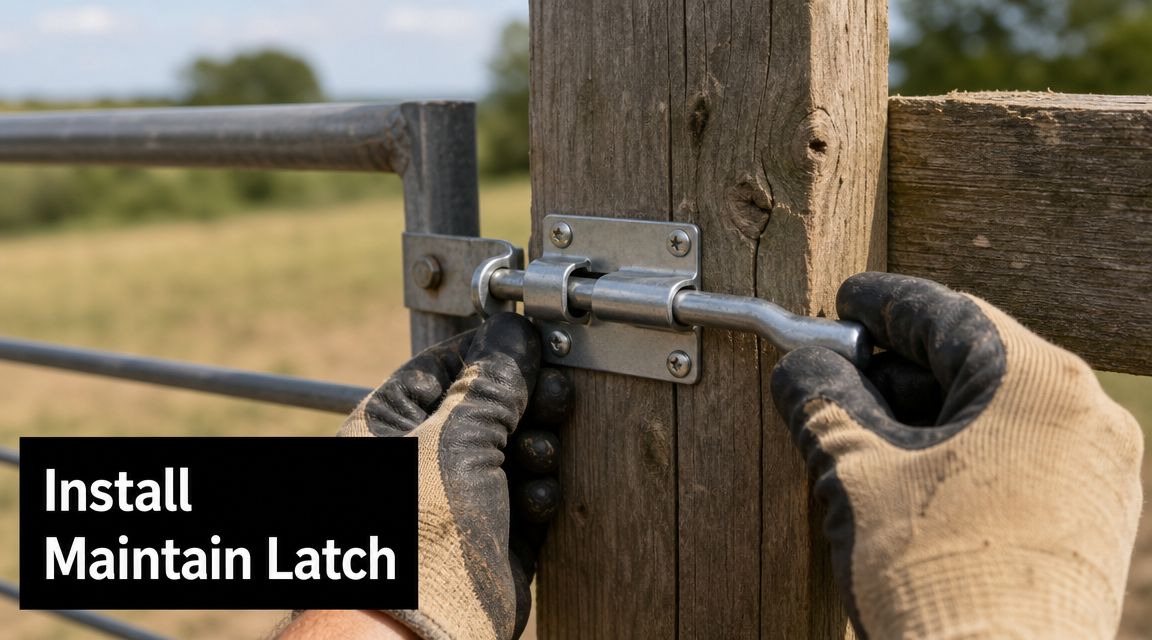
Start with the gate itself. Open and close it slowly, then watch the gap between the gate and post from top to bottom. If that gap changes noticeably, sort out the hinges or gate frame before you mount the latch. A latch should hold the gate shut, not pull a bad gate back into line every time it closes.
A dry fit saves time here. Hold both parts in place, mark the fixing points lightly, and test the closing action by hand before drilling anything permanent.
Use this checklist on any timber, vinyl, aluminum, or steel gate:
- Dry-fit first: Confirm the striker and latch body meet squarely before fixing them down.
- Check the full swing: Make sure the latch clears caps, posts, frames, and trim through the whole opening arc.
- Match the fasteners to the gate material: Wood screws, tech screws, and through-bolts each suit different frames.
- Leave room for movement: Timber gates expand in wet weather and tighten up in summer heat.
- Test repeated closure: A latch that catches once may still fail after ten normal opens and shuts.
For gates where automatic re-latching matters, such as child-safety areas or side entries that should not be left standing open, review self-locking gate latch options with the gate material, post size, and closing action in mind.
Maintenance that actually matters
Most latch maintenance is basic, but it needs to be done before wear shows up as a failed catch or a bent striker.
Start with the screws and bolts. Gates vibrate in wind, posts move with frost and moisture, and repeated use loosens hardware over time. A quick tightening check every so often prevents a lot of sloppy operation.
Then look at the moving parts:
- Clean out grit and debris: Dust, mud, and spider webs can stop a latch from returning fully.
- Lubricate lightly: A small amount of suitable lubricant helps. Too much collects dirt.
- Inspect the latch after seasonal movement: Wooden gates and long metal frames both shift enough to affect alignment.
- Watch for wear marks: Fresh rub marks usually show where the latch is striking off-center.
One practical rule helps on service calls. If the gate needs a push, lift, or second try to latch, adjust it now. Waiting usually turns a simple alignment fix into a worn latch, enlarged screw holes, or a damaged post face.
This walkthrough helps if you want to see the installation sequence in action.
A properly set latch should close and catch under normal use, with no shove, no twist, and no guesswork.
Gate Latch FAQs
Do I need a left-hand or right-hand latch
Sometimes. Some latches are made for one swing direction only, while others can be flipped during installation. Check the gate swing before you order, especially if you are replacing older hardware on an existing post layout. On retrofit jobs, a reversible latch usually saves time and avoids drilling new holes in the wrong place.
What's the difference between a latch and a lock
A latch keeps the gate closed during normal use. A lock limits access.
That distinction matters on entry gates, side yards, and pool barriers. A decorative thumb latch may hold the gate shut just fine, but it does not provide real security unless it includes a keyed cylinder, padlock point, or another locking feature.
Can I install a new latch on an old sagging gate
Yes, but correct the sag first if the gate is dropping enough to miss the catch or scrape during closing. A new latch cannot compensate for a bad hinge line, loose post, or twisted frame. It will usually bind, wear unevenly, or fail to catch consistently.
If the gate has to be lifted to latch, fix the gate before you blame the hardware.
Which latch is easiest for everyday backyard use
For a standard backyard gate, gravity and spring-assisted latches are usually the easiest to live with. They close with simple everyday use and do not ask for a separate locking step every time someone passes through.
The right choice depends on the gate itself. A light garden gate can work well with a basic gravity latch. A heavier wood gate or a gate that gets slammed by kids, dogs, or wind often benefits from a spring-assisted model with a more positive catch.
How do I make an existing gate more secure
Start with fit and alignment. Loose hinges, flexing posts, and sloppy latch engagement are common weak points, and better hardware will not solve them on their own.
After that, choose the upgrade based on the job. For a side yard, that may mean a lockable latch. For a pool gate, it may mean a self-closing, self-latching setup mounted to meet local code. For a farm or acreage gate, it usually means heavier hardware that can handle repeated impact, dirt, and weather without bending out of adjustment.
If you're replacing worn hardware or matching a latch to a new fence build, XTREME EDEALS INC. carries gate hardware, fasteners, and related fence components that can help you spec the latch, hinges, and mounting hardware together instead of piecing the project together one item at a time.