

A gate usually tells on itself before it fails. It drags a little, bounces off the post, or sits pulled shut without ever really catching. Then wind, frost, kids, dogs, and daily traffic do the rest.
That’s why a self locking gate latch is one of the smartest upgrades you can make on a fence or side yard gate. The right latch doesn’t just hold a gate closed. It closes the gap between “good enough” and reliable, repeatable security every single time the gate swings shut.
Why Your Gate Needs a Self Locking Latch
January is when a bad latch shows its flaws. The gate looks shut, then a freeze-thaw shift, a gust off the driveway, or one hard close leaves it sitting open by an inch. In Ontario and upstate New York, that is a common service call.
A self locking latch fixes the problem that causes most walk-backs on residential gates. It catches on its own every time the gate returns, so you are not depending on someone to reach back and secure it by hand. That matters on side-yard gates, dog runs, pool enclosures, and any entry point that gets used in a hurry.

What you gain in day-to-day use
The first change is simple. The gate stays latched after normal traffic.
That stops a lot of small problems before they turn into bigger ones. Pets do not nose the gate open after a partial catch. Couriers and contractors are less likely to leave a side gate standing loose. Wood gates that swell in wet weather and vinyl gates that shift with temperature changes have a better chance of closing securely if the latch is designed to self-engage.
It also gives you a more forgiving setup in rough weather. On a gravity latch, that may mean a solid mechanical catch on a utility or backyard gate. On a magnetic latch such as a MagnaLatch, it usually means more consistent engagement on aluminum, vinyl, or pool gates where alignment needs to stay tighter and safety standards are less forgiving.
Practical rule: If the gate protects a pool, a dog, a side entrance, or a child play area, use a latch that secures itself every time the gate closes.
Where jobs go wrong
The latch gets blamed for problems the whole gate is causing.
I see this often on older wood gates. The owner swaps out the latch, but the gate still sags at the hinge side, drags at the bottom, or rebounds off the post. A self locking latch cannot correct bad geometry. It needs a gate that returns on a clean swing path and meets the post at the right gap.
Self-closing hardware matters just as much as the latch body. If the gate does not return with steady pressure, start by looking at the hinges, spring tension, and post movement. For that part of the job, a set of self-closing gate hinges for residential and pool gates is usually the first category to check before you replace latch hardware.
For readers thinking beyond a backyard opening and into controlled access, the same principle applies at a larger scale. Good entry control starts with hardware that secures the gate without relying on memory or perfect habits. This overview of gatehouse security shows how that idea carries into managed access points.
Choosing the Right Style and Material for Your Gate
Most latch problems start before the drill comes out. They start when the wrong latch gets matched to the wrong gate.
A light vinyl gate in a sheltered side yard doesn’t need the same hardware as a heavy wood pool gate facing snow, salt, and freeze-thaw cycles. The two main choices homeowners are deciding between are magnetic latches and gravity latches.
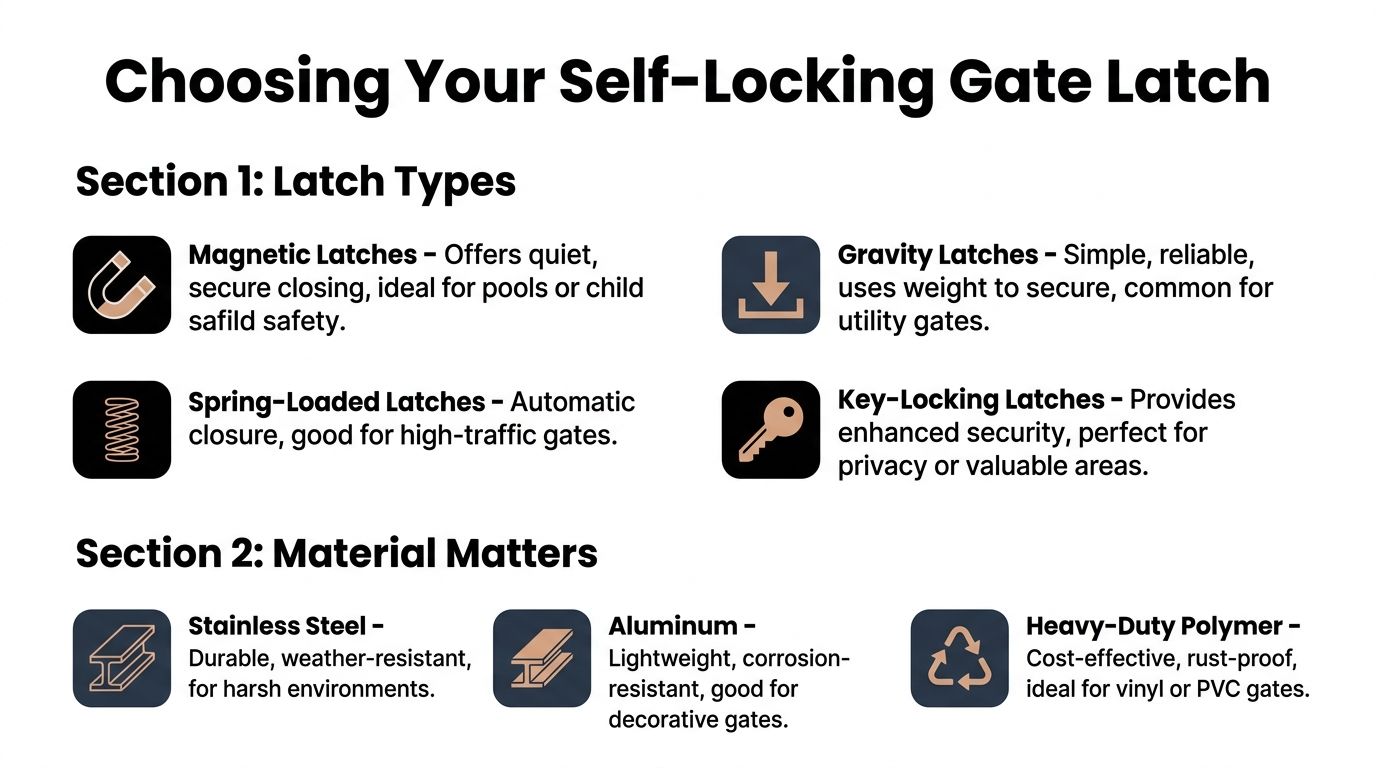
Magnetic versus gravity in real use
A magnetic latch such as the MagnaLatch SERIES 3 Top Pull is the better fit when you need more precise, dependable engagement. Pool gates, child-safety gates, and premium side gates are where magnetic hardware earns its keep. It’s also a strong choice on aluminum, vinyl/PVC, and steel gates where a cleaner look and more controlled operation matter.
A gravity latch like the Design House 189407-MB works well on standard backyard fence gates, garden gates, and utility runs where simple mechanical action is enough. Gravity latches are familiar, straightforward, and easy to service.
Here’s the practical breakdown:
| Latch type | Best use | Strength | Trade-off |
|---|---|---|---|
| Magnetic | Pool gates, child-safety gates, higher-security side gates | More controlled catch, less fussy feel once aligned | Costs more and rewards careful setup |
| Gravity | Backyard gates, utility gates, general fence runs | Simple, familiar, easy to understand | More sensitive to gate swing, angle, and rough handling |
Match the latch to the gate material
Wood gates move. That’s the first thing to remember. They swell, dry out, and sag over time. On wood, both latch styles can work, but magnetic latches usually give you more forgiveness once the gate starts living outdoors through the seasons.
Vinyl and PVC gates benefit from hardware that won’t create staining or corrosion issues. Heavy-duty polymer bodies are often a smart fit here because they don’t rust and they look right on lighter-profile gate frames.
Aluminum gates usually pair well with magnetic hardware because the frames are often cleaner and more square to begin with. When the gate is built straight, a latch like MagnaLatch performs the way it was designed to.
Steel gates sit in their own category. They’re strong, but the finish and environment matter. In Ontario and parts of New York, road salt and wet snow expose every weak point in a coating.
Ontario winters change the decision
Winter punishes sloppy hardware choices. Oil-based lubricants pick up grit. Thin finishes start to show rust. Gravity hardware can ice up if water sits where it shouldn’t.
That’s why I don’t like one-size-fits-all advice about “maintenance-free” hardware. Existing industry content talks in broad terms about corrosion resistance, but there’s still a gap in published regional comparisons for coastal salt air, inland heat, and other climate-specific conditions, as noted in this overview of gate latch durability gaps across climate zones. For Ontario buyers, the same logic applies. Match the material to the environment, not just the catalogue description.
On gates exposed to ploughed snow, road splash, or lake-effect weather, the latch material matters almost as much as the mechanism.
Product fit by use case
A few common pairings work well in the field:
- MagnaLatch SERIES 3 Top Pull: Best for pool barriers, child-safety gates, and cleaner modern builds in wood, aluminum, vinyl/PVC, or steel.
- Design House 189407-MB: Good for backyard pedestrian gates where you want a straightforward self-locking option in a matte black finish.
- Nuvo Iron options: Usually a good fit when the visual side matters as much as function on decorative fence and gate packages.
- Decorex Hardware pieces: Often useful when you’re trying to keep the whole gate package consistent across hinges, fasteners, and trim details.
If you’re comparing categories rather than one exact model, this hardware collection is the useful place to browse latch-compatible parts and related components: https://xtremeedeals.ca/fence-and-gate-hardware/
My rule for choosing fast
If the gate protects a pool, choose magnetic. If the gate is a basic backyard run and the frame is reasonably true, gravity is often enough. If the gate is already a little temperamental, choose the latch with more controlled engagement and spend more time on alignment.
That’s what works in the field. Fancy features don’t rescue a poor fit. Good matching does.
Your Tools and Pre-Installation Checklist
Most latch installs go sideways before the latch even comes out of the box. The gate is sagging, the post is twisted, or the installer measures from the wrong rail and ends up chasing alignment for an hour.
Get the prep right and the rest gets much easier.
What to have on hand
You don’t need a truckload of gear, but you do need the right basics:
- Tape measure: For gate gap, mounting height, and setback.
- Drill and driver: One for pilot holes, one for fasteners if you want to move faster.
- Correct drill bits: Match the latch instructions. Wrong pilot size causes binding, splitting, or loose screws.
- Level or laser level: Especially useful on keeper and striker alignment.
- Pencil or fine marker: Templates only help if your marks are clear.
- Square: Helps when the gate frame itself is questionable.
- Socket or torque-capable driver: Important when hardware calls for specific tightening.
- Graphite lubricant: Useful for certain metal pivot points in cold weather applications.
- Safety glasses: Always.
If you’re missing installation hardware, replacement screws, or backing components, this category covers the basics that usually save a stalled job: https://xtremeedeals.ca/fasteners-and-fittings/
What to inspect before you mount anything
Don’t start by holding the latch against the gate. Start by checking the gate itself.
Look at the hinges first. If the gate sags or swings unevenly, a new latch won’t fix the root problem. Tighten or replace hardware before you try to line up a latch body and keeper.
Then check the gap between gate and post. A latch can only work within its intended range. Too wide and it won’t catch properly. Too tight and seasonal movement will create rub points.
The pre-install checks that save rework
Use this checklist before drilling:
- Check swing direction: Make sure the latch style suits the gate’s hand and direction of travel.
- Confirm the frame is square enough: A badly racked gate creates false alignment marks.
- Inspect the top rail and stile: You need sound material where screws will bite.
- Mark the final closing position: Don’t assume the gate closes where it “looks” like it should.
- Dry-fit the latch and keeper: Hold both parts in place before committing to holes.
If the gate only closes properly when you lift it by hand, stop there. Fix the gate before you install the latch.
Think about winter now, not later
Ontario and upstate New York both expose weak installs fast. Water gets into pilot holes, wood swells, posts shift, and freeze-thaw movement shows up where summer installs looked fine. That’s why clean pilot holes, proper screw choice, and honest alignment checks matter so much.
A latch install should feel boring. If you’re improvising, the prep probably wasn’t finished.
Installing Your Latch for Flawless Operation
A latch install usually looks fine on day one. Then January hits in Ontario, the post shifts a touch, the wood swells, and the gate that clicked shut in October starts missing the keeper. Good installation is about building in enough accuracy and enough tolerance that the latch still works after weather, movement, and real daily use.
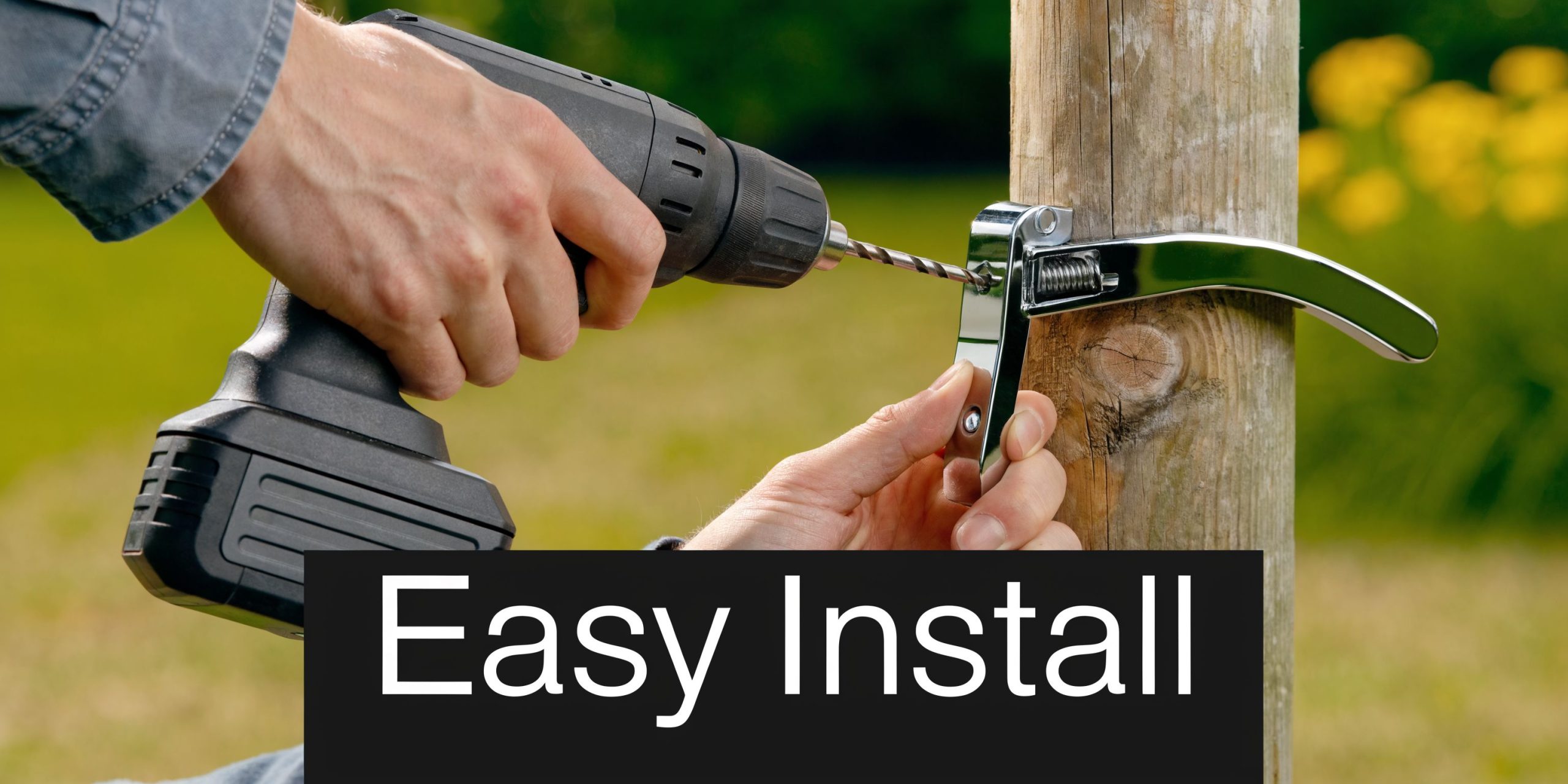
Setting a MagnaLatch at the correct height
Magnetic latches reward careful layout. On aluminum, vinyl, and square-framed pool gates, a MagnaLatch gives you more forgiveness on closing action than a basic gravity latch, but only if the body and striker meet cleanly every time.
For the MagnaLatch SERIES 3 Top Pull, keep the gate gap within the manufacturer’s range, mount the latch at the specified height where code applies, and use the supplied template instead of marking by eye. On a straight, square gate, that saves a lot of fiddling later, especially on aluminum where a bad first hole stays visible. The product details also call for a minimum post size, 3.5 mm pilot holes for the stainless screws, the supplied M5 fasteners, and careful final alignment so the latch engages without forcing the gate into position, according to the MagnaLatch installation details.
I also leave just enough adjustment room to account for seasonal movement. Wood gates in Ontario rarely stay exactly where they were in August.
Aligning the striker so it catches under real use
A magnetic latch should catch on a normal close. If you have to guide the gate in by hand, the alignment is off.
Set the striker with the gate closing at its natural speed. Open and close it from a few different distances. Let it swing from the last foot, then from halfway open. Watch the entry path, not just the final click. If the striker is brushing one side, shift it now. That small rub turns into a callback after a few weeks of use.
The lock indicator should confirm engagement every time. If it catches on a gentle close but misses when the gate swings normally, the body and striker are too far out of line.
Testing like a contractor
Cycle the gate enough times to expose weak points. I do repeated closes from different positions, then test it again with a little side pressure on the gate to mimic the way people use it. That is where loose screws, slight sag, and borderline alignment show up.
For a visual walkthrough, this helps:
Installing a Design House gravity latch cleanly
Gravity latches are simpler, cheaper, and still a solid choice for many wood gates. I use them most often on backyard privacy gates and side-yard entries where the frame is wood, the hardware is accessible, and the owner wants a straightforward mechanical latch instead of a magnetic unit.
With the Design House 189407-MB, start by setting the lever for the correct gate hand before you drill anything. Then mark from the actual closing position of the gate, not from the rail centerline. On wood gates that have a little twist or cup, those are not always the same thing. The manufacturer’s guidance covers the hole size, top-rail fit range, keeper mounting height, included #10 galvanised screws, and recommended tightening torque for a clean install on the intended frame sizes, according to the Design House product instructions.
Getting the gravity action right
A gravity latch has to drop freely and catch without a slam. That is the whole job.
Mount the keeper so the lever falls into place under its own weight. If the gate has to hit hard before the latch drops, raise or lower the keeper slightly and test again. On cedar and pressure-treated gates, I also watch for screw creep after the first few closes because softer wood can let the keeper shift just enough to make the latch inconsistent.
Wind changes the test on exposed gates in upstate New York and open rural Ontario lots. A gravity latch that works in a calm driveway can hesitate on a breezy side yard if the hinges are stiff or the closer is weak. Check it in conditions that match the site.
Material-specific install notes
A few field rules save trouble later:
- Wood gates: Pre-drill every hole and avoid placing screws too close to the edge of a stile. Wet-season swelling can tighten clearances fast.
- Vinyl or PVC gates: Snug the fasteners without crushing the profile. Magnetic latches usually suit these frames better because they tolerate closing variation better than basic gravity hardware.
- Aluminum gates: Deburr holes and confirm the latch body sits flat. MagnaLatch is a strong fit here because aluminum frames stay truer over time.
- Steel gates: Seal exposed drill points and match fasteners to the coating so you do not start rust at the hardware.
Match the latch to the gate first. Then install it accurately. That order prevents most of the problems I see on service calls.
Common Fitment Pitfalls and How to Fix Them
A gate can work perfectly in July and miss every third close in January. I see that a lot in Ontario and western New York, especially on wood gates that swell, sag, and rack a little through the season. The latch is usually not the primary problem. Fitment is.
Binding after installation
Binding usually starts with one of three mistakes. The latch body is pulled out of square by the screws, the post face is not flat, or the gate has just enough twist that the striker meets the latch on an angle.
Loosen the hardware first and test the latch by hand. If it frees up, the screws were forcing the parts into position. On wood gates, re-drill clean pilot holes and shim behind the latch if the board is cupped. On aluminum and vinyl frames, check for flex before blaming the latch. A magnetic unit like MagnaLatch often handles small closing variations better than a basic gravity latch on lighter PVC gates.
Keeper strip-out in soft wood
Soft wood posts create false confidence. The screw bites fast and feels snug, but then strips before the keeper is secure.
If that happens, stop and repair the hole properly. Use a hardwood plug or move the keeper to solid material. Driving a longer screw into weak, wet pine rarely lasts through a freeze-thaw cycle. I also avoid overtightening matte-black decorative hardware such as Design House latches on cedar and SPF gates because the fastener can hold while the wood fibers underneath are already crushed.
The gate closes, but the latch still misses
This one comes down to closing behavior and latch type. Gravity latches want a clean, predictable swing. If the gate drifts shut too slowly, the arm may not drop in time. If it slams, the gate can bounce past the keeper and reopen.
Start at the hinges. Sag, worn self-closing hinges, and loose posts cause more missed latches than the hardware itself. Then look at the gate material. A heavier wood privacy gate often does fine with a gravity latch once the swing is controlled. A vinyl pool gate or aluminum gate with a little frame flex usually does better with a magnetic latch because it catches more positively even when the close is less consistent.
That difference matters on kennel gates too. Anyone planning how to build a dog kennel should match the latch to the gate frame early, before the post spacing and swing direction are locked in.
Winter seizure and sticky operation
Cold weather exposes bad product choices fast. General-purpose oil attracts grit, thickens in the cold, and can leave a metal gravity latch sluggish when the temperature drops below freezing.
Clean the moving parts first. Then use only the lubricant the manufacturer allows. Dry graphite is usually the safer choice on metal pivot hardware. Many polymer magnetic latches are designed to run clean and should not be sprayed with whatever is on the shelf. If you are working in Ontario snowbelt conditions, give extra clearance for packed snow at the bottom of the gate, because a gate dragging even slightly will throw the latch alignment off at the top.
Quick fixes that hold
A few service-call fixes solve most fitment problems:
- Re-square the gate before adjusting the latch.
- Shim the latch body instead of bending hardware to meet the keeper.
- Repair stripped wood screw holes with solid material, not filler alone.
- Swap from gravity to magnetic hardware when the gate frame flexes or the close is inconsistent.
- Recheck alignment after a cold snap or a week of wet weather.
A self locking latch should catch on a normal close, in the weather the gate encounters. If it only works on a calm day with a careful push, the fit is still wrong.
Long-Term Maintenance and Safety Tips
January is when weak latch choices show up. A wood gate swells after a thaw, a steel frame shrinks in the cold, and the latch that felt fine in fall starts missing the strike or sticking on a hard close. In Ontario and upstate New York, long-term reliability comes down to matching the latch style to the gate material, then checking it before weather changes turn a small alignment issue into a service call.
Gravity latches usually hold up well on heavier wood and steel gates where the frame closes with a consistent swing. They are simple, field-repairable, and easy to inspect. Magnetic models such as MagnaLatch tend to be the better long-term choice on vinyl, PVC, aluminum, and pool gates because they tolerate minor movement better and are less prone to sloppy engagement after repeated use. On lighter gates that flex a bit from season to season, that difference matters.
A good maintenance routine is short and practical:
- Clear dirt, leaf buildup, and packed snow from the latch area and gate swing path.
- Tighten mounting screws before loose hardware eggs out the holes, especially on wood gates.
- Test the gate from a normal walking close, not a careful hand-set close.
- Check hinge sag first if the latch starts missing.
- Use only the lubricant the latch maker allows. Dry graphite suits many metal pivot points. Many polymer magnetic latches, including MagnaLatch-style bodies, are meant to run clean.
Safety setup matters just as much as maintenance. For homes with kids, pool areas, dog runs, or side yards that open toward a road, use pool-gate thinking even if the gate is not at the pool. Mount the release high enough that a small child cannot reach it easily, and confirm the gate self-latches from a normal close every time. Design House hardware can work well on general yard gates, but higher-risk openings usually justify stepping up to a magnetic safety latch with more controlled engagement.
Pets change the equation too. A gate that contains a large dog gets hit harder, shaken more, and tested every day at the latch side. If you are also planning the enclosure itself, this guide on how to build a dog kennel is worth reading because the latch only works as well as the gate frame, post setting, and overall layout.
Do a full check twice a year. I like spring and late fall. Look for rust on metal components, cracked polymer bodies, loose posts, stripped screw holes, and any change in the reveal between gate and post. Catching those signs early usually means a quick adjustment. Waiting until the latch fails often means replacing hardware and correcting the gate fit at the same time.
Frequently Asked Questions About Gate Latches
Can I install a self locking gate latch on a double gate
Yes, but one leaf usually needs to become the active gate. The inactive leaf should be fixed securely so the latch has a stable closing point. On double gates that move independently, latch performance gets inconsistent fast.
Will a self locking gate latch work on a vinyl gate
Yes, if the latch suits the gate profile and weight. Magnetic models are often a good fit on vinyl and PVC because they resist rust and usually suit lighter, cleaner gate frames well. Just avoid over-tightening into hollow sections.
Can I add a key lock for more security
Yes, if the latch model supports it. Some magnetic latches include a keyed cylinder or rekeyable feature. For side yard access, that’s often the cleanest way to improve security without adding separate surface hardware.
What if my gate swings both directions
Standard self-locking latches aren’t always the best match for bi-swing gates. Check the latch design first. Some gate setups need a different latch style entirely so the catch works from both directions without damage or false engagement.
Is a gravity latch enough for a pool gate
For many contractors, a magnetic latch is the stronger choice on pool gates because it offers more controlled engagement and better child-safety fitment options. Gravity latches are fine on many general backyard applications, but higher-risk gates deserve stricter hardware choices.
My gate is already sagging. Should I install the latch anyway
No. Fix the sag first. A latch installed on a bad gate just locks the problem into place and makes alignment harder later.
If you need a self locking gate latch, matching hinges, fasteners, or fence hardware that suits the gate you’re building, XTREME EDEALS INC. is a solid place to source the parts in one order. They carry practical fencing and deck hardware, including brands used by DIYers and contractors who want dependable fitment without hunting across multiple suppliers.