
You're probably at the point where the fence plan looks simple on paper. Metal posts for strength, wood rails for a warmer look, and a weekend to get it done. Then you start shopping for brackets and realise that one small piece of hardware decides whether the whole fence stays straight, tight, and worth the money.
That's the part many DIYers get wrong. They spend properly on posts, panels, and tools, then treat the bracket like an afterthought. It isn't. If the connection between the rail and the post is weak, awkward, or mismatched, the fence will show it fast through movement, sag, twist, and repeated repairs.
Why Your Fence Bracket Choice Is So Important
Steel posts solve one of the biggest long-term fence problems. Wood posts rot, move, and eventually fail at ground level. Steel avoids that weak point, which is why so many builders use a hybrid approach with metal posts and wood rails.
The trade-off is upfront cost. Steel posts cost 40-60% more initially than wood posts, with standard 6-foot steel posts ranging from $25 to $40 compared with $15 to $25 for wood posts according to Classic Fence on steel vs wood fence posts. In Canadian conditions, that higher initial cost makes sense because steel offers better longevity and lower maintenance.
The bracket protects the investment
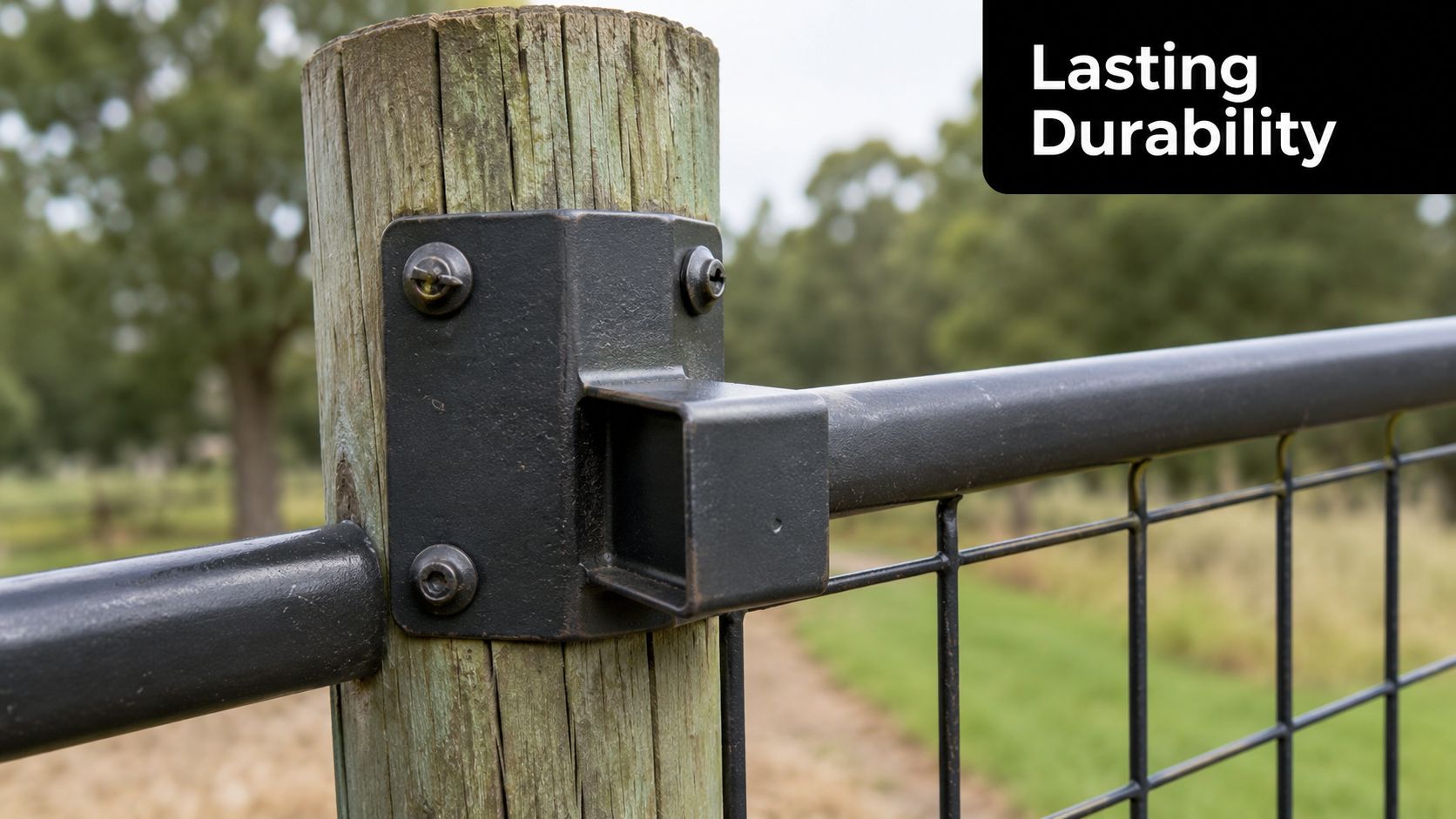
A metal post by itself doesn't hold a wood rail. The bracket does that job, and it does more than just connect two materials. It manages load, alignment, and movement at every rail connection.
If the bracket is too light, the rail can loosen. If the profile doesn't match the post, the connection never tightens properly. If the finish is wrong for the site, corrosion starts where the hardware should be strongest.
Practical rule: If you're paying more for steel posts, don't undermine the whole build with light-duty or mismatched brackets.
That's why fence brackets for metal posts deserve the same attention you give to post spacing, layout, and gate framing. The bracket is the hinge point between the durability of steel and the look of wood.
Labour makes mistakes expensive
This matters even more once installation starts. In the Modesto area of California, labour for installing a 112-foot fence with metal posts runs from $30 to $40 per foot, for a total estimated labour cost of $3,360 to $4,480, as noted in this regional installation discussion. That figure is tied to the work involved in driving metal posts properly and building the structural connection correctly.
Even if your local Canadian labour market differs, the lesson holds. Rework is expensive. Pulling rails off to replace the wrong bracket, swapping out failed fasteners, or correcting bad alignment after the posts are already set wastes time and materials you won't get back.
A fence done right the first time feels expensive on purchase day. A fence done twice costs more.
Exploring Common Bracket Types and Materials
Bracket styles look similar online until you have them in your hand. Once you start fitting them to real posts, the differences become obvious. Shape, screw access, rail support, and angle flexibility all matter.
The common styles you'll actually use
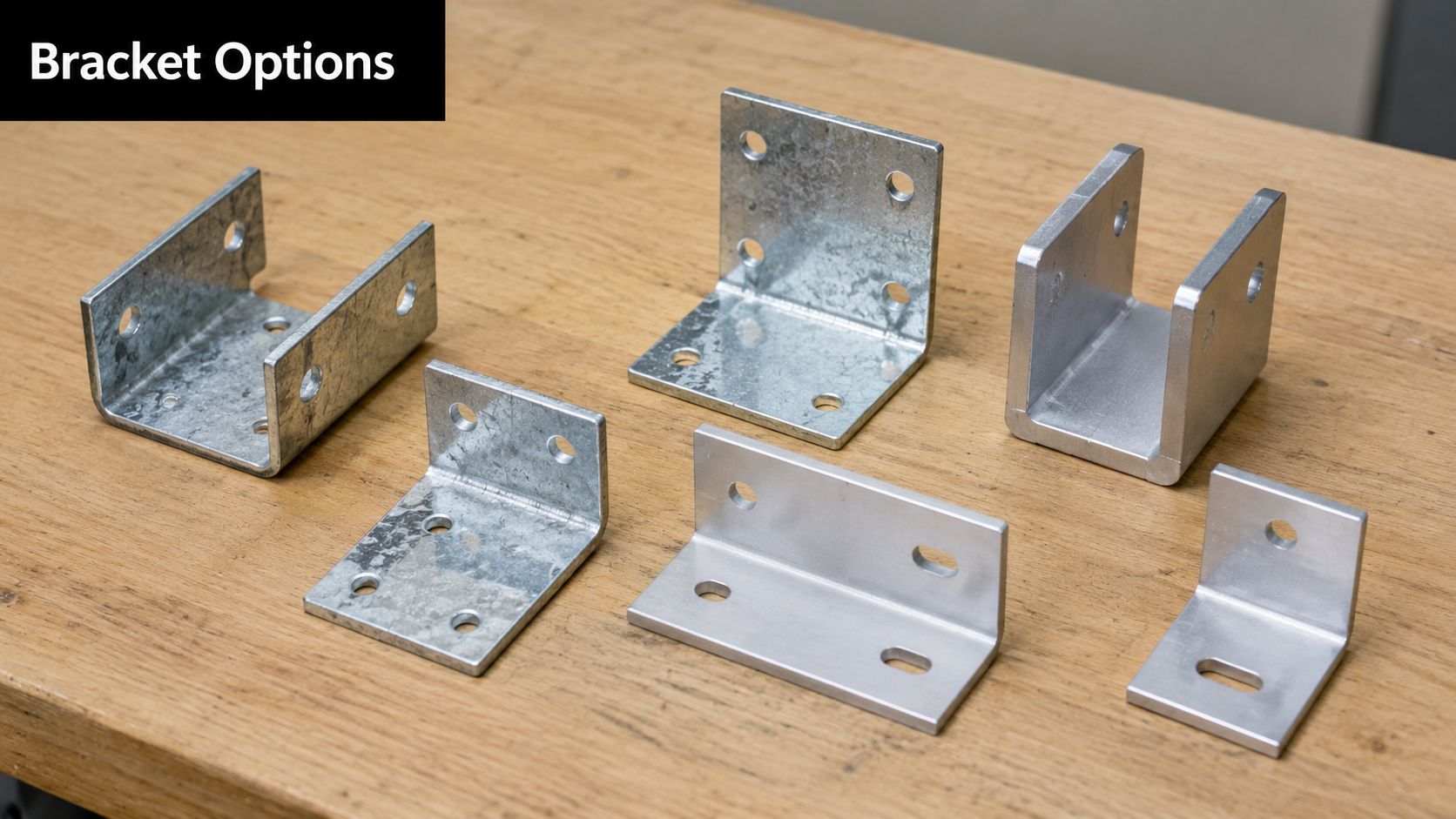
Wraparound brackets grip the post more completely. They're useful when you want a more stable hold on round posts and don't want the bracket to rotate under load.
Bolt-on adjustable brackets give you layout flexibility. That matters on slopes, odd corners, and fence runs that don't land on a perfect square.
Slide-on brackets are tidy and fast when they're made for the exact post profile. Some local codes also call for this style in specific applications.
U-shaped saddles and clip-style hangers are straightforward for standard rail attachment, especially where you're setting nominal 2×4 rails into a bracket pocket rather than clamping around the rail.
If you're comparing options from a Canadian retailer, the product category matters more than the thumbnail. A page like Xtreme eDeals post fence brackets is useful because you can compare clip-style and rail-hanger formats side by side instead of guessing from a generic listing.
Matching the bracket to the post type
Different metal posts need different hardware.
- Round posts usually work best with shaped or adjustable brackets made for pipe diameter.
- Square posts often take flat-mount or slide-on hardware cleanly.
- T-posts need specialised clips or toppers, not standard wood-rail hangers.
- Terminal and corner posts need brackets that can manage direction changes without twisting the rail.
One good example is the Steel 2 Wood WAP-238. It's engineered to connect 2-3/8-inch diameter round steel posts to 2×4 wood rails and allows 90-degree, 45-degree, or custom-angle connections, according to the WAP-238 product listing at Home Depot. That's the kind of spec you want to see before you buy.
Material matters more than appearance
Many fence brackets for metal posts are made from pressed steel, but not all pressed steel is equal. In practice, heavier-gauge brackets hold alignment better, especially with full-size wood rails that pick up moisture, weight, and seasonal movement.
Galvanised steel is a solid baseline for outdoor work. Powder-coated pieces can add another layer of protection and a cleaner finish, but the coating only helps if you install the hardware without damaging it and use compatible fasteners.
You'll also run into branded hardware lines, including Decorex Hardware products carried by Canadian retailers. XTREME EDEALS INC. lists a Decorex Hardware Fence Clip Bracket Hanger sized for 2" x 4" fence rails, which fits the common clip-hanger format used for straightforward rail-to-post connections.
Buy the bracket for the post you have, not the post you think is “close enough”. Close enough is how rails start moving.
How to Select the Perfect Bracket for Your Project
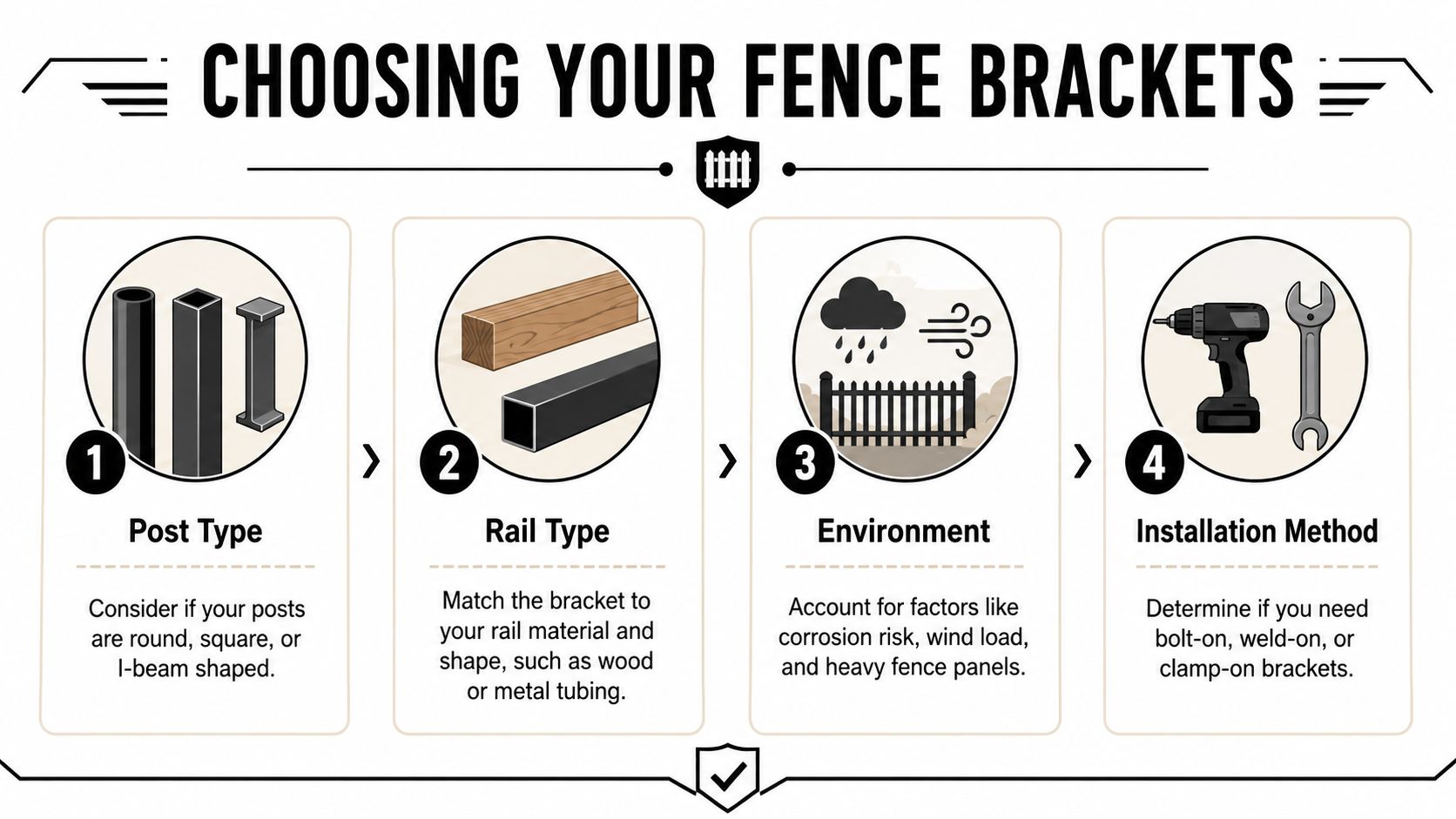
Selection gets easier when you stop looking at brackets as a general category and start filtering by three things. Post shape, rail size, and site conditions. If one of those is off, the install becomes a fight.
Start with post compatibility
This is the first decision, and it removes most bad options immediately. Round pipe, square tube, and T-posts don't share hardware well. A bracket designed for a 2-3/8-inch round post won't magically sit properly on square tube.
Your rail matters too. Most wood privacy and boundary fences use nominal 2×4 rails, so the bracket has to support that dimension cleanly without crushing the wood or leaving slop in the connection.
Then look at steel thickness and finish
Many cheap brackets often lose the plot here. The hardware may fit, but it doesn't have enough body to stay rigid once the fence is loaded.
Technical data shows that 18-gauge steel brackets can reduce failure rates by 37% compared with 20-gauge alternatives, according to Peak Products modular fencing bracket information. That's not a minor detail. On a fence line with heat, wind, and heavy panels, bracket thickness becomes a structural choice.
Non-galvanised hardware is another avoidable mistake in exposed conditions. If the site sees moisture, de-icing salts, or coastal air, bare steel hardware starts the failure process early.
Use this quick selection guide
| Metal Post Type | Recommended Bracket Style | Best For |
|---|---|---|
| Round post | Wraparound or adjustable bolt-on bracket | Wood rails, corners, custom angles |
| Square post | Flat-mount or slide-on bracket | Straight runs, clean alignment, easy screw access |
| T-post | Purpose-made clip or topper system | Agricultural and light-duty fence layouts |
| Terminal or corner post | Adjustable angle bracket | Direction changes and stronger end connections |
That table won't replace reading product specs, but it helps narrow the field fast.
Think about the whole fence, not just the bracket
Fence decisions overlap. Rail material, panel weight, post layout, and even surrounding landscaping all affect what the hardware has to do. For a broader cost-and-material perspective, the Richmond Tree Experts GA fence guide is a useful comparison piece because it shows how fence type changes hardware and installation planning.
Don't choose hardware by price alone. Choose it by how little trouble it creates during installation and how little movement it allows afterwards.
Installing Brackets on Different Metal Posts
Good hardware still needs a careful install. Most bracket failures I see come from one of four mistakes. Wrong fastener, poor layout, uneven rail height, or trying to force one bracket style onto the wrong post type.
Before you fasten anything
Have the right tools out before you start:
- Tape measure and square for consistent rail lines
- Level to keep brackets aligned across the run
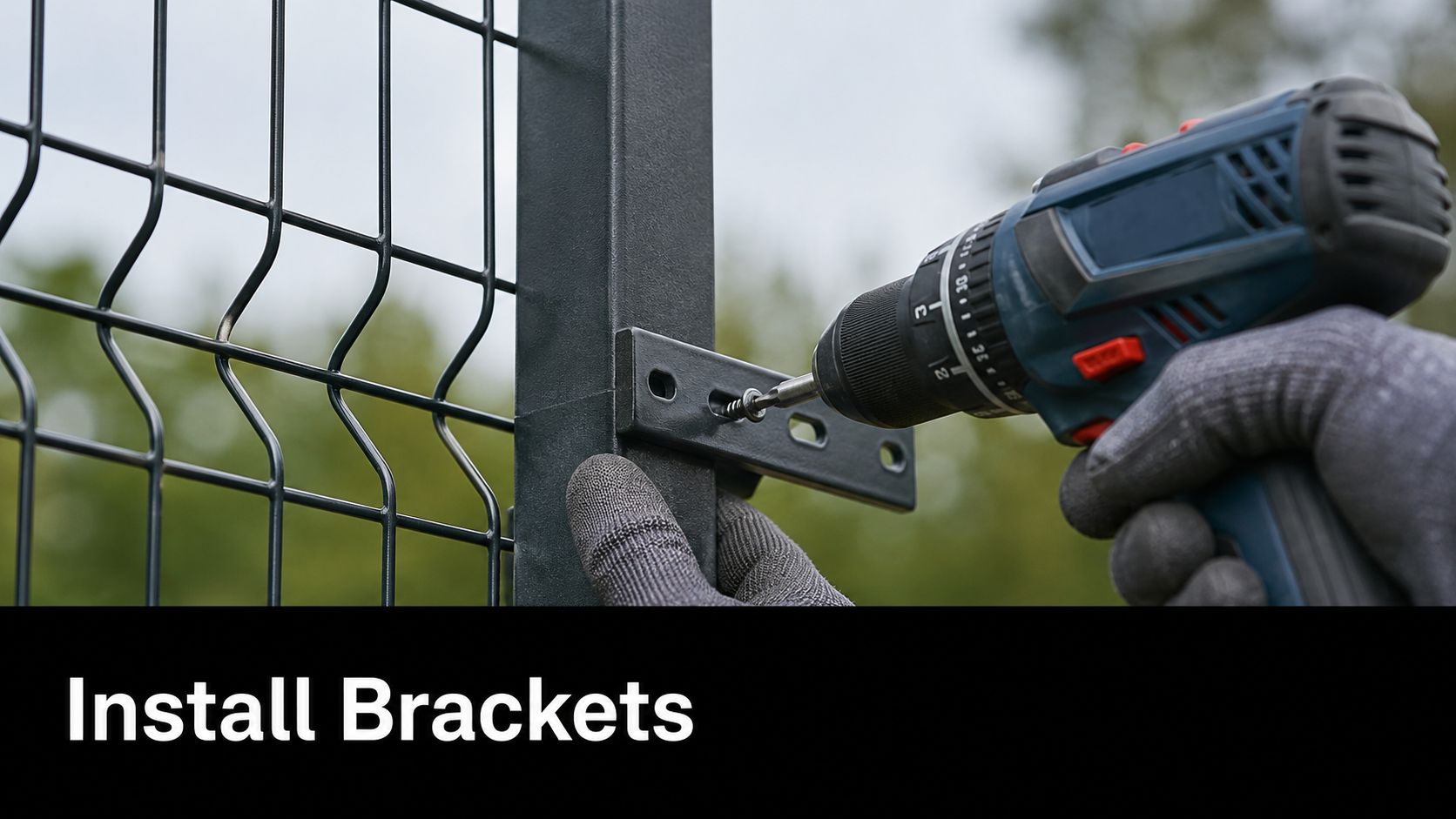
- Impact driver or drill with the proper bit for self-tapping screws
- Socket set or wrench for bolt-on hardware
- Clamps to hold rails while you check fit
- Marker or pencil for layout marks on every post
If you're using metal posts with wood rails, product fit matters as much as tool choice. A category like metal post to wood fence hardware helps narrow your options before you get into the install.
Square metal posts
Square posts are usually the simplest because the flat face gives you a clean mounting surface. Mark the top rail and bottom rail height first, then transfer those marks down the line before any screws go in.
Set the bracket, check it for level, and drive the fasteners without overtightening. If you distort the bracket body, the rail won't seat properly. Once both end posts are bracketed, dry-fit the rail before you commit to the middle posts.
Round steel posts
Round posts take more care because the bracket can rotate if it isn't designed for the diameter. Use hardware sized specifically to the pipe. If you're using an adjustable or wraparound style, tighten gradually and evenly so the bracket seats squarely rather than pulling to one side.
This is also where angle hardware earns its keep. Corners, slight bends, and non-standard layout changes are much easier to manage with a bracket made for variable positioning than with a rigid clip.
A visual walkthrough helps here:
T-posts
T-posts are common on agricultural jobs and lighter enclosures, but they aren't ideal for standard wood privacy rails unless the accessory system is made for them. Don't try to improvise with generic rail hangers.
Use the clips or topper hardware intended for that post profile, and check that each connection resists vertical pull and side movement. T-post systems can work well, but only when every component belongs to the same setup.
Fasteners and footing details that matter
Some local codes are very specific. In Los Altos, California, L-shaped slide-on brackets must be attached with 1/4" x 3/4" self-tapping tek-screws, with 1/4" x 1" screws allowed as a substitute, according to the Los Altos ornamental iron fence document. Even if that exact code doesn't apply to your project, it shows how seriously proper fasteners are treated in structural fence work.
Post setting matters too. The post hole should be three times the width of the metal post, and depth should be about one-third to one-half of the post's above-ground height, as outlined in Jewett-Cameron's Lifetime Steel Post guidance. If the post moves, the bracket can't save the fence.
Advanced Tips for Corrosion Protection and Durability
Most people think durability starts and ends with buying galvanised brackets. It doesn't. Corrosion usually starts where the coating gets interrupted. Drill points, cut edges, scraped faces, and mismatched fasteners.
Protect the weak spots you create on site
If you cut a coated post or drill through a finished bracket, touch that exposed area up before the assembly is left to weather. The same goes for scratches from clamps, dropped tools, and overdriven screw heads.
Fastener compatibility matters just as much. A quality bracket paired with poor fasteners creates a failure point right at the connection. For projects where finish and corrosion resistance both matter, using stainless steel fasteners from Xtreme eDeals is one practical option when the bracket manufacturer allows stainless hardware for the application.
For readers comparing coating strategies beyond standard galvanising and powder coat, APEX NANO corrosion solutions offer a useful look at protective coating approaches for metal exposed to harsh conditions.
Don't ignore movement in seismic regions
Rigid hardware isn't always better. In areas with seismic activity, some fence connections need controlled flexibility rather than absolute stiffness.
For homeowners in seismic zones like parts of BC, updated codes may require flexible line post adapters with 15-degree or greater angle flexibility to handle lateral movement, as discussed in Brentwood Fence's review of wood fence brackets for metal posts. Standard rigid brackets don't provide that.
That matters most on long runs, stepped grades, and fence lines attached to structures or heavy gates.
A bracket that's perfect on a calm site can be the wrong bracket where the ground or structure is expected to move.
Small habits that extend fence life
- Seal exposed steel after drilling or cutting.
- Check screw tension after the wood has gone through a wet-dry cycle.
- Keep bracket pockets clear of debris that traps moisture.
- Replace mixed hardware if the metals or coatings clearly don't belong together.
Those details aren't glamorous, but they're what keep a fence looking organised and staying solid.
Your Project Checklist and Final Thoughts
The best fence brackets for metal posts aren't the ones with the fanciest listing or the lowest price. They're the ones that match your exact post, support your rail properly, and survive your site conditions without turning the install into a workaround session.
That's the key takeaway. Steel posts solve a durability problem. The bracket makes that solution work. If you choose the wrong hardware, you lose the advantage you paid for.
Project checklist before you start
- Confirm the post profile. Check whether you have round pipe, square tube, or T-posts.
- Measure the actual dimensions. Don't buy by memory. A bracket for a 2-3/8-inch round post is different from one for another size.
- Match the rail size. Most brackets are built around nominal 2×4 rails, but you still need to verify fit.
- Choose the bracket style for the layout. Straight runs, corners, and custom angles often need different hardware.
- Check the finish and environment. Wet, coastal, and exposed sites need better corrosion resistance and compatible fasteners.
- Buy the right screws or bolts at the same time. Don't leave fasteners as an afterthought.
- Lay out bracket heights before drilling. Consistent marks save a lot of adjustment later.
- Set posts properly. A solid bracket won't fix a post that moves in the ground.
- Touch up damaged coatings after installation work.
- Review local code requirements if your site has unusual wind, seismic, or municipal restrictions.
One last practical point
Builders who work across exterior systems learn the same lesson over and over. The small connectors decide whether the larger assembly performs properly. You see the same pattern in roofing attachment details, which is why pieces like this guide from Hail King Pros on stone tile roofing are worth reading even outside fencing. The finish gets the attention, but the fastening and connection details carry the load.
A fence built with steel posts and wood rails can look traditional and last far longer than an all-wood setup. Just don't treat the bracket like a minor accessory. It's part of the structure.
If you're sourcing hardware for a new build or a repair, XTREME EDEALS INC. carries deck and fencing accessories, fasteners, post hardware, and related parts that fit practical DIY and contractor work. It's a straightforward place to compare fence components, rail brackets, and matching hardware before you start cutting and fastening.