
If you're stuck on baluster vs spindle, the practical answer is simple: in today's railing work, the terms are often used interchangeably, and what matters most is that openings are kept to about 4 inches so a 4-inch sphere can't pass through. For most deck and stair projects, you'll get farther by choosing the right material, profile, and mounting method than by worrying about which word belongs on the quote.
That confusion shows up all the time when someone starts planning a new deck, replacing porch railings, or pricing out stair parts online. One product page says baluster. Another says spindle. A contractor uses both in the same conversation. Then the homeowner starts wondering if they're ordering the wrong part.
In practice, you're usually looking at the same family of vertical infill members that fill the space between posts and rails. More useful questions include: Will the system meet code. Will it install cleanly. Will it hold up in weather. Will it match the look of the house. And will the hardware you choose make the job easier or harder.
Starting Your Railing Project with Confidence
Many individuals hit the terminology issue right after they've measured the opening and started shopping. They know they need a railing for a deck, porch, or staircase, but the product names feel inconsistent. That's normal. The language has drifted over time, and the trade doesn't always use the words with strict precision.
What helps is shifting the decision away from vocabulary and toward jobsite priorities. A safe railing isn't built by picking the perfect noun. It's built by choosing components that fit your layout, fastening method, and local inspection expectations.
What actually matters first
Before you compare styles, sort out these practical points:
- Project type: A stair run, a level deck guard, and an interior railing don't all install the same way.
- Material system: Wood, metal, and mixed-material railings each call for different cuts, connectors, and finishing work.
- Maintenance tolerance: Painted wood can look excellent, but it asks more from the owner than a low-maintenance metal system.
- Visual goal: Traditional turned members, simple square profiles, and cleaner contemporary lines all read differently from the curb.
Practical rule: If a client asks “baluster or spindle?”, the better follow-up is “What railing system are you building, and how do you want it to look and perform?”
That's the point where the job starts making sense. On a Canadian exterior project, weather exposure usually pushes the conversation toward durability and upkeep. On a stair remodel, fit and fastening geometry often matter more because the angles and cuts leave less room for sloppiness.
Where people lose time
The common mistakes usually aren't semantic. They're planning mistakes.
- Ordering by appearance alone: A style can look right online and still be awkward to mount in your actual rail frame.
- Ignoring support layout: Some members mount directly to the tread or deck surface. Others depend on a bottom rail.
- Leaving spacing until the end: Spacing should drive the layout early, not get “figured out later” after material arrives.
If you keep the focus on safety, layout, and installation method, the baluster versus spindle debate becomes much less stressful.
Decoding the Terminology A Historical and Modern View
The words did start with a real difference. Historically, baluster came from the Italian balaustro, meaning wild pomegranate flower, because early baluster shafts had a swollen, decorative profile. Over time, the slimmer form became associated with spindle in everyday use, especially as turned wood members and spinning tools became familiar household references, as noted in this historical explanation of baluster to spindle terminology.
Early naming was shape-based. Balusters were the more ornate, bulbous supports. Spindles referred to thinner, turned vertical members.
That old distinction still makes sense if you're restoring heritage work or talking to a millwork shop that specialises in traditional stairs. In those settings, shape and profile can still affect what people call the part. A turned, decorative wood member often gets called a spindle. A more architectural description may lean toward baluster.
Why the terms blur today
Retail, contractor shorthand, and homeowner language have compressed the difference. In ordinary deck and stair work, both terms usually point to the same job. They fill the opening between the top rail and the bottom support condition and create the infill barrier in a balustrade.
That's why product searches can feel messy. A shopper may search for black metal deck spindles and land on pages labelled balusters. Another may search for wood stair balusters and hear a finish carpenter call them spindles. Neither person is wrong in normal conversation.
When the distinction still helps
There is still value in understanding the original language.
- Traditional design discussions: If the visual profile is ornate and turned, the historical meaning can help clarify what style you want.
- Custom stair orders: Millwork suppliers may use one term more precisely than deck hardware suppliers do.
- Architectural restoration: On older homes, details matter, and the vocabulary may be used more narrowly.
For everyone else, the safe approach is straightforward. Use either term when shopping, but verify the profile, dimensions, mounting method, and compatible hardware before buying.
A good supplier page should make those details clear enough that the product can be chosen correctly even if the naming varies. That's what separates useful railing listings from vague ones.
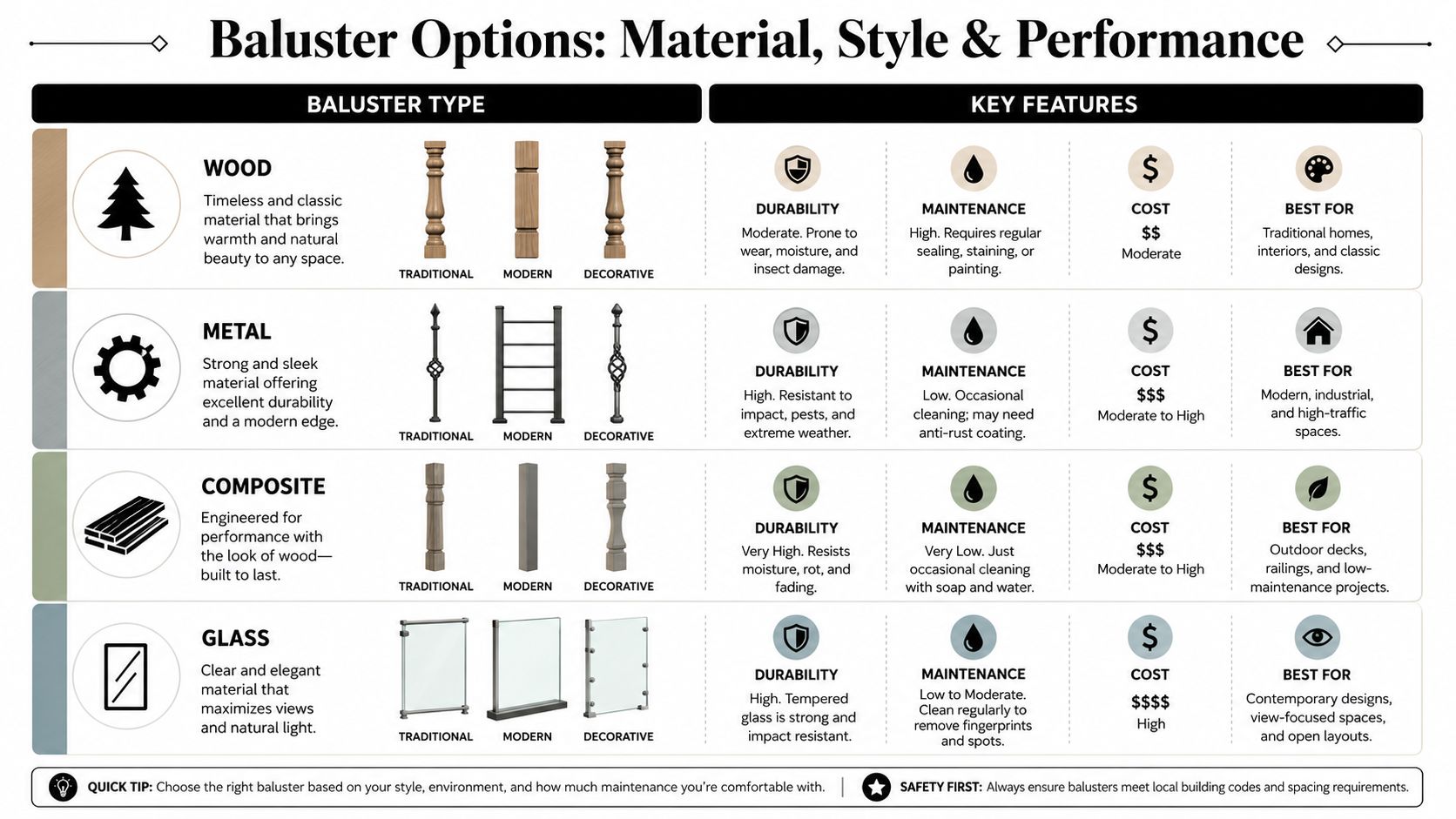
A Practical Comparison Materials Styles and Performance
Once the terminology is out of the way, selection work begins. Material choice shapes the look of the railing, but it also changes how the build goes on site, how much maintenance the owner inherits, and how forgiving the system is when the framing isn't perfectly uniform.
For code-driven railing design, openings need to be laid out so a 4-inch sphere can't pass through, and common sizing ranges differ by material. Wood balusters are commonly about 1 1/4" to 1 3/4" square, while metal balusters are often 1/2" to 1" in diameter or width, which makes material choice and spacing key variables according to this baluster spacing and sizing guide.
| Material | Typical look | Practical strengths | Common trade-offs | Best fit |
|---|---|---|---|---|
| Wood | Traditional, warm, easy to customise | Easy to cut and match to classic homes | Needs finishing and upkeep, profile consistency matters | Porches, interior stairs, heritage-style work |
| Aluminum or steel | Clean, modern, crisp lines | Low maintenance, durable, good for exterior work | Less forgiving if layout is sloppy, visible alignment errors | Deck guards, modern renovations |
| Composite | Coordinated with composite railing systems | Uniform appearance, lower upkeep than painted wood | System-dependent compatibility | Matched deck packages |
| Glass infill with supporting hardware | Open view, contemporary | Minimal visual blockage | Requires careful alignment and a different hardware approach | Scenic decks, modern homes |
Wood works best when the style leads
Wood still makes sense when the house wants detail. On a classic porch or interior stair, turned or square wood members can tie into trim, newels, and casing in a way metal usually doesn't. They're also easier to modify in the field if you're trimming to fit a slightly uneven run.
The trade-off is maintenance. Exterior wood asks for more long-term attention, especially when paint or stain is part of the finish system. If the owner wants something they can mostly ignore, wood often isn't the first recommendation for exposed deck railings.
Metal works best when performance leads
For many exterior projects, metal balusters are the practical favourite. Square or round metal members suit a wide range of styles, from simple suburban deck upgrades to cleaner contemporary builds. They don't ask for the same ongoing finish maintenance as exterior wood, and they tend to keep the railing visually lighter.
Low-maintenance product lines such as Decorex Hardware baluster options are worth considering when comparing exterior systems. In real installs, the appeal isn't just colour or shape. It's consistency. Straight members, repeatable connectors, and clean finishes reduce fuss during assembly and help the railing read as organised rather than patched together.
Cleaner-looking railings usually come from repeatable parts and disciplined layout, not from the fanciest profile.
Composite and mixed systems
Composite systems often appeal to homeowners who want a coordinated package. The upside is visual consistency with the rest of the deck. The caution is compatibility. Some composite railing systems are more closed than they first appear, which means replacement parts and cross-brand mixing may be less straightforward.
Mixed-material systems can work very well. Wood posts with metal balusters are a common example because they balance warmth and low maintenance. That combination gives a traditional frame with lighter infill and often makes exterior upkeep more manageable.
What usually works and what usually doesn't
A few patterns show up again and again on site:
- Works well: Simple square metal balusters in a straight, level deck guard.
- Works well: Wood members on a traditional stair where the rest of the house already features painted trim.
- Less successful: Decorative profiles forced into a modern home where every other line is flat and minimal.
- Less successful: Mixed parts from different systems without checking connector compatibility first.
If the goal is easiest ownership over time, low-maintenance metal is hard to ignore. If the goal is character and continuity with older trim details, wood still earns its place.
Navigating Building Codes and Safety Requirements
Most railing problems don't show up because someone used the wrong term. They show up because the layout missed a code requirement. In day-to-day residential work across the U.S. and Canada, stair and deck rail infill is commonly limited to a maximum opening of about 4 inches, or roughly 100 mm, to reduce fall risk, as described in this reference on balusters and spindle spacing in residential railings.
That single rule shapes a lot of what gets built. It affects how many infill members you need, how wide the visible openings can be, and how open the railing feels once it's installed.
The rule that drives layout
The simplest way to think about the spacing rule is this: don't size the clear opening by eye. Measure the actual gap that remains after the members are installed.
That matters because homeowners often count parts first and only check spacing later. By then, they may realise the layout looks fine but still leaves openings that are too wide. A better approach is to start with the overall run, subtract the width taken up by posts and vertical members, and then distribute the remaining space evenly.
A railing can look symmetrical and still fail if the clear openings are too large.
This is one reason pros usually dry-layout a section before final fastening. It saves rework, especially on longer deck runs where tiny spacing errors can add up and become obvious by the last bay.
Height and guard questions
On projects that involve raised walking surfaces, guard requirements matter just as much as infill spacing. For California work, the code discussion often centres on guards for walking surfaces more than 30 inches above grade, a minimum guard height of 42 inches in many residential applications, and openings that prevent a 4-inch sphere from passing through most guards and stair openings, based on this California-focused code overview and practical layout discussion.
Even if your local jurisdiction differs, the lesson is the same. Height, opening size, and installation method need to be checked together. If you're sorting through requirements for a raised deck, this guide to deck railing height code basics is a useful place to compare your layout assumptions before you order material.

Practical code habits that prevent headaches
These habits save time during inspections and reduce rework:
- Measure the clear opening, not the centre-to-centre spacing: Inspectors care about the open gap.
- Check the entire run: End conditions and transitions near posts are where spacing errors often show up.
- Mock up one section first: A sample bay can expose bad assumptions before you repeat them across the whole deck.
- Keep hardware in mind early: Connector thickness and rail slot dimensions can slightly change your final spacing.
A code-compliant railing usually looks more disciplined because the layout has been thought through. That's another reason the naming debate matters less than people think. Safe, measured installation is what carries the project.
Installation Insights and Compatibility Guide
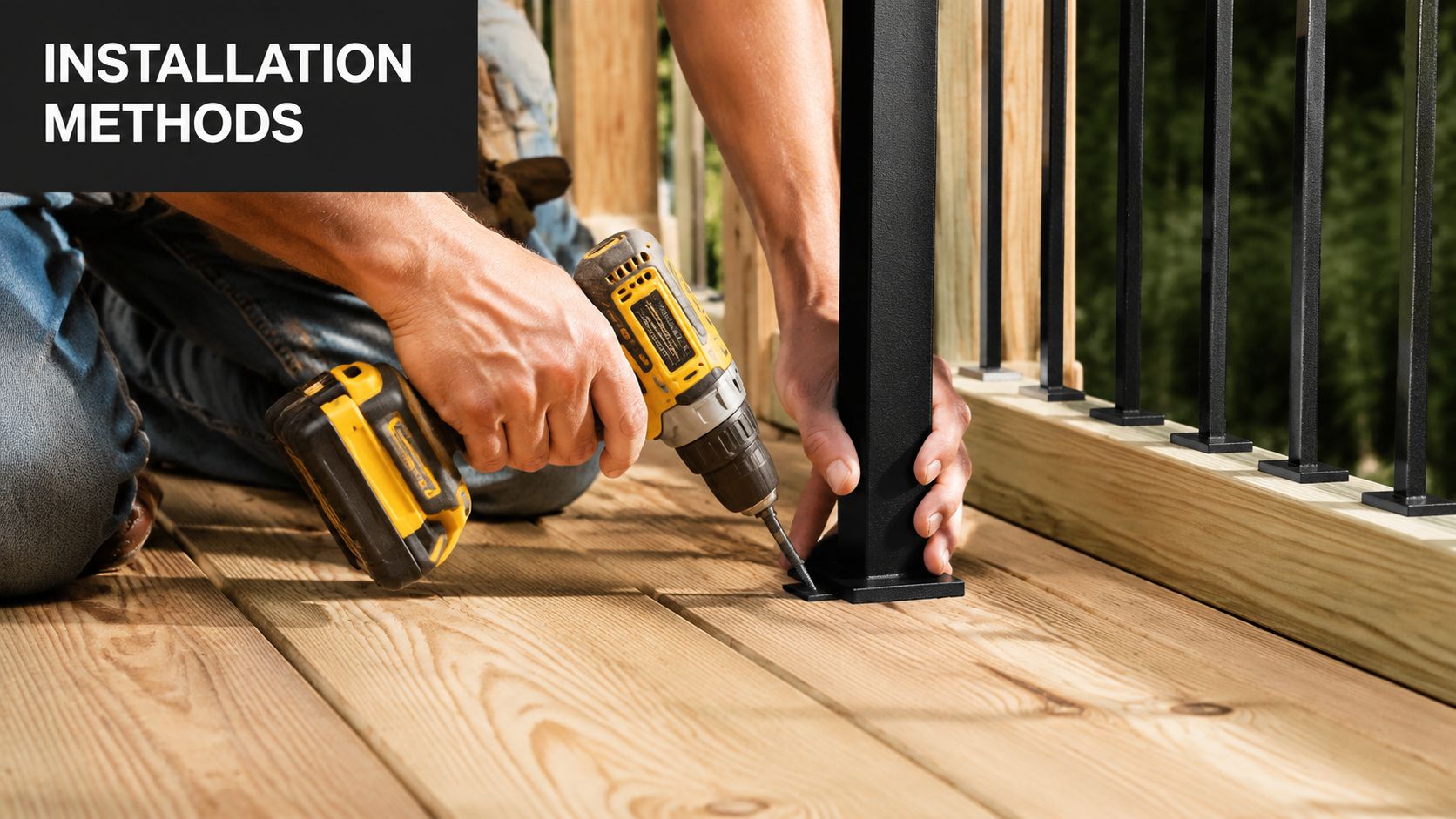
Installation is where the difference between a smooth project and a frustrating one becomes obvious. The key detail isn't just whether you call the part a baluster or a spindle. It's how that vertical member is supported and where the fastening loads go.
In stair and deck railing terminology, balusters typically sit on the tread, floor, or deck surface, while spindles are supported by a lower horizontal rail attached to posts. That changes installation geometry because the support condition changes where fastening loads are introduced, as explained in this trade-focused comparison of balusters and spindles.
Surface-mounted versus rail-supported
A surface-mounted setup can be straightforward on a deck or stair tread because each member lands directly onto a solid substrate. That can simplify the visual layout, but only if the substrate is flat, solid, and properly aligned. If the framing wanders or the surface finish varies, those inconsistencies will show.
A rail-supported setup can create a cleaner module because the top and bottom rails define the infill zone. That's often easier to repeat across multiple sections. The catch is that the bottom rail itself has to be installed accurately, because every spacing and alignment decision depends on it.
Compatibility matters more than people expect
Mixing materials is common, but compatibility still needs checking before you order.
- Wood frame with metal balusters: Popular for exterior projects. It gives a lighter look with less upkeep than all-wood infill.
- All-wood railing: Good for traditional aesthetics, but connector choice and finishing details matter more.
- Factory-style systems: Fast to assemble when all parts belong together, less forgiving when you substitute pieces.
Connector kits, baluster shoes, rail brackets, and the right fasteners make a real difference. A nice-looking baluster can become annoying fast if the fastening method leaves sloppy gaps, visible wobble, or uneven reveal lines.
If you're planning your layout, this guide on spacing deck balusters properly helps tie together part width, opening size, and visual balance before you start drilling.
What usually causes callbacks
Most call-backs come from a short list of avoidable problems:
- Out-of-square sections that force inconsistent cuts.
- Wrong fastener choice for the railing material.
- Loose connectors that let members rattle over time.
- Poor centring that leaves the first and last openings visibly different.
On renovation work, there's another layer. Existing structures may need an outside check before cosmetic upgrades move ahead. If the project involves permits, altered guards, or structural review, it helps to understand the role of surveyors and inspectors in ensuring compliant renovation projects.
A quick visual walk-through can also help before final assembly:
A builder's rule of thumb
Dry-fit one bay completely before committing to the whole run. Check plumb, reveal, and the way the connections look from standing height. If one section looks right and feels solid, repeating it across the project becomes much easier.
That step catches more mistakes than any amount of guesswork at the workbench.
Choosing the Right Baluster Your Project-Based Guide
The easiest way to choose is to match the baluster style to the job, not to the label. Most clients don't need a lecture on historical terminology. They need a railing that fits the house, installs without drama, and won't become a maintenance burden they regret.
For a modern low-maintenance deck
Choose a simple metal profile, usually square or similarly clean-lined. This is the best fit when the goal is durability, a lighter visual footprint, and less upkeep through the seasons. Decorex Hardware aluminum baluster styles fit this kind of project well because they suit contemporary and transitional homes without looking fussy.
For a classic traditional porch
Wood still makes sense when the architecture wants warmth and detail. If the home already has trim, columns, or heritage cues, wood members can feel more natural than black metal. The trade-off is upkeep, but on the right house, that's often worth it for the visual continuity.
For an interior stair that needs style and simplicity
A mixed-material approach often lands in the sweet spot. Wood handrails and posts paired with darker metal infill can keep the stair feeling open while still tying into the rest of the interior. It's a practical compromise when you want a custom look without overcomplicating the build.
For homeowners who want the safest buying path
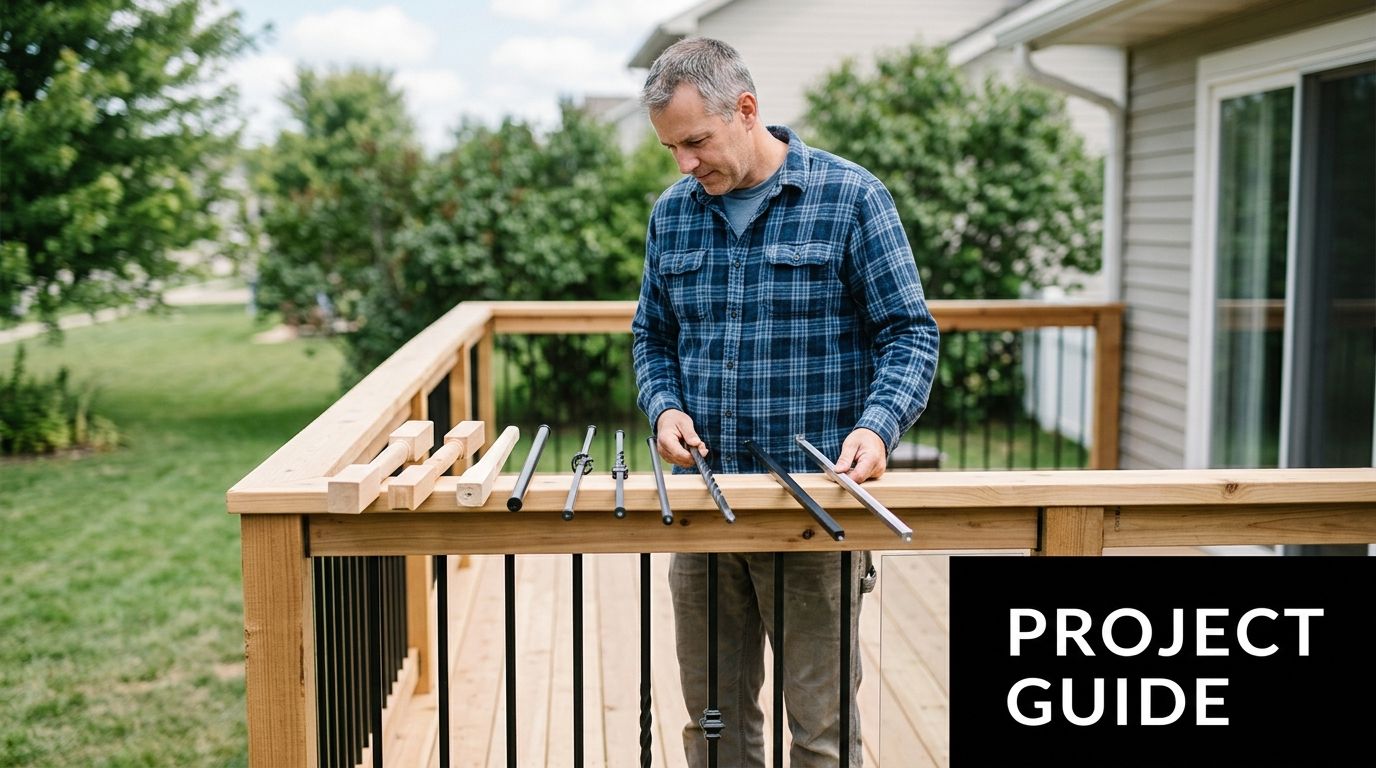
Don't shop by term alone. Shop by system.
- Match the material to the exposure: Exterior weather changes the recommendation quickly.
- Match the profile to the house: Clean lines on modern homes, more detail on traditional ones.
- Match the hardware to the railing design: A good-looking part still needs a secure and compatible mount.
- Match the layout to the code requirement: The cleanest design still has to be measured properly.
If you want examples of finished layouts before choosing a style, this gallery of a deck with balusters is a practical reference point for comparing looks in real applications.
The short version is simple. If your priority is lower maintenance and easier exterior ownership, metal usually wins. If your priority is traditional character, wood is often the better fit. If your project combines materials, make sure the connectors and support method are planned before the order goes in.
If you're ready to choose balusters, connectors, post caps, fasteners, or complete railing accessories, XTREME EDEALS INC. offers practical hardware options for both DIY builds and contractor jobs, including Decorex Hardware products and other deck and fencing essentials that help you finish the project cleanly.