
You're probably standing in the middle of a deck project with a box of hardware in one hand and a simple question in your head. Are lag bolts the right choice for these post connections, or are they just the fastener everybody reaches for by habit?
That question matters more than most DIY guides admit. I've seen plenty of decks where the framing looked tidy, the boards were straight, and the hardware choice underneath was the weak link. A deck post connection can look solid and still be set up to loosen, split, or fail early if the wrong fastener is doing the work.
Lag bolts for deck posts still have a place. They're useful, common, and in some connections they make sense. But they are not the automatic answer for every post-to-beam or post-to-framing joint. In many critical spots, through-bolts and notched posts are the better long-term build.
Selecting the Right Lag Bolt for Your Deck
A lag bolt, often called a lag screw in the trade, is a heavy wood fastener with a large shank, deep threads, and a hex or washer-style head. It's built for structural work, not trim carpentry. That's the main difference from a standard wood screw. A wood screw holds light or moderate loads. A lag fastener is used where the connection has to carry real weight.
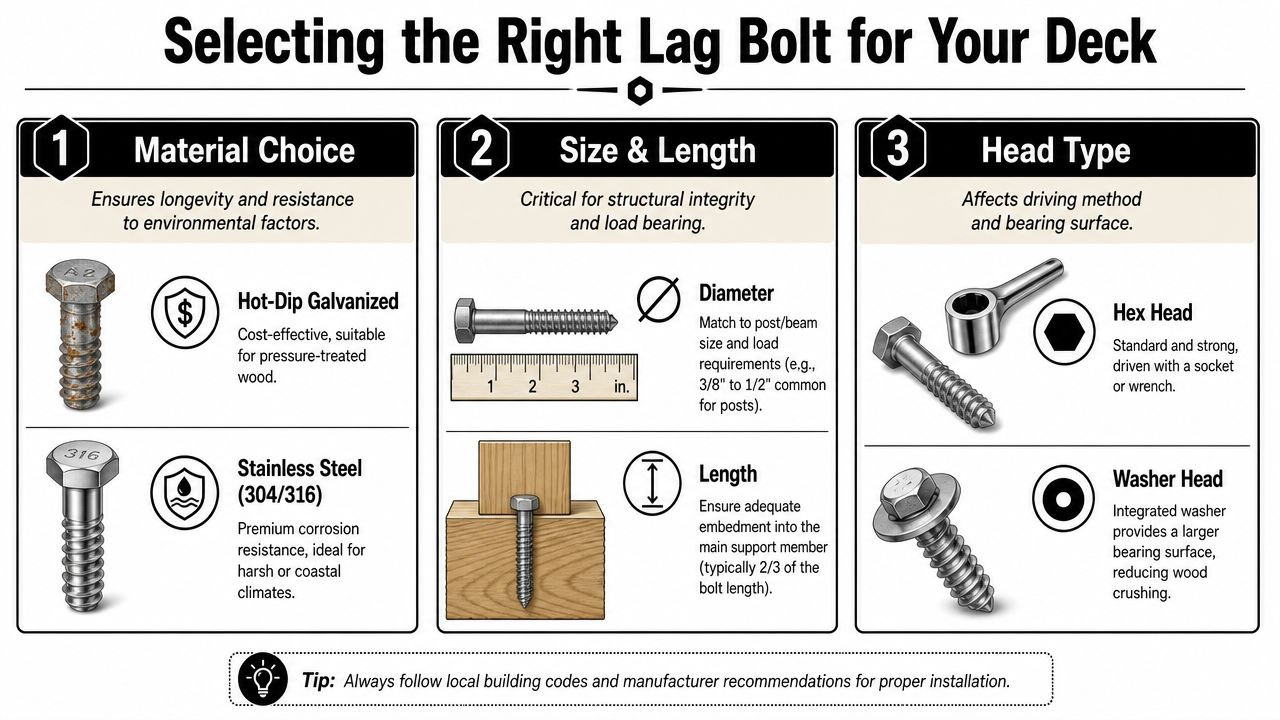
For deck work, size is the first decision. Deck construction commonly uses lag bolts ranging from 3/8-inch to 1/2-inch in diameter, with length sufficient to penetrate both the deck post and at least 1.5 inches into the supporting beam for a secure hold. If you're comparing hardware types before you buy, this breakdown on lag bolt vs structural screw is useful because it separates where each style fits.
Choose diameter before length
Most capable DIYers do this backwards. They start by measuring thickness and grabbing whatever length seems close. Start with diameter, because diameter tells you a lot about the fastener's structural role.
Here's a practical perspective:
- 3/8-inch lag bolts suit lighter structural connections where the member size and loading don't call for heavier hardware.
- 1/2-inch lag bolts are common where you need a more substantial connection at posts and beams.
- Bigger isn't always better if the member is too small or the fastener lands too close to an edge.
A large lag in undersized lumber can do more harm than good. It can split the member and reduce the holding power you thought you were gaining.
Length has to match the job
Length isn't about burying as much steel into wood as possible. It's about getting enough penetration into the receiving member without creating layout problems or crushing the joint when you tighten it.
For post connections, I look at three things:
- The thickness of the post
- The thickness of the beam or framing member
- How much thread lands in the main support member
If the threads barely bite into the beam, the connection is weak. If the lag is too long, you can create installation issues or interfere with other hardware.
Practical rule: The fastener has to do structural work inside solid wood, not just pass through the first member and pretend it's anchored.
Match the material to the exposure
Outdoor hardware lives a rough life. Pressure-treated lumber, rain, freeze-thaw cycles, and salt air all punish cheap finishes.
Use hardware suited to the conditions:
- Hot-dip galvanised steel works well for many pressure-treated deck builds.
- Stainless steel makes more sense in harsh or coastal conditions where corrosion is a bigger concern.
- Modern coated structural fasteners can also be a good fit when they're rated for exterior structural use.
If you're buying actual hardware for the build, one example in this category is the Decorex Hardware 1/2" x 12" Lag Bolt Screws with Hex Head and Hot Dip Galvanized finish, available through XTREME EDEALS INC. It's the kind of product that fits deck framing use where a hot-dip galvanised lag is appropriate.
Don't ignore the head style
A hex head is standard and easy to drive with a socket. A washer head spreads pressure better at the surface. Either way, use the right washer when the connection calls for one. You want the head bearing on the wood properly, not digging in and crushing fibres.
Understanding Code Requirements for Post Connections
A failed post connection usually looks fine until the day it starts to move. The bolts are tight, the beam looks straight, and then the post begins to twist, split, or loosen because the connection was built around what fit, not what the code and the load path required.
Code for deck posts is about more than picking a fastener size. It covers how the load gets from beam to post to footing, how far fasteners stay from edges and ends, and whether the connection resists withdrawal, shear, and seasonal movement without crushing or splitting the wood. If you want a quick reference on deck post support requirements, start there, then confirm the final detail with your local inspector.
One point carries over from ledger fastening rules. Structural fasteners need real embedment into sound wood, not a few threads biting into a checked edge or a weak outer zone. That same logic applies at post connections. A lag screw that barely catches solid material may pass a casual glance, but it does not give the connection much reserve once the deck starts cycling through wet and dry seasons.
What inspectors are checking at a post connection
Inspectors usually care about three things first.
- Load path: The beam load has to bear properly on the post or on approved hardware that transfers the load to the post.
- Fastener placement: Holes need enough clearance from edges and ends so the post or beam does not split.
- Approved connection method: Some post-to-beam details are accepted more readily than others, especially when the builder uses through-bolts, notched posts, or listed metal connectors.
That last point gets missed all the time. A pair of lag bolts driven through the side of a post into a beam can meet a basic fastening idea, but it is often not the best detail. In the field, I trust a notched post with through-bolts far more than a face-fastened beam hanging off lags alone, because the wood is bearing directly and the bolts are clamping, not trying to do all the structural work by themselves.
Spacing rules exist to prevent splits, not to make paperwork
Edge distance and end distance are simple. Keep the fastener far enough from the side and end of the member that the wood fibers stay intact under load and during tightening.
Crowd a lag too close to the edge of a 6×6 post and the fastener acts like a wedge. Put it too close to the end of a beam and the member can split along the grain. Once that happens, the connection strength drops fast, even if the hardware itself is the right diameter.
I lay out these holes before drilling every time. It saves callbacks, and it saves good lumber from being ruined by one bad placement.
Minimum code compliance is not the same as the best post detail
This is the part many DIY guides skip. Code gives you a minimum standard. It does not mean every code-accepted lag connection is the smartest way to hold a deck together for the next fifteen years.
For beam-to-post work, a notched post with through-bolts is usually a better structural detail than relying on lag bolts alone through the face of the post. The notch gives the beam direct bearing. The through-bolts clamp the parts together and are easier to inspect because you can see the full connection. Lags still have their place, but they are often overused where a bolt and washer assembly would do a better job.
If you are planning your deck in Ontario, check local interpretations before you drill anything. Municipal inspectors often want post, beam, and connector details shown clearly, and some are much more comfortable approving through-bolted or connector-based assemblies than site-improvised lag details.
How to Install Lag Bolts in Wood and Concrete
A lot of deck hardware problems start on a day when the framing looks fine, the fastener size looks right, and the installer hurries the drilling. The lag goes in a little crooked, the wood fibres crush under the washer, and the connection passes a quick glance while losing strength from the start.
That matters even more with deck posts because lag bolts are often asked to do work that should have been handled by bearing, through-bolts, or a proper connector. If you are using lags, install them cleanly and use them where they make sense.
Wood-to-wood installation
For wood framing, start by pulling the joint together first. A lag bolt should clamp an already aligned connection. It should not drag a beam, block, or bracket into place while cutting its own path.
I clamp the members, mark the hole, and drill before I touch the fastener. That extra minute prevents wandering holes and keeps the head from pulling one piece out of line.
Use this sequence:
- Clamp the parts in final position so nothing shifts while you drill.
- Lay out the hole location and confirm you still have proper edge and end clearance.
- Drill the correct pilot holes for both the shank and the threaded portion.
- Install a washer under the head so the load bears on steel, not directly on the wood fibres.
- Drive the lag slowly with a ratchet, socket wrench, or low-speed driver.
- Stop at snug-tight once the joint is fully seated.
For common softwood framing such as SPF, pine, or fir, these pilot sizes are a practical starting point:
| Lag Bolt Diameter | Pilot Hole for Shank | Pilot Hole for Threads |
|---|---|---|
| 3/8-inch | 1/4-inch | 3/16-inch |
| 1/2-inch | 5/16-inch | 1/4-inch |
Those sizes are field guidance, not a substitute for the fastener manufacturer's instructions or an engineered detail. Dry lumber, dense species, and holes near the end of a member all call for more care. If you are sorting out how the post, beam, and hardware work together, this guide on support for deck framing and hardware choices is a useful companion.
One more point from the field. If the connection is carrying serious load at a beam-to-post joint, a lag through the face of the post is often not the best detail in the first place. A notched post with through-bolts gives the beam direct bearing and reduces the connection's dependence on thread withdrawal strength.
Tightening without damaging the joint
Fast is not the goal here. Controlled tightening is.
An impact driver can overrun the connection before you feel what the wood is doing. A hand ratchet or a slow socket driver gives better feedback, especially in treated lumber that can be wet on the outside and harder than expected in spots.
Seat the washer. Pull the joint tight. Then stop.
If the washer starts sinking into the wood, or the head keeps turning after the joint is already closed, back the lag out and inspect the hole. Threads may be stripping the receiving member, or the pilot hole may be wrong.
If you hear cracking while tightening, stop and check the member. Wood rarely gives you that warning twice.
Concrete connections at post bases
Lag bolts do not install directly into concrete for deck post bases. You need a concrete anchor system rated for the bracket, the base detail, and the loads involved. Depending on the hardware and the engineer's detail, that may be a wedge anchor, sleeve anchor, epoxy-set anchor, or another anchor approved by the connector manufacturer.
The basic process is simple, but accuracy matters:
- Set the post base in its exact location before drilling
- Drill the hole to the anchor manufacturer's required diameter and depth
- Clean out concrete dust so the anchor can seat and develop its rated hold
- Install the anchor plumb and square
- Tighten the base hardware without pulling the bracket out of position
The common mistake is drilling first and trying to make the base fit afterward. On a post base, being off by even a little can leave the post out of plumb or put side-load on hardware that was meant to sit flat.
For post bases on concrete, follow the connector manufacturer's instructions and your local code requirements exactly. And for beam-to-post connections above that base, do not assume lag bolts are automatically the right answer just because they are easy to buy. In many deck details, through-bolts and proper bearing are the stronger long-term choice.
Common Lag Bolt Mistakes That Weaken Your Deck
Most weak lag-bolt connections don't fail because the steel was defective. They fail because the installer asked one fastener to fix a bad layout, bad drilling, or the wrong connection design.
The mistakes I see most often
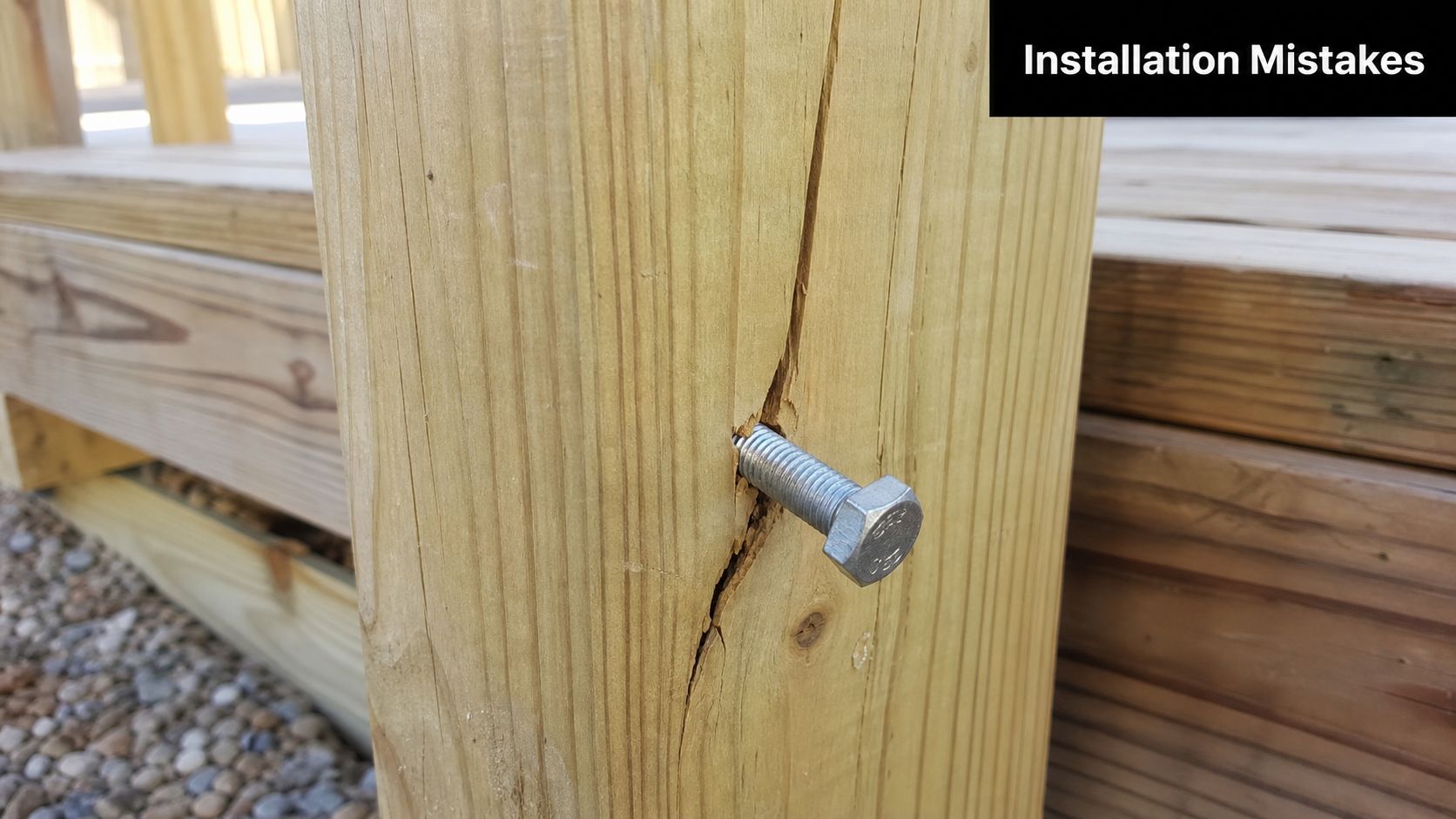
- Skipping the pilot hole: This is how posts split, especially near ends and edges. The lag acts like a wedge before the threads even start doing useful work.
- Over-tightening the fastener: Crushing wood fibres under the head reduces the quality of the joint. In some cases, the threads strip the receiving member and the connection loses bite.
- Using indoor or lightly plated hardware outdoors: Exterior deck framing needs hardware suited to treated lumber and weather exposure. Cheap plating doesn't last.
- Treating every post connection the same: A lag that works for one framing task might be a poor choice for a beam seat or a high-load joint.
- Ignoring spacing: If the lag lands too close to an edge or end, the wood can split now or later under seasonal movement and load.
What failure looks like in the field
A bad lag connection often doesn't announce itself with a dramatic collapse. It starts with movement. The beam shifts a little. The railing picks up a wobble. The post face checks around the bolt. Water gets in. The wood moves through wet and dry cycles, and the fastener loosens further.
That's why “it felt tight when I installed it” isn't a useful standard.
Jobsite check: If a connection depends entirely on the shear strength of a couple of lag bolts and the wood itself isn't carrying the load cleanly, rethink the detail.
Smarter Alternatives to Lag Bolts for Deck Posts
This is the part most basic deck tutorials skip. Lag bolts are common, but they are not automatically the strongest choice for post connections. In particular, post-to-beam connections deserve a harder look.
A critical underserved angle is the misconception that lag bolts are the best choice for attaching cross beams to deck posts, whereas data from industry experts shows that notching or through-bolts are superior because lag bolts rely on shear strength and can loosen over time. That matches what many experienced builders already know from repairs. A post carrying a beam by bearing is better than a post asking a couple of lags to suspend the load.
Through-bolts versus lag bolts
A through-bolt passes all the way through the connection and tightens with a nut and washer on the far side. That changes the way the joint behaves.
Lag bolts cut threads into wood. Through-bolts clamp the members together. For post-to-beam work, that clamping action is often more dependable over time.
Here's the no-nonsense comparison:
| Connection method | Main strength | Main drawback | Good use case |
|---|---|---|---|
| Lag bolt | Fast installation in wood | Can loosen, relies on wood thread engagement | Secondary structural wood connections |
| Through-bolt | Strong clamping force through full assembly | Needs full access and clean drilling through both members | Post-to-beam and other critical load points |
| Structural screw | Faster install, often engineered for structural use | Must match approved application | Connector-specific framing details |
| Notched post with bolts | Load bears on wood, not just fastener shear | More layout and cutting skill required | Beam support on posts |
Why notching changes everything
A notched post lets the beam sit on a shoulder cut into the post. That means the wood carries the vertical load directly. The bolts or screws then help lock the assembly together instead of doing all the lifting.
That's a better load path. It's also more forgiving over time as the wood cycles through moisture changes.
A lot of builders use lag bolts because they're easy. Easy isn't the same as durable.
For concrete-supported post hardware and anchoring details below, wedge anchors in concrete are worth understanding because the post system is only as strong as the support beneath it.
Structural screws have earned a place
Modern structural screws can be a solid alternative when the fastener is approved for the exact connection. They're faster to install than traditional lags, and many reduce the amount of pre-drilling needed. That said, I still don't treat them as a universal replacement. For a beam-to-post connection where bearing can be built into the detail, notching and through-bolting still make more structural sense.
A quick visual helps if you want to see connection principles in action.
Frequently Asked Questions About Deck Fasteners
Can you reuse old lag bolts
You can physically reuse them. I usually wouldn't. Once a lag has been driven, loaded, removed, and exposed to weather, you don't know what you're putting back into a structural joint. Corrosion, damaged threads, and stretched hardware aren't worth gambling on in deck framing.
What's the difference between a lag bolt and a carriage bolt
A lag bolt threads into wood. A carriage bolt passes through a drilled hole and tightens with a nut. For critical post-to-beam work, a through-bolt style connection is often the stronger choice because the joint is clamped across the full thickness instead of relying on threads cut into wood.
Do lag bolts always need washers
In structural deck work, a washer is usually the smart move and often the expected one. It spreads the load under the head, reduces crushing at the surface, and helps the connection stay tighter.
Are self-tapping lag screws the same as old-school lag bolts
They overlap, but they're not always the same product. Some modern lag screws are designed to install more easily and may reduce pre-drilling in certain wood conditions. That doesn't mean every connection should skip pilot holes. Dense lumber, dry lumber, and near-edge placement still demand care.
What's the safest default for a beam on a post
If you can notch the post so the beam bears on wood and then lock it with through-bolts, that's usually a stronger long-term detail than hanging the beam off lag bolts alone. The fastener should secure the assembly, not do all the structural carrying by itself.
If you're gathering hardware for a new deck or replacing weak post connections, XTREME EDEALS INC. carries deck and fencing accessories, lag bolts, carriage bolts, washers, anchors, post base brackets, joist hangers, and other practical hardware for wood and concrete connections.