
You're usually not choosing between two pieces of steel. You're choosing between two ways of building.
One path follows the older habit: grab a lag bolt, drill a pilot, crank it in, and trust the mass of the fastener. The other uses an engineered structural screw that goes in faster and often comes with listed performance for specific structural jobs. If you're building a deck, fastening a ledger, tying beams together, or upgrading a fence that has to survive weather and inspection, that choice affects more than labour. It affects whether the connection matches the plans, whether the inspector accepts it, and whether you have to redo work after the framing is already in place.
That's why the lag bolt vs structural screw question matters. Not because one is always better, but because each solves a different problem. A capable DIYer can make the right call, and a junior contractor should know when the old-school answer stops being the safe answer.
The Modern Builder's Dilemma Old School Brawn vs New School Brains
You're in the fastener aisle with a deck ledger, beam connection, or fence rebuild in mind. The lag bolts look familiar. The structural screws look specialised. Both claim heavy-duty use. Only one may fit the connection you're building.
The mistake is treating this as a simple strength contest. It isn't. On site, the primary question is whether the fastener matches the connection design, the lumber, the exposure conditions, and the approval path for the job. A lag bolt can still be the right hardware for some assemblies. A structural screw can be the smarter choice when you need tested structural performance and a cleaner install.
What builders are really deciding
A fastener choice usually comes down to three practical issues:
- Connection type: A beam-to-post clamp-up behaves differently from a ledger-to-house connection.
- Installation risk: Pilot-hole work, wood splitting, access for tools, and repeatability all matter.
- Inspection pressure: Some projects only need a solid build. Others need hardware with clear engineered values the reviewer can recognise.
Practical rule: If the connection is safety-critical and tied to a permit, don't choose by habit. Choose by the listing, the approved detail, and the installation instructions.
A lot of rework starts when someone assumes “heavy” means “approved”. Inspectors don't inspect by feel. They look for fasteners that match the structural detail or the manufacturer's recognised use.
The real shift in the trade
The trade hasn't abandoned lag bolts because they stopped working. It shifted because many modern structural screws give builders a more controlled way to hit structural intent with fewer installation steps. That matters on decks, fences, pergolas, and outdoor framing where treated lumber, moisture, and repeated loading expose sloppy fastening fast.
If your project needs to stay safe, legal, and easy to defend after inspection, this isn't an old versus new argument. It's a job-matching decision.
Anatomy of a Fastener Defining Lag Bolts and Structural Screws
A lot of confusion starts with names. In wood construction, people still say “lag bolt,” but lag screw is the more accurate term. Engineering Express notes that “lag bolts” and “lag screws” are often used interchangeably, but lag screw is the correct term for these heavy-duty wood fasteners, and they're used because of their coarse threads and thicker shaft in wood connections (Engineering Express on lag bolts in wood).

What a lag bolt really is
A lag screw is the old workhorse. It has a thick shank, deep threads, and usually a hex head that you drive with a wrench, socket, or impact and socket. It's built to bite into wood and draw two members together hard.
That makes it useful in heavy wood connections where clamp force matters. Builders still use it on posts, beams, and other assemblies where the fastener is part of a simple, direct load path.
But lag screws ask more from the installer. Layout matters. Pilot holes matter. Spacing matters.
What makes a structural screw different
A structural screw is an engineered fastener designed for structural wood connections with specific geometry, coatings, and drive features. Many use proprietary heads and bits, and many are intended to reduce installation friction while still serving in demanding connections.
They're not just “strong screws.” Their design is aimed at controlled installation and predictable performance.
For builders shopping practical options, the broader category is easy to see in suppliers that carry framing and hardware fasteners, including fasteners and fittings at Xtreme eDeals.
Lag screws rely heavily on diameter and traditional installation practice. Structural screws rely more on engineering, thread design, coatings, and listed applications.
Why the distinction matters on site
If you treat these as interchangeable, you'll make the wrong call in critical spots. A lag screw is still a legitimate structural fastener in the right situation. A structural screw is often the cleaner answer when you need easier driving, better compatibility with modern framing materials, and a connection detail that's easier to support during review.
The builder's job is to know which one the connection is asking for.
Head-to-Head Technical Comparison
The technical differences show up fast once you stop looking at the fasteners as just “big screws.”
| Attribute | Lag Bolt (Lag Screw) | Structural Screw |
|---|---|---|
| Typical identity | Traditional heavy-duty wood fastener | Engineered structural wood fastener |
| Head style | Commonly hex head | Often proprietary or specialised drive head |
| Installation approach | Usually needs pilot hole and more torque | Often installs without predrilling, depending on product and application |
| Layout sensitivity | More dependent on careful spacing and edge distance | Often easier to place consistently in framing workflows |
| Outdoor suitability | Depends on finish and compatibility | Often available with coatings suited to treated lumber |
| Best fit | Traditional heavy wood fastening, compression-focused assemblies | Code-driven structural connections, faster repeat installs |
A visual side-by-side helps clarify where each one fits.

Steel, coating, and outdoor use
Regionally relevant advice matters. Calgary Fasteners notes that structural screws are made with stronger steel than lag screws and can be specially coated for treated lumber, which is a practical advantage in wet or outdoor assemblies common in Canadian construction (Calgary Fasteners on structural screws vs lag screws).
That matters more than people think. Outdoor deck framing doesn't forgive poor fastener selection. If the screw or bolt finish isn't compatible with treated lumber or long-term exposure, the connection can become the weak spot long before the wood itself is done.
Strength in practice
Many articles get sloppy, talking about “stronger” without separating tension, withdrawal, and clamp-up behaviour.
FastenMaster's comparison is more useful because it frames the difference around code-listed capacity and installation method. Structural screws are commonly engineered and tested to meet specific load ratings and can often be installed without predrilling, while lag screws or lag bolts typically require a pilot hole and more installation torque (FastenMaster on structural screws vs lag bolts).
That doesn't make lag screws obsolete. It means structural screws often win when the design calls for quantified performance and repeatable field installation.
Spacing and edge discipline
Traditional lag installation leaves less room for lazy layout. Engineering Express explains that for tension applications in wood, a 1/2-inch lag screw needs an edge distance of 1.5 times the diameter, which equals 3/4 inch, and minimum end-distance rules can range from 2 to 3.5 times the diameter depending on the table referenced. That's one reason older lag-bolt methods demand careful spacing and placement. Miss your layout and you can invite splitting, poor load transfer, or an inspector's questions.
If your framing crew struggles to keep hole spacing clean and consistent, a fastener that depends on strict layout control can create avoidable problems.
The practical takeaway is straightforward. Lag screws reward careful prep. Structural screws reward disciplined product selection and proper driving technique. Both can work. One usually asks for more labour and more room for error.
A quick field demo is useful before you commit a whole build method to one fastener family.
The Installation Process From Pilot Holes to Final Torque
The install process is where many DIYers change their mind.
A lag screw sounds simple until you're drilling straight pilot holes through pressure-treated lumber, trying not to wander, then wrestling the fastener home without tearing up the fibres around the entry point. Structural screws simplify that routine in many wood applications, but only if you use the correct bit, correct length, and the exact product approved for the connection.
Installing lag screws properly
Lag screws need respect. The usual workflow is slower, and every step affects the final connection.
- Lay out the pattern carefully. Mark edges and ends before touching a drill. Incorrect layout is a common source of split-prone mistakes.
- Drill the pilot hole cleanly. A crooked or oversized pilot defeats the point.
- Bring the members tight. If the parts shift while driving, the fastener won't pull the assembly together the way you expect.
- Drive with controlled torque. A socket on an impact can work well, but overdriving can crush fibres or strip the bite in softer wood.
A bad lag install often still looks sturdy from a few feet away. That's the problem. The defects hide inside the connection.
Installing structural screws efficiently
Structural screws are usually faster in the field because they cut out steps. In many applications, they don't require predrilling, so the job becomes layout, drive, and verify seating. That speed reduction in labour is one of the main reasons crews prefer them for repetitive structural work.
Use the bit the manufacturer specifies. Don't substitute just because another bit “kind of fits.” Cam-out, head damage, and under-seated heads are common when installers get casual.
For builders working across wood and foundation-adjacent details, this is also where it helps to understand adjacent anchoring systems such as concrete screw anchors for decks and fences. Deck work often combines wood-to-wood and wood-to-concrete fastening, and you don't want to improvise either one.
What goes wrong most often
- Skipping pilot holes on lag screws: That raises the risk of splitting and poor alignment.
- Mixing product categories: A generic large screw isn't automatically a structural screw.
- Using the wrong driver bit: That damages the head and can leave the screw improperly seated.
- Driving by feel alone: Structural connections need more than a snug look.
A clean install isn't just about speed. It's about making the same connection, the same way, every time.
Application Showdown Where to Use Each Fastener
The lag bolt vs structural screw decision becomes practical. Different connections ask different questions. Some want clamp force and thickness. Others want listed structural values and a fastening pattern an inspector recognises right away.

Deck ledgers
This is the connection where old habits can get expensive.
In Canada, structural-screw adoption is tied to a regulatory shift toward engineered fastening rather than simple prescriptive hardware. GRK's Canadian performance data sheet shows a deck-ledger example where using 1/4 in. by 3 in. lag bolts would require 12 lags for a single house connection scenario, which shows how fastener count can multiply on real projects. The same source frames the shift toward engineered fastening for repeatable structural performance, and FastenMaster notes that modern structural screws can deliver comparable or superior tensile strength to lag bolts while often eliminating pre-drilling in these kinds of load-bearing wood assemblies (GRK RSS performance data).
For a ledger, the appeal of structural screws isn't just speed. It's fewer steps, fewer holes to manage well, and a much clearer path when the connection needs to align with a tested fastening approach.
Beam and post work
For thick members in direct compression, lag screws still have a place. If you're drawing one heavy timber element tight to another and the design allows it, they can make sense. But if the assembly relies on a listed connector or a manufacturer-specified fastening schedule, match the fastener to the connector documentation first.
That's where many junior builders get caught. They assume a bigger lag is safer than the specified screw. Often, it isn't safer because it isn't what the connector or detail was designed around.
Fences, pergolas, and outdoor framing
Wind, seasonal movement, and wet lumber all change the equation. Structural screws are often easier to place and more forgiving in repetitive outdoor framing, especially when treated lumber compatibility matters. Lag screws can still work for gate posts, heavy braces, and thick wood joints, but they ask for cleaner prep and more discipline.
If you're gathering hardware for these assemblies, product selection should include the whole connection, not just the fastener. That can mean joist hangers, post bases, brackets, deck screws, and lag or structural fasteners sourced together so the build method stays consistent.
A field rule that holds up
Use structural screws when the connection needs engineered clarity. Use lag screws when the design suits traditional heavy wood fastening and the approval path doesn't require a more specific listed fastener approach.
Code Compliance Cost and Selection Criteria
Most articles stop at “structural screws are faster” and “lag bolts are cheaper.” That's not enough to keep a project out of trouble.
The more important question is whether the connection will satisfy the plan reviewer, the inspector, and your own liability standard after the job is closed in. That's especially relevant in code-heavy markets. One persistent gap in common comparison articles is clear guidance on when a structural screw is preferable because an engineered fastener value is required for a deck, fence, or ledger-type connection. Total Fastening points out that many comparisons focus on speed and strength but leave buyers with the practical question of which fastener will satisfy a permit reviewer or inspector for a specific connection (Total Fastening on lag bolts vs lag screws).
Code first, shopping second
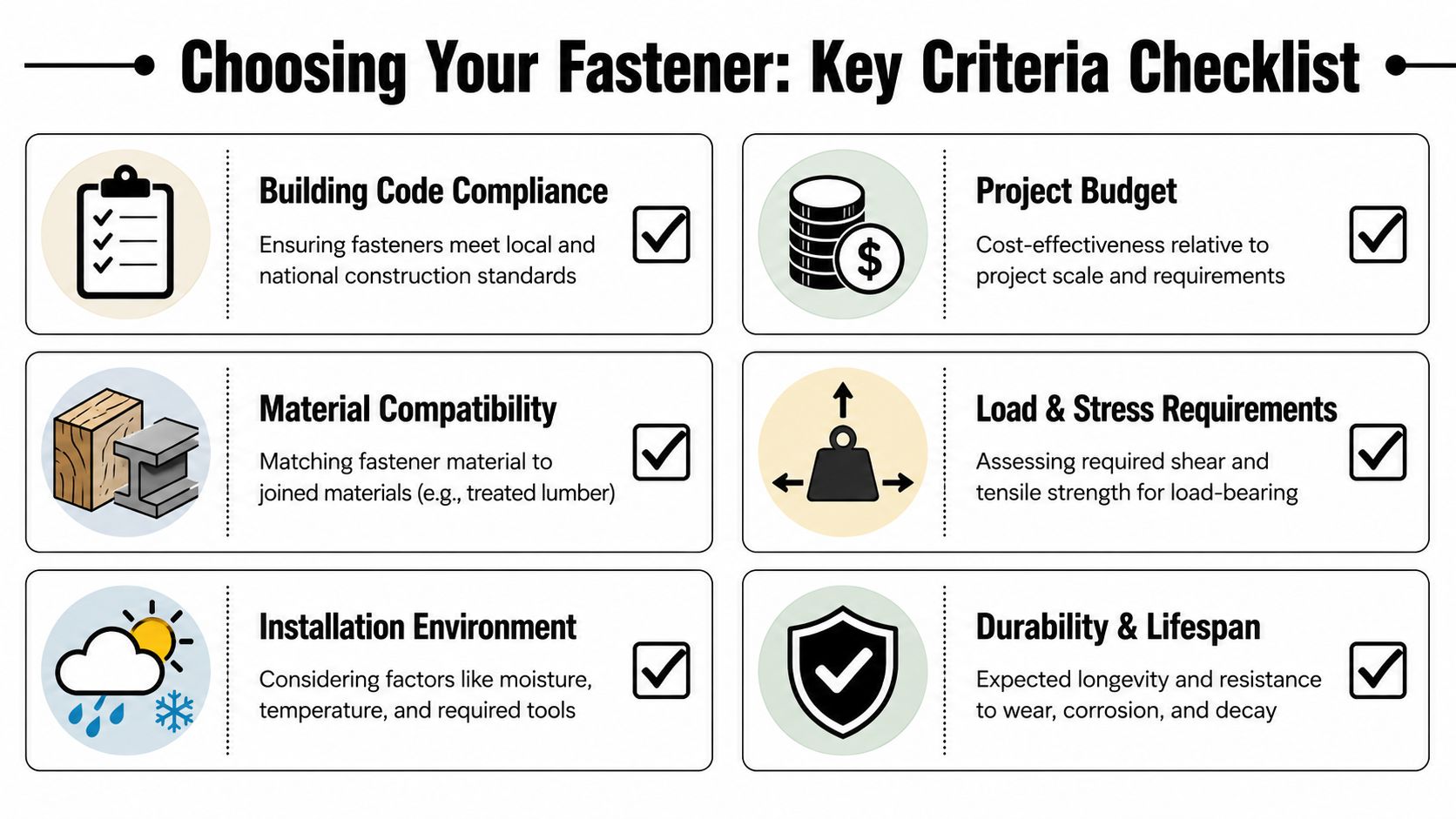
Start with the approved detail or the connector schedule. If the drawing, hardware manufacturer, or local code path expects an engineered fastener with a listed structural value, a generic lag screw choice can create a mismatch even if the assembly feels solid.
That matters on deck ledgers, hold-down conditions, connector-specific framing, and any assembly where failure would be serious. If you want a practical example of how local code interpretation affects real work, this overview of Southwest Michigan building codes is a good reminder that jurisdiction and inspection practice shape material choices as much as field habit does.
Jobsite reminder: “Strong enough” and “approved as installed” are not the same thing.
Cost means more than unit price
Lag screws often look cheaper on the shelf. That doesn't automatically make them cheaper in the build.
Consider the full cost:
- Labour time: Structural screws often reduce installation steps.
- Rework risk: Wrong fastener choice in a reviewed connection can force tear-out.
- Crew consistency: Simpler install methods reduce field variation.
- Material compatibility: Outdoor-rated options matter in treated lumber assemblies.
A lag screw can still be the economical answer for a simple non-critical connection where the design allows it. But once permit review, repetitive installation, or high-consequence framing enters the picture, the “cheaper” option can become the more expensive one.
A selection filter that works
Ask these questions in order:
- Is the connection structural and safety-critical?
- Does the plan or connector call for a specific listed fastener?
- Is the assembly outdoors, in treated lumber, or exposed to moisture?
- Will pilot-hole work slow the job or increase the chance of installation error?
- Does the connection depend on traditional clamp-up more than engineered fastener values?
If you're also choosing non-structural decking fasteners for the visible surface layer, that's a separate decision from framing hardware. Products such as stainless steel deck screws solve a different problem than ledger or beam fasteners.
The Final Verdict When to Use Which and Why
Here's the straight answer.
Choose a structural screw when the connection is critical, the project is likely to be inspected, the hardware schedule calls for engineered values, or you want faster and more repeatable installation in modern outdoor framing. That's usually the smarter path for deck ledgers, many framing connections, and jobs where you need a clean argument for why the fastener belongs there.
Choose a lag screw when the connection suits traditional heavy wood fastening, clamp force is the main goal, and the design doesn't require a more specific engineered fastener path. It still works well in the right beam, post, and bracing situations. It just isn't the universal answer it used to be.
For most builders, the safest habit is simple:
- Match the fastener to the detail, not to memory
- Follow the manufacturer's installation method exactly
- Don't swap in a bigger lag just because it looks tougher
- Treat permit-driven connections differently from casual backyard carpentry
If you're unsure, stop before you fasten the whole assembly. Verify the approved detail, the connector requirements, and the fastener's listed use. That pause is cheaper than failed inspection, torn-out framing, or a structural callback after the project is finished.
If you're sourcing hardware for a deck, fence, or pergola build, XTREME EDEALS INC. carries practical categories for fasteners, brackets, joist hangers, post bases, and related outdoor hardware, which makes it easier to match the connection hardware to the job before you start drilling.