
A privacy fence usually looks fine on day one. The problems show up later, when the gate starts dragging, the latch stops lining up, screws back out, and rust stains start bleeding down a clean panel. Most of those failures don't start with the boards. They start with the hardware.
That's why buying privacy fence hardware the same way you buy trim pieces is a mistake. Hinges, brackets, fasteners, latches, post caps, and anchors decide whether the fence stays square, moves properly, and holds up to weather. If you're building new, replacing a gate, or sorting out a fence that never worked quite right, the right selection process matters more than is often underestimated.
Why Your Fence Hardware Matters More Than You Think
A fence can look finished on Saturday and start showing hardware mistakes by the next storm or the first month of gate use. The boards rarely cause that trouble. The connection points do.
Privacy fence hardware carries the loads that make a fence stay straight, swing properly, and survive weather. Some of that load is constant, such as rails bearing on posts and fasteners holding panels in place. Some of it changes every day, especially at the gate, where weight, motion, and wind keep working the same hinges, latch, and post connection. That is why gate problems usually show up before failure in the rest of the run.
Cheap hardware also creates expensive repairs. Weak rail hardware and poor post connections are false economy, because rework costs more than getting the structural parts right up front. I see this on square layouts and on angled or stepped runs, where off-angle connections put even more stress on brackets, screws, and gate alignment.
What hardware really controls
The right parts determine more than whether the fence goes together.
- Fasteners keep joints tight and matched to the fence material, load, and exposure.
- Brackets support rail ends and help hold line and spacing over time.
- Hinges carry gate weight and transfer that force into the gate post.
- Latches depend on stable geometry. If the post shifts or the gate sags, the latch becomes the symptom, not the cause.
- Post caps reduce water entry at the most exposed end grain or post top.
A good selection process starts with four questions. What type of fence are you building. Where are the highest loads. What does the climate do to metal and fasteners. How visible will the hardware be when the job is done. Those answers narrow the field fast.
For example, a basic backyard wood privacy fence in a mild climate can use a different mix of screws, brackets, and hinges than a tall vinyl fence with a wide gate in a coastal area. A decorative black hinge set may fit the look, but finish and corrosion resistance still need to match the site. On non-square layouts, adjustable hardware or brackets suited to angled connections can save a lot of field improvisation.
That is where product choice gets practical. Xtreme eDeals carries privacy fence hardware in the categories that usually decide whether a job holds up or turns into a callback, including structural fasteners, rail brackets, gate hinges, latches, and post caps. The right combination keeps the fence working as a system, not as a collection of separate parts.
The Anatomy of Privacy Fence Hardware
A privacy fence usually looks simple until the hardware starts failing. The boards may still look straight, but a loose rail connection, a weak gate hinge, or the wrong bracket at an odd corner can turn a clean install into a repair job.
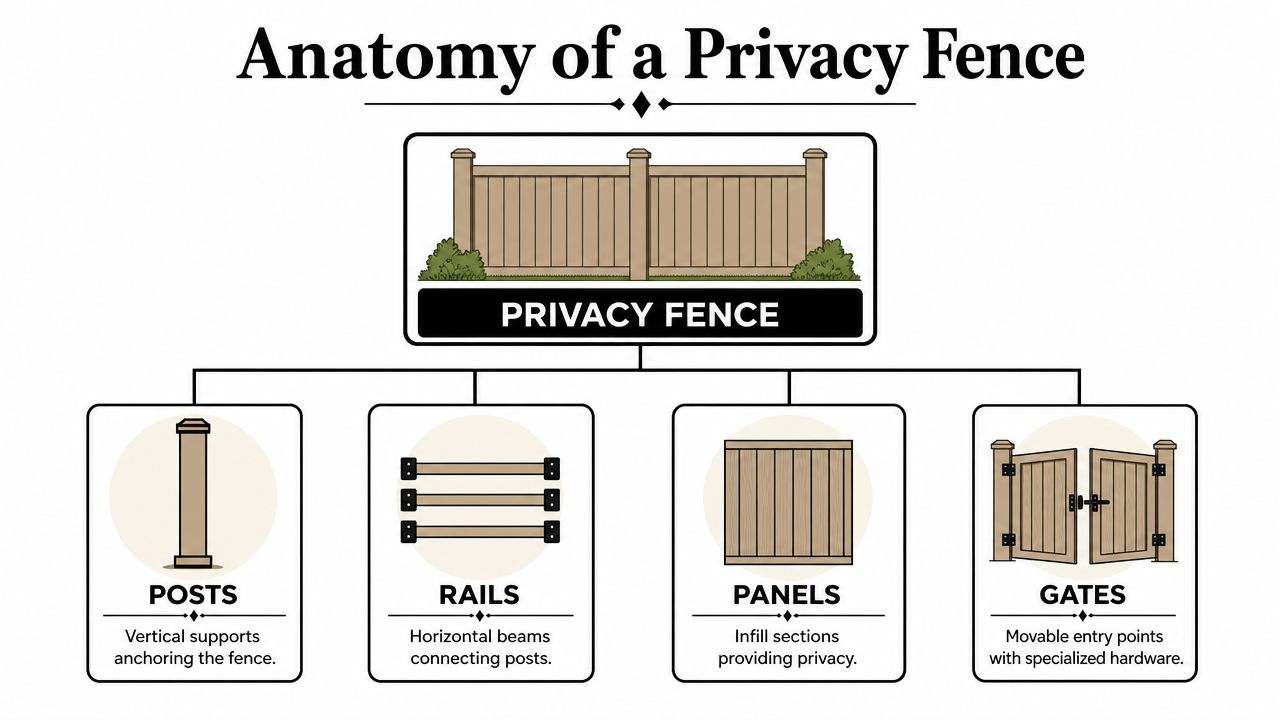
Posts are the spine
Posts carry the dead load of the fence, the side load from wind, and the concentrated stress from gates. If the post setup is weak, every other piece of hardware works harder than it should.
Post hardware usually includes anchors or base hardware where required, rail connection brackets, fasteners, and post caps. Caps are often chosen for appearance, but they also protect the most exposed end of the post from water entry. On wood fences, that small detail can affect how long the post top stays sound.
Rails are the structure between posts
Rails keep the run tied together and hold the panels in plane. They also transfer force from the infill back into the posts. Hardware at this point needs to match both the rail profile and the post material, especially on mixed-material builds such as wood rails on metal posts or vinyl sections with reinforced inserts.
A common mistake is grabbing whatever screws are already in the trailer or toolbox. Rail connections need exterior-rated hardware with enough holding strength for the span, the panel weight, and the site exposure. If you are matching brackets, screws, and connection fittings, the fasteners and fittings for fence and deck projects category is usually where the right combination starts to come together.
| Fence zone | What it does | Hardware that matters most |
|---|---|---|
| Posts | Carry vertical and lateral load | anchors, brackets, caps |
| Rails | Tie posts together | rail brackets, structural fasteners |
| Panels | Provide privacy and wind surface | panel screws, clips, channel parts |
| Gates | Add movement and access | hinges, latches, cane bolts, gate kits |
Panels create privacy, but also catch wind
Solid privacy panels act like sails. On a sheltered lot, that may not show up as a problem for years. On an open yard, corner lot, or long uninterrupted run, wind load starts working on every screw, bracket, and rail seat.
That changes the hardware decision. Light-duty connectors may be acceptable on a short decorative section, but tall full-privacy panels usually need better fastening schedules and stronger rail attachments to resist racking and gradual loosening.
Gates are where fences fail first
Gate openings combine weight, repeated movement, and constant alignment checks. A latch only works if the posts stay where they belong and the hinges carry the load without sagging.
Most fence complaints sound like gate problems because gate movement exposes small errors in layout, anchoring, and hardware choice faster than the rest of the fence.
For that reason, it helps to treat gate hardware as its own system instead of an add-on at the end of the order. Hinge size, latch style, and post reinforcement all need to match the width, height, and weight of the gate.
Non-square layouts need different hardware logic
Straight runs on square lots are the easy jobs. Real properties often include jogs, slopes, radiused sections, old concrete pads, and corners that are close to square but not quite. Those layouts change what hardware will fit and still look clean.
Independent installation guidance discusses handling fence panels around curved or angled areas with swivel brackets, corner-post planning, and field adjustments. The need for adjustable hardware is important because many buyers order for a perfect rectangle, then reach the site and find angles that standard fixed brackets will not handle cleanly.
On sloped or irregular lots, fixed connectors can force ugly gaps, twisted rails, or unnecessary trimming. Adjustable mounts, angle-capable brackets, and the right fastener package usually produce a cleaner result and save time in the field. Xtreme eDeals carries the hardware categories that solve those problems, especially for builders trying to match structural needs with the finished look instead of improvising at the last minute.
Choosing Your Hardware Material and Finish
The material decision usually comes down to one question. What will this hardware face year after year?
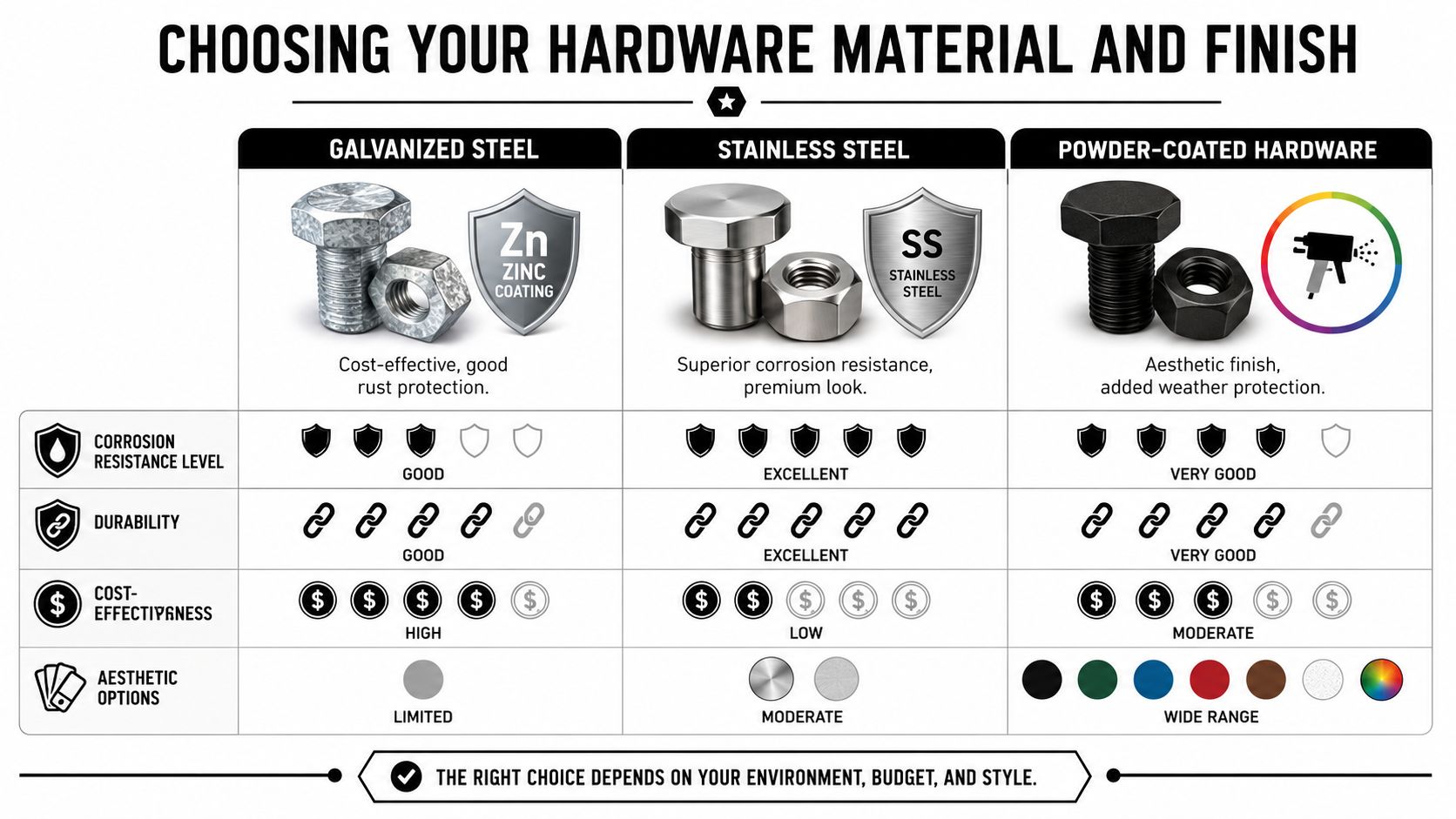
Galvanized steel for practical outdoor use
Galvanized hardware is the standard working option for many privacy fence jobs. It offers solid corrosion protection and makes sense when you need dependable exterior hardware without paying for a premium finish everywhere.
It's a good fit for brackets, many fasteners, utility gates, and general fence assembly. If you're shopping connection parts, fasteners and fittings for fence and deck projects are the category where this choice matters most because that's where finish, thread type, and outdoor rating need to match the application.
Stainless steel for the harshest exposure
Stainless is the upgrade when corrosion is the biggest concern. Wet sites, freeze-thaw exposure, and areas where hardware sees repeated moisture all benefit from moving up to stainless on key components.
Regional guidance emphasises stainless steel and galvanized zinc as weather-resistant finishes for hinges and fasteners, specifically because they reduce rust-driven loosening, seizure, and premature gate sag in outdoor conditions, as noted in Lowe's fence hardware buying guide. In plain terms, stainless buys you fewer headaches on the moving parts and exposed fasteners that are hardest to replace later.
Powder-coated hardware for a finished look
Powder-coated hardware is usually chosen for appearance first, but good coated hardware also adds another layer of weather protection. It's common where homeowners want black hardware against wood or a coordinated look with metal accents, gate frames, or decorative inserts.
The trade-off is simple. A finish only protects what remains intact. Once coating gets damaged, exposed base metal can become the weak point if the underlying material and environment don't match.
Field note: Decorative hardware works well when it's built on a corrosion-resistant base. Decorative hardware over weak metal is where buyers get disappointed.
Side-by-side decision guide
| Material | Where it works well | Main trade-off |
|---|---|---|
| Galvanized steel | General outdoor brackets, screws, utility hardware | Less refined appearance |
| Stainless steel | Hinges, fasteners, high-moisture exposure, demanding climates | Higher upfront cost |
| Powder-coated hardware | Visible hardware, design-focused gates, black accent work | Finish damage matters |
Pick material by failure risk, not by habit. Use stronger corrosion resistance where replacement is annoying, alignment matters, or movement is constant. That usually means the gate hardware and primary fasteners deserve more attention than the decorative pieces.
Hardware for Your Fence Structure Posts and Rails
Most privacy fences don't fail because someone chose the wrong decorative cap. They fail because the structure was assembled with hardware that didn't match the load.
Start with the rail connection
Rails need rigid, well-supported connections into the posts. If you're using brackets, size them to the rail and install them so the load transfers cleanly instead of relying on a few screws in withdrawal. That's one reason purpose-made post and fence brackets for rail connections are worth using instead of improvising with generic angle hardware.
This is also where people make a common mistake. They grab whatever screws are already in the trailer or toolbox. Deck screws have their place, but not every screw is meant for every structural fence connection.
Match hardware to the fence type
Wood, vinyl, and metal-framed privacy sections don't all behave the same way.
- Wood fencing moves with moisture, so brackets and fasteners need to hold while the material expands and contracts.
- Vinyl systems often rely on cleaner, more exact fit-up. Oversized fasteners or sloppy bracket placement can telegraph through the finished look.
- Mixed-material builds need extra care where one material is rigid and another moves.
Don't overlook post tops
Post caps do two jobs. They finish the look, and they help shield the most weather-exposed part of the post. On wood posts especially, that top surface takes water and sun directly. If you leave it open, you shouldn't be surprised when it weathers faster than the rest of the fence.
That's why cap selection is more than a style decision. Pyramid caps, ball caps, and other decorative styles can all work if they fit the actual post size properly and sit securely.
A post cap that looks good but fits loosely becomes another maintenance item. A cap that fits correctly helps the fence look finished and stay that way.
Why this part of the job affects total ownership cost
Hardware selection matters more when labour is expensive. Professional labour often accounts for 50% to 70% of total fence cost, and a typical 6-foot wood privacy fence can run around $25 to $45 per linear foot installed according to the BLS-linked market summary for fence installation economics. That's exactly why weak rail hardware and poor post connections are false economy. Rework costs more than getting the structural parts right up front.
A quick buying filter for posts and rails helps:
- Choose load-rated connection hardware for rails and corners, not decorative substitutes.
- Use exterior-compatible fasteners that match the hardware finish and the fence environment.
- Fit caps to true post size, not nominal lumber assumptions.
- Account for awkward runs early if the layout changes direction, rises, or steps.
Good structural hardware doesn't draw attention to itself. That's the point. It keeps the fence quiet, square, and stable.
Selecting the Right Hardware for Your Gate
If the gate works well, it's often assumed the whole fence was built well. If the gate drags, swings out of line, or won't latch, that's all that's noticed.
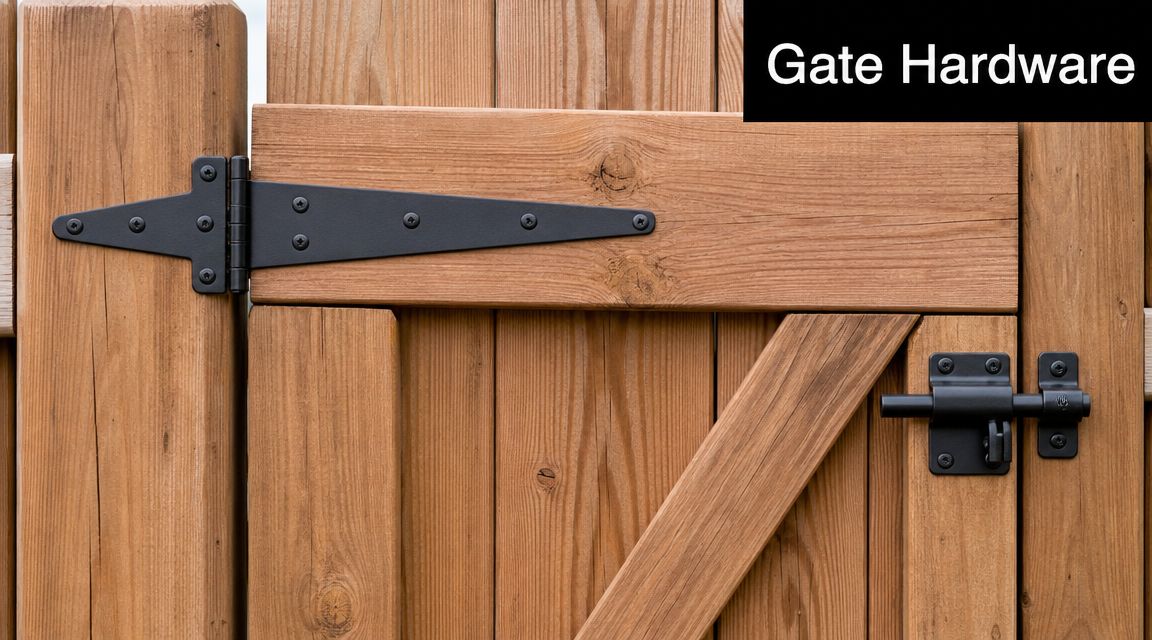
Hinge choice should follow weight and use
A gate is a moving load hung off one side of an opening. That means hinge choice isn't cosmetic. It's structural.
Strap hinges spread load well across a wood gate frame and are often the right call for heavier or wider wood privacy gates. T-hinges can work on lighter applications, but they're often chosen because they're available, not because they're ideal. Self-closing hinges make sense where controlled closing matters, especially around pool-adjacent spaces or high-traffic side-yard gates. If that's the route you're taking, self-closing gate hinges for outdoor fence applications are the category to compare by finish, adjustment style, and intended gate type.
The latch is only as good as the alignment
Buyers often focus on latch style first. That's backwards. A latch can't compensate for a gate that sags, twists, or racks under use.
For privacy fence gates, installation guidance recommends #10 x 1" self-tapping stainless steel or galvanized screws and proper post anchoring to reduce rotation under repeated gate cycling and wind loading, according to this gate installation guide PDF. That's the practical heart of gate hardware selection. Strong hinges and a decent latch still won't perform if the post moves.
What works on single gates and double gates
Single gates need enough hinge support and a latch that engages consistently without forcing the user to lift or push the gate into position.
Double gates add another layer. You need both leaves aligned, and one side usually acts as the fixed leaf. Hardware layout matters because load transfer and spacing need to stay consistent across the opening.
A few practical rules help:
- Use heavier hinge hardware than you think you need when the gate has solid privacy infill.
- Choose a latch with the right level of security for the location, from simple gravity latches to keyed or lockable options.
- Add a cane bolt on double gates when one leaf needs to stay fixed during normal use.
- Avoid mixing finishes and metal quality on one gate. The weakest piece usually shows failure first.
This walkthrough shows the kind of fit-up details that affect gate performance in practice:
Don't buy gate hardware by price alone
Cheap gate kits often look fine in the package. The problem appears after cycling, weather exposure, and a bit of settlement. Better gate hardware usually gives you thicker hinge leaves, cleaner bearing surfaces, stronger fasteners, and more reliable latch engagement.
That matters most on privacy fences because solid gates carry more wind and more weight than open decorative gates. If any part of the fence deserves careful selection, it's the gate.
Your Privacy Fence Hardware Purchasing Checklist
Buying hardware gets easier when you stop looking at parts individually and start checking compatibility across the whole job.
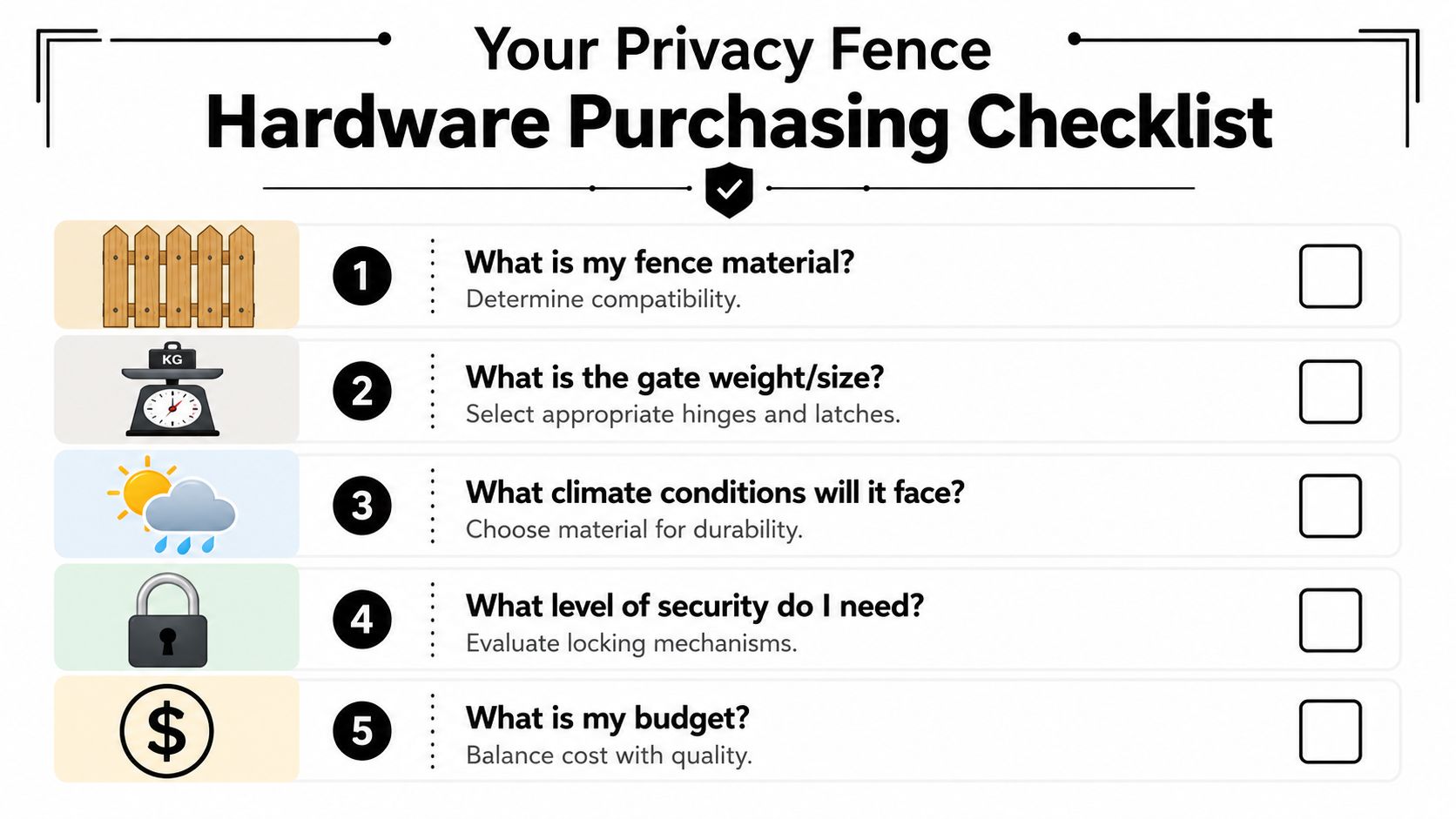
Five questions to answer before you order
What is the fence made from
Wood, vinyl, and mixed-material systems need different connection details. Don't assume one bracket or fastener type suits every assembly.Where is the movement
Gates, latch posts, and transition points need more attention than straight static runs.What weather will the hardware face
If the site stays wet, freezes, or gets repeated moisture on exposed hardware, move up in corrosion resistance on the critical parts.How visible is the hardware
Hidden structural pieces can stay utilitarian. Exposed hinges, latches, and caps should match the look you want.Is the layout simple or awkward
Corners, slopes, and non-square runs may require adjustable or angle-capable hardware rather than standard fixed connectors.
Count parts by zone, not by memory
One of the easiest ordering mistakes is undercounting the small pieces. Break the project into zones and count each one separately.
| Zone | Check before purchase |
|---|---|
| Fence runs | brackets, rail fasteners, panel fasteners |
| Posts | anchors or bases if needed, caps |
| Single gate | hinge set, latch, matching screws |
| Double gate | hinges, latch, cane bolt, fixed-leaf hardware |
Tie the hardware budget to the project budget
A typical 150- to 200-foot backyard privacy fence can cost $3,000 to $8,000, and a well-built privacy fence can add 2% to 5% to a home's value according to this privacy fence cost and value guide. That's a good reason to stop thinking of hardware as the place to cut corners first.
Buy hardware the way you'd buy tires for a truck. It may not be the whole machine, but it determines how the whole machine performs.
One practical note on purchasing. For larger jobs, bulk packs often make more sense than piecing together singles, especially for screws, anchors, washers, and brackets. For small repairs, individual packs are easier to manage. The right buying format depends on project scale, not just sticker price.
Installation Tips and Common Mistakes to Avoid
Good privacy fence hardware can still fail if the install is sloppy. Most hardware complaints I hear from property owners come down to one of two things. The wrong part was chosen, or the right part was installed badly.
Mistakes that cause early problems
The first mistake is treating all outdoor screws the same. Fastener type, coating, and head style matter. A poor screw choice can strip, snap, stain the work, or loosen under seasonal movement.
The second mistake is poor alignment during installation. Hinges mounted out of plane, rails fixed under stress, and brackets installed without checking level and square all create problems that show up later as sag, bind, or latch misalignment.
A few errors show up repeatedly:
- Skipping pre-drilling when needed leads to splitting and poor screw seating.
- Overdriving fasteners crushes material and weakens the connection.
- Relying on the hardware to correct bad framing usually fails.
- Ignoring post stability guarantees gate problems later.
Installation habits that pay off
Use a consistent sequence. Set and verify posts first. Dry-fit hardware where possible. Check gate swing and latch alignment before final tightening. Then re-check after the structure settles from initial loading.
For gate assemblies, proper anchoring matters as much as hinge quality. The installation guidance cited earlier also notes the value of proper post anchorage and hardware layout for reducing rotation and keeping the opening stable. That's one reason a gate that seems fine on install day can drift out of alignment after regular use if the supporting post wasn't locked in properly.
Don't treat it as install-and-forget
Outdoor hardware needs inspection. Not constant attention, but regular observation.
Hardware doesn't usually fail all at once. It gives warning first. A streak of rust, a loose hinge leaf, a latch that needs a shove, a gate that drops slightly at the free end.
That's when to tighten, clean, adjust, or replace a component before it damages the surrounding fence.
A basic maintenance routine works:
- Check moving hardware seasonally for looseness, drag, and corrosion.
- Clean exposed finished hardware so dirt and moisture don't sit on the surface.
- Touch up or replace damaged visible parts if coating has been compromised.
- Watch the latch side of the gate because that's where sag shows up first.
If you build and maintain with that mindset, the hardware lasts longer and the fence keeps working like a system instead of becoming a sequence of small repairs.
Frequently Asked Questions About Fence Hardware
Do wood and vinyl privacy fences use the same hardware
Not always. Some principles carry over, but the actual fit, fastener choice, and bracket style often differ. Wood tolerates some field adjustment. Vinyl usually demands cleaner alignment and the right matched components. Use hardware that suits the fence system, not just the colour or finish.
Can you paint galvanized hardware
You can, but that doesn't mean you should on every job. Painted hardware can improve appearance when you need a specific look, but coating over galvanized pieces adds another maintenance variable. If appearance matters from the start, it often makes more sense to buy a finish you want rather than trying to convert a working finish into a decorative one later.
How do I choose hardware for a heavy privacy gate
Start with the weight and the amount of use. Solid privacy gates need stronger hinges than open decorative gates because they carry more material and catch more wind. Use heavy-duty hinges, stable posts, and a latch that doesn't require forcing the gate into place to engage. If it's a double gate, add the hardware needed to hold the fixed leaf securely.
What hardware helps on sloped or odd-shaped properties
Adjustable connection hardware matters most there. Swivel brackets, angle-capable fittings, careful corner-post planning, and rail trimming are usually what solve those layouts cleanly. Standard fixed hardware can work on a straight level run and become a problem immediately on a curve or stepped grade.
Are post caps only decorative
No. They improve the finished look, but they also help shield exposed post tops. On wood fences, that matters because the top of the post takes direct weather exposure.
If you're comparing options for a new build, a gate repair, or a full hardware refresh, XTREME EDEALS INC. carries fence and deck hardware categories that fit the practical decisions covered here, including brackets, fasteners, post caps, and gate hardware for both DIY and contractor purchasing.