

You've picked the parts for the job. Maybe it's a set of Decorex Hardware post caps for a fence refresh, a batch of deck screws and carriage bolts for a new platform, or gate inserts and balusters for a larger backyard build. Then you hit checkout and the main question shows up fast. What's the right shipping choice for hardware that isn't light, compact, or easy to stack?
That's where Canadian shipping options stop being a generic e-commerce topic and become a practical job-cost issue. A box of fasteners behaves very differently in transit than long balusters, bulky post caps, or mixed hardware bundles with awkward dimensions. The cheapest label on screen isn't always the cheapest delivered order once size, distance, handling, and destination are factored in.
For homeowners, that usually means balancing budget against delivery speed so the project doesn't stall for missing brackets or anchors. For contractors, it means deciding whether to split shipments, consolidate them, or move a larger order through a freight lane instead of standard parcel. If you're also bringing goods across the border, the planning gets tighter. Peak Transport's guide to cross-border freight is a useful reference if you want a plain-English overview of what cross-border freight planning looks like before the shipment even moves.
Getting Your Hardware Home
Shipping hardware across Canada always comes back to one thing. The product itself drives the shipping decision.
A small carton of washers, wedge anchors, or lag bolts is dense and straightforward. A mixed order with true 6×6 post caps, decorative finials, joist hangers, and gate hardware is different. It may not be the heaviest shipment on the dock, but it can take up more cube, need better internal protection, and create more handling points if the order gets split across services.
That's why the best Canadian shipping options for hardware aren't chosen by brand name alone. They're chosen by matching the carrier and service level to the order profile.
Most delivery mistakes happen before the parcel leaves the building. They start with the wrong service for the shape, urgency, or destination.
For deck and fence projects, buyers usually fall into three groups:
- DIY homeowners: You need a clear delivery window so you can schedule the build and avoid paying for rush shipping you don't need.
- Contractors and installers: You care about consistency. A job can't stop because one carton of post base brackets arrives days after the fasteners.
- Bulk buyers and property managers: You need order consolidation, cleaner paperwork, and a delivery setup that fits a receiving site, not just a residential doorstep.
Some orders should move through a parcel network. Some are better bundled into fewer cartons. Some are large enough that freight becomes the cleaner answer. Once you look at shipping this way, checkout gets simpler. You're no longer asking, “Which carrier is best?” You're asking, “Which option fits this order?”
Comparing Major Canadian Carriers
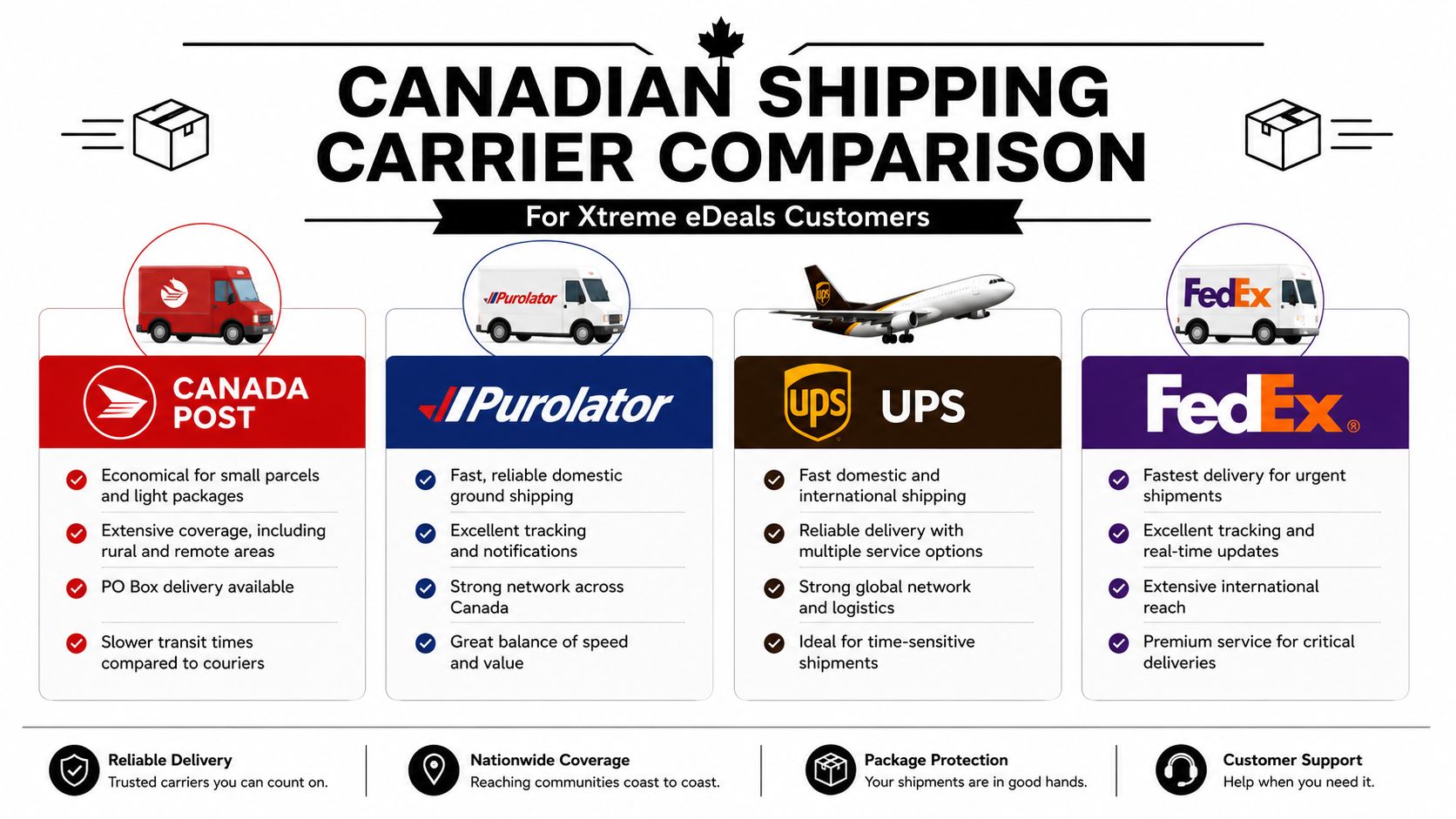
When customers ask about Canadian shipping options, they usually mean four names. Canada Post, Purolator, UPS, and FedEx. All four can move hardware. They just don't solve the same problem equally well.
Canada's parcel market is fairly concentrated. UPS and Canada Post each accounted for 18% of parcels in 2022, while Purolator held 13% according to Stallion's Canadian retail shipping statistics. For a buyer, that concentration matters because it means most practical choices will come from a short list of major networks rather than dozens of equivalent alternatives.
Canada Post for broad national reach
If the order is heading to a smaller town, a rural address, or a customer who wants a dependable standard parcel option, Canada Post is usually the first carrier to evaluate. That's especially true for cartons of screws, brackets, hinges, or smaller mixed hardware kits.
Its domestic service ladder is useful because it clearly separates urgent from standard shipments. A practical summary from FreightAmigo's guide to Canada Post services shows that Priority offers next-day delivery with tracking, delivery confirmation, signature confirmation, and $100 liability coverage. Xpresspost is guaranteed in less than two days with tracking and the same $100 liability coverage, while Regular Parcel takes 2 to 9 business days and remains tracked.
For hardware buyers, that structure works well when you need a simple choice:
- urgent replacement parts
- standard project materials
- tracked delivery for higher-value cartons
UPS and FedEx for tighter commercial execution
UPS and FedEx are often the stronger fit when the shipment is heavier, more commercial in nature, or moving into a business environment where tracking visibility matters more than the absolute lowest label rate. They're also commonly used when buyers want a more courier-style experience instead of a postal one.
For hardware, these carriers often make sense when:
- The parcel is heavier: Dense boxes of bolts, anchors, or fasteners can fit their networks well.
- The address is commercial: Shops, warehouses, and active job sites often prefer courier deliveries with clearer operational handling.
- The buyer is deadline-driven: If the shipment supports an install crew, more control can matter more than a modest rate difference.
FedEx and UPS also tend to be worth comparing on mixed-carton orders where one box is compact and heavy while another is bulky and protective-pack heavy. Those are the shipments where service choice can change the final cost more than people expect.
Purolator for domestic business-to-business movement
Purolator sits in a practical middle ground for many Canadian shipments. It's often a sensible option when the delivery is domestic, time-sensitive, and going to a populated corridor rather than a very remote destination.
For builders and trade buyers, Purolator is often attractive when the order is:
- headed to a contractor yard or light industrial address
- too important to leave on a slower economy service
- not large enough to justify freight
Practical rule: If your order supports scheduled labour, compare services based on delivery reliability and handling fit first, then rate second.
A side-by-side view for hardware orders
| Carrier | Best For | Key Service Tiers | Considerations |
|---|---|---|---|
| Canada Post | Smaller parcels, broad Canadian coverage, standard residential delivery | Priority, Xpresspost, Regular Parcel | Strong option for nationwide reach and clear service tiers |
| Purolator | Domestic business shipments and time-sensitive corridor deliveries | Ground and express-style courier services | Often a good fit for contractor and commercial addresses |
| UPS | Heavier parcels, commercial deliveries, cross-border and tracked courier workflows | Ground and faster courier options | Worth checking when shipment weight or business delivery needs are central |
| FedEx | Time-sensitive parcels and courier handling with strong visibility | Ground and express courier options | Often useful for buyers who prioritize tighter delivery control |
The right call depends less on logo and more on the order itself. A compact box of structural screws may ship well through one network, while a carton of decorative post caps with void fill and edge protection may price out better elsewhere. That's normal in hardware shipping. Shape matters almost as much as weight.
Decoding Your Shipping Bill
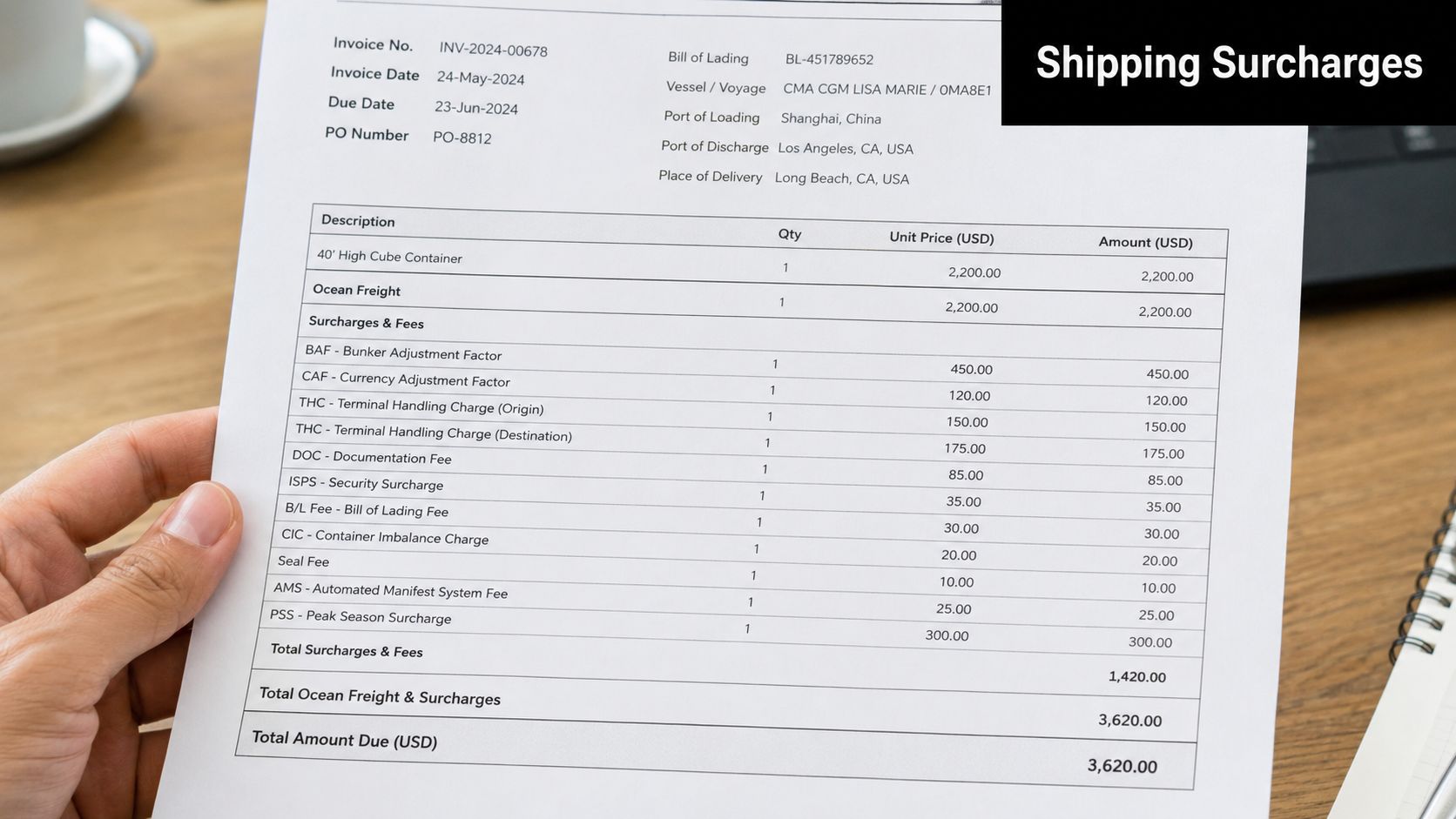
A shipping bill has a base rate, then a layer of real-world adjustments. That's why two orders with similar product values can end up with very different delivery totals.
The biggest mistake buyers make is assuming shipping cost follows product price. It doesn't. It follows the work the carrier has to do.
What you're actually paying for
A parcel invoice usually reflects several cost drivers at once:
- Distance and destination: Rural and remote shipments often cost more because the final mile is harder to serve.
- Package profile: Weight matters, but so do box dimensions, shape, and handling difficulty.
- Service level: Faster services cost more because the network gives your parcel higher priority.
- Special handling: Long, oversize, or awkward cartons can trigger extra charges even when they aren't especially heavy.
Canada's geography is a major reason this happens. The country has about 4 people per square kilometre, which makes last-mile delivery more expensive because carriers travel longer routes with fewer parcels per stop, as explained by Ottawa Logistics on last-mile delivery strategies. That's the underlying reason rural delivery surcharges are common and why nationwide delivery isn't priced the same way as dense urban corridor shipping.
Why dimensional weight catches hardware buyers
Dimensional weight is what trips up a lot of deck and fence orders. It means the carrier may price the shipment based on the space the carton takes up, not just the scale weight.
A small box of lag bolts is dense. It usually earns its cost on actual weight. A larger box with decorative post caps, finials, or carefully wrapped metal components may be light for its size but expensive for the room it occupies in the network. That's why a bulky carton can cost more than a heavier one.
If you're checking out and the rate looks higher than expected, ask these questions first:
- Is the box larger than the items really need?
- Did the order mix dense pieces with very bulky protective packaging?
- Is the destination a rural or lower-density area?
- Did the order cross into a service tier with extra handling?
Cross-border charges add another layer
If the order is coming from the U.S. into Canada, taxes, duties, and customs paperwork can also shape the final landed cost. That matters for buyers who focus only on the transportation rate and forget the border process. If your order includes items that raise compliance questions, this overview of shipping regulated products to Canada is a useful starting point before you complete the order.
When you want the cleanest total before payment, review the delivery details carefully at checkout. That's where address type, service choice, and order mix usually have the biggest effect on the final shipping bill.
A shipping quote is not just a transportation price. It's the cost of moving that exact carton, through that exact network, to that exact address.
Smart Packaging to Reduce Costs
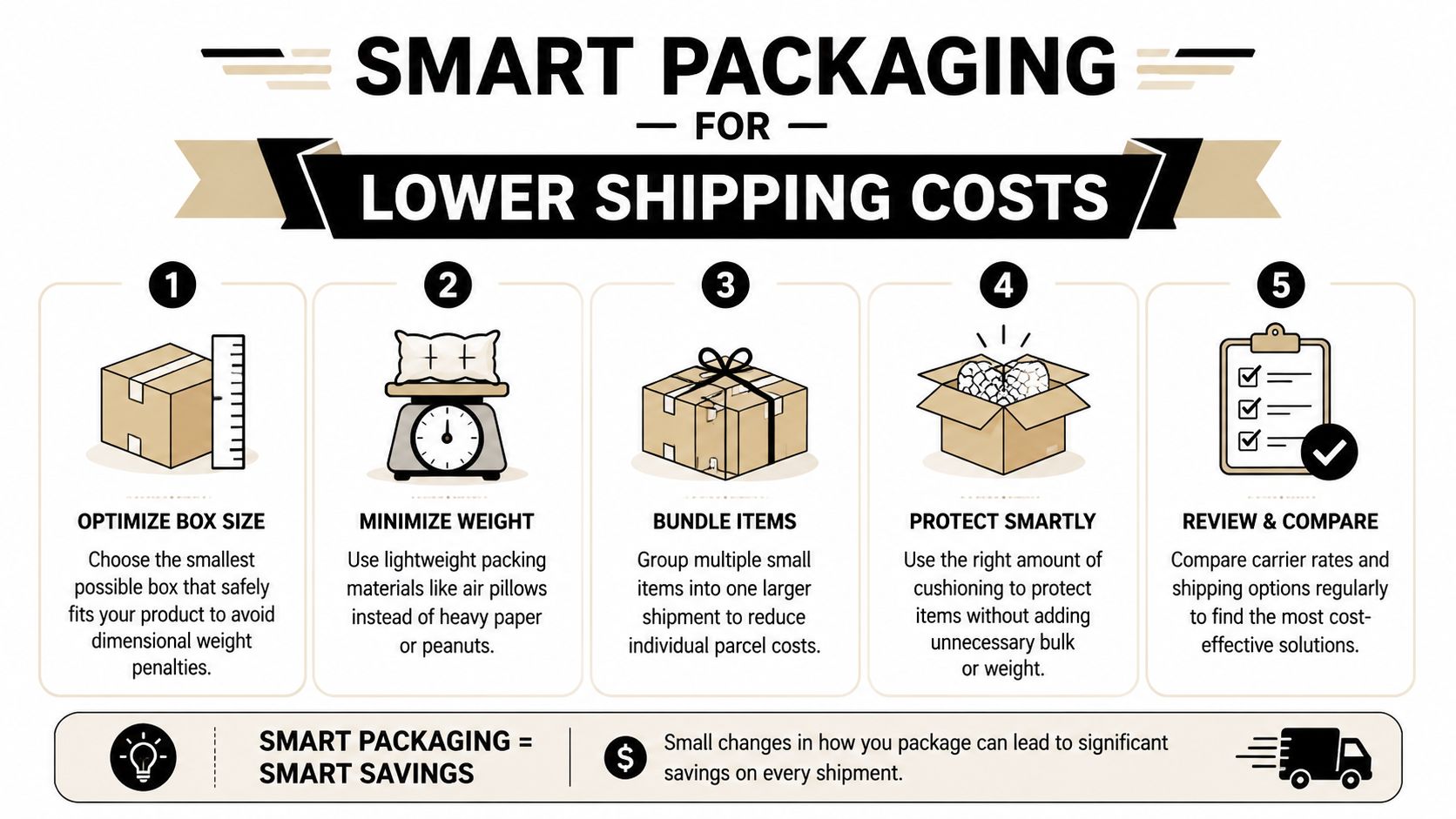
If you want lower shipping costs, start with the carton before you start shopping carriers. Packaging decisions can save money or lead to avoidable charges.
For hardware, smart packing isn't about making the box look neat. It's about controlling cube, protecting finishes, and bundling products in ways that make the shipment denser and easier to handle.
Bundle dense and bulky items together
A good hardware shipment often balances one product type against another. A carton of deck screws, sleeve anchors, or washers can help offset the cube of lighter items such as decorative post caps or certain gate accents. That doesn't mean cramming everything into one box. It means building a parcel that uses space efficiently without creating crush risk.
A few combinations tend to ship better than people expect:
- Post caps with fasteners: Dense hardware helps improve carton efficiency.
- Balusters with small accessory packs: The long items set the carton shape, while smaller parts fill voids that would exist anyway.
- Joist hangers with brackets and bolts: Similar handling requirements often make these easier to consolidate safely.
Cut empty space before you cut service
Oversized boxes are one of the easiest ways to overspend. If a product needs protection, use the right internal packaging. Don't solve every problem by jumping to a much larger carton.
For hardware, the useful standard is simple:
- keep sharp metal edges from cutting packaging
- keep finished surfaces from rubbing during transit
- keep the box tight enough that parts don't migrate and damage each other
That matters with coated balusters, decorative inserts, and polished or powder-coated accessories. A return caused by finish damage costs more than proper packaging ever did.
This short video is a good visual refresher on efficient packaging habits.
Pack for handling, not just for storage
The parcel has to survive conveyor movement, vehicle loading, and doorstep delivery. Hardware orders fail when the carton is packed for warehouse shelving instead of transport.
If the contents can shift, the box shape changes under stress. Once that happens, damage risk and surcharge risk both go up.
Use edge protection for long metal parts, isolate loose fastener packs so they don't hammer decorative items, and avoid mixed boxes where heavy steel components can drop onto lighter finish pieces. These are small packing choices, but they directly affect what the shipment costs and whether it arrives ready to install.
B2B and Freight Shipping for Larger Projects
Some orders stop making sense as parcel shipments. If you're buying for a full deck build, multi-unit fence work, or a retail replenishment order, the cleaner move is often freight.
That usually happens when the order has too many cartons, too much combined weight, or too many awkward pieces to move efficiently through a standard parcel network. The exact crossover point varies by shipment, but the operational signs are easy to spot. If you're splitting a project into many boxes just to force it through parcel service, you're probably close to freight territory already.
When freight becomes the better tool
Freight is often the better fit for bulk orders of:
- post base brackets
- carriage bolts and lag bolts in volume
- multiple cases of fasteners
- mixed deck and fence hardware for staged jobs
The reason is simple. Palletizing reduces repeated handling. It can also keep related materials together so the receiving site gets one coordinated delivery instead of chasing several cartons over several days.
If you're pricing a contractor or reseller purchase, use the bulk order request page when the order is large enough that parcel service may not be the cleanest fit. That's often the point where a custom shipping approach is worth more than a standard checkout calculation.
What to expect on delivery day
Freight delivery is more structured than parcel. The truck may arrive curbside, and the receiving location may need space, staff, or equipment ready. If the site doesn't have a dock or forklift, you may need liftgate service. That should be discussed before dispatch, not after the truck is on route.
Your paperwork matters more, too. If you're not familiar with freight documents, this explanation of the legal roles of a bill of lading is worth reading. It helps clarify why the shipment description, consignee details, and delivery instructions need to be accurate before the freight moves.
How contractors avoid preventable delays
The best receiving workflow is usually the simplest one:
- Match the order to the site: Don't send pallet freight to a location that can only handle small parcel drop-offs.
- Confirm access details early: Tight streets, apartment projects, and active construction sites need delivery planning.
- Inspect on arrival: Check pallet condition, carton count, and visible damage before signing.
- Stage by install sequence: Put brackets, anchors, and fasteners where crews will use them.
Freight doesn't need to be complicated. It just needs to be treated like site logistics, not like an oversized parcel.
Tracking Returns and US Orders
Once the order ships, tracking becomes your control point. Use the tracking number from the shipping confirmation to watch for movement, exception scans, delivery attempts, and completed delivery. For hardware orders, that's especially helpful when the shipment is tied to scheduled labour or a weekend install.
If something looks wrong, act early. A stalled scan, address issue, or delivery exception is easier to resolve when it's caught in transit than after the expected delivery date has passed. If you need policy details, order support, or help with a shipment already in motion, the most direct place to start is the customer help centre.
Returns that go smoother
Returns are usually easiest when the product is still in good condition and packed close to the way it arrived. That matters with post caps, decorative inserts, hinges, and coated metal parts because finish damage during return transit can complicate the process.
Keep the key details:
- original order information
- item condition notes
- packaging that protects corners, finishes, and hardware bags
If the order is coming from the U.S.
Cross-border shipments need a different expectation set. For parcel shipments from the U.S. to Canada, ground courier services are usually the lowest-cost option but can take 3 to 7 business days, while express options are faster at around 2 to 5 business days and cost more, according to DX Engineering's shipping help information.
For buyers, the practical takeaway is straightforward. The cheapest cross-border service can become the most frustrating one if the order is time-sensitive or likely to be affected by customs friction. If the project has a hard install date, paying for a faster service can be cheaper than paying a crew to wait.
Frequently Asked Shipping Questions
Can hardware orders ship to a P.O. box
Some orders can, but not every carrier or shipment type is a fit for a P.O. box. Small, standard parcels are more likely to work than bulky cartons or courier shipments. If your order includes larger hardware or mixed cartons, use a physical delivery address when possible.
What should I do if my package arrives damaged
Inspect the box as soon as it arrives. Take photos of the outer carton, inner packaging, and damaged items before disposing of anything. That record helps support a faster review, especially for products such as post caps, balusters, or decorative pieces where finish condition matters.
What if a shipment looks lost
Check the tracking first for the latest scan and any delivery exception. If the parcel hasn't moved as expected, contact support with the order number and tracking details. The sooner a trace starts, the easier it is to sort out whether the shipment is delayed, misrouted, or awaiting address clarification.
Is faster shipping always the better choice for hardware
No. Standard tracked service is often the better value for planned projects. Faster shipping makes sense for replacement parts, missing install-critical hardware, or jobs with fixed labour dates. For routine orders, paying for speed you don't need usually adds cost without improving the outcome.
Is one big order cheaper than several smaller ones
Often, yes, but only if the order is packed well. Consolidation can reduce repeated parcel charges, yet poor bundling can create oversize or handling issues. Hardware ships best when the order is combined intelligently, not just combined aggressively.
If you're ordering deck and fence hardware and want a cleaner shipping plan before you buy, XTREME EDEALS INC. lists product details, support resources, and ordering options for both standard and larger project needs, which makes it easier to match the shipment method to the actual job.