
You can spend good money on pressure-treated lumber, lay out your framing carefully, cut clean lines, and still build a deck that starts failing early because of one cheap decision. The screw matters that much.
Few realize the mistake on day one. They notice it a few seasons later, when rust stains creep out from the heads, boards start lifting, and a deck that looked solid begins to feel tired underfoot. That kind of failure is frustrating because the wood often isn't the first thing to give up. The fasteners are.
Your Deck Is Only as Strong as Its Weakest Screw
A lot of bad decks start out looking fine. Fresh boards. Straight rows. Nice colour. Then the rain, summer heat, snow, and wet-dry cycling get to work. If the screws aren't compatible with pressure-treated wood, the damage starts where you can't easily see it. At the shank, at the threads, and right where moisture sits between the board and the joist.
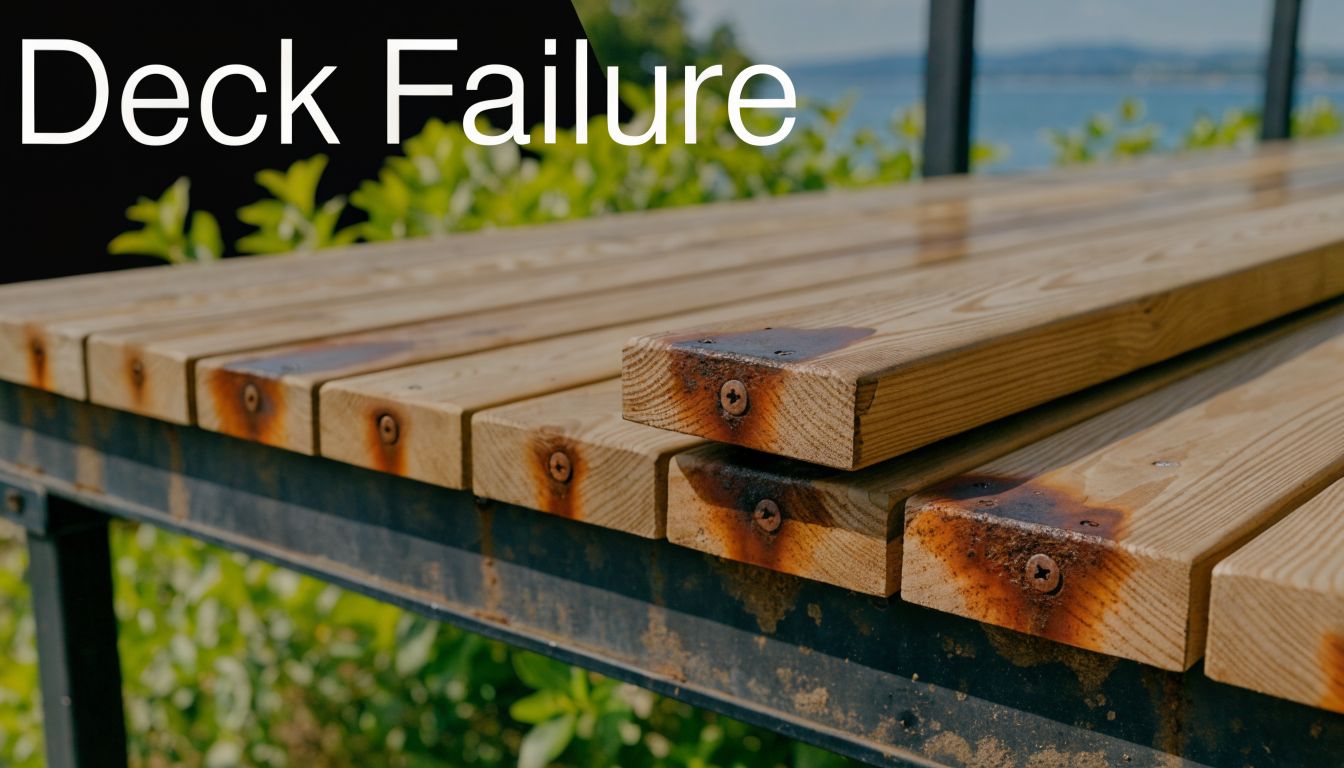
I've seen decks where homeowners assumed the problem was bad lumber, when the underlying issue was bargain-bin fasteners reacting with the treatment chemicals. The boards cupped, the heads stained, and every repair became harder because the screws were frozen in place or snapped on removal. That turns a simple board replacement into a tear-out job.
Fastener choice sits in the same category as footings and framing details. It isn't decorative. It determines service life. If you're also sorting out base support and code considerations, this guide to local code for deck foundations is worth reviewing before you build.
Cheap screws don't save money if they force you to pull boards back up in a few years.
The best deck screws for pressure treated wood aren't just the ones that drive easily on install day. They're the ones that still hold after years of moisture, copper exposure, freeze-thaw movement, and foot traffic.
Understanding Pressure-Treated Wood's Corrosive Nature
Pressure-treated wood lasts because mills force preservative chemicals into the fibres. Those preservatives protect against rot and insects, but they also change the rules for fasteners. A screw that behaves fine in dry interior pine can break down much faster in treated lumber.
Why treated lumber attacks the wrong screw
The big issue is copper-based treatment chemistry. In modern treated wood, you'll run into ACQ and increasingly MCA. Both protect the wood. Neither is kind to the wrong metal.
ACQ is the harsher of the two. It has a reputation for chewing through basic coatings and exposing base steel. MCA is less corrosive, but less corrosive doesn't mean non-corrosive. You still need a fastener designed for treated lumber, especially on an exposed deck where rain and trapped moisture keep the reaction going.
In Canada, NBC 2015 Section 9.23.3.1 requires at least hot-dipped galvanized fasteners for pressure-treated lumber, and testing referenced by the Canadian Wood Council found that 316 stainless steel lasted over 2,000 hours without red rust in salt-spray testing, compared with less than 200 hours for HDG, which is why stainless is the stronger choice in coastal or high-moisture work (Canadian fastener guidance for treated wood).
Code minimum is not the same as long-term best
Many builders get tripped up on this point. Code minimum gets you to acceptable. It doesn't always get you to durable.
For a dry inland build with good airflow, hot-dipped galvanized may meet the minimum requirement. For a ground-level deck, shaded deck, lakefront project, or anything with persistent dampness, minimum spec can become false economy fast. Railings are another place where cutting corners doesn't pay off, because movement and water exposure tend to show up early there. If you're matching materials across the build, these pressure-treated wood railing options help keep the rest of the assembly consistent.
The chemistry changes the buying decision
When you're choosing screws, think in this order:
- Wood treatment first. ACQ is harder on metal. MCA is easier, but still demands compatible fasteners.
- Exposure second. Coastal air, splash zones, wet shade, and poor ventilation all raise the stakes.
- Service life third. If you want to build once and leave it alone, stainless starts making sense quickly.
The screw isn't reacting to the weather alone. It's reacting to the wood, then the weather keeps feeding that reaction.
That's why generic "outdoor screws" are a gamble. Pressure-treated wood needs treated-wood fasteners. Anything else is asking the screw to do a job it wasn't built for.
Comparing Deck Screw Materials Corrosion and Cost
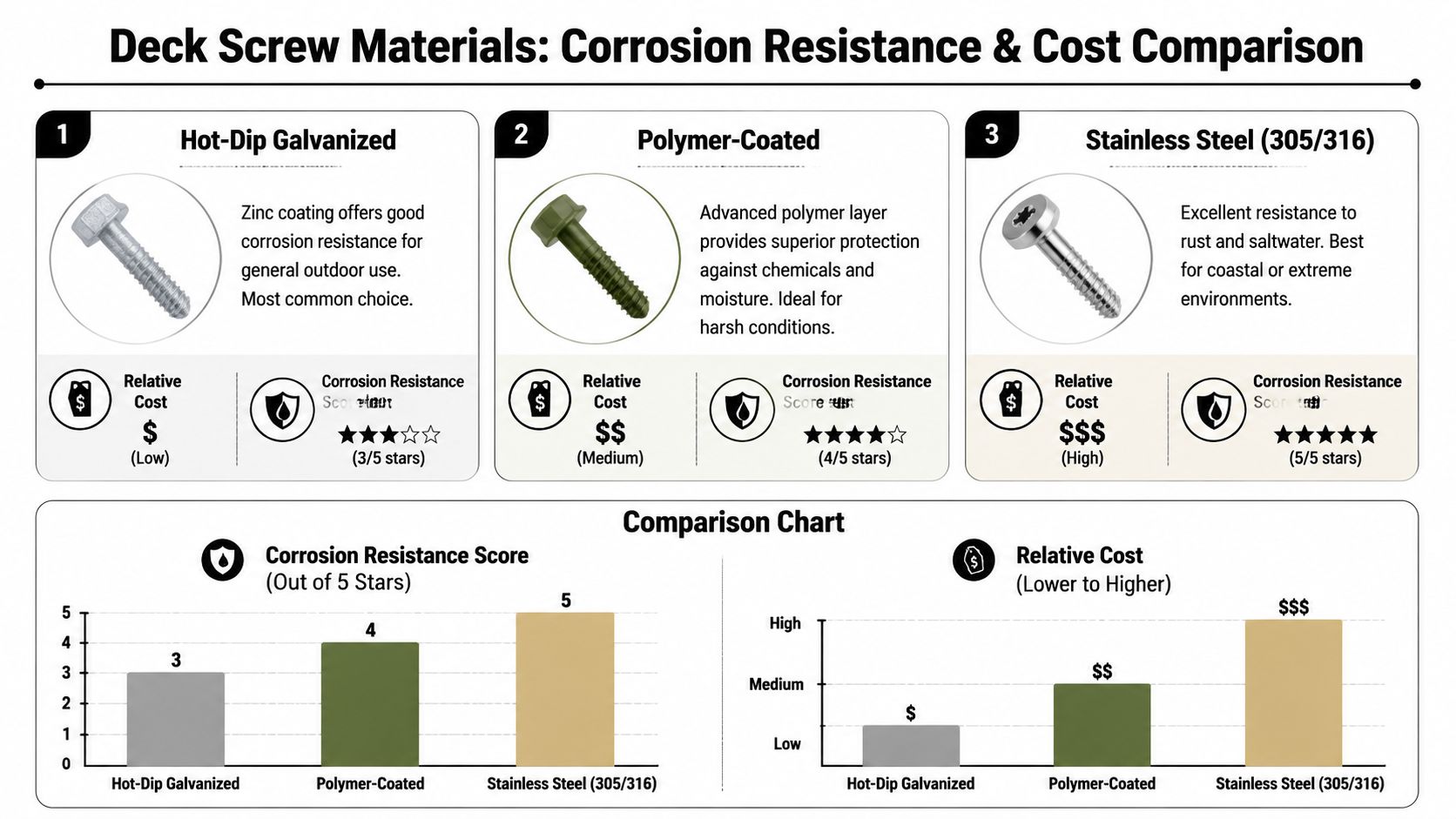
Most deck screws for treated lumber fall into three buckets. Hot-dip galvanized, polymer-coated carbon steel, and stainless steel. All three can be sold for exterior work. They are not equal once they're buried in pressure-treated wood.
Here’s the quick comparison first.
| Screw type | Corrosion resistance | Upfront cost | Best use | Main trade-off |
|---|---|---|---|---|
| Hot-dip galvanized | Acceptable as a minimum | Low | Basic inland applications where code minimum is the goal | Shorter life in demanding conditions |
| Polymer-coated | Better than basic galvanized when the coating stays intact | Medium | Inland decks, budget-conscious builds, general PT work | Performance depends on coating durability |
| Stainless steel 305/316 | Highest | High | Coastal work, wet locations, long-life builds, premium PT decks | Higher purchase price |
Hot-dip galvanized works, but only to a point
Galvanized screws still matter because building code recognises them, and for some projects they are the entry point. The problem is that treated lumber, especially ACQ, can consume that protective layer over time. Once the zinc is gone, the steel underneath is exposed.
That matters a lot more than people expect because deck screws don't fail in a neat, visible way. They lose capacity while buried in wood. You may not know there's a problem until a head twists off during repair or a board starts moving under load.
Use galvanized when the project fits the category. Dryer inland setting. Limited exposure. Tight budget. Clear understanding that you're buying to a lower durability tier.
Coated screws are the middle ground most people actually use
A good coated screw is often the practical answer for an inland pressure-treated deck. You get better chemical resistance than plain galvanized, lower cost than stainless, and usually decent driving characteristics.
This is the category where product design matters a lot. Some coatings hold up well. Some don't. If the coating scratches easily, chips during driving, or breaks down at the board-to-joist interface, corrosion starts at exactly the place you need strength.
For homeowners shopping on budget, this is often where value lives. XTREME EDEALS carries stainless steel deck screws, but it also makes sense to compare those against coated options based on exposure, not just price per box.
Practical rule: If you're already spending for quality lumber and decent framing hardware, don't underbuy the screw just to save a little on the last line item.
Stainless steel costs more and usually costs less over time
The cost-of-failure conversation gains perspective from a 2019 University of California study which found that standard galvanized deck screws in ACQ-treated pine corroded 3.2 times faster than 316 stainless steel screws. After 24 months of simulated coastal exposure, the galvanized screws had lost 78% of their tensile strength, while the stainless versions retained 94% (UC corrosion findings on deck screws).
That one data point tells you almost everything you need to know about the long game. Stainless doesn't merely look cleaner. It keeps its strength.
For practical buying, I’d break it down like this:
- Use galvanized when you're meeting minimum requirement and the environment is forgiving.
- Use coated when the project is inland, exposed but not extreme, and budget matters.
- Use 316 stainless when moisture hangs around, salt is in the air, the deck sits low, or you don't want to revisit the fasteners later.
The real cost is labour, not just hardware
People compare screw boxes at the shelf. Builders compare call-backs, tear-outs, and replacement labour.
If a screw fails early, you don't just replace a screw. You remove boards. You fight seized heads. You damage adjacent stock. You lose finish quality. On older decks, the labour to undo a bad fastener decision can dwarf the original saving.
That's why the best deck screws for pressure treated wood often aren't the cheapest per piece. They're the ones least likely to force a rebuild of work you've already paid for.
The Anatomy of a High-Performance Deck Screw
A deck can survive a mediocre stain choice. It will not forgive bad screw design. I’ve seen boards loosen, heads snap, and surface fibers blow out long before the framing had any real age on it, all because the fastener looked cheap enough to be "close enough."
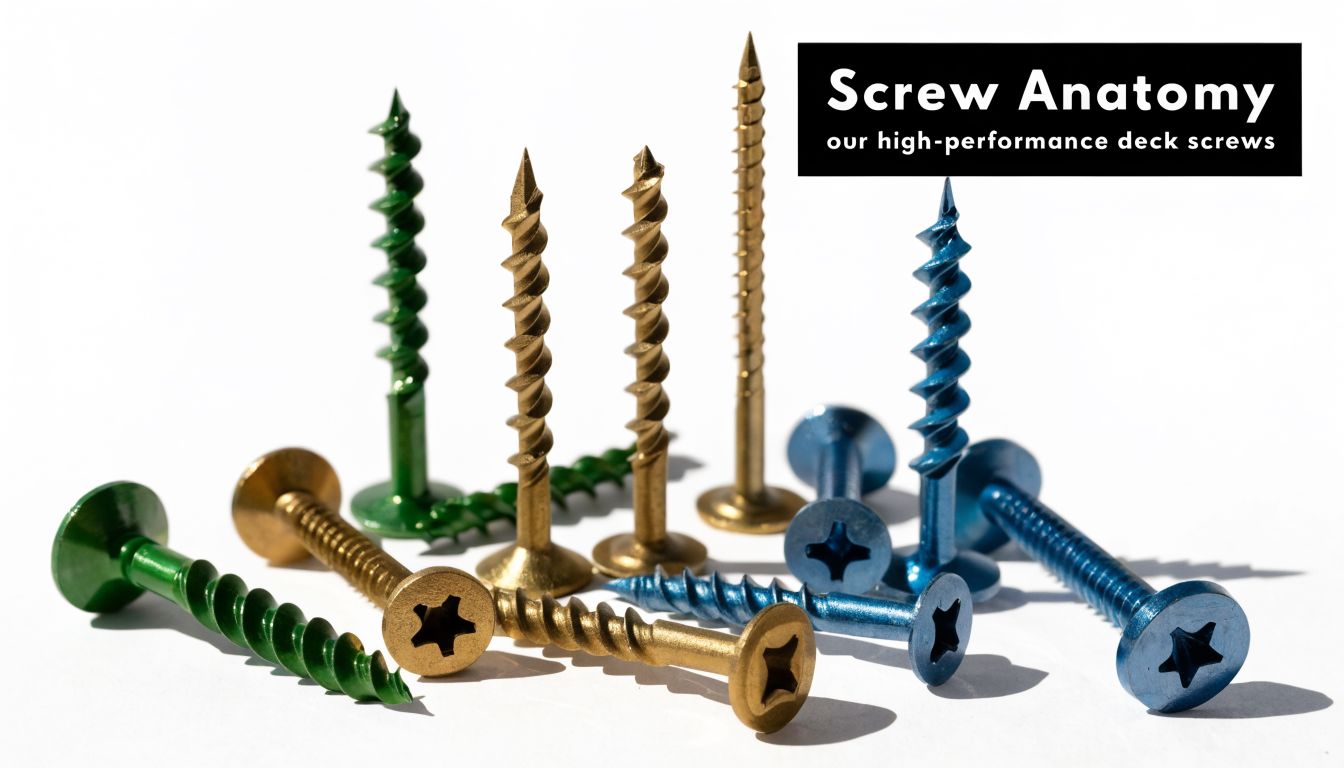
Drive type decides whether the job goes smoothly or turns into rework
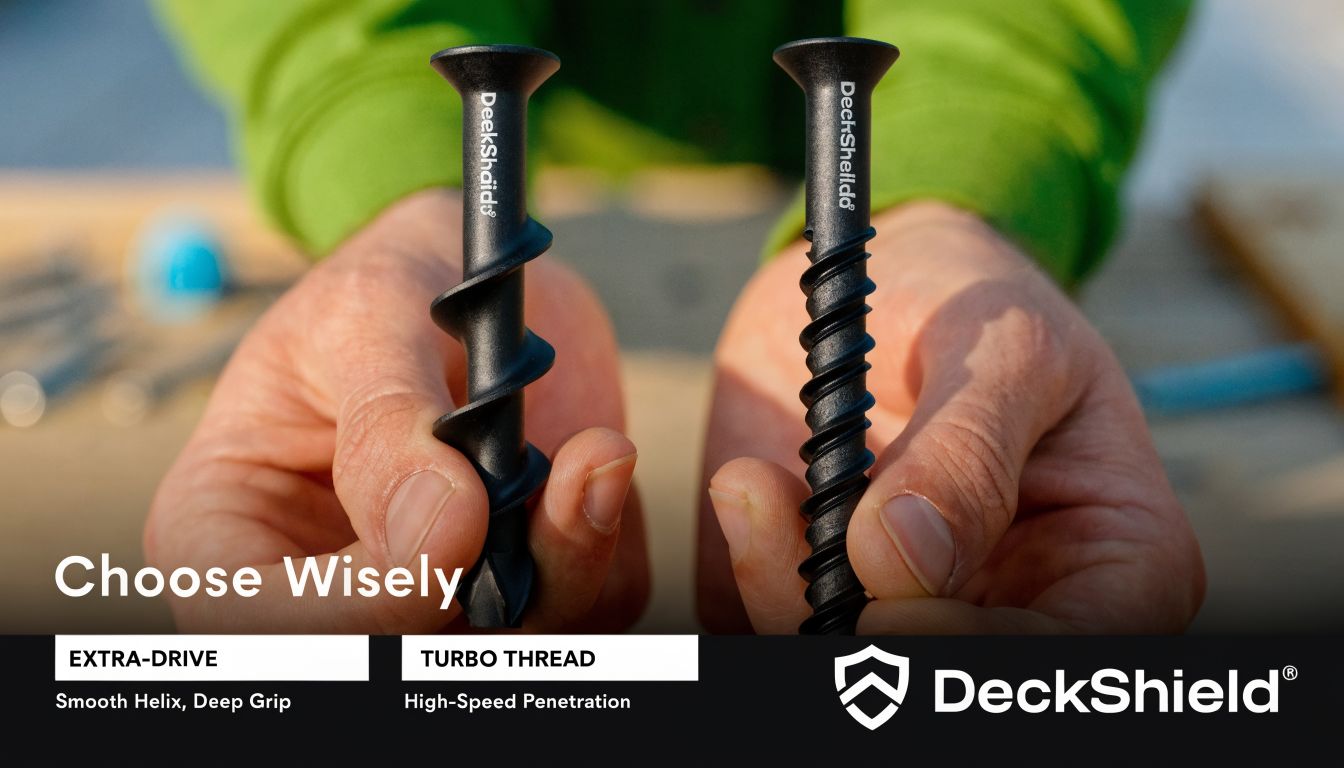
For decking, star drive is the first feature I want. It keeps the bit seated, transfers torque cleanly, and cuts down on stripped heads, especially when you are driving hundreds of screws in treated lumber that fights back.
That matters more than convenience. A mangled head is a future repair bill. If a board cups or needs replacing later, the screw still has to come out. Phillips heads are far more likely to cam out during install, and once the recess is damaged, removal gets ugly fast. On a service call, that can mean cutting boards apart just to reach one failed fastener.
Researchers at FPInnovations have published fastener testing used across the wood products field, including withdrawal and connection performance work for wood construction standards and product evaluation (FPInnovations fastener and wood connection research). The practical takeaway on site is simple. A positive-drive recess with a properly matched bit gives better control and fewer damaged heads.
Thread pattern controls hold through seasonal movement
Pressure-treated decking does not sit still. It dries after install, swells in wet periods, and keeps cycling. Screw threads have to hold through that movement without shredding the wood fibers around them.
Coarse threads are usually the right call for decking boards into joists because they bite aggressively in softer treated lumber. Fine threads have their place in denser materials, but on typical deck boards they can feel busy without giving you better long-term grip. What matters is whether the screw pulls the board down firmly and stays put after the board starts moving through weather cycles.
Use the screw for the job in front of you:
- Deck boards to framing need a deck screw with threads that hold well in treated wood.
- Dense stock or hardwood trim benefits from a sharper point and a thread design that cuts cleanly.
- Ledgers, hangers, and load-bearing connections need approved structural fasteners, not ordinary deck screws.
The cost-of-failure issue shows up here too. A screw that strips the hole during install may still feel tight that day. Six months later, that same board starts lifting at the ends.
Head shape affects surface finish and water behavior
The head has one job. Seat flush without wrecking the board surface.
Flat and bugle-style heads are common because they countersink cleanly when the screw geometry is right. Poor head design can tear surface fibers, leave the fastener proud, or bury it too deep and create a pocket that holds water. That is not just a cosmetic problem on pressure-treated lumber. Wet spots around overdriven heads can age the surface unevenly and make later board replacement more likely.
On visible decking, consistency matters. A clean row of flush heads looks better, sheds water better, and is safer underfoot.
Here’s a short visual explainer before the finer points.
Tip design is what saves board ends
Cheap screws act like wedges. Better screws cut.
A Type 17 point or similar cutting tip removes a small amount of material as it starts, which helps reduce splitting near board ends and keeps the screw from skating across the surface. That saves time because you can skip a lot of unnecessary predrilling in routine decking work, while still getting a cleaner start and a straighter drive.
This matters even more with modern treated wood chemistry. ACQ and MCA boards are hard on fasteners, but they can also be stubborn to drive into cleanly depending on moisture content and density. If the tip is poor, installers compensate with extra force, and extra force is how you snap heads, strip recesses, and scar finished boards.
If you're stocking for the full build, keep your decking screws separate from your framing hardware and connectors. A broader selection of fasteners and fittings helps because the right screw for deck boards is not the right fastener for every other part of the structure. Good layout and fastening habits also line up with these expert deck building tips.
A high-performance deck screw is a package. Corrosion resistance keeps it alive in treated wood. Drive type, thread design, head shape, and tip geometry determine whether it installs cleanly now and comes back out without a fight years later.
Choosing the Right Screw for Your Deck Project
Theory finds its practical application on the jobsite. The right screw for one deck is the wrong screw for another. Exposure, treatment chemistry, and budget all change the answer.
For coastal, wet, and low-airflow decks
If the deck lives near salt air, beside heavy moisture, or close to grade where the underside stays damp, 316 stainless steel is the safe call.
That decision is even more relevant as lumber chemistry keeps shifting. A 2026 source states that over 70% of pressure-treated lumber in Canada uses MCA treatment, that some coated screws can fail 35% faster in MCA, and that 316 stainless steel screws maintain full shear strength, making stainless the stronger long-term choice with modern treated wood (MCA fastener compatibility discussion).
That doesn't mean every coated screw is useless. It means you should stop treating "pressure-treated wood" like one fixed category from twenty years ago. The chemistry changed. Fastener choice has to change with it.
For inland decks where budget matters
Here’s the contrarian view. Not every inland deck needs stainless.
If you're building in a lower-risk setting with decent airflow, no salt exposure, and a realistic budget, a quality coated screw can be a sensible choice. That's especially true for secondary structures, rental-property decks, or projects where the expected ownership window is shorter.
Use coated when all of the following are true:
- The deck is inland and not exposed to marine air
- The framing can dry instead of staying damp
- The deck sits off grade with airflow underneath
- You accept the trade-off of lower long-term margin than stainless
That last point matters. Budget screws aren't "wrong" when the conditions fit. They're wrong when buyers treat them like stainless.
For stairs, railings, and critical connections
Deck board screws are not structural screws. That's the first rule.
For stairs, guard assemblies, ledgers, and any load-bearing connection, use the fastener type specified for that connection. A standard deck screw might hold a board down just fine and still be the wrong choice for a structural connection. People get into trouble when they assume all exterior screws are interchangeable.
A good habit is to sort the project by connection type:
| Deck area | Fastener approach |
|---|---|
| Surface decking | Coated or stainless deck screws matched to exposure |
| Fascia and trim | Finish-appropriate exterior screws, often with cleaner head style |
| Stairs and rail components | Higher-strength fasteners suited to movement and load |
| Ledger and structural framing | Approved structural screws or other specified structural hardware |
If you want another practical build overview beyond fasteners, these expert deck building tips are useful for seeing how screw choice fits into the larger assembly.
On a deck, the best screw is the one that matches both the wood chemistry and the connection it's serving.
Simple buying rules that keep you out of trouble
If you want the short version, use this:
- Choose stainless for long life when moisture or salt will stay in the picture.
- Choose coated for inland value when exposure is moderate and you're honest about the trade-off.
- Choose structural screws for structural work. Don't substitute deck screws and hope.
- Match the screw to the board thickness, not just to what's already in the toolbox.
That's how you avoid paying for the same deck twice.
Pro Tips for a Flawless Deck Screw Installation
A good screw can still do a bad job if you install it poorly. Most visible deck fastener problems come from technique, not just product choice.
Small habits that make the deck look better
Start with the right bit and replace worn bits before they start slipping. A tired bit rounds out the recess, overheats the drive, and makes even a quality screw feel cheap.
Then pay attention to depth. You want the head flush or just slightly below the surface, not buried. Overdriving crushes fibres, leaves a cup that holds water, and weakens the hold.
Where people usually go wrong
Use pilot holes when you're close to board ends, working with dry stock, or driving into material that wants to split. Even with a good cutting tip, pilot holes are still a smart move in those trouble spots.
A few more shop-floor rules help:
- Keep spacing consistent so the deck looks organised and loads share evenly.
- Drive straight because angled screws look sloppy and reduce holding quality.
- Check board pressure as you fasten so you pull the board tight before setting the second screw.
- Use the right tool setting. Too much force strips fibres and sinks heads too deep.
Wet treated lumber compresses easily. If you hammer the screw too deep on install day, the head can end up sitting in a little crater once the board dries.
An impact driver is fine for many deck screws, but a drill/driver with clutch control can give cleaner, more consistent depth if your hand is heavy on the trigger. That's especially useful on visible surfaces where a neat screw line makes the whole deck look sharper.
Frequently Asked Questions About Deck Screws
Can I reuse old deck screws
Do not reuse them.
A screw that has already been driven, removed, and left outside may have hidden corrosion on the shank or thread roots. It may also have lost some holding power from the first install. On a deck built with pressure-treated lumber, saving a few dollars on reused screws can turn into loose boards, callbacks, and a second round of labor later.
Is it okay to mix different screw types on one deck
Yes, if you are matching the fastener to the task.
Decking screws for deck boards, trim screws for trim, and approved structural fasteners for load-bearing connections is standard practice. Trouble starts when leftover screws from different boxes get mixed together without checking coating, metal type, or rating. That matters even more if one area of the deck uses ACQ-treated lumber and another uses hardware that calls for a specific corrosion-resistant fastener.
What length screw should I use
For 5/4 deck boards, a 2 1/2-inch screw is the usual choice. For thicker 2x decking, use a longer screw that gives solid bite into the joist without punching through where it should not.
The goal is simple. Enough penetration to hold the board tight through seasonal movement, but not so much length that you create new problems below. If you are unsure, check the fastening guidance from the Canadian Wood Council.
Are composite deck screws okay for pressure-treated wood
Sometimes, but do not assume they are interchangeable.
Composite screws are designed around composite board density, surface finish, and thermal movement. Treated wood behaves differently. It swells, shrinks, and carries preservative chemicals that can be hard on the wrong fastener. A screw that works fine in composite may not be the best choice for ACQ or MCA-treated lumber, especially if its coating or base metal is not rated for that exposure. The cheap mistake is buying by label instead of compatibility.
Can I use deck screws for joist hangers or ledger connections
No.
Use the exact fasteners approved for the connector or ledger detail. Standard deck screws are not built or tested for those structural connections, and a failure there costs far more than a box of proper hardware.
XTREME EDEALS INC. supplies deck and fencing hardware, including pressure-treated compatible screws, connectors, post hardware, and general fastening products. If you need to compare options for a specific build, browse the catalogue at XTREME EDEALS INC..