
You've built the deck, stood back, and realised something's still missing. The stairs feel exposed, the opening looks unfinished, and if kids or pets use the space, that gap isn't just cosmetic. It needs a gate.
A good deck gate isn't hard to build, but a bad one is easy to build by accident. Most DIY failures start before the first cut. The opening wasn't measured properly, the frame wasn't braced against sag, or the hardware was chosen like an afterthought. If you get those decisions right early, the rest of the job goes smoothly.
Planning Your Perfect Deck Gate
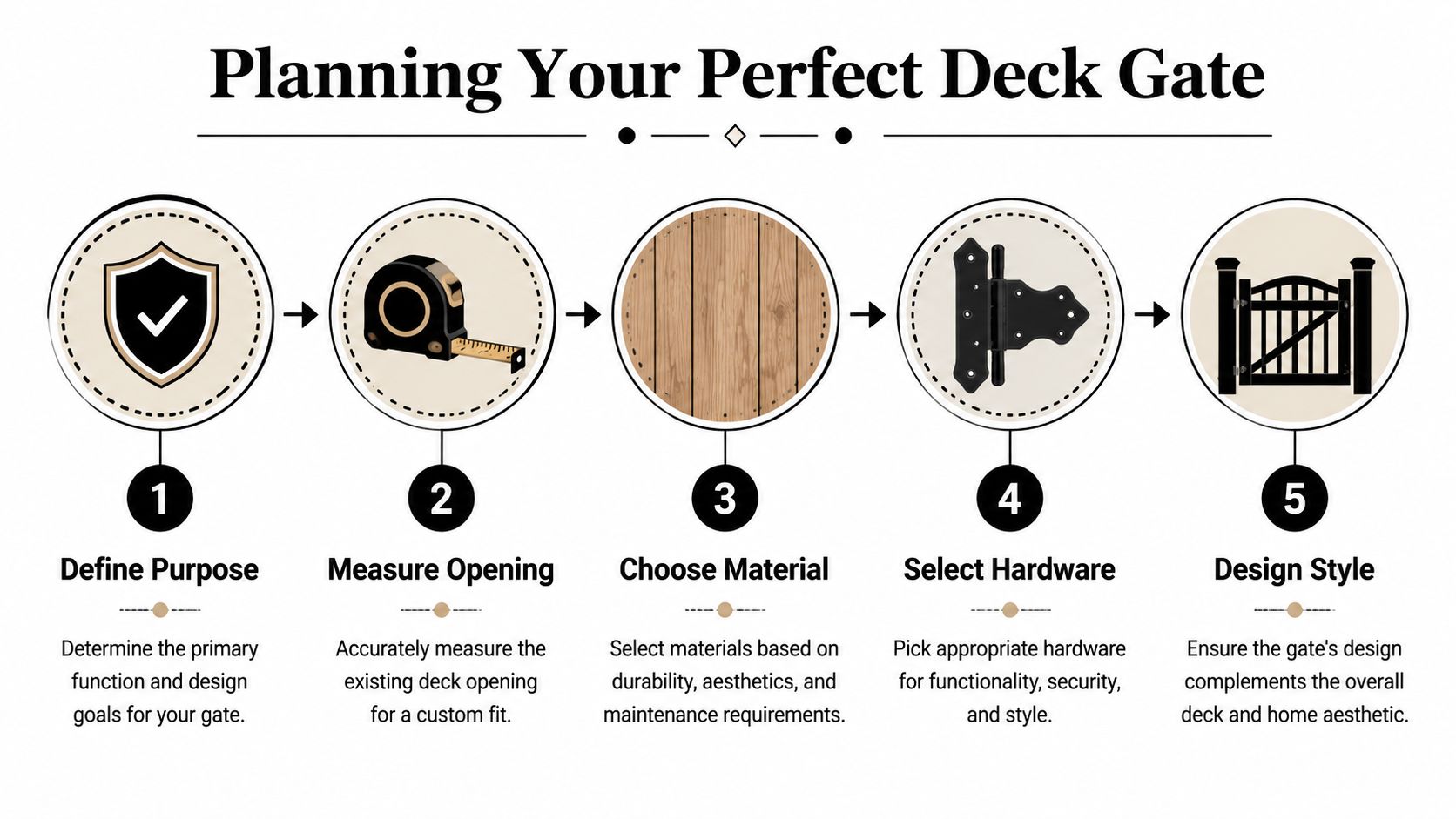
A deck gate works best when it's designed for the opening, not forced into it later. That means deciding on layout, material, and hardware style before you buy lumber or cut a single board.
Single or double gate
Most deck openings take a single-panel gate. It's simpler, lighter, and easier to keep aligned over time. If the opening is modest and you're mainly controlling access to stairs, a single leaf is usually the right call.
A double gate makes sense when the opening is wide and you want balanced sightlines or occasional access for furniture, bins, or equipment. The trade-off is complexity. You now have two leaves, a meeting point in the centre, and more chances for one side to drift out of alignment.
Use this quick comparison before you commit:
| Gate style | Best for | Main advantage | Main drawback |
|---|---|---|---|
| Single-panel | Stair openings and standard deck entries | Fewer moving parts | Can feel oversized on a very wide opening |
| Double-panel | Wide openings and symmetrical layouts | Better visual balance | Harder to latch and keep even |
Wood or metal
For most DIY builds, wood is the practical choice. It's easier to cut, easier to tune on site, and easier to match to an existing railing. A 2023 survey on DIY deck gates found that 41% of homeowners who took on deck projects built the gates themselves, and pressure-treated lumber was used in 76% of those DIY builds.
Metal has strengths too. It stays straighter, gives you a slimmer profile, and can suit a modern deck. But unless you're using a pre-made panel or already work comfortably with metal fabrication, wood is more forgiving.
Practical rule: Choose the material that matches your skill set first, then your design preference second. A simple wood gate built square will outperform a stylish gate that twists, sags, or binds.
Hardware affects the design
This is the part many people leave too late. Don't.
Your hinges, latch, self-closing option, and stop details all affect gate width, swing direction, frame thickness, and post strength. If the gate is near stairs or a pool area, your hardware choice also affects safety compliance.
Keep the planning focused on these questions:
- Purpose first: Is this gate for child safety, pet control, stair protection, or privacy?
- Swing direction: Will it open cleanly without hitting rails, siding, planters, or stair nosings?
- Weight: Are you building a light framed gate or a heavier infill gate that needs strap hinges?
- Look: Should the gate disappear into the railing, or stand out as a feature?
The cleanest builds happen when the gate looks like it belonged there from day one.
Measuring and Designing for a Perfect Fit
A deck gate doesn't need much clearance, but it needs the right clearance. Too tight and it binds when the wood moves. Too loose and it looks sloppy, rattles in use, and can fail inspection.
Measure the opening like a builder
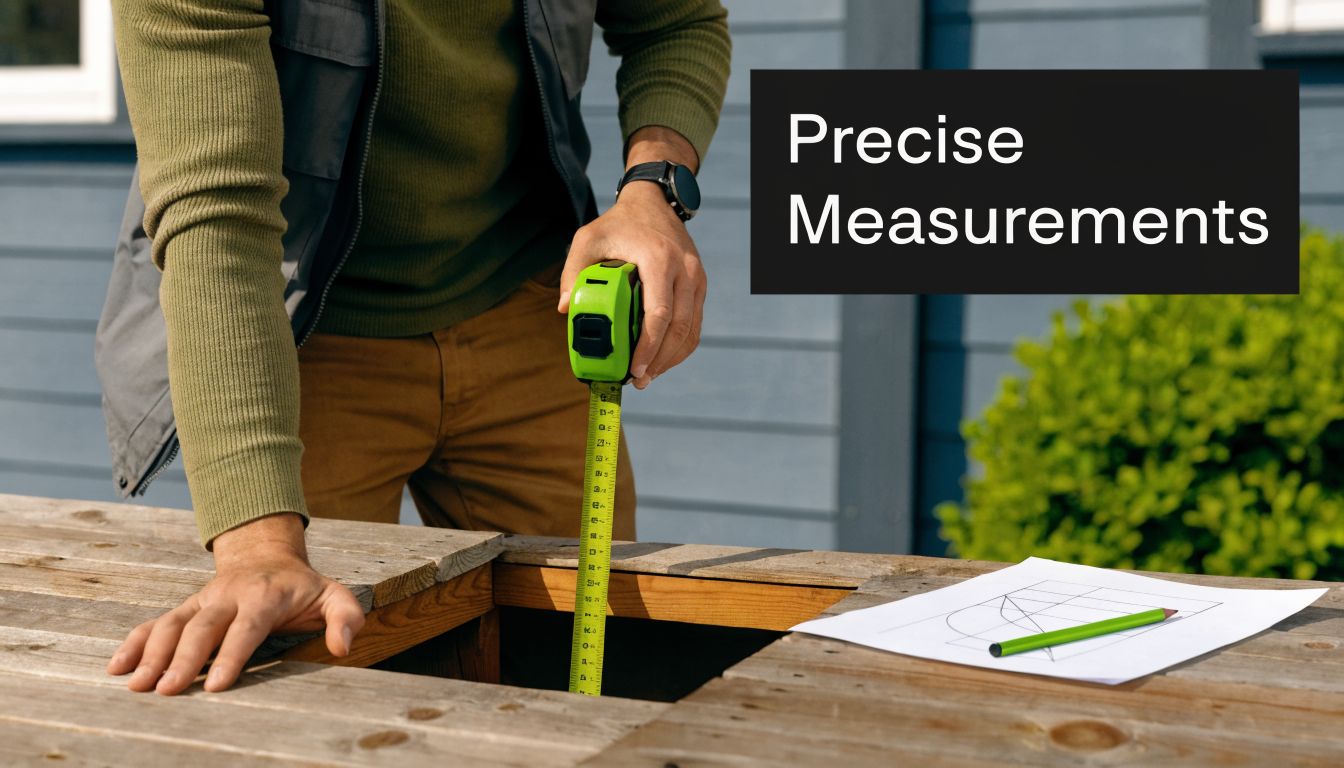
Don't measure once across the middle and call it done. Posts are often slightly out of parallel, especially on older decks.
Take these measurements:
- Top width
- Middle width
- Bottom width
- Opening height on both sides
- Deck surface to rail or guard line
Use the smallest width as your working number. That gives you the actual restriction.
If your posts feel loose, fix that before building the gate. A gate hung on a weak post will never stay aligned. If you need to strengthen or reset a support, this guide on how to install a fence post helps with the basics that apply to gate posts too.
Work backwards from the clearances
The gate itself must be smaller than the opening to allow for hinges, latch side clearance, and free swing. The exact allowance depends on your hardware, so check the hinge and latch specs before you finalise the cut list.
Here's the process:
- Start with the smallest opening width
- Subtract the hinge-side clearance
- Subtract the latch-side clearance
- Leave a little room for seasonal wood movement and easy swing
If your opening measures 36 inches at the narrowest point, you don't build a 36-inch gate. You build to fit the opening after hardware and operating clearance are accounted for.
Measure the posts. Then measure the opening again after you decide on hinges and latch. Hardware isn't decoration. It changes the build.
Keep the gate compliant
When learning how to build deck gates, the most common code miss is spacing. According to deck gate spacing guidance based on IRC requirements, baluster spacing must not allow a 4-inch sphere to pass through, and the gap between the bottom of the gate and the deck surface cannot exceed 4 inches.
That affects both safety and layout. If you're using vertical balusters, don't eyeball the spacing. Lay them out on a flat surface and measure each gap.
A simple spacing example
If your gate frame has an interior width of 36 inches and you plan for 5 balusters, you're not just spacing 5 pieces. You're spacing the openings too. That creates 6 spaces across the width. Divide the available space evenly so each opening stays under the code limit.
Use a story stick or scrap board to mark the repeated spacing before fastening anything. It's faster than chasing small measurement errors across the frame.
Building the Gate Frame and Infill
The frame decides whether the gate lasts or starts sagging after a season. This is the part to slow down on.
Start with a flat assembly surface
Build the frame on the flattest surface you have. A garage floor, sheeted workbench, or level patio works well. If the surface is twisted, your frame can be square on paper and still rock when you lift it.
A typical wood deck gate frame uses pressure-treated rails and stiles. Dry-fit the pieces first, clamp them, and check for square by measuring corner to corner in both directions. If the diagonals match, the frame is square.
Choose joints that resist movement
You can build a serviceable gate with butt joints and exterior screws, but it's not the strongest option. For a gate that gets frequent use, half-lap joints give you more glue area and more resistance to racking. They take longer, but they pay back in stability.
As noted earlier in the planning discussion, reinforcement matters. Building guidance on deck gate joinery and fasteners is worth reviewing if you're choosing components for a stronger assembly.
Here's how the common options compare:
| Joinery method | Best use | Strength | Difficulty |
|---|---|---|---|
| Butt joint with screws | Basic light-duty gate | Fair | Easy |
| Half-lap joint | Frequent-use wood gate | Strong | Moderate |
| Frame with metal corner braces | Quick reinforcement | Good | Easy |
A commonly recommended approach for reducing sag is reinforcing corners with half-lap joints or metal braces and using galvanized or stainless steel fasteners such as 3-inch deck screws. The same guidance notes that this can reduce failure rates by up to 15% in treated wood gates, particularly where moisture and movement are constant. That finding appears in the earlier cited Angi source, so I won't repeat the link here.
Add the anti-sag support the right way
Many DIY builders know they need a diagonal brace, but place it the wrong way. The brace should support the latch side from dropping under its own weight.
For a wooden compression brace, run it from the bottom hinge corner up to the top latch corner. That way the load pushes into the brace instead of pulling away from it. If you're using a tension cable kit instead, the cable runs the opposite diagonal and gets tightened to pull the frame back into square.
A gate doesn't sag because the hinges failed first. It sags because the frame was allowed to rack.
Install balusters or decorative infill
Once the frame is square and braced, add the infill. Vertical wood balusters are the easiest option because they visually match most deck railings and are easy to cut to consistent length.
A clean approach is:
- Lay out both end positions first: Set the outer balusters so edge gaps stay even.
- Mark all centres on the top and bottom rails: Transfer marks with a square so pieces stay plumb.
- Pre-drill near board ends: This helps prevent splitting, especially in treated lumber.
- Check spacing as you go: Small errors compound fast across a narrow gate.
If you're using a decorative metal insert or gate panel, make sure the frame supports it mechanically, not just cosmetically. Fasten through proper framing, not just trim pieces.
This walkthrough helps to visualise the framing sequence and assembly order:
Keep the frame square while fastening
Don't remove the clamps too early. Fasten one corner, re-check the diagonals, then fasten the opposite corner. If you're adding braces after the frame goes out of square, you're only locking the error in place.
Before moving on, set the gate in the opening with spacers underneath. Check the reveal on all sides. If the frame looks off now, fix it now. Hardware won't cure a twisted gate.
Selecting and Installing Gate Hardware
A well-built gate with poor hardware still feels cheap in use. It drags, bounces, sticks, or refuses to latch unless you slam it. Hardware isn't where you save money.
Match hinges to gate weight
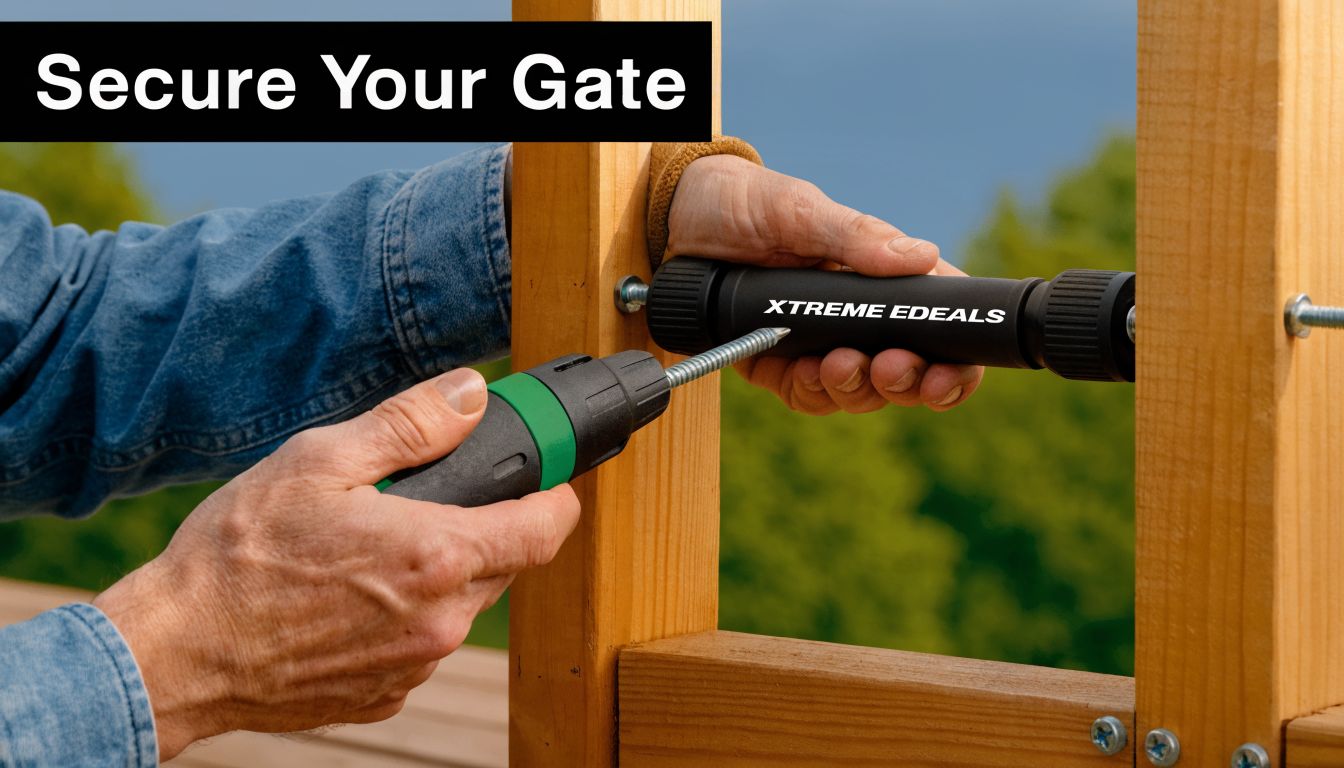
Light gates can work fine with basic exterior-rated hinges. Heavier gates need longer hinge leaves and more screw purchase into the frame and post.
This is the practical breakdown:
- T-hinges: Good for lighter wood gates where appearance is secondary.
- Strap hinges: Better for wider or heavier gates because they spread the load across more of the frame.
- Self-closing hinges: Best where the gate must shut on its own, especially near stairs or pool-adjacent areas.
- Adjustable hinges: Useful when you want more tuning room after installation.
If you're comparing options, a dedicated collection of fence and gate hardware makes it easier to sort by hinge style, latch type, and finish before you commit.
Choose the latch based on the job
Not every latch solves the same problem. A gravity latch is simple and reliable for everyday use. A lockable latch adds security. A magnetic latch can feel cleaner and smoother, but only if alignment is precise.
Use this quick guide:
| Hardware type | Best for | What to watch |
|---|---|---|
| Gravity latch | General deck access | Needs accurate strike placement |
| Lockable latch | Privacy and controlled access | May need more clearance planning |
| Magnetic latch | Smooth close and modern look | Sensitive to misalignment |
| Self-latching system | Safety-critical openings | Requires careful height setup |
For safety, especially around stairs or pools, deck gate safety guidance notes that gates are often required to be self-closing and self-latching, with the release mechanism installed at least 54 inches from the bottom of the gate to keep it out of reach of small children.
Install hardware in the right order
Don't start by screwing everything tight. Dry-position first.
A clean installation sequence looks like this:
- Support the gate on blocks at the desired bottom clearance.
- Position the hinges on the gate frame and pre-drill all holes.
- Fasten hinges to the gate first, then swing the assembly into place at the post.
- Shim for even reveals before fastening to the post.
- Test swing and return before installing the latch.
Buy hardware after you know your gate weight and thickness. Buying first often leads to awkward spacing, shallow fastener bite, or a latch that never lines up.
What works and what doesn't
What works is simple. Long enough hinge leaves, exterior-rated screws, solid backing, and a latch installed only after the gate is hanging true.
What doesn't work is mounting hinges into weak trim, mixing finishes that corrode unevenly, or forcing a latch to “catch” by pulling the frame out of square. If you have to lift the gate by hand every time it closes, the problem isn't the latch. The problem started earlier.
Finishing, Alignment, and Final Adjustments
Hanging the gate is where good planning shows up. If the frame is square and the hardware suits the build, installation feels controlled instead of fussy.
Hang it with support under the gate
Set temporary spacer blocks under the gate so it sits at the exact bottom clearance you planned. This does two things. It frees your hands while you fasten the hinges, and it stops the gate from settling lower during installation.
Once it's in place, check the reveals around the perimeter. You want the gap to look even to the eye, not just close enough by tape measure.
Tune the swing before setting the latch
Open and close the gate several times before you mount the latch catch. Watch for three things:
- Rubbing at one corner: Usually means the frame shifted during hanging or the post is slightly out of plumb.
- Uneven reveal: Hinge side or latch side needs slight adjustment.
- Self-close issues: Hinge tension may need tuning, or the gate may be fighting gravity because it was hung out of level.
Make small changes. Loosen, shim, re-seat, and test again. Don't start trimming the gate unless you're sure the problem isn't hinge position.
Seal end grain and exposed cuts
The finish matters most on the places water enters first. That means end grain, screw penetrations, and the lower edge of the gate.
Use an exterior-rated stain, paint, or sealant that suits your lumber and climate. Apply it after the gate has been test-fit and final adjustments are done. If you finish first and then trim later, you leave fresh cuts exposed.
The lower rail and bottom corners usually fail first because they hold moisture longer. Protect those areas carefully, not just the face boards.
Final checks before you call it done
Before you put tools away, run through a short punch list:
- Fasteners snugged, not stripped
- Gate swings freely through full travel
- Latch engages without forcing
- Brace or cable still tight
- Finish applied to cut ends and exposed wood
- No sharp hardware edges or protruding screws
A deck gate should close with one hand and no drama. If it needs a shove, a lift, or a shoulder bump, keep adjusting.
Deck Gate Troubleshooting and FAQs
The biggest mistake people make with deck gates is assuming sag is inevitable. It isn't. Most sagging starts with one of three habits. A weak frame, a missing or misoriented brace, or hardware fastened into material that can't hold the load.
Common problems and fixes
The gate sags at the latch side
Check the diagonal brace first. If it runs the wrong way, it won't support the load properly. If the brace is correct, inspect the hinge screws and the post stiffness.
The latch doesn't line up
Don't move the latch immediately. Open and close the gate and check whether the frame is dropping during swing. Fix alignment at the hinges before relocating latch hardware.
The gate rubs the deck
That usually means the bottom clearance was too tight or the gate settled after hanging. Re-shim, adjust hinge position, and confirm the post hasn't moved.
FAQs from the job site
Can I use composite decking to build a gate
As a surface material or trim, sometimes yes. As the main structural frame, it's usually a poor choice. Composite boards don't have the same stiffness as solid framing lumber, so they can flex and sag unless they're supported by a proper frame.
What's the best way to build a gate on a sloped deck
Build the frame square first, then deal with the slope in the infill or the lower edge profile. Don't force the whole gate out of square to follow the deck line. If the opening is over stairs, be extra careful about swing direction and bottom clearance.
How do I add a decorative insert to my gate
Treat the insert as infill, not structure. The frame should carry the load. Fit the insert inside a stable gate frame and fasten it to proper rails or stops so it can't rattle loose over time.
Do I need an anti-sag kit
Not always. A properly braced wood gate often doesn't. But if the gate is wide, heavy, or already showing movement, a tension kit can be a smart correction.
If you're ready to build and want dependable fasteners, hinges, gate kits, post hardware, balusters, and outdoor finishing accessories in one place, browse XTREME EDEALS INC.. Their catalogue is especially useful when you want matching hardware and project parts without piecing an order together from multiple shops.