
Choosing the right wall mounting brackets is about more than just picking a piece of hardware off the shelf. It’s a crucial decision that balances the job you need it to do, the material it's made from, and, most importantly, the type of wall you're attaching it to. Get it right, and you've got a secure, great-looking installation. Get it wrong, and you're in for a headache.
This choice is the difference between a project that lasts a lifetime and one that fails. The right bracket is what guarantees your setup is not just functional but also safe and perfectly suited to your home's style.
Choosing the Right Wall Bracket for Your Project
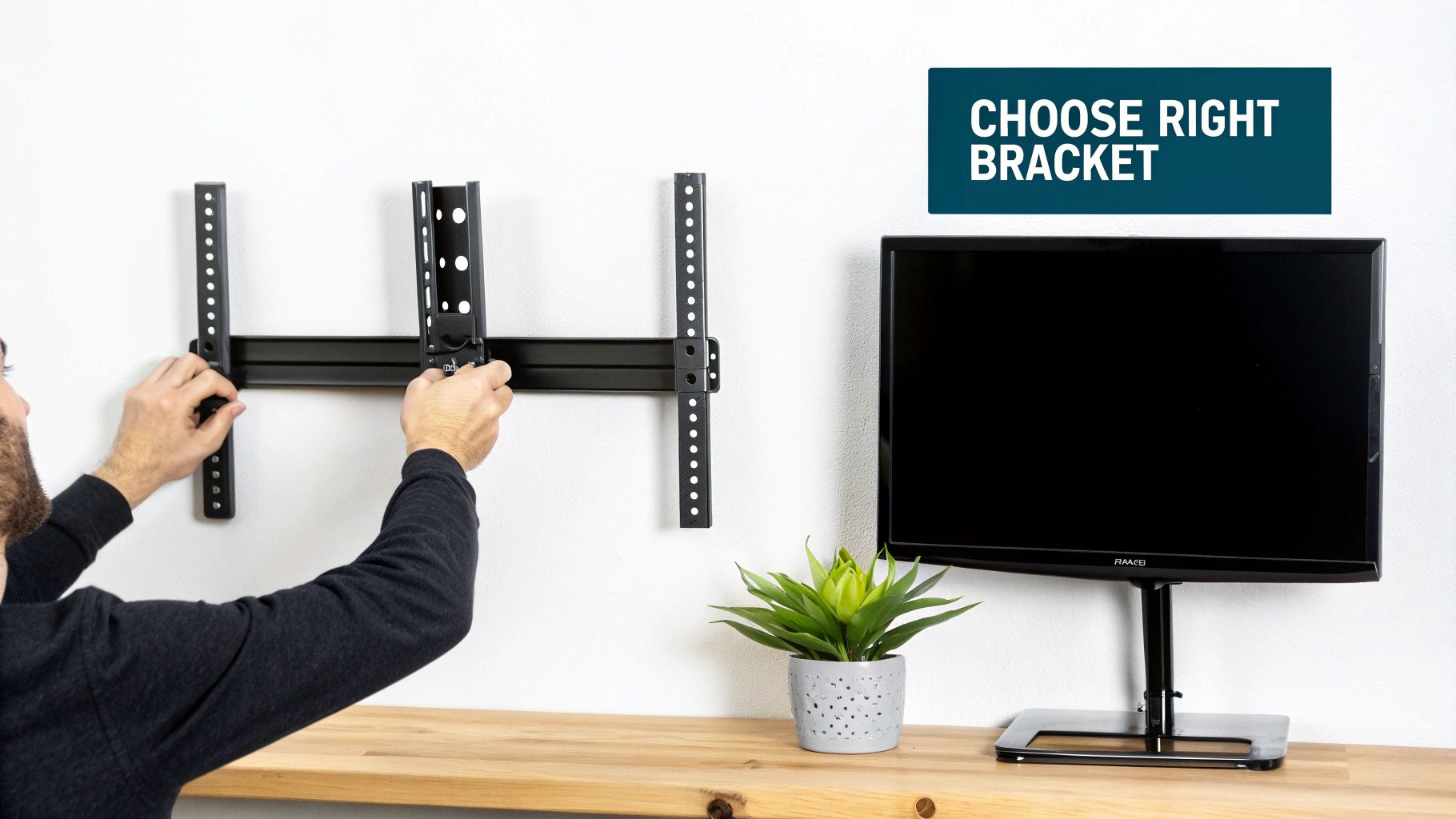
This is where a successful, professional-looking installation really begins. Whether you're hanging a hefty flat-screen TV, putting up some sleek floating shelves, or making sure a handrail is rock-solid, the bracket is the quiet hero doing all the heavy lifting. A bracket that isn't up to the task can mean saggy shelves or, in a worst-case scenario, a total failure that could be dangerous.
The first step is always to properly understand what your project demands. Think of a bracket as the foundation of a tiny house; it absolutely has to be strong enough to hold up everything you put on top of it, no questions asked. This guide will walk you through the options, so you can pick the perfect bracket with confidence.
Why Your Bracket Choice Matters
Making a smart choice here ensures your project is both safe and looks the part. The right piece of hardware will comfortably hold the weight it's designed for, year after year. The wrong one can lead to damaged walls, broken belongings, and a lot of frustration. This is especially true for the DIY crowd, where projects can range from simple picture hanging to full-blown home renovations.
The market for wall mounting gear reflects just how popular these projects are. In fact, North America dominates the global market for wall-mounted shelf brackets, holding about 35% of the total market share. This huge demand is fuelled by high homeownership rates and a real passion for DIY projects, and it's only expected to keep growing. You can dig into more details about the wall-mounted shelf bracket market over at marketintelo.com.
A wall mounting bracket isn't just a piece of metal; it's the critical connection between your wall and the item you want to secure. Its strength, material, and design must all work together with your wall's structure for a successful, lasting installation.
To help you out, we've pulled together a handy quick-reference table.
Quick Bracket Selection Guide
This table breaks down some common projects to help you quickly narrow down the best bracket for the job.
| Project Type | Recommended Bracket | Key Consideration |
|---|---|---|
| Floating Shelves | L-Brackets, Concealed Brackets | Even weight distribution and aesthetics. |
| Heavy-Duty TV Mount | Full-Motion or Fixed TV Brackets | VESA compatibility and weight capacity. |
| Handrail Installation | Handrail Brackets | Must be secured into wall studs for safety. |
| Outdoor Planter Box | Heavy-Duty L-Brackets (Weather-Resistant) | Corrosion resistance and high load rating. |
| Conduit or Piping | Conduit Straps or U-Bolts | Diameter of the pipe and wall substrate. |
Remember, this is just a starting point. Always check the manufacturer's specs against your project's specific needs.
Our curated selection of hardware offers reliable, purpose-built solutions for projects of any size. From our rugged Universal Joist Hangers to our versatile Post Base Brackets, checking out our complete range can help you find everything you need to get your next installation done securely and efficiently.
A Guide to Bracket Types and Their Best Uses
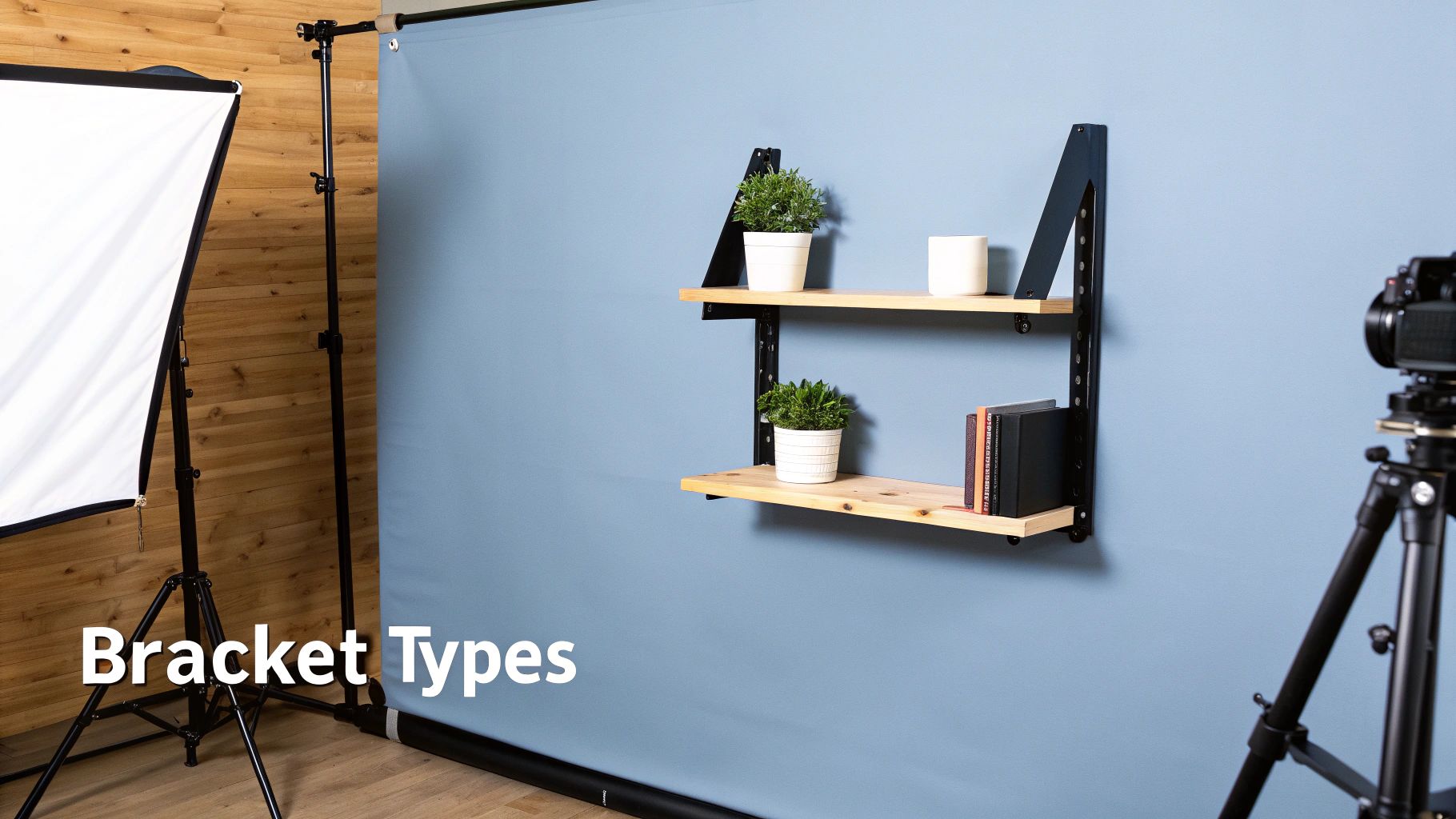
Picking the right wall mounting bracket is a lot like choosing the right tool for a job. You wouldn't use a hammer to drive a screw, right? The same logic applies here. The best bracket depends entirely on what you're trying to hang and where you're hanging it. Not all brackets are built the same; each design solves a specific problem, whether you’re aiming for a clean, minimalist look or need maximum adjustability.
Let's start with a classic: the L-bracket. It's the honest, hardworking backbone of the bracket world. It’s perfect for putting up sturdy shelves in a garage, pantry, or workshop where function trumps form and you just need something strong and reliable.
But what if you want something more stylish for your living room? That's where floating shelf brackets come in. The hardware is completely hidden inside the shelf, creating a sleek illusion that it's magically suspended on the wall. They're a fantastic choice for displaying photos, art, or treasured keepsakes where the focus should be on your items, not the hardware holding them up.
We've made sure our own product line covers both bases. You’ll find heavy-duty L-brackets for serious storage and cleverly concealed supports for those elegant displays, giving you a solid solution for any project. Our selection includes specialized options like Post Base Brackets for securing posts to concrete or wood, and Universal Rafter Ties for reinforcing roof structures, ensuring you have the right hardware for any structural need.
Finding the Perfect TV Mount
When it comes to hanging a TV, the bracket you choose has a huge impact on your viewing experience. It's not just about getting the TV on the wall; it's about getting it in the perfect spot. Generally, TV mounts fall into three main camps.
- Fixed Mounts: Think of these as the simple, rock-solid option. They hold your TV flush against the wall for a super clean, low-profile look. If you have a dedicated home theatre room where your seating is always in the same place, a fixed mount is an excellent, no-fuss choice.
- Tilting Mounts: This is where things get a bit more flexible. A tilting bracket lets you angle the screen up or down. This is an absolute lifesaver if you're mounting your TV a bit higher up, like over a fireplace. A quick tilt down eliminates glare and gives you a much better picture.
- Full-Motion Mounts: For the ultimate in flexibility, nothing beats a full-motion (or articulating) mount. You can tilt, swivel, and pull the TV out from the wall. This is the go-to for open-plan living spaces or big rooms where you might be watching from the couch one minute and the kitchen the next.
The growing popularity of TV wall mounts tells a story about how we live now. People want to save space, get a cleaner look, and have more flexible viewing options, especially as screens keep getting bigger. It's a clear shift away from traditional media units.
The numbers back this up, too. In North America, the market for TV wall mounting brackets is on track to be worth around $2.5 billion by 2025. This isn't just a niche market; it's a major trend driven by our love for bigger screens and clutter-free rooms.
Whether you're tackling an indoor installation or planning an outdoor project with our tough deck accessories, getting a handle on these basic bracket types is the first and most important step to getting the job done right.
2. Choosing Your Bracket: Materials and Load Capacity
Picking the right material for your wall mounting brackets isn't just about looks—it's the foundation of a safe, secure, and long-lasting installation. The material determines a bracket's strength, how much it weighs, and how well it stands up to rust, especially in tricky spots like a steamy bathroom or the great outdoors.
Think of it like choosing the right tires for your car. You wouldn't put summer tires on for a Canadian winter drive, right? The same logic applies here; you need the right material for the job.
Common Materials and Finishes
You’ll find that steel is the go-to for most heavy-lifting jobs. It's the undisputed champion of strength and durability, making it the perfect choice for mounting a big-screen TV or holding up a heavy quartz shelf. This is exactly why our galvanized and powder-coated steel brackets at Xtreme Edeals are built tough—they’re designed for maximum support when you need it most.
But steel has its trade-offs. It can be quite heavy, and if its protective coating gets scratched or chipped, it becomes vulnerable to rust. That’s where a material like aluminum shines. It's significantly lighter than steel and has a natural resistance to corrosion, which makes it a fantastic pick for outdoor projects or anywhere moisture is a concern.
A bracket's finish does more than just make it look good; it's a vital shield against the elements. A powder-coated finish, for instance, bakes on a tough, even layer that fights off scratches and rust. For serious, long-term outdoor protection, you can't beat galvanized steel. It’s coated in zinc, creating a powerful barrier that will fend off corrosion for years to come.
To make things a bit clearer, here’s a quick comparison of the most common options you'll encounter.
Bracket Material and Finish Comparison
| Material/Finish | Primary Benefit | Best For | Corrosion Resistance |
|---|---|---|---|
| Powder-Coated Steel | Strength & Durability | Heavy-duty indoor applications (TVs, heavy shelves) | Good |
| Galvanized Steel | Maximum Corrosion Resistance | Outdoor or high-moisture areas (decks, bathrooms) | Excellent |
| Stainless Steel | Sleek Look & Corrosion Resistance | Kitchens, bathrooms, modern decor, food-grade areas | Very High |
| Aluminum | Lightweight & Rust-Proof | Outdoor fixtures, decorative items, marine environments | Excellent |
Ultimately, matching the material and finish to your specific project and environment is the key to ensuring your brackets don't just hold up, but also last a lifetime.
Understanding Load Capacity (And Why It Matters)
Now, let's talk about the single most important factor: load capacity. This is simply the maximum weight a bracket is certified to hold safely. It's non-negotiable.
Think of it like a weightlifter’s personal best. Pushing past that limit is just asking for a disaster. Always, always choose brackets with a load rating that's well above the total weight you plan to hang.
And when I say "total weight," I mean everything. A simple pine shelf is light on its own, but load it up with your entire hardcover book collection, and you could easily be dealing with ten times the initial weight. Do the math beforehand.
It’s also crucial to know what kind of load you’re dealing with:
- Static Load: This is a constant, stationary weight. Picture a framed painting on the wall or a shelf holding collectibles. Most load ratings you'll see are for static loads.
- Dynamic Load: This involves weight that moves, shifts, or has force applied to it—think of a pull-up bar, a swing-out gate, or even a handrail. These situations put immense stress on brackets and demand a much, much higher load capacity to be safe.
How to Match Your Bracket to Your Wall Type
You can have the strongest bracket in the world, but it’s completely useless if the wall can't hold it up. Think of your bracket and its fasteners as a team—they're only as strong as their weakest link. Figuring out what your wall is made of is the single most important step to prevent a disaster and make sure your project stays put for years to come.
The best-case scenario? Mounting directly into wood studs. These are the vertical wooden beams that make up the frame of your wall, and they provide the most solid anchor point you can ask for. A simple electronic stud finder is your best friend here; it’ll beep or light up to show you exactly where that dense wood is hiding behind the drywall. Always aim for the centre of the stud for the most secure grip.
Navigating Different Wall Surfaces
Of course, a stud isn't always going to be exactly where you need it. When that happens, you have to play matchmaker between your hardware and your wall material. This is the point where choosing the right fastener becomes just as crucial as choosing the right bracket.
If you're working with masonry like brick or concrete, forget about standard screws. You’ll need to step up to specialized masonry anchors, like sleeve or wedge anchors. These are designed to expand inside a pre-drilled hole, creating an incredibly tight, friction-based grip. They're the go-to choice for anything heavy-duty.
A bracket and its fastener are a system. The bracket provides the structure, but the fastener creates the bond with the wall. If that bond is weak, the entire system will fail, regardless of how strong the bracket itself is.
Then you have drywall, the most common material for interior walls and also the most deceptive. Because it's just a soft sheet of compressed gypsum, it can't support much weight on its own. This is non-negotiable: you absolutely need to use specialized drywall anchors.
The infographic below gives you a quick visual guide to start your bracket selection process based on where it will live—indoors or out.
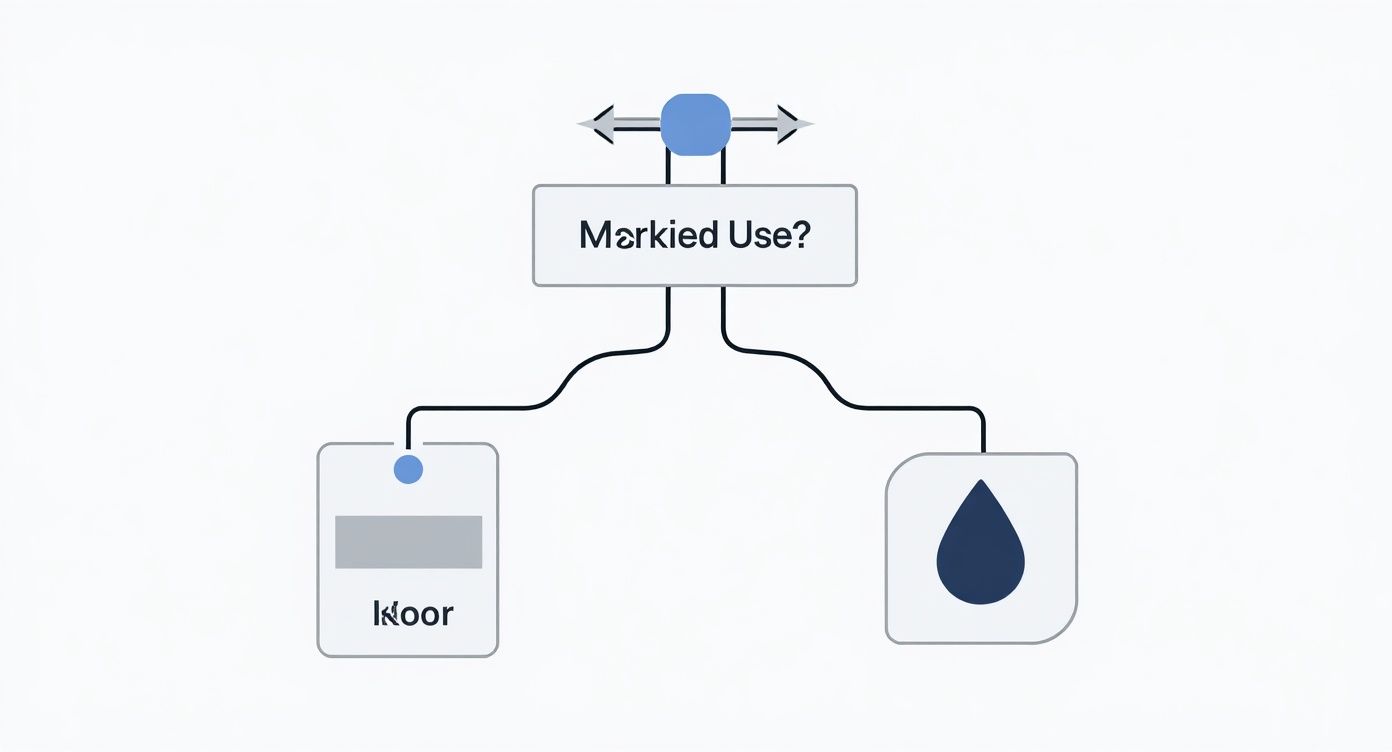
As you can see, the environment is your first fork in the road, pointing you toward materials designed for either the controlled climate inside or the harsh elements outside.
Choosing the Right Drywall Anchor
The demand for good mounting hardware is massive. With the recent boom in home renovations, the North American market for drywall hooks, fasteners, and boards hit a value of USD 24.76 billion in 2023. You can read more about this growing market on Grand View Research.
For very light items, a simple plastic expansion anchor might do the trick. But for anything with a bit of heft, you’ll need to bring in the heavy hitters:
- Toggle Bolts: These are clever little devices with spring-loaded "wings" that pop open behind the drywall. This distributes the weight over a much larger area, making them perfect for heavy shelves or mirrors.
- Molly Bolts (or Sleeve-Type Anchors): As you tighten the screw on a molly bolt, its sleeve expands and clamps onto the back of the drywall. This creates a really secure hold that's much stronger than your average plastic anchor.
By taking the time to correctly identify your wall and pick the right fastener, you’re setting your wall mounting brackets up for success.
Your Essential Toolkit and Installation Steps
With the right tools laid out and a clear plan in mind, installing wall mounting brackets is a job any confident DIYer can tackle. I always think of it like following a simple recipe: get your ingredients (tools) ready first, then follow the steps. A successful installation is all about precision, not brute force.
Before you even think about drilling, get your toolkit in order. Having everything you need within arm’s reach makes the whole process go smoothly and helps you stay focused on the task at hand.
Gathering Your Essential Tools
You don't need a massive workshop to get this done, but a few key items are absolutely non-negotiable for a secure and level installation. These are the workhorses of any mounting project.
- Drill with Assorted Bits: This is for your pilot holes. Make sure you've got bits for both wood and masonry, depending on what your wall is made of.
- Spirit Level: Honestly, this is the most critical tool. A slightly crooked shelf or TV will drive you crazy once it's up on the wall.
- Stud Finder: Your best friend for finding solid wood studs behind the drywall. This is where you'll get the strongest possible anchor point.
- Measuring Tape and Pencil: For marking out your placement with precision. The old saying holds true: measure twice, drill once.
The Universal Installation Process
This step-by-step guide covers the basic process for most bracket installations. For more detailed instructions, especially for specialty items, like those in our Nuvo Iron gate insert video guide, it’s always a good idea to check the manufacturer's specific directions.
-
Measure and Mark Your Placement: Figure out exactly where you want the bracket to go. Use your measuring tape and pencil to mark the drill hole locations. Before you mark, hold the bracket against the wall and put your spirit level on it to make sure it's perfectly straight.
-
Drill the Pilot Holes: Using the right drill bit for your wall and fasteners, drill a pilot hole on each mark you made. The hole needs to be just a bit smaller than the screw's diameter to get a really tight, snug fit. If you're going into drywall without hitting a stud, this is when you drill the hole for your anchor.
-
Install Anchors if Necessary: If you’re not drilling into a stud, now’s the time to insert your wall anchors. A gentle tap with a hammer should get them to sit perfectly flush with the wall.
-
Secure the Bracket: Line up the bracket with your pilot holes (or the anchors you just installed) and drive the screws in. You want them tight enough that the bracket is rock-solid against the wall, but be careful not to over-torque. Overtightening can strip the screw head or even crack the drywall.
The most common mistake I see is people rushing the measurement. Taking an extra minute to double-check that your marks are level is the single best thing you can do to get a professional-looking result you'll be happy with.
Common Wall Mounting Questions Answered
Even the most straightforward project can throw you a curveball. Getting answers to common questions before you start drilling can save you a lot of headaches and help you sidestep those rookie mistakes. Let's tackle some of the most frequent things people ask when installing wall mounting brackets.
How High Should I Mount My TV or Shelves?
Figuring out the right height is part art, part science. When it comes to a TV, comfort is king. A good rule of thumb is to have the centre of the screen at eye level when you're sitting in your favourite chair. For most living rooms, that sweet spot is around 42 inches from the floor.
Shelves are a different story—their job determines their height. Decorative shelves? Position them for the best visual appeal in the room. But for hardworking shelves in a kitchen or office, they need to be within easy reach, usually between four and five feet off the ground. Always consider the room's proportions and ceiling height so everything looks balanced, not just stuck on the wall.
What Are the Biggest Mistakes to Avoid?
I see a few common slip-ups time and time again that can really compromise a solid installation. The absolute biggest one is not matching your fasteners to your wall type. Using the wrong anchor for your wall is the #1 reason mounts fail, and it's a completely avoidable risk.
Another classic mistake is skipping the level. It’s so tempting to just "eyeball it," but trust me, your eye will notice even a tiny slant once something is hanging up there. Finally, don't underestimate the total weight. You have to account for the item itself plus anything you'll put on it.
Here's a pro tip: never max out your bracket's weight rating. If your shelf and its contents weigh 40 pounds, don't grab a bracket rated for exactly 40 pounds. Give yourself a safety buffer by choosing one that can handle at least 60-80 pounds. That's how you get real peace of mind.
Can I Mount Heavy Items on Walls with Metal Studs?
You sure can, but you have to use the right gear. Your standard wood screws won't do a thing in hollow metal studs—there's nothing for them to bite into. You'll need specialized fasteners like toggle bolts or snap toggles.
These clever anchors are designed to pass through a small hole in the stud and then expand or flip open on the other side, locking themselves securely in place. If you're hanging something seriously heavy, like a huge TV, the best bet is often to cut into the drywall and add some solid wood blocking between the metal studs. This gives you an undeniably strong surface to mount to.
How Do I Protect Brackets from Rusting Outdoors?
When you're mounting something outside, your best defense against rust happens before you even install the bracket. It all comes down to choosing the right material from the start.
- Choose the Right Material: For any outdoor project, stick with brackets made from stainless steel, aluminum, or galvanized steel. These are built to withstand the weather. Our line of weather-resistant hardware is specifically designed for the harsh Canadian climate.
- Inspect and Maintain: If you've got a powder-coated bracket, give it a once-over every so often. Look for any chips or deep scratches that go through the finish.
- Touch-Up Damage: Find a nick? Clean the spot and touch it up right away with a good quality, rust-resistant paint. This simple fix seals the metal back up and stops moisture in its tracks.
At XTREME EDEALS INC., we carry a huge range of heavy-duty, weather-resistant brackets and all the specialized hardware you need for any type of wall. Find the perfect solution for your next project by exploring our complete hardware collection.