
You’re probably at the point where the old railing has to go, the new deck is framed, or the permit office has made it clear that “close enough” won’t pass. That’s when railing material stops being a style choice and becomes a project decision.
For most outdoor jobs, black aluminum handrails solve more problems than they create. They give you a clean look, they don’t ask for much upkeep, and they’re easier to work with than heavier metal systems. More important, they can fit demanding code and climate conditions when you choose the right profile, finish, fasteners, and anchors.
A lot of guides stop at “aluminum doesn’t rust.” That’s not enough. The main job is choosing a system that looks right, installs cleanly, and holds up in the weather and under inspection.
Why Choose Black Aluminum for Your Next Project
When clients compare railing materials, I tell them to stop looking at showroom appeal first. Start with what the railing has to survive. Sun, water, movement, foot traffic, and years of neglect will expose weak choices fast.
Black aluminum works because it balances appearance with jobsite practicality. It has the modern look people want, but it also behaves well during installation and over the long run.
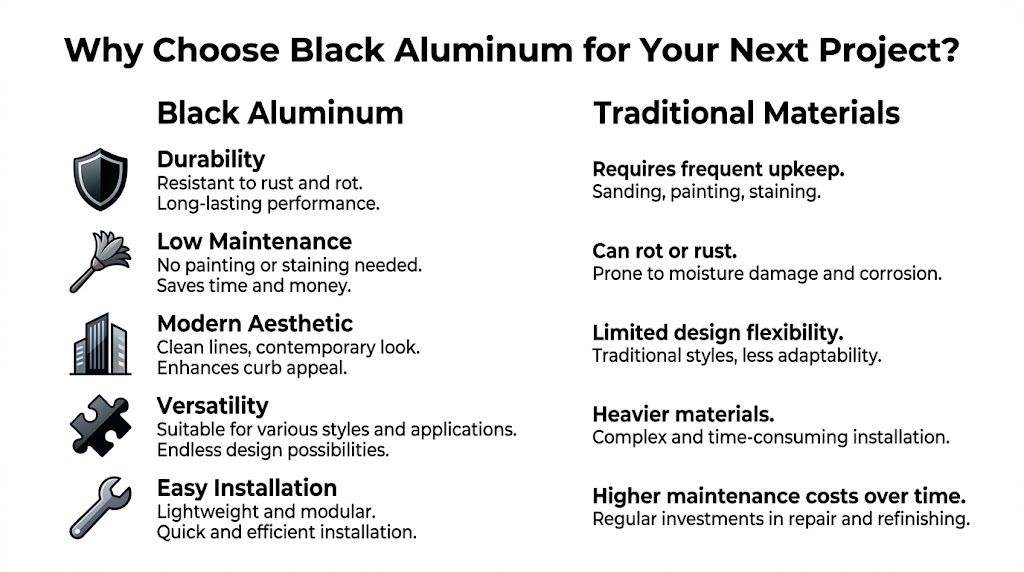
Material showdown on a real project
Wood still has its place. It’s easy to cut, familiar to most crews, and can suit traditional homes. The problem is maintenance. Once the finish starts failing, the handrail starts looking tired, and in wet exposure the upkeep never really ends.
Steel gives you strength and a solid feel, but it comes with weight, corrosion concerns, and more effort on site. In strong sun, black aluminum handrails maintain safer touch temperatures, staying under 120°F peak compared with steel at 160°F+, according to the data cited in this California-focused heat performance review. The same source notes that 78% of professional contractors in a 2024 California Contractors Association survey preferred black aluminum for performance in climates with wide temperature swings.
Vinyl can look neat on day one, but it’s not my first choice when the client wants a slimmer, more architectural line. It tends to look bulkier, and once surface wear or discoloration shows up, there’s not much charm left.
Material Showdown Aluminum vs Wood vs Steel vs Vinyl
| Feature | Aluminum | Wood | Steel | Vinyl/PVC |
|---|---|---|---|---|
| Upkeep | Low. Routine cleaning only | High. Needs ongoing finishing attention | Moderate to high, especially if coating is compromised | Low to moderate, but appearance can age poorly |
| Weight | Light and easier to handle | Moderate | Heavy | Light |
| Corrosion or rot resistance | Strong with proper powder coating | Vulnerable to rot and moisture issues | Can corrode if finish fails | Won’t rot, but can weather cosmetically |
| Look | Crisp, narrow, modern | Warm, traditional | Industrial to classic | Bulkier, less refined |
| Site adjustments | Generally straightforward | Easy for carpentry crews | More demanding | Usually simple but less flexible visually |
| Best fit | Decks, stairs, porches, balconies | Traditional decks and porches | Heavy-duty visual style | Budget-conscious or low-detail installs |
Where black aluminum pulls ahead
The simplest way to describe it is this. Aluminum is the all-weather gear of outdoor construction. It’s built for exposure, easy to carry, and doesn’t demand constant attention after the job is done.
That matters for homeowners, but it matters just as much for installers. Lighter components are easier to stage, easier to square, and easier to manage on stairs and raised decks.
Black aluminum is one of the few railing choices that usually makes both the client and the installer happy.
If you’re still comparing framing, boards, and compatible railing options, this overview of aluminum deck materials is a useful place to line up the rest of the build around the railing choice.
The trade-offs worth being honest about
Black aluminum isn’t magic. Cheap systems can feel flimsy, and poor powder coating shows up quickly in harsh exposure. Scratches on a low-quality finish are harder to ignore on black than on lighter colours.
It also doesn’t give you the visual warmth of stained wood if that’s the exact style you’re after. And if a client wants a very ornate, old-world wrought-iron look, aluminum won’t fake that convincingly.
But for clean lines, dependable outdoor use, and a railing that doesn’t become a maintenance burden, it’s hard to beat.
Decoding Styles Components and Finishes
A black aluminum railing system is simple once you break it into parts. Most problems happen when buyers treat it like one product instead of a group of pieces that all need to work together.
If you know what each component does, it’s much easier to order properly and avoid awkward fixes on site.
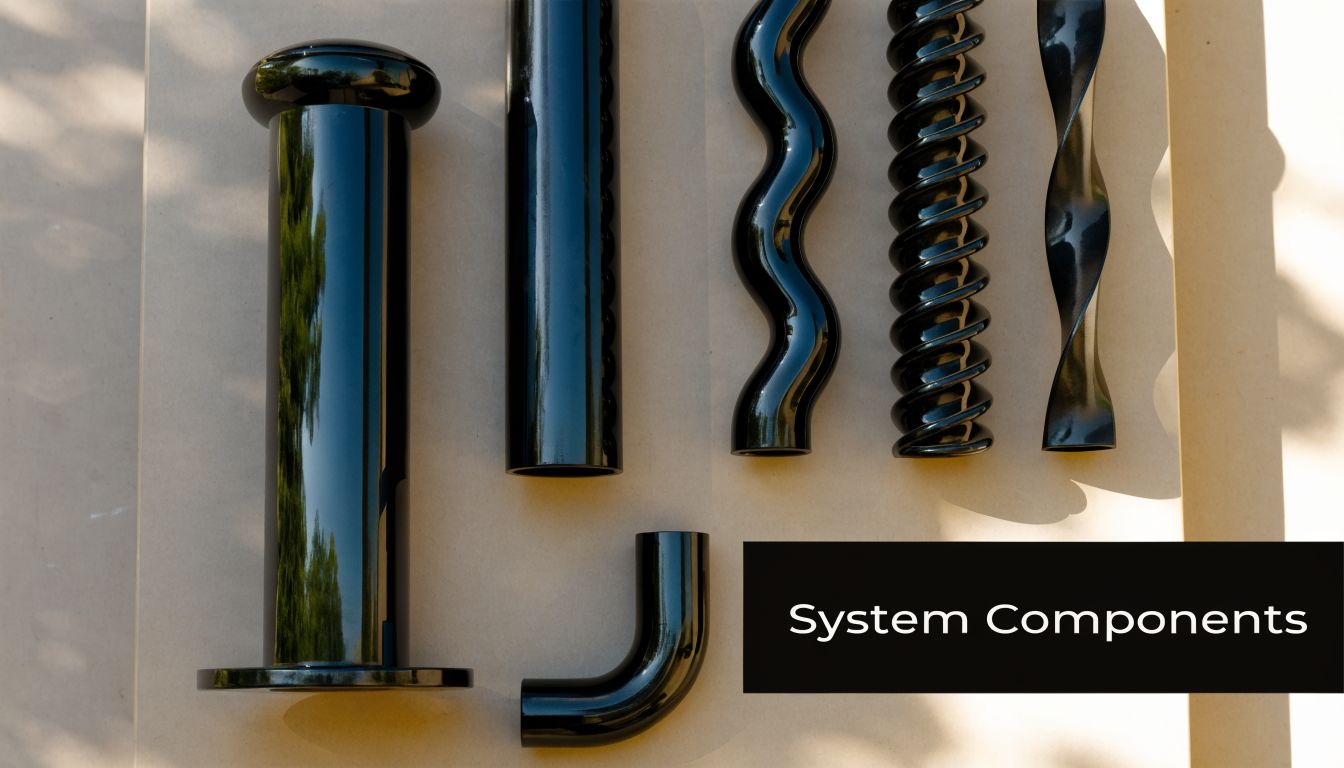
The core parts that make up the system
Posts do the heavy lifting. They anchor the railing to the deck, stair stringer, fascia, or concrete and give the whole assembly its rigidity. If the posts are weak or poorly mounted, nothing above them matters.
Top and bottom rails create the frame. They tie the spans together and hold the infill in place. The top rail also shapes how the railing feels in daily use. Some profiles look sharp and minimal, while others are designed to be more comfortable in the hand.
Balusters are the vertical infill pieces. These are often noticed from a distance because they determine how open or closed the railing looks. Slim square balusters usually suit modern homes best, while more decorative versions can soften the look on traditional porches.
Brackets, connectors, and trim are the quiet parts that decide whether the finished job looks crisp or patched together. Base trim hides fasteners and plates. Rail brackets keep angles clean on stairs. End caps and transition fittings make the difference between a polished installation and one that looks assembled from leftovers.
Style choices that actually change the finished look
Not every black aluminum handrail reads the same once it’s installed. The visual effect depends on profile, spacing, and the accessories you choose.
A few common directions:
- Minimalist layouts use square posts, straight top rails, and simple balusters. These work well on newer homes and composite decks.
- Traditional layouts often add more shaped top rails or decorative caps to soften the lines.
- Feature-driven designs use small details to carry the style, especially on entry stairs or front porches.
Post caps are a good example. A basic flat cap keeps the look understated. A Nuvo Iron pyramid post cap creates a sharper architectural finish. A Nuvo Iron ball cap gives a more classic profile. Those small details matter more than people expect, especially when the railing is close to the front entry.
Practical rule: Choose the post cap after you choose the house style, not before. A cap that looks great online can look out of place once it’s sitting beside trim, decking, and siding.
Why the finish matters as much as the metal
The powder-coated finish isn’t just colour. It’s part of the protection system. On black aluminum handrails, the coating has to resist sun, moisture, and abrasion without turning chalky or patchy.
A good finish keeps the railing looking even and helps it stand up to regular cleaning and weather exposure. A poor finish chips too easily, fades unevenly, and makes a decent railing look cheap long before the structure fails.
That’s why I pay attention to consistency across the whole kit. Posts, rails, brackets, and accessories should all match in sheen and colour. If they don’t, the install can look pieced together even when everything is technically correct.
What works and what usually disappoints
What works is a coordinated system. Matching rails, posts, balusters, trims, and caps from a compatible line saves time and usually looks better.
What doesn’t work is mixing random components because they’re close in size. That approach often creates small fit issues, visible gaps, or a finish mismatch that stands out immediately on black.
Planning Your Project Sizing Codes and Safety
Most railing mistakes happen before the first hole is drilled. Bad measurements, wrong post locations, and code assumptions create expensive rework.
The right way to plan black aluminum handrails is to treat layout and compliance as part of the same task. If the railing won’t pass inspection or won’t fit the framing properly, it was never the right system.
Measure the structure before you measure the railing
Start with the actual finished conditions. Don’t measure off plans alone if the deck, stair run, landing, or slab is already built. Field conditions win every time.
Check these points first:
- Span lengths between post locations, measured at the actual mounting surface
- Corner conditions where rail direction changes
- Stair angle and total run so the stair sections match the slope
- Surface material such as wood framing, composite sleeve over framing, or concrete
- Edge conditions for surface mount versus fascia mount
On stairs, don’t guess. Measure the rise and run and confirm the exact angle before ordering brackets or pre-cut components.
The code details that can’t be treated casually
Local code always controls, and you need to verify the rules that apply where the project sits. In California, that gets more technical fast.
California’s Building Code Title 24 mandates handrail diameters of 1-1/4 to 2 inches for graspability and requires systems to withstand a 200 lbf concentrated load, according to this California code summary for aluminum ADA handrails. The same source states that using 3/8-inch stainless steel wedge anchors is critical in seismic zones to achieve the required 50 lbf/ft uniform load capacity.
That’s the kind of requirement people miss when they shop by appearance alone. A rail can look fine and still fail because the profile isn’t graspable or the anchor schedule doesn’t suit the structure.
California-specific concerns that deserve attention
California isn’t one environment. A coastal install and an inland install can punish materials in different ways.
For black aluminum handrails, these are the pressure points I’d watch closely:
- Seismic anchoring: Post bases and anchors have to be chosen for movement resistance, not just vertical holding power.
- Corrosion exposure: Coastal jobs need coatings and hardware that can tolerate salt air.
- Fire-area review: In fire-prone regions, the material choice and local approval path matter more than many generic railing guides suggest.
- Permit compatibility: Imported systems that don’t line up with local expectations can create inspection delays.
One practical resource if you need to compare local height expectations before ordering is this guide on deck railing height code.
If the project is in a strict jurisdiction, I’d rather spend extra time confirming the post base, rail profile, and hardware package than spend a day replacing parts after inspection.
Sizing decisions that affect both safety and appearance
The cleanest jobs usually come from disciplined post spacing and consistent panel sizing. Uneven bays stand out, especially with black rails against light decking or stucco.
A few field habits help:
- Set end posts first. Corners, stair starts, and terminations control the rest of the layout.
- Work backwards from fixed points. Doors, landing edges, and framing members matter more than ideal panel symmetry.
- Keep visual rhythm in mind. Slightly adjusting bay sizes can make the whole run look intentional.
- Confirm substrate thickness before anchoring. Surface-mounted posts need real support below the finished deck surface.
What often goes wrong
The most common mistakes are predictable. People order rails before verifying stair angle. They mount posts over weak decking instead of structural backing. They assume any round or rectangular top rail will satisfy graspability rules. It won’t.
Another issue is mixing hardware metals carelessly in exposed environments. Even when the railing itself is sound, the wrong fastener package can shorten the life of the install.
A black aluminum handrail system should feel simple once it’s assembled, but the planning behind it has to be exact.
Our Top Black Aluminum Handrail Kits and Components
Not every project needs the same railing package. A small DIY stair run, a large rear deck, and a salt-air balcony should not be treated as the same purchase with different lengths.
I prefer to think in terms of use cases. That helps narrow the right kit and avoids spending money on features the project doesn’t need.
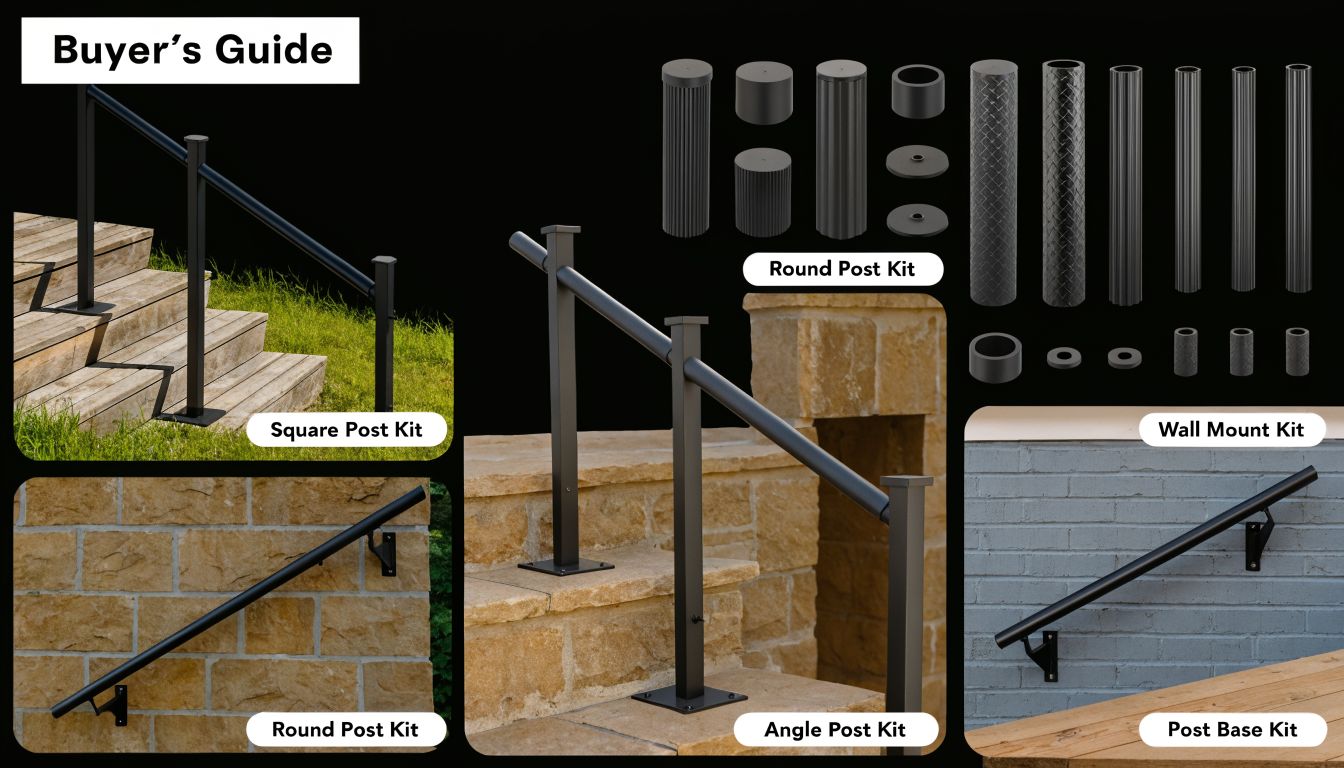
The DIY-friendly setup
For homeowners handling their first railing job, the best option is usually a kit with matched rails, balusters, brackets, and trim. Buying piece by piece can work, but it raises the odds of missed parts and finish mismatch.
Look for:
- Pre-matched components that reduce ordering errors
- Straightforward bracket systems for deck runs and stair runs
- Clean post options that don’t require fabrication on site
- Simple accessory choices so the build doesn’t get bogged down in cosmetic decisions
A compact handrail kit is especially useful on front entry steps, porch transitions, and short deck sections where custom fabrication would be overkill.
The contractor’s choice
On repeat work, modularity matters more than novelty. Contractors usually need a system they can scale, trim, and adapt without fighting every detail.
That often means choosing individual components from dependable lines such as Decorex Hardware balusters, matching posts, post skirts, and bracket sets. The value is in consistency. If one deck has stairs, corners, and level sections, a modular family of parts lets the crew keep the same finish and fit throughout.
This approach works well when the job has:
- multiple elevations
- a mix of stair and level rail sections
- wider deck perimeters
- detail-sensitive front elevations where trim and cap choices matter
The finishing pieces that improve the whole job
A lot of buyers focus on rails and forget the accessories that make the result look complete. That’s backwards.
Small upgrades often do the most visual work:
| Component | Best use | What it changes |
|---|---|---|
| Pyramid post caps | Modern decks and contemporary stairs | Sharpens the profile |
| Ball post caps | Traditional porches and classic entries | Softens the overall look |
| Base trim or skirts | Surface-mounted posts | Hides hardware and cleans up the base |
| Matching balusters | Any exposed run | Keeps visual consistency across spans |
Nuvo Iron decorative caps are a good example of where a minor add-on can make the whole railing look more deliberate.
The coastal-minded choice
If the project sits in harsh exposure, the finish quality and fastener selection matter more than decorative add-ons. I’d lean toward black aluminum handrails with a proven powder-coated finish and pair them with compatible stainless hardware.
The product spec matters more than the product photo. You want a system built around coating performance, clean hardware integration, and minimal exposed weak points. Fancy design details don’t help if the install starts showing distress early.
Buy the railing as a system, not as a pile of parts. Most callbacks come from the small pieces that were improvised, not from the main rails.
What I’d avoid
I’d avoid bargain kits with vague hardware descriptions, no clear accessory compatibility, and no obvious path for stairs, corners, or concrete mounting. Those products can look like savings at checkout and become a headache during layout.
I’d also avoid mixing decorative pieces from one line with structural parts from another unless you’ve already confirmed fit and finish in hand.
Installation Overview Tools and Key Steps
Black aluminum handrails are manageable for a skilled DIYer and efficient for a contractor, but only if the setup is organised before assembly starts. The installation itself usually goes smoothly when the layout, anchoring, and cutting plan are settled first.
You don’t need a specialty fabrication shop for most jobs. You do need the right tools and a methodical sequence.
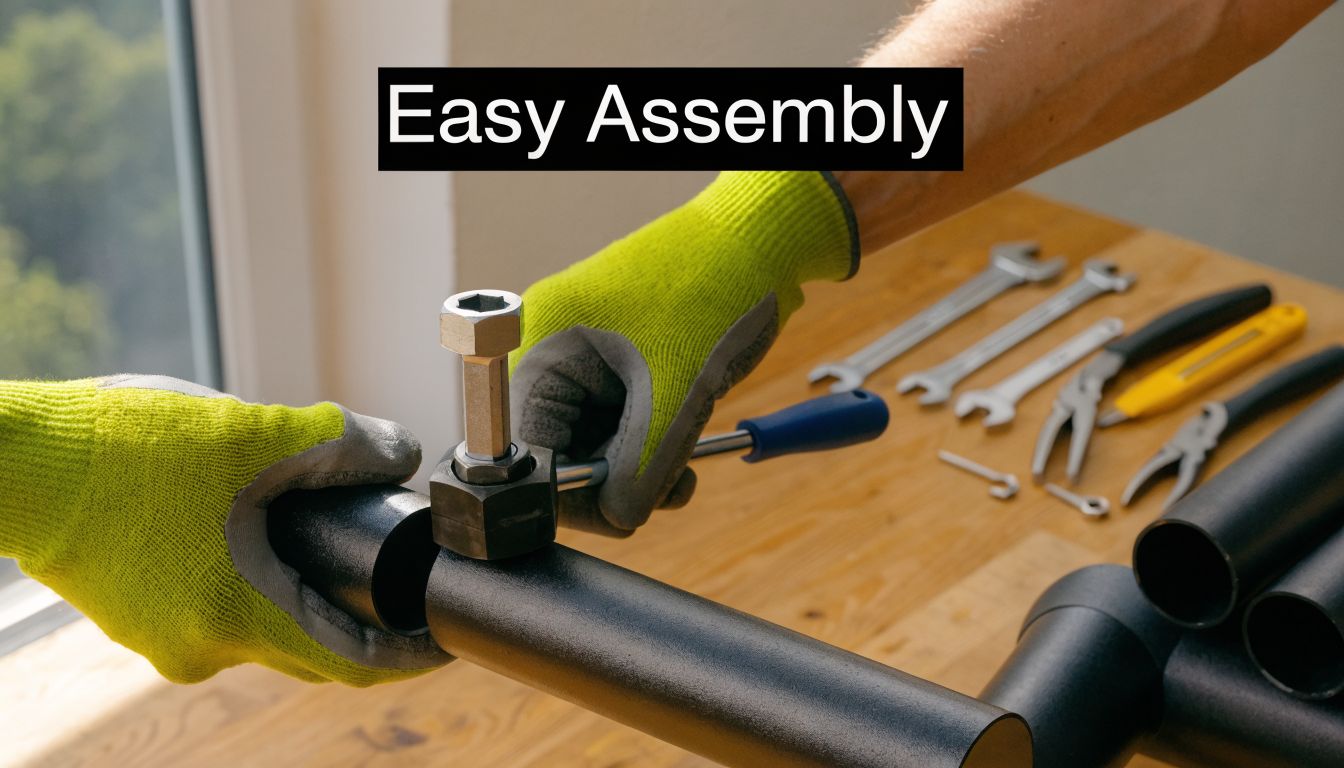
The basic tool set
For most installations, I’d have these ready:
- Tape measure for layout and panel sizing
- Level for posts, rails, and bracket alignment
- Drill and driver with bits matched to the substrate and fasteners
- Miter saw with a non-ferrous blade for clean cuts on aluminum
- Clamps to hold rails or brackets during fitting
- Impact driver or wrench set for anchors and structural fasteners
- Marker and square for accurate cut lines
- Safety gear including gloves and eye protection
The biggest mistake with tools is trying to cut aluminum with a blade that leaves rough edges or chips the finish badly. Clean cuts save time later.
Surface mount or fascia mount
These two approaches change the job more than people expect.
Surface-mounted posts sit on top of the deck or slab. They’re common, straightforward to lay out, and easy to align. They do, however, take up some deck surface area and require proper structural backing beneath the mounting point.
Fascia-mounted posts attach to the outside face of the deck structure. They keep the walking surface cleaner and can look sharper on tighter decks. They also demand a sound rim or edge structure and more care during alignment.
If the framing isn’t strong enough for the mount style you want, don’t force it. Build to the structure you have, or reinforce it first.
The installation flow that keeps the job clean
A simple sequence works best:
- Prepare the surface. Confirm the deck, stairs, or concrete are sound and ready for anchoring.
- Lay out post locations. Mark corners, ends, transitions, and stair starts before drilling anything.
- Mount the posts. Set them plumb and confirm alignment across the run.
- Cut rails to fit. Measure from actual post positions, not assumed ones.
- Attach brackets and test fit. Make small corrections before final fastening.
- Install balusters or panel sections. Keep spacing consistent and watch for finish damage.
- Finish with trim and caps. These parts go on last, once structural work is confirmed.
For a visual walkthrough of attachment basics, this guide on how to attach deck railing is a useful companion before you start.
A video can also help if you want to see the sequence in action:
What separates a smooth install from a frustrating one
Most clean installs come down to restraint. Don’t rush the post layout. Don’t cut all rails before test fitting. Don’t tighten everything fully until the run is visually straight.
Set one section completely, check it from a distance, then repeat the pattern. Railings can be technically level and still look wrong if the layout is careless.
The crews that stay patient at the start usually finish faster overall.
Lifespan Maintenance and Long-Term Costs
The appeal of black aluminum handrails isn’t just what they look like on install day. It’s what they don’t ask from you in the years after.
Wood railings usually turn into a maintenance schedule. Steel can become a coating-management problem. Aluminum, when it’s properly finished and installed, is mainly a cleaning job.
What long service life really depends on
The finish does a lot of the work. Quality powder coatings that meet AAMA 2604 standards can ensure no fading or pitting for over 20 years, and market projections show a 4.9% CAGR from 2025 onward, with growth tied in part to labour cost savings of up to 30% compared to wrought iron installation, according to this black aluminum railing market overview.
That doesn’t mean every black aluminum handrail on the market will perform the same way. A well-coated system with compatible hardware is one thing. A low-spec import with vague finishing details is another.
The maintenance routine most owners can live with
For most homes, upkeep is simple:
- Wash with mild soap and water when dirt, pollen, or grime builds up
- Inspect brackets and fasteners during seasonal outdoor maintenance
- Touch up or replace damaged components if impact damage breaks the finish
- Keep drainage areas clear so dirt and moisture don’t sit around bases and connections
That’s a much easier ownership profile than sanding, staining, or repainting a wood system on a regular cycle.
Where long-term value comes from
The value isn’t just the product life. It’s the reduced hassle.
You spend less time maintaining it. Installers often spend less effort handling and fitting it than they would with heavier ornamental metal. And the finished look tends to stay consistent if the coating quality is there from the start.
For clients in harsher environments, I also pay attention to sealing around mounts and penetrations. If you’re comparing protective products for exposed metal and outdoor joints, this background on durable aluminum sealant technology is useful for understanding how advanced sealant systems help protect aluminum-adjacent applications in wet or corrosive conditions.
The cost trade-off clients should understand
Black aluminum handrails may not always be the cheapest option at checkout. But cheap doesn’t stay cheap if it means more labour, more upkeep, or an earlier replacement cycle.
That’s why I tell clients to compare total ownership, not just carton price. Ask:
| Cost question | Why it matters |
|---|---|
| How much upkeep will this need? | Ongoing labour and materials add up |
| How hard is it to install? | More difficult systems cost more in labour |
| How well does the finish hold up? | Premature cosmetic failure changes replacement timing |
| Are replacement parts available? | A damaged section shouldn’t require a full rebuild |
The strongest buying position is simple. Buy a system you won’t resent in five years.
Your Buying Checklist and Final Questions Answered
If you want the project to go smoothly, reduce the decision to a short checklist and work through it in order. That prevents the usual mistakes, especially ordering before the code and layout are confirmed.
Buyer’s checklist
- Confirm local code first. Height, graspability, spacing, and mounting requirements come before style.
- Measure the actual site. Decks, stairs, and concrete pads rarely match assumptions exactly.
- Choose the mounting method early. Surface mount and fascia mount affect post choice, structure, and layout.
- Select a complete visual style. Posts, rails, balusters, skirts, and caps should look like one system.
- Verify finish quality. Black shows finish inconsistency quickly, so coating quality matters.
- Match the hardware to the environment. Wet, coastal, and high-exposure locations need more attention.
- Plan for maintenance access. Even low-upkeep systems should be easy to clean and inspect.
Buy once for the site conditions you actually have, not for the photo you liked online.
Can I install black aluminum handrails on a concrete patio
Yes, if the slab is sound and the anchoring method matches the structure. Concrete installs usually live or die by anchor choice, edge distance, and layout accuracy.
The patio also has to be part of a safe overall design. If the slab is cracked, thin, or poorly located for the required post spacing, solve that before ordering the railing.
Can I repaint black aluminum later
You can, but I rarely recommend it unless there’s a very specific reason. Factory-finished aluminum usually looks cleaner and lasts better than a field repaint.
If colour change becomes necessary, surface prep matters. A quick overcoat without proper preparation usually looks temporary and tends to fail unevenly.
How do I handle stairs properly
Treat stair rail sections as their own part of the project. Don’t assume the level-deck kit will sort itself out once you reach the steps.
Measure the actual stair angle, confirm the bracket compatibility, and make sure the handrail profile is appropriate for grip where that applies. On stair work, layout discipline matters more than speed.
Are black aluminum handrails a good fit for front entries and small porches
Usually, yes. In fact, they often look best there because the slim profile doesn’t crowd a small space.
For front entries, details matter more. A decorative post cap, clean base trim, and neat transitions into steps or walls do a lot to improve the final result.
What should make me walk away from a product
Three things. Poor finish consistency, vague hardware information, and no clear guidance for mounting conditions.
If the seller can’t tell you how the system goes together, what accessories match it, or what type of project it suits, that’s enough reason to keep looking.
If you’re ready to compare kits, accessories, post caps, balusters, anchors, and deck hardware in one place, XTREME EDEALS INC. is a practical source for both DIY buyers and trade users. Their catalogue covers the parts that usually make or break a railing project, including decorative caps, fasteners, brackets, and compatible outdoor hardware, so you can build a cleaner materials list before installation starts.