
You've picked the style, measured the run, and started thinking about posts, panels, and gate hardware. Then someone says, “Check the bylaw first.” That's the point where a straightforward fence project turns into a rules project.
Most homeowners run into the same surprise. The fence they want makes perfect sense for privacy, pets, or curb appeal, but fence height requirements aren't based on preference alone. Local zoning, setback rules, permit thresholds, corner-lot visibility, pool safety, and even the difference between a solid fence and an open one can change what's legal on the exact same property.
A fence that works in one city can be rejected in the next. A fence that's acceptable in the back garden can be non-compliant the moment it wraps into the front setback. And the finishing details matter more than people expect. Post caps, top trim, hinges, self-latching gate hardware, and the way height is measured from grade can decide whether a build passes or gets flagged.
Your New Fence Starts With a Tape Measure Not a Shovel
A lot of fence problems start before the first post hole. The homeowner wants more privacy, orders materials, books a weekend, and assumes a standard panel height will settle the whole issue. Then the neighbour asks where the line really is, or the city says the front section is too tall, or the inspector wants a permit because the finished height ended up over the local threshold.
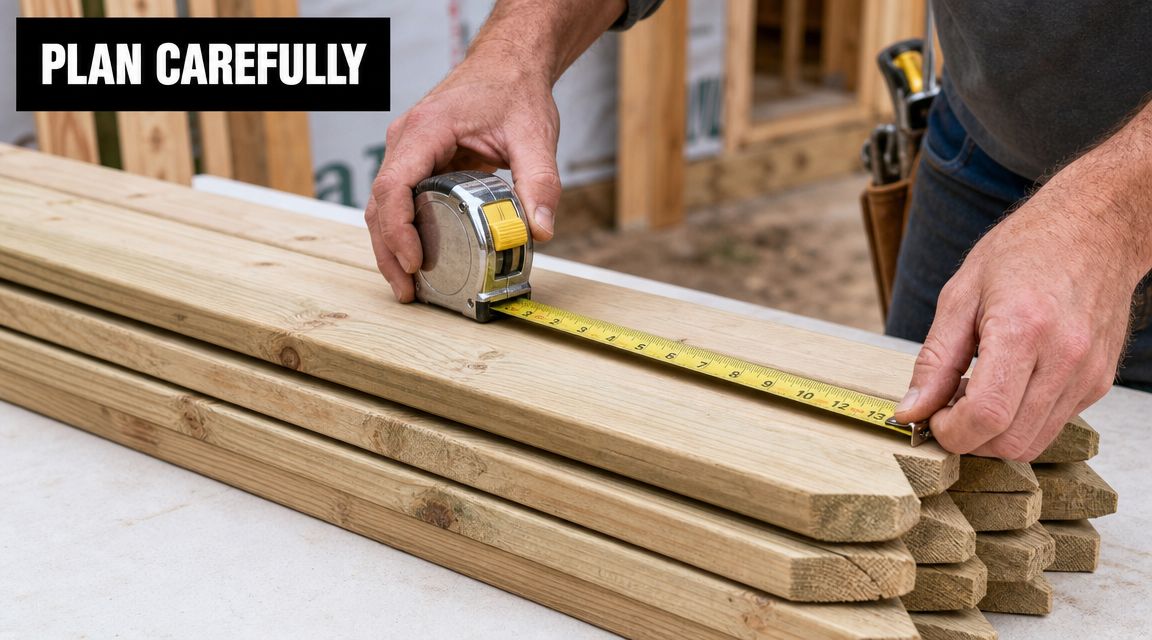
That's why the tape measure comes first. Before digging, you need to know where the fence sits on the lot, how the municipality defines front, side, and rear yard areas, and whether your chosen design is considered solid or open. Those details drive the legal height more than the product photo does.
Where DIY jobs usually go sideways
The common mistakes are predictable:
- Ordering for the wrong height: A homeowner plans a privacy fence at one height, then learns the front portion must be lower.
- Ignoring finished grade: On a sloped lot, the “same” fence can measure differently depending on where the official measurement is taken.
- Treating hardware as decoration only: Taller posts, oversized caps, and gate assemblies can affect the final measured height and function.
- Skipping the local office call: Generic online advice won't tell you what applies to your parcel.
Practical rule: If you haven't checked the lot layout, the setback, and the local zoning language, you're still in the sketch stage.
The build itself is the easy part. The planning is what keeps you from tearing out work you already paid for. When you're gathering rails, brackets, caps, anchors, and fasteners, it helps to organise the project around the code requirements first, then the materials. A good starting point is to pull your hardware from a dedicated catalogue of fence building supplies so you can match components to the design you're allowed to build.
Understanding Standard Fence Height Limits
People want one clean answer. They ask, “What's the legal fence height?” In practice, the answer is usually split by location on the lot. Front-yard fences tend to be lower because cities protect sightlines for drivers and pedestrians. Side and rear-yard fences are usually where privacy height is allowed.

A useful California example comes from Sacramento. Local guidance described in this Sacramento fence-height overview says front-yard fences are generally limited to about 4 feet, while backyard and interior property-line fences are typically allowed up to 6 feet, with some locations bordering parks, alleys, or commercial sites permitted up to 8 feet. That's a good reminder that the common “front low, back high” rule is only a starting point, not a universal law.
The rule of thumb most people start with
Here's the practical baseline many homeowners hear first:
| Yard area | Common planning assumption | Why it changes |
|---|---|---|
| Front yard | 3 to 4 feet | Visibility, streetscape, corner safety |
| Side yard | Often similar to rear yard | May change if it faces a street |
| Rear yard | 6 feet is the common privacy target | Some cities allow taller fences in limited cases |
That baseline is useful for early design decisions, but it won't replace the local code check.
Solid fences and open fences aren't treated the same
Many DIY plans encounter issues here. Homeowners think only height matters. Municipalities often care just as much about opacity.
An open ornamental fence may be allowed where a solid privacy fence isn't. A front-yard assembly with spacing between pickets or wrought iron sections can be treated differently from a continuous panel wall. If you start with solid boards because you want seclusion, that same choice can trigger stricter limits in the exact area where you wanted the fence most.
The material list should reflect that early. Post spacing, rail layout, panel style, and base brackets all depend on the final permitted design. If the code only allows a more open front section, you may need one fence system in the rear and a different one facing the street.
A quick visual helps if you're comparing common layouts before you buy hardware:
What works in the field
What usually works is a split approach. Keep the street-facing portion lower or more open, and reserve the full privacy build for the side and rear yard where the zoning allows it. What usually doesn't work is buying one fence package for the whole perimeter and assuming it can be installed unchanged from sidewalk to back lane.
How Fence Height Is Officially Measured
Homeowners often focus on the panel height printed on the product listing. Inspectors don't. They care about the finished installed height and where that measurement starts.
On level ground, this seems obvious. On a sloped lot, beside a retaining edge, or along a property line where one side sits higher than the other, it gets messy quickly. Some jurisdictions measure from the exposed face, which means the side with the lower grade can be the side that controls the number. That's why a fence that “looks right” from your garden can still be too tall from the neighbour's side or from the street.
Grade matters more than most people expect
If your yard rises or falls, don't assume each panel can follow the terrain without affecting compliance. Stepped panels, racked panels, gravel boards, and raised planters can all change the apparent and measurable height.
A few practical checks help:
- Measure from the finished ground level, not the old sketch: If you're adding soil, edging, or a mow strip, recheck the final grade.
- Measure every section, not just the tallest post: A legal average doesn't help if one segment exceeds the local cap.
- Watch transitions carefully: Front-to-side transitions and sloped corners are where over-height sections often appear.
Height compliance is usually judged on the installed fence, not the nominal size of the parts you bought.
Decorative tops can still count
Hardware choices are important. A cap, finial, lattice top, or ornamental feature can push the finished assembly over the line if you haven't checked how the code treats projections.
Santa Barbara offers a clear example in its fence, screen, wall and hedge guidelines. Decorative top elements can project up to 12 inches above the maximum if they are no wider than 9×9 inches and spaced at least 6 feet apart. That's useful because it shows a city may allow decorative projections, but only within very specific limits.
So if you're choosing ball caps, pyramid caps, or other post-top details, treat them as part of the design review, not an afterthought. The same goes for taller posts cut long “just in case.” If the cap sits above the measured limit and the local code doesn't allow that projection, the fix may be cutting down installed posts.
For homeowners who want to see how another common exterior code issue is measured and interpreted, this guide to deck railing height code is a useful comparison. The details differ, but the lesson is the same. Measurement rules matter as much as the product itself.
Navigating Pool Fences Corner Lots and HOAs
A standard garden fence and a compliant special-condition fence aren't always the same thing. Pools, corner lots, and HOA rules are the three situations that catch people after they thought the hard part was done.

Pool barriers follow their own rules
A property-line fence can be legal and still fail as a pool barrier. California-focused guidance in this pool fence law summary states a pool barrier must be at least 5 feet high, with openings sized to block a 4-inch sphere, bottom clearance limited to 2 inches, and self-closing, self-latching gates. The same guidance says the latch is typically at least 54 inches above the ground.
That changes the hardware list immediately. You're no longer just buying hinges and a latch that feel sturdy. You need a gate that closes reliably on its own, latches every time, and places the release hardware where the barrier standard expects it.
The usual failure points are simple:
- Gate sag: The latch stops lining up after a short period.
- Wrong hinge type: Decorative strap hinges don't automatically close the gate.
- Climbable layout: Horizontal members or adjacent structures make the barrier easier to scale.
- Too much clearance below: The fence works for the property line but not for pool safety.
If you're fitting a gate in a pool area, purpose-built self-closing gate hardware is the category to look at first.
Corner lots have visibility issues that normal lots don't
Corner lots create a visibility problem because your fence can affect drivers and pedestrians approaching an intersection. The fence section nearest the streets often ends up under tighter restrictions than the rest of the yard. Even if your backyard can carry a privacy fence, the corner area may need to stay lower or more open.
Confusion often arises regarding “front yard” definitions. On a corner lot, you may have more than one street-facing condition to deal with. The side yard that feels private to you may still count as an exterior side setback under local rules.
If your property touches two streets, assume the fence layout needs a second review before materials are ordered.
HOA approval is separate from city approval
An HOA can restrict style, materials, colour, and height even when the city would allow more. The city doesn't usually solve HOA disputes for you. You have to satisfy both if both apply.
That comes up often with rental planning and property use changes. Owners sorting out occupancy, tenant readiness, and exterior upgrades often miss the private-rule side of the equation. If that's part of your broader project, Edinhart's guide on steps for renting your condo is a useful reminder that local rules and community rules often overlap in practical ways.
When You Need a Permit for Your Fence
The permit question usually comes down to one thing first. Height. Many jurisdictions use fence height as the trigger that moves a simple build into formal review.
One clear example appears in San Mateo County guidance referenced through San Francisco Planning fence information. It notes that a fence-height exception is required for anything over 6 feet in a rear yard, and that all fences over 6 feet require a building permit. That's a strong illustration of a common threshold. Once you go above the ordinary residential limit, paperwork tends to follow.
A simple permit check sequence
If you want to avoid running in circles, use this order:
Confirm the zoning district
The parcel's zoning can change the allowed height before you even think about design.Identify the fence location on the lot
Front, rear, interior side, exterior side, and corner conditions can all be treated differently.Check whether the design is solid or open
Material layout may affect what height is permitted.Ask about permit triggers and exceptions
Taller fences, retaining conditions, and special sites often need extra review.
What to have ready before you call or apply
You don't need a perfect architectural set for an initial conversation, but you do need something organised.
- A basic site plan: Show the house, property lines, and the proposed fence run.
- Fence details: Note the intended height, style, and whether it's solid or open.
- Gate locations: Important for pool areas and access points.
- Material and hardware notes: Posts, anchors, brackets, hinges, and latches all help clarify what you're building.
A clean application also helps the inspection side. When the fence uses proper post bases, suitable anchors, and exterior-rated fasteners, you're showing the project was planned as a structural outdoor build, not improvised from leftover hardware.
What doesn't work
What rarely works is asking the municipality only one vague question such as “Can I build a six-foot fence?” That leaves out the lot placement, visibility issues, and design type that usually control the answer. Ask about your exact property condition, not a generic fence.
A Good Fence Makes a Good Neighbour
You can build a code-compliant fence and still end up in a long argument if you don't handle the neighbour side properly. The easiest disputes to avoid are the ones you address before excavation starts.
The shared-property-line conversation matters because most neighbours don't react to the permit drawing. They react to what they think they're going to see every day. If they feel surprised by the height, style, or placement, the project can become personal fast.
The conversation worth having early
Bring three things to the discussion: the proposed location, the style, and the finished side. That last point causes more friction than homeowners expect. If one side gets rails exposed and the other gets the clean face, decide that before installation.
A practical talk should include:
- Exact location: Confirm the fence sits where both parties expect.
- Style and height: A sketch prevents misunderstandings.
- Responsibility for cost and upkeep: Better discussed early than after the invoice arrives.
A neighbour who sees the plan early is less likely to challenge the work later.
Shared boundaries need more than good intentions
Boundary questions can get complicated when old fences, walls, or long-standing assumptions are involved. If the line itself is in doubt, don't rely on memory or a previous owner's verbal explanation. Use a survey if needed, and look at guidance that deals directly with boundary structures and neighbour interactions. Survey Merchant's guide to boundary walls is a helpful reference for the kinds of issues that come up when two properties share a border condition.
The smoothest fence jobs usually aren't the ones with the fanciest materials. They're the ones where nobody feels ambushed.
Building Your Compliant Fence A Final Checklist
By the time you're ready to buy posts and fasteners, the big decisions should already be settled. The lot has been checked. The local rules are clear. Any special conditions have been identified. That's what keeps the installation clean and the inspection uneventful.

Final pre-build review
Run through this list before you order the full package:
- Check the exact lot area for each fence section: Don't assume the front return, side run, and rear line all share the same rule.
- Confirm how your city measures height: Especially important on slopes, raised beds, or grade changes.
- Review special conditions: Pool areas, corner lots, and HOA restrictions can override your basic design assumptions.
- Match hardware to compliance needs: Gate closers, latches, post caps, and anchors should fit the code-approved design.
Los Angeles is a good reminder that material and solidity can be as important as raw height. Under Los Angeles Municipal Code Section 13.10, a front-yard fence in certain fence height districts may reach 6 feet only if it is open wrought iron and any solid portion does not exceed 3.5 feet. That's the kind of rule DIYers miss when they focus only on a single number.
What a durable compliant build looks like
A compliant fence isn't just one that passes on paper. It also needs to hold its line, keep the gate aligned, and survive weather without shifting out of tolerance. That means choosing the right post size, using the correct base or embedment method for the site, selecting exterior-rated fasteners, and treating decorative add-ons as part of the measured assembly.
For product sourcing, XTREME EDEALS INC. is one example of a retailer that carries fence and deck hardware such as post caps, finials, hinges, post base brackets, bolts, screws, and anchors. That kind of catalogue is useful when you need to coordinate the structural parts and the finish details rather than buying them separately and hoping they work together.
A fence project goes well when the design, the hardware, and the local rules all agree. If one of those is out of step, the trouble usually shows up after the money is spent.
If you're planning a new fence or correcting an older one, XTREME EDEALS INC. offers fencing and outdoor hardware categories that can help you source practical components for a code-conscious build, including post caps, hinges, brackets, fasteners, anchors, and other finishing details that affect both performance and compliance.