
You're standing in front of a cart, or a browser tab, with chain link fabric, posts, caps, bands, bolts, hinges, rail ends, and latches all staring back at you. The fabric looks straightforward. The hardware doesn't. Homeowners and contractors often hit that point and realise the small parts are where a fence project gets confusing fast.
That confusion is normal. Chain link fence hardware looks simple until you install the wrong band size, use a light latch on a busy gate, or buy standard fasteners for a salty coastal property and watch them rust first.
The good news is that the hardware aisle makes sense once you know what each piece is doing. Some parts carry tension. Some transfer load. Some stop water getting into a post. Some only seem minor until the gate starts sagging and won't latch. If you understand the job of each fitting, you can buy once and install it properly.
Your Guide to Every Piece of Chain Link Fence Hardware
A new hire on a fence crew usually spots the big items first. Fabric. Posts. Top rail. Gates. Then the bucket of small fittings comes out, and that's where the questions start. Which bands go where? Why do some caps have loops and others don't? Why does one gate latch feel solid while another feels loose right out of the box?
The answer is that chain link fence hardware is what turns a pile of steel into a working system. The fabric doesn't stay tight on its own. The rails don't hold themselves in line. The gate doesn't swing straight without the right hinges, and it won't stay closed with a weak latch.
In California work, that practical thinking matters even more because local public works and procurement documents tend to require detailed catalog data and dimension drawings for hardware such as latches, stops, keepers, and related components rather than relying on one simple statewide consumer rule, as shown in the Rancho California Water District materials and specification framework. That tells you something useful right away. Hardware isn't treated as an afterthought.
Think of this guide the same way a contractor thinks through a material list before leaving the yard. Start with the frame. Add the fittings that connect the frame. Build the gate with hardware that can handle movement. Then choose finishes and fasteners that suit the site, not just the budget.
The parts that usually fail first aren't the biggest ones. They're the parts that move, hold tension, or sit exposed to moisture every day.
Once you see hardware in that order, shopping gets easier and installation mistakes become easier to avoid.
The Skeleton of Your Fence Frame
A chain link fence stands because the frame does the heavy lifting. The mesh doesn't create strength. The posts, rails, bracing, and terminal assemblies do.
Terminal posts carry the load
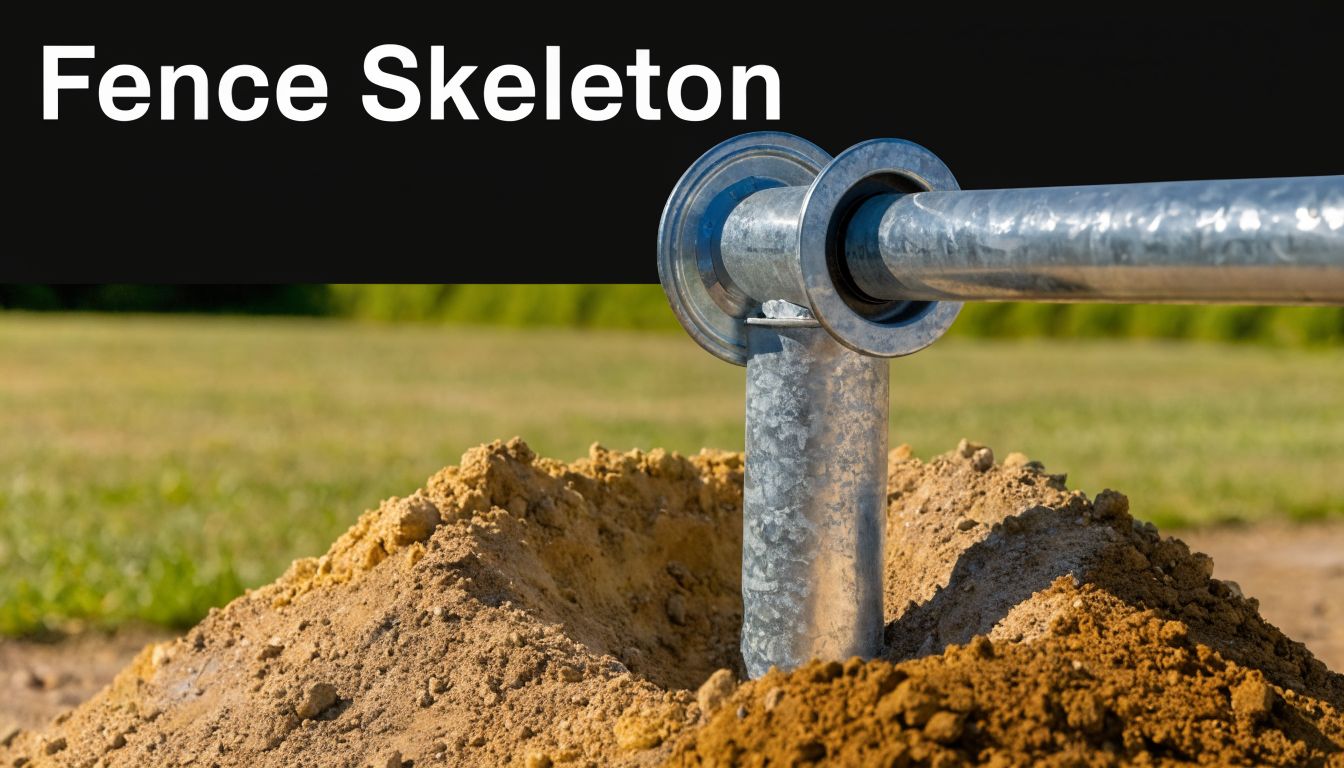
If you want one part of the fence to respect, it's the terminal post. That includes end posts, corner posts, and gate posts. These are the anchor points where the fabric gets stretched and where the load changes direction.
Line posts mostly keep the run standing and aligned. Terminal posts deal with pull. That's why they need the right fittings and bracing, especially once you move into heavier fabric. Commercial specifications commonly call for 9-gauge (3.4 mm) fabric, and thicker fabric transfers more wind and impact load into the terminals and tensioning hardware, as noted in the EPA chain link fencing specification document.
A fence with heavy fabric and weak terminal hardware often fails in a predictable way. The fabric itself may still be intact, but the post starts leaning, the bands loosen, or the end assembly loses tension.
Line posts and top rail keep the run straight
Line posts are the rhythm section of the fence. They don't usually take the highest stress, but they keep the run upright and support the top rail so the fabric stays in plane instead of billowing or bowing.
The top rail ties those line posts together. Without it, the fence feels loose. With it, the run acts like a connected structure instead of a row of separate uprights. The top rail also helps distribute movement so one section doesn't take all the abuse from wind, bumps, or daily use.
Here's the practical hierarchy:
- Terminal posts handle pull, corners, ends, and gate forces
- Line posts support the run and maintain alignment
- Top rail ties the run together and resists sagging
- Bracing stiffens the sections that take concentrated load
The tension bar is small but critical
The tension bar slides through the end of the chain link fabric and gives the bands something solid to clamp. Without it, the mesh is just a flexible sheet trying to hold against a round post.
Practical rule: Match the strength of the hardware to the strength of the fabric. Heavy fabric on light terminal hardware is asking one side of the system to do work the other side can't support.
That's why experienced installers don't buy the fabric first and figure out the rest later. They size the frame and the hardware as one system.
Connecting the Pieces with Essential Fence Fittings
The frame gives the fence its shape. The fittings make that frame usable. These are the pieces that look interchangeable to beginners but absolutely are not.
Tension bands and brace bands do different jobs
A lot of bad material lists come from mixing up tension bands and brace bands.
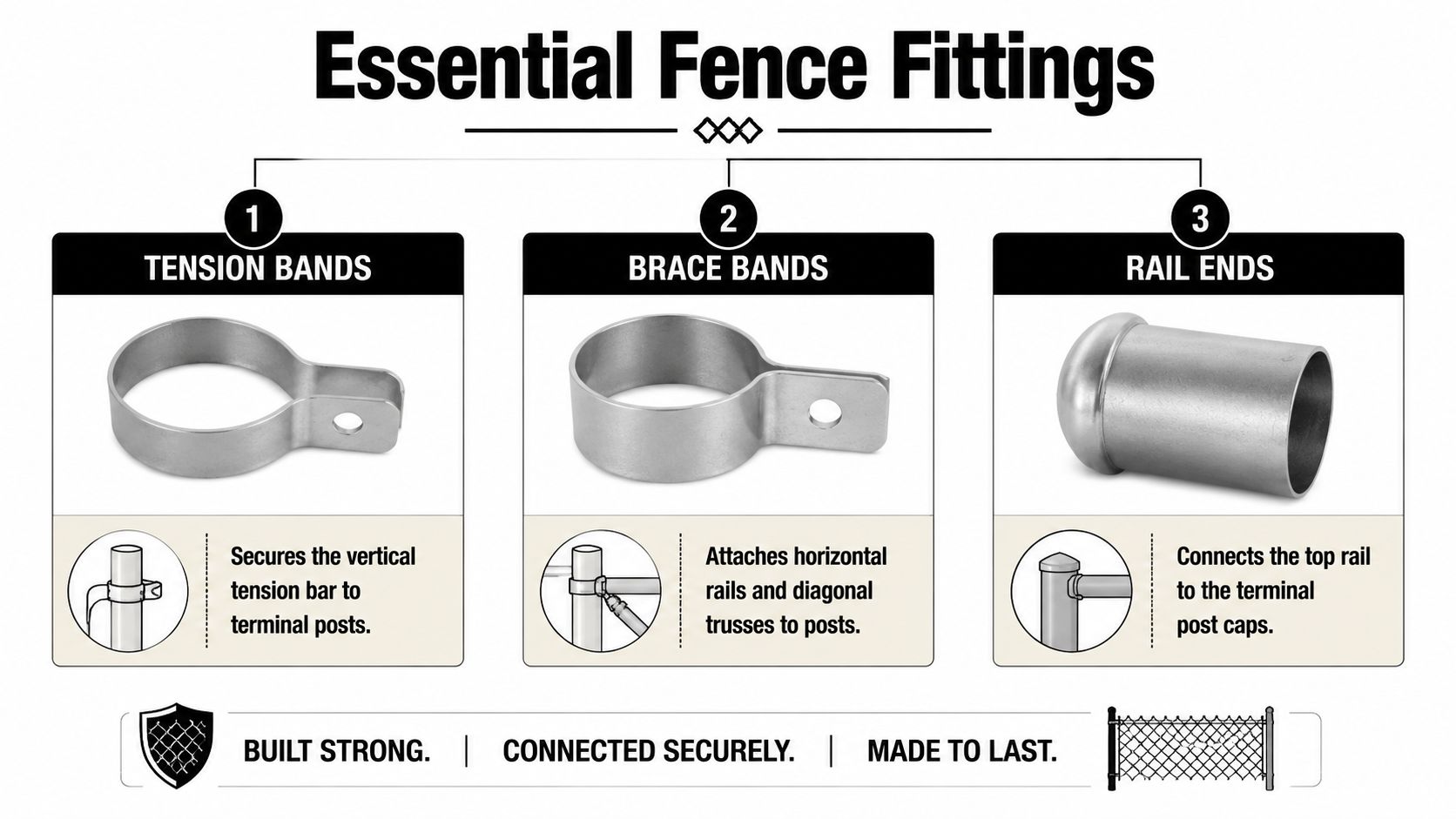
A tension band wraps around a terminal post and holds the tension bar that grips the edge of the fabric. Its job is fabric attachment and tension transfer. If you install the wrong size, it won't sit right on the post, and the whole edge connection feels sloppy.
A brace band is different. It's used to attach parts like a rail end or brace connection to a post. It supports structural tie-ins rather than holding the fabric itself.
That difference matters because the most common wire size used in both residential and commercial chain link is 9-gauge, while 11-gauge is more common for temporary fencing, according to Big Jerry's chain link fencing statistics. A permanent fence using common heavier fabric benefits from fittings sized and rated for that kind of everyday load.
Caps, loop caps, and rail ends
Post caps do more than finish the look.
A plain dome cap closes off the top of a post and helps keep water and debris out. A loop cap does that job and also creates a pass-through point for the top rail. On a straight run, loop caps are one of those parts you barely notice when they're right and immediately notice when they're wrong.
Rail ends are the cups or fittings that terminate the top rail neatly against a terminal post. They give the rail a proper seat and secure connection. Without them, installers get tempted to improvise, and improvised rail terminations rarely stay tidy for long.
A simple buying approach works well here:
| Part | Main job | What goes wrong when it's wrong |
|---|---|---|
| Tension band | Clamps tension bar to terminal post | Loose fabric edge |
| Brace band | Attaches rail end or brace fitting | Weak structural connection |
| Loop cap | Supports top rail on line post | Rail shifts or sits poorly |
| Dome cap | Seals post top | Water and debris enter post |
| Rail end | Terminates top rail at terminal | Rail connection feels makeshift |
The finishing parts also affect appearance
Even practical fences benefit from clean finishing details. Decorative post caps won't fix a bad install, but they do sharpen the final look of a gate line or exposed terminal. That's especially useful on front-yard runs, pool surrounds, or mixed-material projects where the fence has to look intentional, not purely utilitarian.
If you're buying fittings online, it helps to group them by task instead of by name. Buy your fabric-attachment parts together, your rail-connection parts together, and your finishing caps last.
Choosing Gate Hardware for Security and Function
The gate is where chain link fence hardware gets tested hardest. A fence run mostly sits there. A gate moves, twists, gets slammed, gets leaned on, and gets used when people are in a hurry. If the gate hardware is weak, the rest of the fence can be perfectly built and still feel cheap.
Hinges decide whether the gate stays level
A sagging gate usually starts with hinge selection, not with the latch. Light-duty hinges on a wide or frequently used gate wear faster, shift more, and let the frame settle out of square.
For most chain link gates, think in two layers. The post hinge anchors to the gate post. The frame hinge attaches to the gate frame. Together they carry weight and control swing. If either side is undersized, the gate starts dropping on the latch side.
Heavy-duty gate hardware earns its keep on wider openings, commercial entries, and any gate that gets used daily. It isn't flashy. It just saves callbacks.
A good rule from the field is simple:
- Narrow, light-use gate can often use standard hinge hardware
- Wider gate benefits from heavier hinges and better adjustment
- High-use access point needs hardware chosen for wear, not just initial fit
- Double gate needs both hinge strength and a reliable latch alignment plan
Latches affect both security and daily use
Latches get judged by security, but convenience matters too. A latch that feels awkward or sticky gets abused. People slam it, kick it, or leave it half-latched.
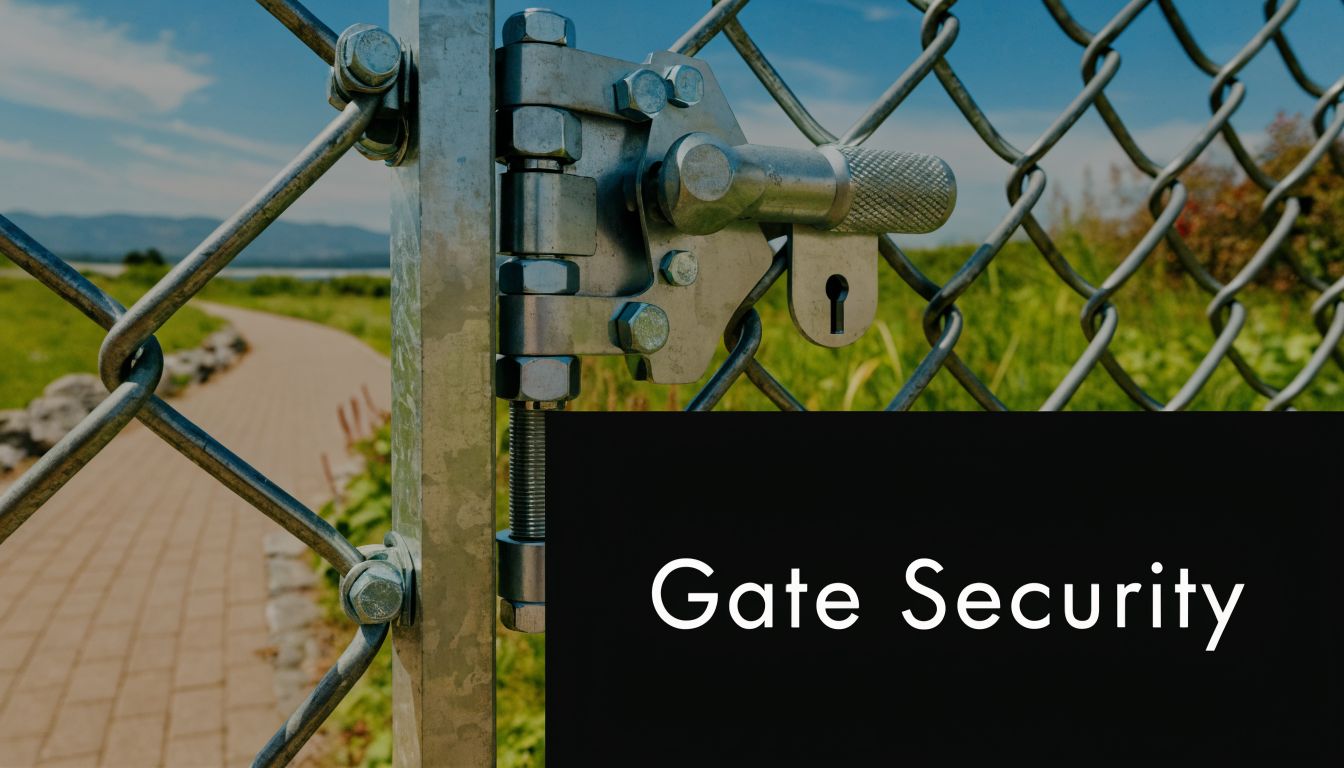
Common options include fork latches, butterfly latches, and more specialised gate latch assemblies. A padlockable fork latch is often the practical middle ground for utility and security. It's familiar, easy to operate, and gives you a straightforward lock point.
If you're troubleshooting another outdoor gate as well, the Tuff Shed door hardware repair guide is a useful reference for diagnosing misalignment, worn latch parts, and fit issues that often show up across different gate and door hardware setups.
For browsing actual gate parts, fittings, and related options in one place, the Xtreme eDeals fence and gate hardware collection includes categories relevant to hinges, latches, inserts, and finishing hardware.
Gate corners and inserts matter more than people think
Gate corners, sometimes called elbows, tie the gate frame together. If these are loose, thin, or poorly fitted, the frame can rack under repeated opening and closing. Once that happens, even a good latch starts missing its catch point.
This is a good spot to think beyond pure function. Decorative finials, gate inserts, and cleaner frame fittings can upgrade the look of a plain chain link gate without changing the whole fence style. That's useful when a job needs to stay practical but still look finished from the street.
Here's a quick visual walkthrough before you choose your setup:
A gate should close cleanly without being lifted, shoved, or dragged into position. If it needs force on day one, something is already wrong.
Selecting Materials Coatings and Preventing Corrosion
Two fences can use the same layout and still age very differently because of finish and fastener choice. Buyers use these options to either save money intelligently or create future maintenance.
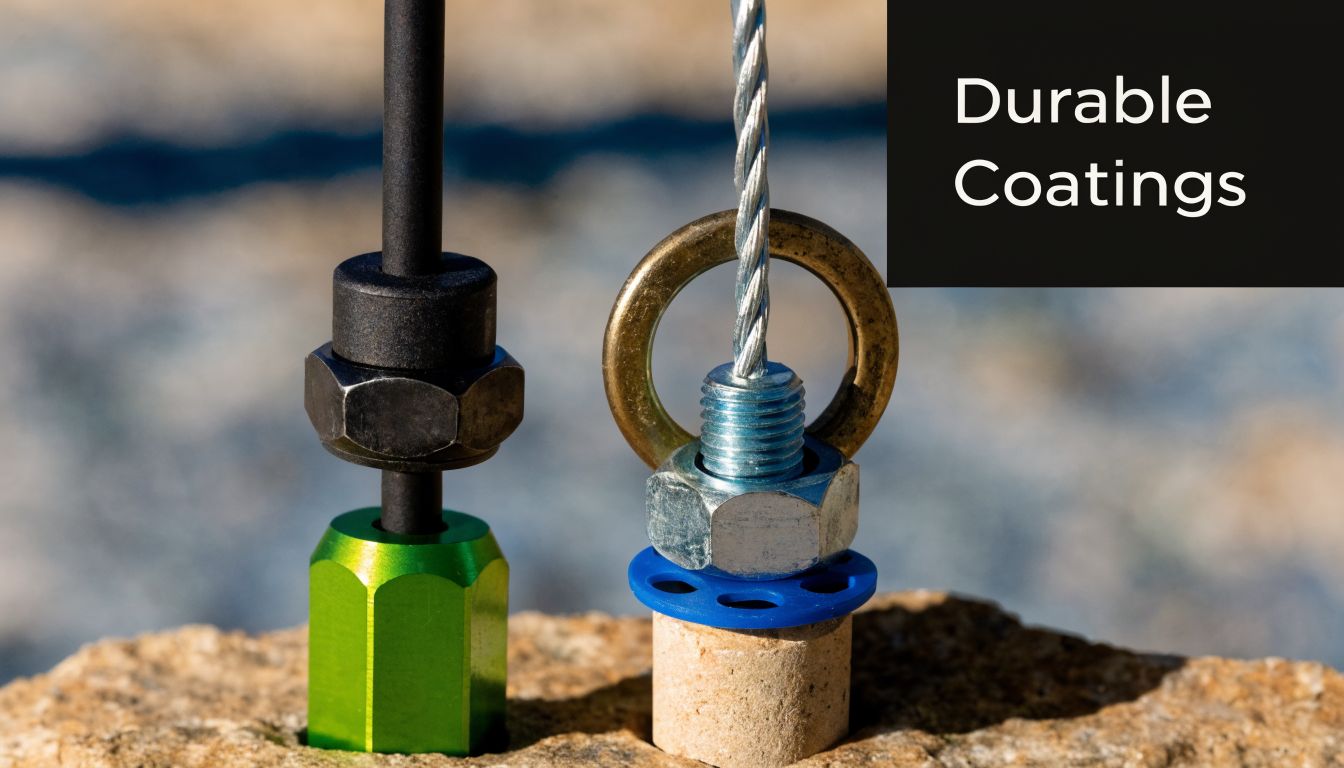
Galvanized, vinyl-coated, and powder-coated
Galvanized steel is the standard baseline for chain link systems because it resists corrosion and stays relatively low-maintenance. It's a sensible default for a lot of installations, especially when budget matters and exposure is moderate.
Vinyl-coated components add a layer that can improve appearance and help protect the metal underneath, especially when you're matching coated fabric or aiming for a black fence finish. The catch is that a nice outer coating doesn't excuse weak base hardware. If the fitting underneath is light-duty, the coating won't make it structurally better.
Powder-coated hardware is worth a look where appearance and exposure both matter. It can be a better fit for visible gates, accent hardware, and places where standard finishes tend to weather quickly.
A simple decision table helps:
| Site condition | Usually works | Usually worth upgrading |
|---|---|---|
| Inland residential | Standard galvanized | Better-coated gate hardware |
| High irrigation exposure | Galvanized with closer maintenance | Corrosion-resistant fasteners and hinges |
| Coastal property | Heavier corrosion protection | Powder-coated, stainless, or hot-dip galvanized hardware |
| Fire-prone area | Metal hardware | All-metal assemblies with code-aware choices |
Coastal jobs punish the small parts first
Homeowners often consider posts and fabric when they think about rust. In practice, the first ugly failures often show up on fasteners, hinges, tension bands, and latches.
For coastal areas, corrosion is a primary concern, and salt air accelerates rust on those smaller parts. In those environments, heavier-protection options such as powder-coated, stainless, or hot-dip galvanized components can extend service life and reduce maintenance, according to the Chain Link Fence Manufacturers Institute accessories guidance.
That's why a bargain hardware pack can turn into the expensive choice. Replacing a rusted hinge or seized latch on an installed gate is never as cheap as choosing better hardware up front.
Fire resistance is a separate buying question
In California's WUI areas, buyers should think about more than corrosion. All-metal hardware assemblies are ignition-resistant, which makes them relevant where defensible space and fire-hardened construction choices are part of local expectations. Hardware in those settings isn't just about opening and closing a gate. It may also need to align with fire-aware material choices.
Buy hardware for the site, not for the showroom. Inland dry lots, marine exposure, and fire-prone zones don't treat metal the same way.
If you want long service life, put your money into the parts that move and the parts that hold tension first.
Common Installation Mistakes and Sizing
Most fence failures don't come from exotic problems. They come from ordinary shortcuts. A post set too far apart. A band that almost fits. A gate connection held together with whatever bolt was on the truck.
Post spacing isn't a suggestion
If line posts are spaced too far apart, the fence run starts acting soft. The top rail has to span too much distance, and the fabric loses support between posts.
Federal Highway Administration guidance specifies line posts at a maximum of 10 feet centre-to-centre, and exceeding that distance can lead to top rail sag and gradual tension loss in the fabric, as shown in the FHWA chain link standard drawing.
That's one of those rules people try to bend to save a post or two. It usually costs more later.
Sizing mistakes compound fast
Hardware sizing errors rarely stay isolated. A band that's slightly wrong on the post diameter won't clamp evenly. A loose rail end lets movement build. A poorly matched cap can throw the rail line off just enough to create headaches down the run.
Watch for these common misses:
- Wrong post diameter fit means bands and caps won't seat properly
- Undersized carriage bolts can loosen at critical connections
- Improvised gate fasteners tend to wear or oval out the mounting points
- Mixed finish hardware often creates uneven ageing and a patched-together look
Commercial specification documents also show gate and terminal connections commonly using 5/16 in. carriage bolts through straps, mesh, and terminal posts rather than relying on tie-wire for those higher-stress points. That's a practical reminder that gate vibration and repeated use need mechanical fastening, not guesswork.
Tensioning mistakes show up later
A fence can look fine on install day and still be wrong. Poor tensioning often reveals itself after the first stretch of weather, use, or impact. The fabric starts looking tired. The run gets a belly in it. The terminal side starts carrying load unevenly.
If you're reviewing the overall sequence before installation, this chain link fence installation how-to guide is a handy companion for checking the order of operations and avoiding preventable fit problems.
If a fitting needs to be forced because the size is close enough, it's the wrong fitting.
Professional-looking chain link work comes from boring accuracy. Correct spacing. Correct sizes. Correct fasteners.
Your Chain Link Hardware Buying Checklist
Before you buy anything, stop thinking in terms of “a fence kit” and think in terms of systems. You're buying a frame system, a connection system, and if needed, a gate system. That approach keeps you from ending up with fabric and posts but missing the small hardware that finishes the job.
Questions to answer before you shop
Write these down first:
- What post diameters are you using for line posts, terminal posts, and gate posts
- How many terminal points are in the layout, including ends, corners, and gates
- Are you building a straight run, a cornered layout, or a gated enclosure
- Will the site face coastal air, constant irrigation, or ordinary inland exposure
- Is the property in a WUI area where all-metal hardware assemblies may be a smarter code-aware choice, given California's emphasis on ignition resistance in fire-prone zones as discussed in the gate corner and WUI hardware guidance
- Do you want plain utility hardware or a more finished look with decorative caps or upgraded gate details
What to put on your purchase list
Break your order into categories so you don't miss anything.
Framework hardware
- Terminal post fittings
- Line post caps or loop caps
- Rail ends
- Brace-related fittings
- Tension bars
Fabric connection hardware
- Tension bands sized to the terminal posts
- Brace bands sized to the posts they wrap
- Carriage bolts, nuts, and washers that match the intended fittings
- Ties or other approved connection pieces for the run
Gate hardware
- Post and frame hinges
- Latch assembly
- Gate corners or elbows
- Drop hardware if required on paired gates
- Locking accessories where security matters
Final buying filter
If you're staring at two similar products, use this order of importance:
- Correct size
- Correct duty level
- Correct corrosion resistance
- Appearance
Appearance matters last because a decorative cap that fits right is useful, but a decorative cap that doesn't fit is just another problem in a box. For project planning, browsing a dedicated set of chain link accessories can make it easier to sort by the hardware families you specifically need instead of guessing from mixed search results.
A good shopping list should leave you with no “maybe this will work” parts. Chain link fence hardware is forgiving in some places, but not in the spots that carry tension, movement, or exposure.
If you're ready to price out fittings, fasteners, caps, gate parts, or finishing details for your next fence build, XTREME EDEALS INC. offers chain link accessories, fence and gate hardware, post caps, bolts, and related outdoor hardware in one catalogue, which makes it easier to build a complete order without piecing the job together across multiple suppliers.