
A self closing gate usually becomes important the day after someone forgets to shut one. It might be the side gate that swings open toward the street, the pool gate that doesn’t quite latch unless you give it an extra push, or the service gate behind a small commercial building that staff assume someone else will close. The pattern is always the same. The weak point isn’t the gate. It’s relying on memory.
That’s why I treat self-closing hardware as safety equipment first and convenience hardware second. A gate that returns to the closed position on its own removes one of the most common failure points in fencing and access control. For homeowners, that means fewer worries about children, pets, and unwanted access. For contractors and property managers, it means fewer call-backs and fewer arguments about whether the gate was “left open by accident”.
Why Your Property Needs a Self Closing Gate
The most common job starts with a complaint that sounds small. “The gate keeps getting left open.” Then you look closer and realise the risk is bigger than the annoyance.
At a house, that risk is often a pet slipping out, a child wandering into a pool area, or a side gate blowing open after a delivery. On a rental property, it’s tenants using a shared path and assuming the next person will deal with the gate. On a commercial site, it’s staff moving equipment through an access point and leaving a protected area unsecured.
A self closing gate fixes a human habit problem. It doesn’t need reminders, signage, or perfect behaviour. It closes because the hardware is designed to close.
For some owners, the next step after reliable closing is controlled entry. If you’re thinking beyond a simple latch and want to upgrade your property's gate access, that kind of system works best when the gate itself already returns to a dependable closed position.
A lot of DIY jobs fail because the installer treats the closer as an add-on instead of part of the gate system. The hinge, latch, post stiffness, swing clearance, and gate weight all have to work together. If you’re starting with the hinge side of the job, this range of self-closing gate hinges is the kind of category you review first, before drilling anything into a post.
A gate that only closes when conditions are perfect isn’t self-closing in any practical sense.
Where it matters most
- Pool barriers: This is the critical application. If the gate doesn’t shut and latch consistently, the barrier has failed.
- Street-facing side gates: These get opened constantly and forgotten constantly.
- Pet containment: Dogs learn very quickly which gate doesn’t pull itself shut.
- Commercial access points: Repeated use exposes weak springs, sagging frames, and poor latch alignment fast.
Understanding Self Closing Gate Mechanisms
A gate can have a latch, a lock, and a heavy frame and still fail at the one job that matters here. It has to return to closed every time, from a full open or a casual push, in heat, wind, and daily use. The mechanism is what decides whether that happens consistently.
In California, mechanism choice also has to match site conditions. A closer that behaves well inland can corrode fast near the coast. A gate hung on posts set in shrinking, drought-affected soil can go out of alignment enough to defeat a marginal closer. I treat the mechanism, hinge material, post stiffness, and latch alignment as one system because field conditions decide how forgiving the installation needs to be.
Spring-loaded systems
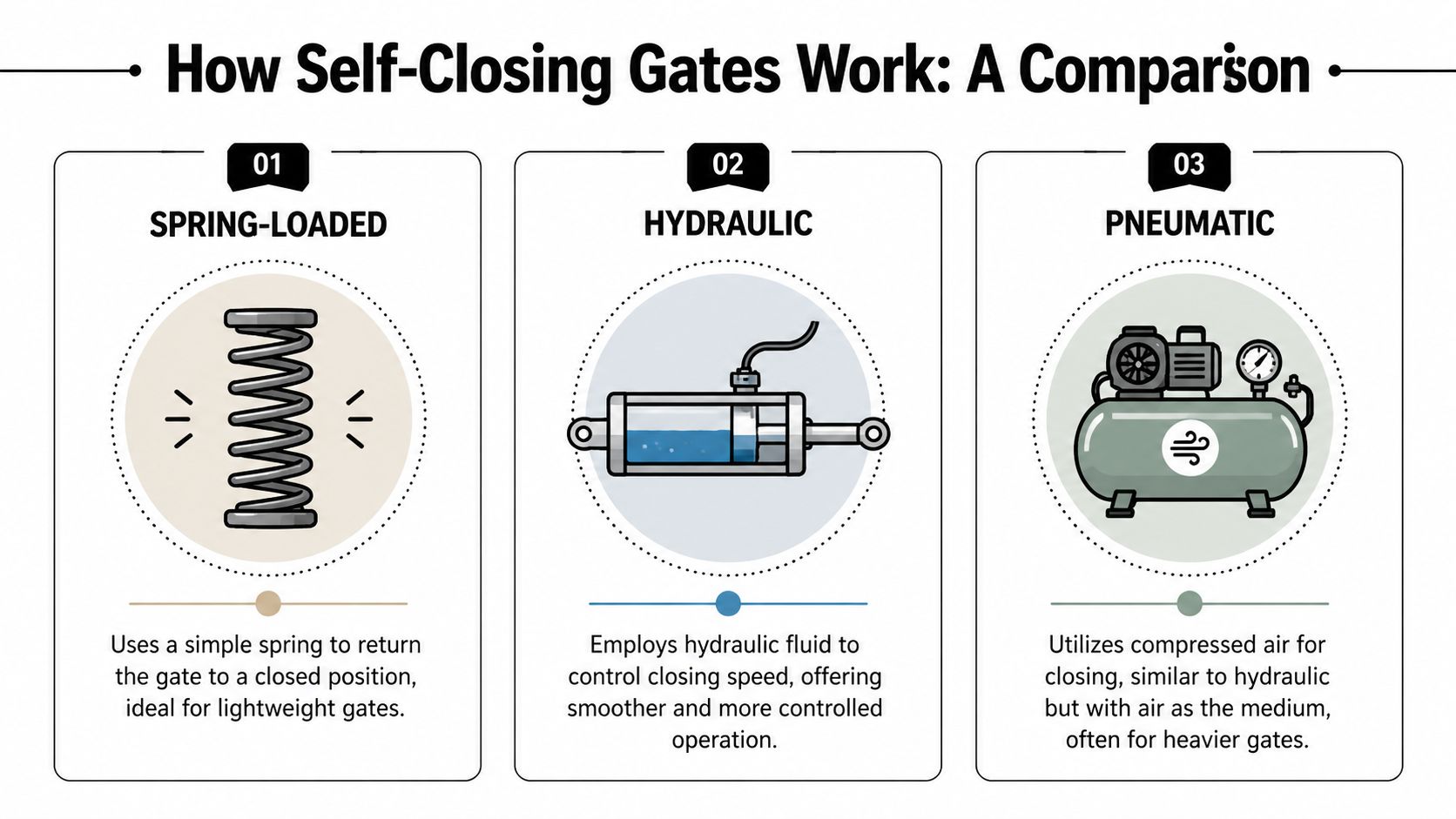
Spring closers store energy as the gate opens, then release that energy to pull it shut. They are common on light and medium residential gates because they are compact, affordable, and easy to fit on wood, vinyl, and many metal frames.
They also have a narrow margin for error.
If the gate drags, the hinges bind, or the latch needs a very exact strike, a spring-only setup often starts missing the close. That is especially common on side-yard gates where the post has a little movement or the slab is not perfectly level. On pool and pedestrian gates, I only trust spring systems when the frame is square, the posts are stiff, and the latch engages cleanly without needing a slam.
Hydraulic and pneumatic closers
Hydraulic and pneumatic closers add control to the swing instead of relying on stored spring tension alone. The gate closes with more restraint, which helps on wider gates, heavier infill, and locations with frequent use.
Hydraulic units are usually the better choice when adjustment matters. They give more control over closing speed and final pull-in, which can make the difference between a gate that taps the strike and one that latches every time. Pneumatic versions can work well too, but product options are often more limited depending on gate style and mounting space.
For commercial entries, service yards, and multifamily properties, a controlled closer usually ages better than a basic spring hinge setup. If your project also ties into access control, this guide for facility security gives useful context on how the gate hardware fits into the wider entry system.
Gravity hinges and angled closing
Gravity hinges use geometry to return the gate to closed. The hinge line or gate path is set so the leaf wants to swing back on its own. On the right opening, they are simple and reliable.
On the wrong opening, they become fussy fast.
I do not use gravity as a fix for poor layout or weak posts. These systems depend on accurate set-out, stable supports, and enough clearance through the swing. If a post settles or the opening shifts, the gate can lose that self-return action. In drought-prone parts of California, soil movement around lightly founded posts is one reason I avoid gravity setups unless the structure is very solid.
Practical comparison
| Mechanism | Best fit | Main advantage | Common limitation |
|---|---|---|---|
| Spring-loaded | Light to medium residential gates | Compact, simple hardware | Less forgiving of sag, drag, and latch misalignment |
| Hydraulic | Heavy, wide, or high-use gates | Adjustable, controlled closing | Higher cost and more mounting detail |
| Pneumatic | Mid to heavy gates where a controlled return is needed | Smooth closing action | Fewer hardware choices in some gate formats |
| Gravity-based | Openings built for the required hinge geometry | Minimal mechanical complexity | Sensitive to settlement and installation accuracy |
Why hinge material matters
The closing method is only half the job. The hinge body, pins, fasteners, and internal components determine how well that closer survives weather.
That matters a lot in California. Near the coast, salt air will punish low-grade steel hardware. On exterior residential work, I prefer corrosion-resistant polymer or marine-grade components where the product is rated for the application. D&D Technologies explains how polymer self-closing hinge designs improved resistance to rust, binding, and UV exposure in outdoor use in its discussion of self-closing gate hinges.
For inland sites, heat and dust are the usual enemies. For coastal sites, corrosion is first. Either way, cheap hinges rarely stay adjustable for long.
Practical rule: Choose the mechanism after you confirm gate weight, width, post stability, site exposure, and how precisely the latch must engage. That order prevents most callback problems.
Navigating Safety Codes and Legal Requirements
When a self closing gate protects a pool, raised platform, or restricted area, code isn’t a suggestion. It determines hardware choice, hinge count, latch position, and sometimes the whole gate layout. The mistake I see most often is assuming any spring hinge makes a gate “code compliant”. It doesn’t.
Pool gate requirements in California
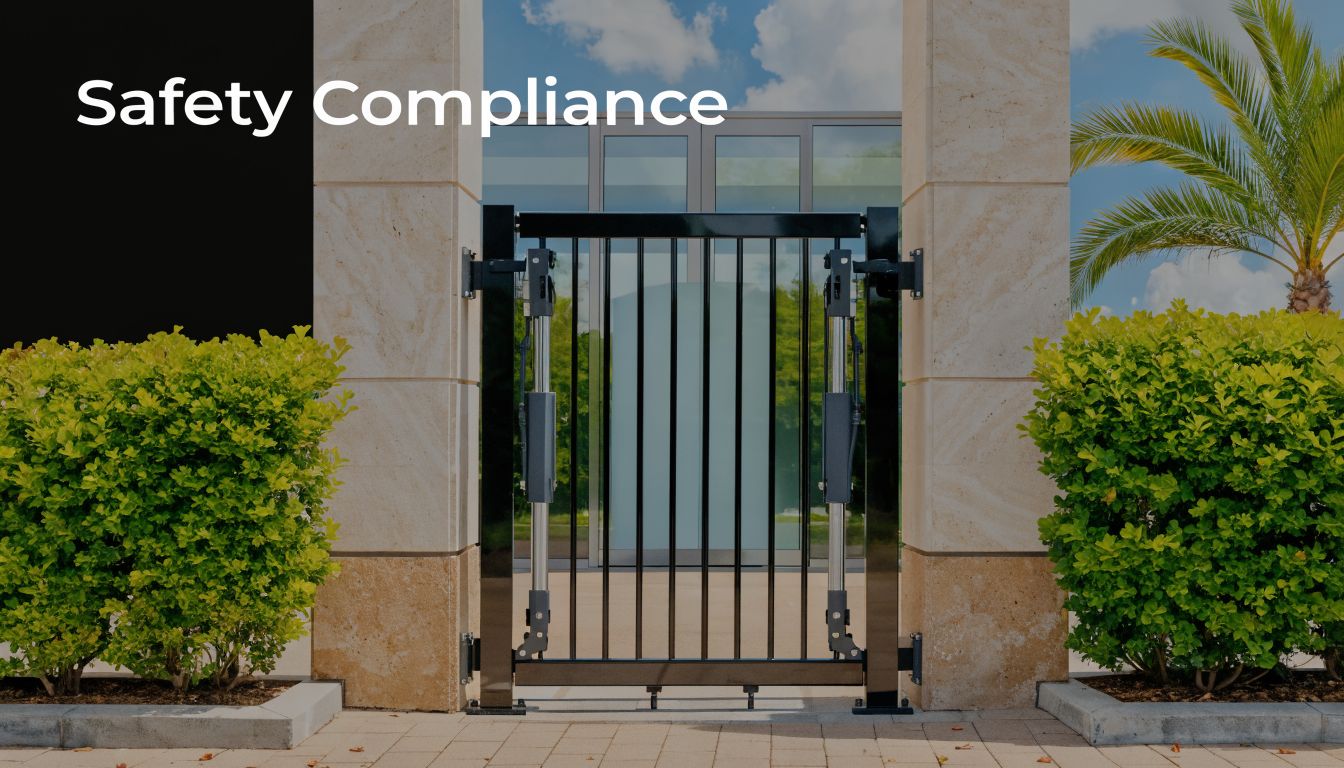
For residential and commercial pool barriers in California, the baseline requirement is that the gate must be self-closing and self-latching. The verified guidance here is specific. The 2022 California Building Code, Chapter 10, requires self-closing and self-latching gates for pools, with specific latch heights and closure forces, and SB 1842, effective in 2025, mandates dual self-closing hinges tested to ASTM F1908. The same source notes that drowning risks are linked to gate failures in 65% of cases, according to Safeguard Industries’ summary of self-closing safety gate requirements.
That one point changes the buying decision immediately. A single light-duty closer on an older pool gate isn’t the same thing as a compliant assembly. If you’re building or retrofitting a pool barrier, confirm the hinge configuration and latch arrangement before you order hardware.
What code language means in plain English
For most property owners, “self-closing and self-latching” means four practical things:
- The gate must return on its own: You should be able to open it and release it without manually pushing it shut.
- The latch must catch consistently: Closing isn’t enough if the latch misses under normal use.
- The hardware setup must suit the risk level: Pool barriers need more than a casual backyard standard.
- The gate frame and posts must support the hardware: A compliant hinge on a flexible post still gives you a non-compliant result.
If the latch only catches when someone swings the gate hard, the install isn’t finished.
Industrial and elevated platform applications
California also has requirements for safety gates in industrial and construction settings. Verified data states that in California, Cal/OSHA Title 8 Section 3209 mandates guardrails and gates on platforms over 30 inches high, and those gates must use self-closing mechanisms that return to a fully closed position on release, as described by Industrial Platforms’ product and compliance page.
This matters for roof access points, mezzanines, stair openings, and service platforms. These aren’t decorative gates. They are part of a fall-protection strategy. In those settings, appearance matters far less than repeatable closing action, secure mounting, and hardware that holds up under daily use.
For property managers juggling these duties across multiple buildings, this resource on essential facility management safety is useful because gate compliance usually sits inside a larger inspection and maintenance workflow.
The contractor’s compliance checklist
I keep the field version simple:
- Identify the gate’s purpose first. Pool barrier, side yard, commercial access, roof platform, and tenant separation gates don’t all follow the same rules.
- Read the local code trigger. In California, pool barriers and raised work areas carry stricter obligations.
- Match the hardware to the application. Heavy-duty spring hinges, polymer hinges, hydraulic closers, and latches are not interchangeable in every context.
- Test the gate after installation. Open from different angles. Let it close on its own. Confirm the latch catches without assistance.
- Re-check after a short use period. New gates can settle slightly. Tension and alignment may need a final adjustment.
A code-compliant self closing gate isn’t just one that has the right parts on paper. It’s one that performs the required function every time the user lets go.
Choosing the Right Gate Type for Your Property
A side-yard gate in Sacramento and a pool gate in San Diego might look similar on a materials list. They do not behave the same once weather, code, and daily use start working on them. In California, gate choice is tied to more than appearance. Coastal salt air eats the wrong hardware, dry soil can shift posts after a long summer, and pool barrier rules leave very little room for a gate that only closes properly on a good day.
Residential side and garden gates
For a standard pedestrian gate, start with how the gate and posts will age at that site. Timber gates in inland California often dry out, shrink, and twist through the hot season. In coastal areas, steel frames and fasteners need better corrosion resistance than many off-the-shelf kits provide. Vinyl and composite gates resist rot, but some flex enough to create latch alignment problems if the frame is not stiff.
That is why I separate residential gates into two groups. Light-use convenience gates and security or code-sensitive gates. A simple garden gate can tolerate a narrower adjustment window. A side-yard gate that controls access to a pool path, alley, or multifamily service area needs more predictable closing action.
Material matters, but post stability matters just as much. Drought conditions across California can dry and loosen soil around poorly set posts. A gate that worked fine in spring can start dragging or missing the latch by late summer. If you are comparing parts, it helps to review self-closing gate hinges and latch hardware with the gate weight, frame material, and post type in mind, not just the opening width.
Pool enclosure gates
Pool gates get selected backwards too often. Someone picks a decorative panel first, then tries to force self-closing hardware onto a gate that is too heavy, too wide, or too flexible. That is where callbacks happen.
For California pool work, choose the gate as part of the barrier system. CBC requirements and state pool safety rules are stricter than what many generic gate guides assume, and SB 1842 pushed more attention onto residential drowning prevention. The practical standard on site is simple. The gate needs to return to the closed position and latch consistently after real-world use, not just during the first test.
Keep the gate leaf reasonably light, keep the frame rigid, and avoid designs that create extra wind load if the property sits in an exposed canyon or near the coast. I also avoid hardware finishes that corrode quickly in marine air. A rusty spring hinge loses adjustment range fast.
A good pool gate is predictable. Every opening angle should lead back to the latch without anyone helping it.
Commercial and industrial gates
Commercial properties need a different approach because abuse is part of the job. Tenants push carts through them, delivery drivers let them swing hard, and maintenance crews prop them open if the setup fights them. Hardware that works on a quiet side yard often wears out early in a service corridor or loading area.
Use gate types that match traffic and liability. For a pedestrian access gate at an apartment complex, aluminium or welded steel usually gives better long-term alignment than a wide timber leaf. For restaurant yards, trash enclosures, and utility areas, I prefer simpler designs with fewer decorative pieces that can loosen or trap debris. If the site is within the coastal corrosion zone, specify stainless or properly rated coated components from the start. Replacing failed hinges a year later costs more than choosing the right hardware on day one.
Commercial gates also need enough clearance and frame strength to keep closing action consistent after frequent use. A closer cannot compensate for a sagging post or a twisted frame forever.
A quick comparison
| Property type | What matters most | Common mistake | Better choice |
|---|---|---|---|
| Residential | Fit with the site, stable posts, manageable maintenance | Choosing a gate style before checking weight, flex, and soil conditions | Match the gate material and frame stiffness to the climate and post construction |
| Pool | Consistent self-closing and self-latching under California code requirements | Using a decorative gate that is too heavy or too flexible for reliable closure | Build the gate around barrier performance first, then appearance |
| Commercial | Durability, corrosion resistance, and repeatable function under frequent use | Installing light-duty residential hardware on high-cycle access points | Use commercial-grade gate frames and hardware suited to traffic and environment |
A Practical Guide to Selecting Your Hardware
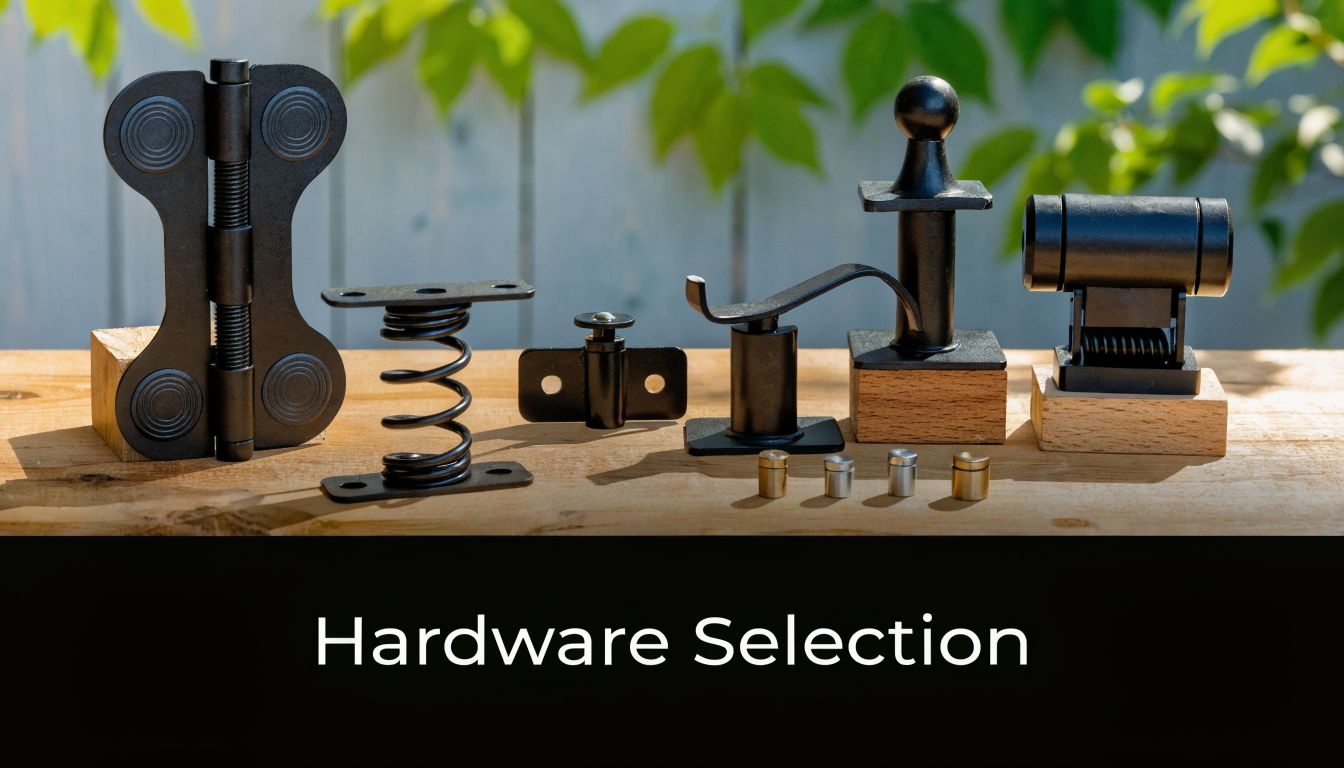
Choosing hardware gets easier when you stop shopping by category name and start shopping by gate conditions. “Self-closing hinge” doesn’t tell you enough. You need to know what the gate is made from, how much it weighs, how rigid the posts are, what the latch requires, and what the weather does at that site.
Start with the gate, not the hinge
A light aluminium pedestrian gate and a thick timber gate may look similar in opening width, but they load the hinges very differently. Wood adds weight fast. Wide gates exert more force on the hinge side. Decorative infill can change wind resistance. All of that affects whether a spring hinge can do the job cleanly or whether you need a more controlled closer.
Use this as a selection worksheet:
- Gate material: Wood, steel, aluminium, vinyl, and composite each place different demands on fasteners and hinge mounting.
- Gate width and weight: Wider and heavier gates need more control and less guesswork.
- Post construction: A rigid steel or properly set wood post gives the closer a fair chance. A weak post will mimic hinge failure.
- Use frequency: A side yard gate used a few times a day is different from a multi-tenant or commercial gate.
- Exposure: Inland dust, coastal air, and direct sun all influence hardware choice.
If you’re comparing complete categories, this fence and gate hardware collection is the right kind of place to cross-check hinges, latches, fasteners, and related parts together rather than buying them one by one from mismatched sources.
Match the hardware finish to the environment
California creates two common headaches for gate hardware. Coastal corrosion and inland dryness. Near the coast, finishes and corrosion resistance matter more than many owners expect. Inland, dust and heat expose weak closing systems and neglected hinges.
For that reason, I look at finish and material as part of performance, not just appearance. Galvanised steel, powder-coated components, and polymer hinge bodies all have their place. The wrong finish can shorten service life even when the gate itself is well built.
Pick the latch and hinge as a pair
A self closing gate isn’t successful just because the hinge returns the leaf. The latch has to accept the gate with the amount of force and alignment the closer produces. If the latch demands a perfect strike every time, the closer tension often gets over-tightened to compensate. That usually leads to slamming, hardware wear, or user complaints.
Choose a latch that’s tolerant of normal movement, then tune the hinge to close positively without aggression.
The video below is useful for seeing how self-closing hardware comes together in a real product context.
Product-level decisions that actually matter
When I’m buying parts, these are the details I care about:
- Adjustability: Can tension be increased or reduced after the gate settles?
- Mounting style: Face-mount and side-mount setups don’t behave exactly the same on every frame.
- Fastener compatibility: Wood screws, machine bolts, anchors, and through-bolts each suit different substrates.
- Maintenance profile: Polymer hinges reduce ongoing lubrication needs. Some metal systems need more attention.
- Accessory fit: Post caps, inserts, balusters, and decorative framing shouldn’t interfere with gate swing or closer placement.
Nuvo Iron and Decorex Hardware are the sort of brands many contractors recognise in this category because they cover practical fence and gate components rather than novelty accessories. In the same lane, XTREME EDEALS INC. lists a 13" Self-Closing Gate Spring in galvanised steel with black powder coating, supplied with screws and an installation guide. That type of product can suit simpler gate setups where a spring closer is the appropriate approach, but it still has to be matched to the gate’s weight, alignment, and latch behaviour.
What not to do
| Bad buying habit | Why it causes trouble |
|---|---|
| Buying by appearance alone | Decorative hardware often lacks the adjustment or durability the gate needs |
| Reusing an old latch with new hinges | The hinge may improve closing while the old latch still prevents reliable securing |
| Assuming one hinge type suits every material | Wood, vinyl, and metal frames move and load differently |
| Ignoring the post | Post flex can make good hardware look defective |
High-Level Installation and Adjustment Checklist
Most self-closing gate problems are installation problems wearing a hardware disguise. The closer gets blamed, but the issue is usually a post that isn’t plumb, a gate that’s already sagging, or a latch that was mounted before the swing path was tested.
Before you mount anything
Check the post first. If the hinge post moves, twists, or leans, stop there and fix it. No self-closing system will perform properly on a weak support.
Then inspect the gate leaf. It should be square, reasonably true, and free from drag at the bottom or latch side. A gate that rubs only gets worse once closing force is added.
The field checklist
- Confirm the posts are solid and plumb. This is the foundation of the whole install.
- Dry-fit the gate and hinges. Verify clearances before final fastening.
- Mount the hinges at the correct spacing. Follow the hardware pattern instead of improvising based on appearance.
- Install the latch after swing testing. Don’t lock the latch position in too early.
- Adjust closing tension gradually. Add only enough force to close and latch consistently.
- Test from several opening distances. A gate that latches from fully open but not from a partial opening still needs work.
- Re-check fasteners and alignment after use. Gates often settle a little after initial operation.
If you need a straightforward reference product while planning hinge spacing and adjustment expectations, a typical self-closing gate hinge option helps anchor those decisions around a real hardware format.
Tension and latching
Installers often over-tighten a self closing hinge because they’re trying to overcome a bad latch setup. That’s backwards. Fix alignment first, then tension second.
The goal is controlled closure with enough energy to engage the latch. Not a hard slam. If users start guiding the gate by hand because it feels aggressive, they’ll eventually interfere with the self-closing action and create a new problem.
Set the gate so it closes reliably on its own, then leave a small reserve of force for weather and normal wear. Don’t use spring tension to hide framing errors.
Common install failures
- Sag at the latch side: Usually a frame or post issue, not a tension issue.
- Gate closes but won’t latch: Often caused by poor strike alignment or rebound.
- Gate sticks near closed position: Check clearance, hinge mounting, and latch interference.
- Uneven movement through the swing: Look for twisted framing or hardware mounted out of plane.
Maintenance and Troubleshooting Common Issues
A self closing gate isn’t a fit-and-forget assembly. Good hardware reduces maintenance, but every outdoor gate still needs inspection. Most problems show up gradually. Slower closing, inconsistent latching, hinge noise, a slight drop at the latch end. If you catch those early, the fix is usually small.
What to check regularly
Walk the gate through its full swing and watch what changes near the end of travel. That’s where most faults reveal themselves. If the gate slows down, stalls, or touches the latch awkwardly, inspect hinge fasteners, post movement, and latch alignment before changing the closer tension.
For coastal properties, watch for finish breakdown and corrosion around fasteners and hinge points. For inland sites, pay more attention to dust build-up, dryness, and friction.
Dry climate problems in California
Verified data highlights a problem many generic guides ignore. In dry climates affected by California drought conditions, lack of moisture and increased dust can cause a 28% hinge seizure rate, and hinges can lose up to 35% of their torque in low humidity, leading to gates sticking open. The same verified guidance notes that this can be addressed with CA VOC-compliant lubricants, based on the provided YouTube reference on self-closing gate maintenance in dry conditions.
That matches what contractors see in hot, dusty conditions. A gate that worked in spring can become sluggish by peak summer if the hinge isn’t suited to the environment or never gets serviced.
Troubleshooting by symptom
| Symptom | Likely cause | First fix |
|---|---|---|
| Gate sticks open | Dust, reduced hinge torque, friction | Clean hinge area and use an appropriate compliant lubricant |
| Gate closes slowly | Tension loss or drag | Inspect for rubbing before increasing tension |
| Gate slams | Over-adjusted spring or poor latch setup | Reduce tension and review latch alignment |
| Gate misses latch | Sag, rebound, or strike misalignment | Correct alignment before changing hardware |
Hardware rarely “fails all at once”. Most gates warn you with small changes in closing speed and latch consistency.
Frequently Asked Questions About Self Closing Gates
Can I convert my existing gate to a self closing gate
Often, yes. The key question is whether the existing gate and posts are sound enough to support the hardware. If the gate already sags, twists, or rubs, adding a self-closing hinge won’t solve the underlying problem.
Are self-closing hinges suitable for vinyl or composite gates
They can be, but the gate frame and manufacturer’s reinforcement details matter. Some vinyl and composite gates need specific mounting methods or internal support to prevent flex and hardware pull-through.
How do I choose hardware for a heavy or wide gate
Start with the gate’s actual construction and how rigid the post is. Heavy and wide gates usually need more controlled closing action and less guesswork. Don’t select by appearance alone, and don’t assume a light spring hinge will compensate for weight or rotational force.
Do self-closing gates need a special latch
Not always special, but the latch must work with the way the gate closes. Some latches are far more tolerant of slight movement and minor seasonal changes than others. Hinge and latch should be chosen together.
Why does my gate close in the morning but not later in the day
That usually points to environmental movement or friction. Heat, dust, moisture changes, and minor post movement all affect closing performance. If the gate only works during part of the day, inspect alignment before increasing tension.
If you’re sourcing parts for a new self closing gate or a retrofit, XTREME EDEALS INC. carries fence and deck hardware that fits this kind of work, including hinges, gate hardware, fasteners, post accessories, and related components. It’s a practical place to compare the parts you need for the whole assembly instead of treating the closer as a stand-alone fix.