

Gate Latch Spring Loaded: Your Complete 2026 Guide
A gate that drifts open is one of those problems people put up with for far too long. You nudge it shut on the way out, hear it tap the post, and assume that’s enough. Then a gust catches it, the latch misses, and suddenly the dog is nosing through the gap or the side yard is wide open again.
That’s where a gate latch spring loaded setup earns its keep. It takes the job your hand keeps forgetting to finish and does it automatically. When the gate closes, the latch snaps into place on its own. No second check. No balancing act with groceries, tools, or a lead in one hand.
The Simple Fix for a Gate That Won't Stay Shut
Most bad gates don’t start as disasters. They start as small annoyances. The gate needs an extra shove. The latch only catches if you lift the frame a little. Someone leaves it resting against the post instead of closed. Over time, that turns into a security problem.
A spring-loaded latch fixes that in the simplest way possible. It creates automatic latching. Close the gate, and the mechanism returns to its locked position without needing a separate step from the user. For side gates, garden gates, paddock entries, and service yards, that’s often the difference between a gate that looks closed and one that is closed.

I’ve seen this most often on timber garden gates between masonry pillars or timber posts. The hinges are still serviceable, the gate isn’t rotten, but the old latch has lost any forgiveness. A spring-loaded replacement gives you back a clean close and a clear click.
Where it makes the biggest difference
- Homes with pets: A gate that only “usually” catches isn’t good enough.
- Family gardens: Kids don’t always stop to check whether a latch fully engaged.
- Rental and managed properties: Hardware needs to work consistently for people who didn’t install it.
- Utility side yards: Bin access, meter access, and trades traffic put a lot of wear on basic latches.
Practical rule: If the gate must stay shut even when nobody remembers to check it, a spring-loaded latch makes more sense than a manual catch.
Security hardware also works better when it’s part of a broader approach. If you’re thinking beyond the latch and looking at perimeter awareness as well, this Wisenet Security Ltd guide is a useful read for understanding how gate hardware and property security fit together.
How a Spring Loaded Latch Works
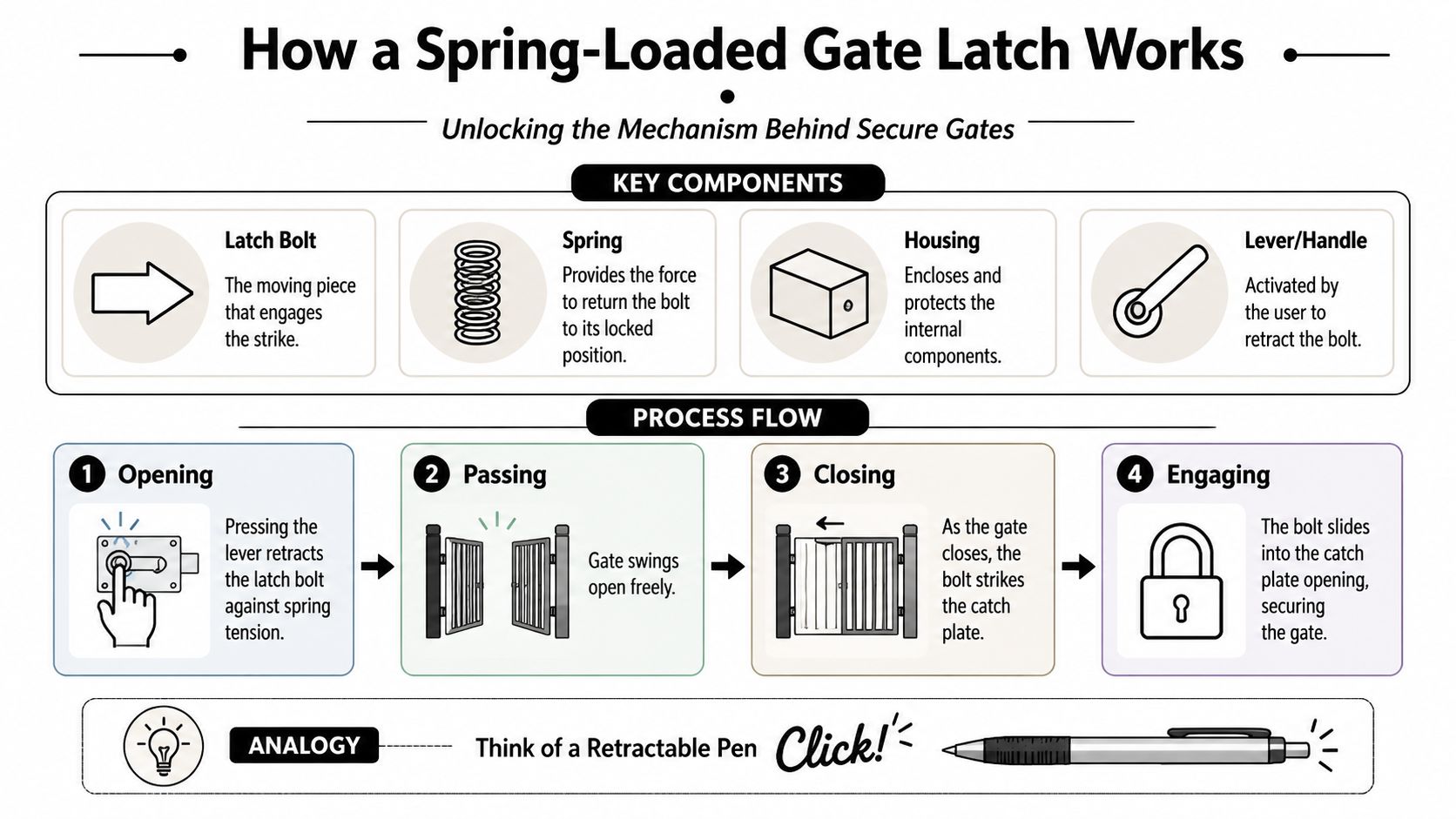
The mechanism is simple. Think of a retractable pen. Press it, something moves against spring pressure, then the spring pushes it back into position. A gate latch spring loaded works on the same basic principle, just with heavier hardware and outdoor duty.
The latch has a moving bolt, a spring, a housing, and some form of release handle or lever. When the gate closes, the bolt meets the strike or catch. The contact forces the bolt back for a moment. As soon as the opening lines up, the spring pushes the bolt home.
The motion in plain terms
- You open the gate by lifting, pressing, or pulling the release.
- The bolt retracts because your hand overcomes the spring tension.
- The gate swings free until you bring it back to the post.
- The bolt hits the strike and slides back briefly.
- The spring drives it forward into the catch opening, locking the gate.
That last step matters. The spring isn’t there for convenience alone. It gives the latch enough return force to re-engage after contact.
Why some latches feel better than others
A good latch has a positive action. It doesn’t scrape, drag, or need a slam. If it’s built and aligned properly, you should feel a clean mechanical engagement.
Poor-quality or badly fitted hardware usually fails in one of three ways:
- Weak return action: The bolt doesn’t drive home properly.
- Rough travel: Dirt, corrosion, or poor housing fit slows movement.
- Bad strike alignment: The latch works, but the gate never presents the bolt to the catch in the right place.
The spring provides the force. Alignment decides whether that force can do its job.
That’s why people sometimes blame the latch when the fault is instead found in the gate frame, post, or hinge line. The latch mechanism can only compensate so much. If the gate arrives crooked, the bolt won’t meet the catch cleanly no matter how good the spring is.
Exploring Different Latch Types and Materials
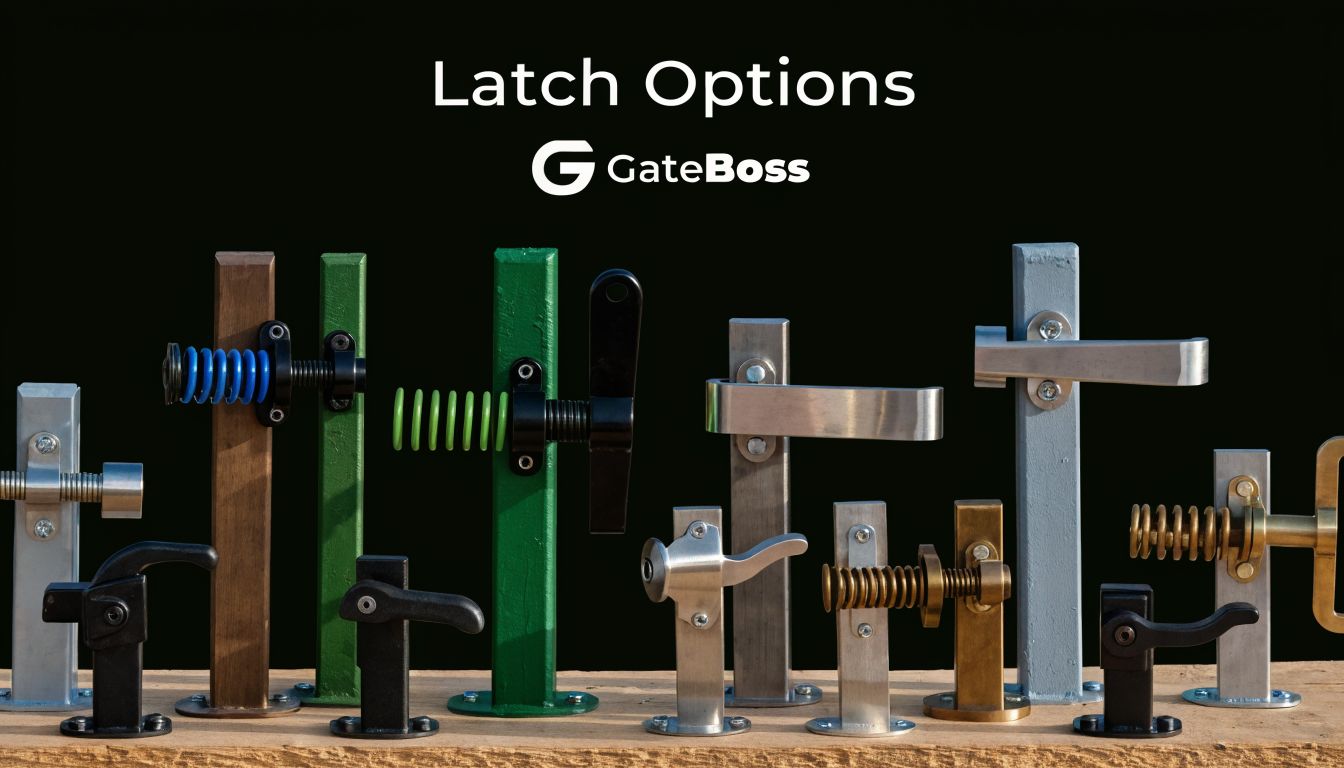
Not every spring-loaded latch is built for the same gate. Some are meant for light garden use. Some suit metal farm gates. Some are designed as compact bolt units, while others are larger assemblies with cable release or T-handle operation.
Common latch styles
Bolt-style spring latches
These are straightforward. A spring-loaded bolt shoots into a strike or keeper when the gate closes. They suit timber side gates, utility gates, and a lot of residential work where you want clear function without much fuss.
Spring-assisted gate latches with handle release
These add easier operation, often with a larger thumb piece, lever, or cable release. Some are more comfortable for frequent-use gates because they don’t force the user into an awkward reach.
Two-way or flexible access latches
These are useful where the gate may need operation from either side, or where the latch design allows more forgiving use with varying hand positions. In practical terms, these help on service routes and busy access points.
Material choices that actually matter
For the spring itself, professional-grade gate latch springs often use zinc-plated music wire. The published specification for one standard spring includes a free length of 0.720 inches, wire diameter of 0.041 inches, outside diameter of 0.296 inches, a maximum load capacity of 12.14 pounds, and a compressed maximum length of 1.097 inches with open hooks on both ends, according to the Trex gate latch spring specification.
Those numbers tell you the spring wasn’t guessed at. It was engineered to return the latch with a predictable amount of force.
Here’s the part many buyers miss. In coastal locations or anywhere with regular salt exposure, the same source notes that stainless steel alternatives may cost 30 to 50 percent more initially but can extend service life in corrosive conditions. That trade-off is real. Cheap hardware in salt air often becomes expensive hardware after enough replacements.
A practical material view
| Material | Typical use | What it does well | Where it struggles |
|---|---|---|---|
| Zinc-plated steel | General residential use | Good balance of function and cost | Salt-heavy coastal exposure |
| Galvanized steel | Ranch, residential, utility gates | Solid outdoor durability | Finish wear can still catch up in harsh environments |
| Powder-coated steel | Decorative and visible gates | Better appearance and added surface protection | Coating damage exposes base metal |
| Stainless steel | Coastal and humid sites | Strong corrosion resistance | Higher upfront cost |
If you deal with outdoor hardware more broadly, the same logic applies to other security components too. This shipping container lock guide is useful because it shows how material choice changes once weather and exposure become the primary enemy rather than simple lock function.
How to Choose the Right Latch for Your Gate
The right latch isn’t the one with the nicest finish on the shelf. It’s the one that matches the gate’s material, swing, exposure, and daily abuse. That’s where a lot of installs go wrong. People buy by appearance, then wonder why the gate won’t latch cleanly six months later.
Start with the gate, not the latch
Ask four questions before you buy anything.
- What is the gate made of: Timber, metal, vinyl, and composite all move differently.
- How does it swing: Inward, outward, or with a need for access from both sides.
- How stable is the structure: A square gate on solid posts gives you more latch options.
- What kind of weather does it live in: Dry inland cold, wet coastal air, desert heat, or repeated seasonal movement.
A major gap in the market is climate-specific advice. Standard galvanized options may fail in 6 to 18 months in coastal areas due to salt spray, while desert heat can warp composite gates and create misalignment, as noted in the coastal durability discussion at Chick's Saddlery.
Match the material to the region
A latch that survives nicely inland can struggle badly near saltwater. A finish that looks tough in the package may not stay that way in humid air or on a gate that sees hard sun all afternoon.
Gate Latch Material Comparison
| Material | Best For | Corrosion Resistance | Cost |
|---|---|---|---|
| Zinc-plated steel | Standard inland residential gates | Moderate | Lower |
| Galvanized steel | General outdoor utility and ranch use | Good | Moderate |
| Powder-coated steel | Visible gates where appearance matters | Varies by coating integrity | Moderate |
| Stainless steel | Coastal, humid, salt-exposed locations | High | Higher |
For a broad look at compatible hardware options, latch styles, and related components, the fence and gate hardware collection is the sort of catalogue worth checking against your gate type before you commit.
Watch the compatibility traps
Apprentices usually learn the hard way within this context.
A spring-loaded latch that works well on a straight timber gate can become fussy on composite or vinyl if the frame shifts with heat. A metal gate may need a different mounting method entirely. Decorative inserts, thicker frames, unusual rail positions, and oversized posts can also block handle travel or put the strike in the wrong plane.
Buy for the gate you have in January and July, not the gate you measured on one mild afternoon.
Pay close attention to these trouble points:
- Composite gates: Heat movement can change latch alignment.
- Pressure-treated wood: It moves as moisture changes, so leave room for minor adjustment.
- Metal gates: Some jobs are better with weldable hardware than screw-fixed residential latch sets.
- Large posts and heavy gates: They need a latch that tolerates slight movement without constant fiddling.
A good decision usually comes down to this. If the gate is light, stable, and inland, standard finishes can do the job. If the gate is exposed, busy, or close to salt air, spend more on the material before you spend more on replacements.
Installation and Adjustment Guide
A proper install is mostly about alignment. The latch body can be beautifully made, but if the bolt meets the strike too high, too low, or on a bad angle, the gate will always feel cheap.
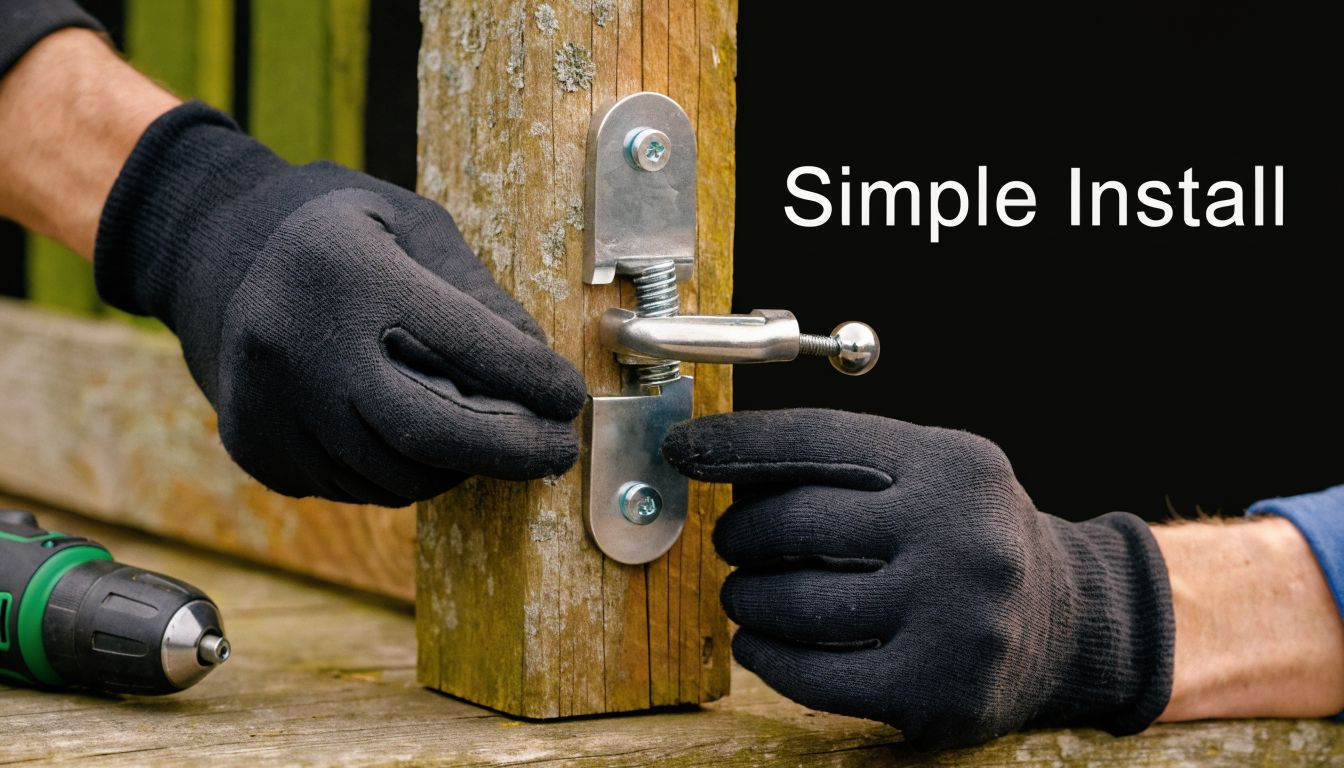
Commercial spring-loaded gate latches are commonly sold as complete assembly systems for quick fitting. The Tough1 spring-loaded gate latch is listed at 11.5 inches length by 5.5 inches width by 1.5 inches depth, and the same product overview also describes options such as adjustable cable mechanisms on the NUVO IRON 6.5-inch model and weldable T-handle variants with a 3/4-inch pin and 1-inch housing for metal gates in the State Line Tack product information.
Fit it in this order
Check the gate first
Open and close it several times before you mount anything. If the gate sags, drags, or swings itself open, sort that out first.Hold the latch body in place
Position it where the user can reach it comfortably and where the bolt has a straight line to the strike.Mark with the gate closed
Don’t guess where the strike goes. Put the gate in its normal closed position and mark the contact point from there.Use the right fasteners for the material
Timber, metal, and composite don’t all want the same approach. Match the fixing method to the post and frame.Test before tightening fully
Snug the hardware enough to hold it, then cycle the gate repeatedly before final tightening.
Adjustment matters more than people think
The latch should catch with a clean click, not a crash. If you need to slam the gate, something is off. Usually that means the strike is too far in, too high, or not square with the bolt’s path.
Some mechanisms offer extra flexibility. Adjustable cable release designs help when gate layout makes direct handle access awkward. Weldable T-handle variants make sense on fabricated metal gates where permanent mounting gives a stronger result.
A lot of latch work feels familiar if you’ve ever repaired vehicle hardware. The moving parts differ, but the principle is the same. Alignment, smooth travel, and clean engagement decide whether a mechanism feels dependable. This DIY car door latch replacement guide is a good example of that mindset.
If you need a product example for a surface-mounted setup, the self-locking gate latch option shows the kind of hardware layout that suits many residential gates.
Here’s a visual walk-through that helps if you prefer to see the sequence before you drill.
Fixing Common Latch Problems
When a spring-loaded latch stops behaving, the symptom usually points straight at the cause. The mistake is treating every fault like a bad spring.
The latch misses the strike
If the bolt lands above, below, or beside the catch, look at gate alignment before you touch the latch. Misalignment between spring tension and strike plate is a known issue, especially on composite gates that can warp in heat. Oversized gates on 6×6 posts can also drift out of line as weight and ground movement affect the opening, as noted in the Bushland Ranch installation gap discussion.
Fixes usually include:
- Adjust the strike position: Small moves make a big difference.
- Tighten or shim hinges: Sag at the hinge side shows up at the latch side first.
- Check post movement: Frost-heave or settlement can move the whole geometry.
The spring feels weak
A weak return usually shows up as a bolt that doesn’t snap home with confidence. Before replacing parts, clean the mechanism and test the bolt by hand. Dirt, paint overspray, and corrosion can mimic spring fatigue.
If the spring has lost force, replace it with the correct style rather than improvising. A random spring that “sort of fits” often creates either a sluggish return or too much force against the strike.
If a latch worked well before and now only latches when slammed, look for drag before you blame the spring.
Rust and rough movement
Surface rust is one thing. Rust inside the moving path is another. Once corrosion starts binding the bolt, the latch loses its self-latching reliability.
Do three things:
- Remove debris and loose corrosion
- Inspect the finish and fasteners
- Replace heavily pitted components rather than forcing them along
If rust keeps returning fast, the lasting fix is usually a better material choice for that site, not another round of cleaning.
Maintenance and Where to Buy Your Latch
Good latch maintenance is simple. The work is light, but it needs to happen before the latch starts sticking.
A maintenance routine that actually works
Check the latch when the seasons change or any time the gate starts sounding different. You’re listening for scraping, delayed engagement, or the lack of that clean click on closure.
Keep the routine practical:
- Clean the moving parts: Dust, grit, grass clippings, and spider webs all end up in outdoor hardware.
- Inspect the mounting screws or weld points: Loose hardware creates false alignment problems.
- Watch the gate line: If the reveal changes at the top or bottom, the gate is moving before the latch is failing.
- Protect exposed finishes: Especially on visible gates where chips and scratches let corrosion start.
Buying with fewer regrets
Buy the latch for the environment and the gate structure, not for the package photo. A tidy black finish may look right on the bench, but if the site is coastal or the gate sees constant movement, material and mounting style matter more than cosmetics.
That’s where a proper hardware catalogue helps. The gate hardware section includes spring-loaded latch options alongside hinges and related gate components, which makes it easier to match the latch to the rest of the assembly instead of choosing it in isolation. If you’re comparing products, look for the latch style, release method, and material fit that matches the gate conditions you already identified.
One sensible approach is to keep your buying checklist short:
| Checkpoint | Why it matters |
|---|---|
| Gate material | Decides how the latch mounts and how much movement to expect |
| Exposure | Tells you whether standard coated steel is enough or whether corrosion resistance should lead |
| Usage level | Frequent access benefits from smoother, easier-release hardware |
| Gate size and weight | Heavier or larger gates punish lightly built latches faster |
A spring-loaded latch is small hardware, but it does an important job. When it’s selected properly, fitted straight, and checked now and then, it gives you the kind of gate closure people stop thinking about. That’s usually the sign the job was done right.
If you’re replacing a worn latch or planning a new gate build, XTREME EDEALS INC. is one place to compare gate hardware with the rest of your fence and deck accessories so the latch, hinges, and mounting hardware work together from the start.