

You’re probably at the stage where the deck frame is done, the boards are down, and the last big visual decision is staring at you. The railing has to look right, pass inspection, and still look good after a few hard seasons of sun, rain, and dirt.
That’s where white aluminum railing keeps coming up for good reason. It gives a clean finish, works with composite, wood, and concrete settings, and it doesn’t demand the upkeep that usually comes with painted wood or corrosion-prone metal systems. The catch is that not all white aluminum railing is equal. The finish, the wall thickness, the post mounting, and the code details matter more than most product pages admit.
Choosing the Perfect White Aluminum Railing for Your Home
A lot of homeowners start with colour. They know they want a bright, crisp perimeter that frames the deck instead of visually shrinking it. White aluminum railing usually enters the conversation when painted wood starts to feel like a maintenance trap and bulky vinyl looks too soft for the design.
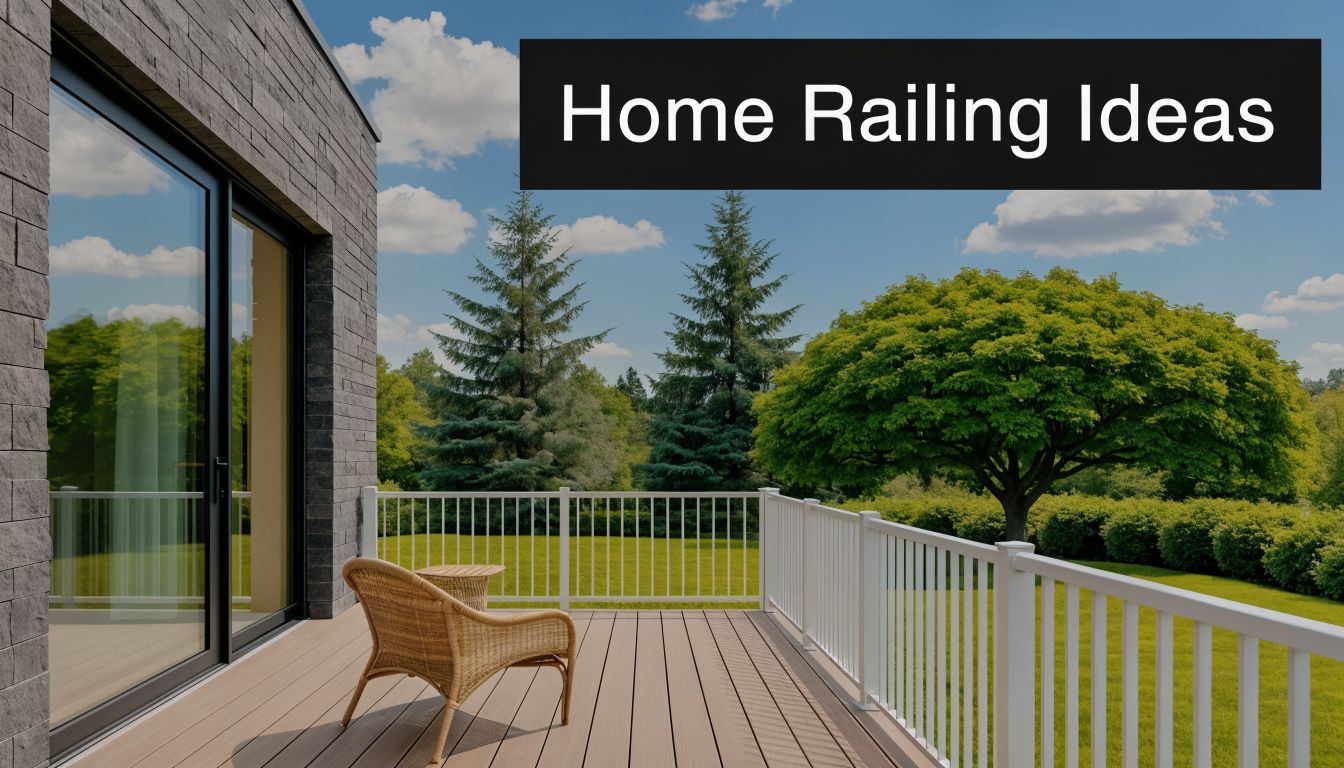
The appeal isn’t just visual. The North American aluminum railing market is projected to reach a 28.5% global market share in 2026, and white finishes tie with composites in popularity for residential projects because homeowners want low maintenance and corrosion resistance, according to Coherent Market Insights on the aluminum railing market.
Where white works best
White aluminum railing suits a few common project types especially well:
- Composite decks: It sharpens the edges and keeps the whole build looking current.
- Backyard patios: White reads lighter than black and can feel less visually heavy around smaller spaces.
- Covered decks: If you plan to elevate your backyard with a roof, white railing often pairs better with soffits, trim, and beams than darker finishes.
- Lakefront and coastal-style homes: White fits that architecture naturally without committing you to constant repainting.
A railing should finish the project, not create the next maintenance project.
What homeowners usually get wrong
They buy by photo alone. That’s a mistake. The right system depends on your post layout, stair runs, mounting surface, local code expectations, and whether you want standard pickets, cable, or glass-compatible framing.
If you’re still comparing system formats, looking through deck rail kits in Canada is a practical way to see how complete kits differ from buying every rail, bracket, and post separately. For many homeowners, that’s the moment the project starts making sense.
Why Choose Aluminum Over Wood, Vinyl, or Steel
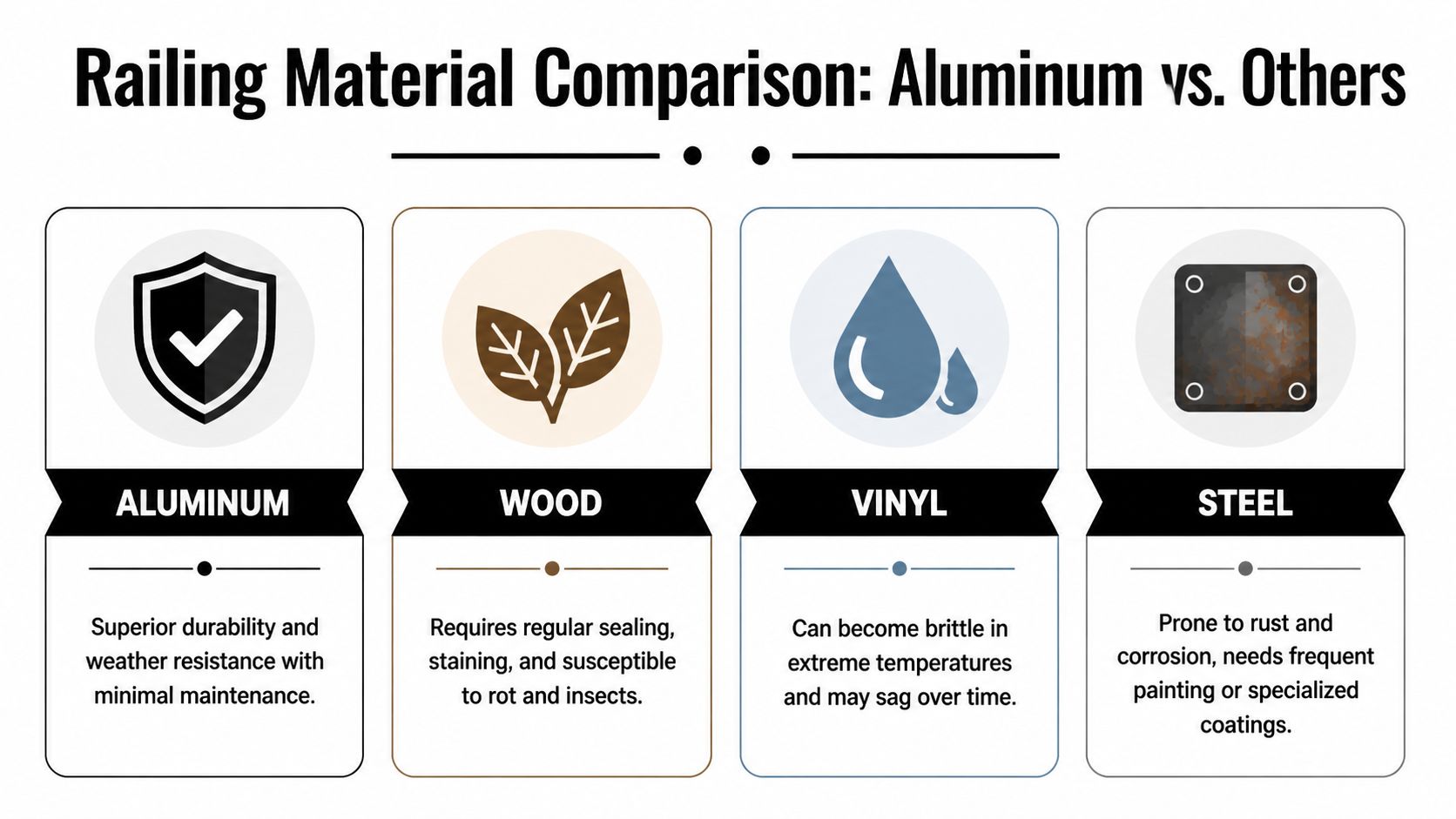
Material choice is where budget, maintenance, and lifespan all collide. Every railing material can work. The question is what you’ll have to live with after installation day.
The practical comparison
| Feature | White Aluminum | Wood | Vinyl (PVC) | Steel |
|---|---|---|---|---|
| Maintenance | Low. Usually cleaning and periodic inspection. | High. Needs sealing, staining, or painting. | Moderate. Cleaning is easy, but appearance can age unevenly. | Moderate to high. Coating maintenance matters. |
| Weather performance | Strong choice for outdoor exposure. | Vulnerable to rot, splitting, and insect damage. | Can become brittle or deform over time. | Strong, but corrosion is the constant concern. |
| Appearance | Clean, modern, and works with many deck styles. | Warm and traditional. | Often bulkier in profile. | Sharp and architectural. |
| Long-term ownership | Predictable if the finish quality is good. | More labour over time. | Lower upkeep than wood, but not always the most rigid feel. | Good strength, but finish failures become expensive. |
| DIY friendliness | Many systems are straightforward with the right layout. | Familiar to many DIYers, but finishing adds work. | Some kits are simple, though expansion and rigidity can be issues. | Heavier and less forgiving to work with. |
Wood still has one advantage
Wood looks natural in a way no powder-coated system can fully copy. If the house is older, rustic, or built around timber details, wood may still be the right visual call.
But painted wood railing is usually where homeowners get frustrated. It can look excellent on day one, then start asking for sanding, scraping, touch-up painting, and board replacement. Once moisture gets into joints or end grain, the work starts stacking up.
Vinyl solves some problems and creates others
Vinyl is often chosen by people trying to avoid repainting. Fair enough. The issue is that some vinyl systems feel bulky, and not everyone likes the look beside a higher-end deck surface.
In the field, the biggest complaint isn’t usually cleaning. It’s feel. A railing can be code-compliant and still feel less solid than the homeowner expected.
Practical rule: If you grip the top rail every time you use the stairs, you’ll notice stiffness and finish quality long before you notice brochure language.
Steel has strength, but not always the right kind of ownership
Steel works well in many settings. The trade-off is corrosion management. In exposed conditions, especially near moisture or salt, the finish system matters constantly. Once a coating fails, the owner inherits the upkeep.
That’s where aluminum usually wins the argument. It gives you a strong, cleaner-lined system without the same rust anxiety. It also avoids the repetitive finish cycle that comes with wood.
Why white aluminum lands in the sweet spot
White aluminum railing hits a useful middle ground:
- It looks finished without looking bulky
- It resists the outdoor problems that punish wood
- It avoids the rust concerns tied to steel
- It generally feels more refined than many vinyl systems
For most residential decks, that balance is hard to beat. You get a railing that looks deliberate, not temporary.
Finding Your Style With Finishes and Components
White sounds simple until you start comparing actual railing parts. Then you realise there’s bright white, softer white, gloss, matte, and textured finishes that all read differently outdoors.

Finish first, profile second
A glossy white can feel more formal and more traditional. A matte or lightly textured white often looks better on newer builds because it cuts glare and hides minor grime a bit better.
That decision matters more than people think. A railing runs the full perimeter of the deck. It’s not an accent piece. It becomes part of the architecture.
By 2019, powder-coated aluminum railing reached a 7% U.S. market share with 15-20% sales growth, and vertical cable styles in white and bronze finishes were surging among professional builders and property managers, as noted earlier in the market data.
Components that change the look
The same white finish can look completely different based on the parts you pair with it.
Top rail shape
A flat, broader top rail reads modern. A more rounded profile feels traditional and softer. If the deck is for entertaining, some homeowners prefer a profile that feels comfortable in the hand and visually substantial from the yard.
Infill choice
Here, style shifts fastest:
- Square balusters give the most familiar deck-railing look.
- Round balusters soften the lines slightly.
- Vertical cable infill keeps the view more open while staying structured.
- Glass-compatible systems suit view lots, patios, and contemporary designs.
Trim pieces and accessories
Post caps, skirts, brackets, and base covers decide whether the railing looks custom or pieced together. Good accessories hide transitions, fasteners, and cuts. Cheap ones do the opposite.
What tends to work well together
If you want a clean current look, pair a matte or textured white with simple pickets and low-profile post caps. If the house has stronger trim details, a glossier white and a more defined top rail can tie in better.
Brands and accessory lines matter here too. Matching hardware from lines such as Decorex Hardware and coordinating post details can make a standard kit look much more intentional.
Don’t mix a premium rail section with bargain brackets and generic caps. That’s how a good railing starts looking assembled instead of designed.
Navigating Building Codes and Sizing Requirements
Code isn’t the glamorous part of a deck build, but it’s the part that decides whether the railing is safe, inspectable, and worth installing at all. A nice-looking system that fails on height, spacing, or load resistance is just an expensive do-over.
The load requirements that matter
In California, the code baseline is clear. Residential railings must withstand a 50 plf uniform load and a 200 lbf concentrated load at the top rail, and tested 6063-T6 aluminum systems can meet those requirements while offering better corrosion resistance in coastal areas than steel, based on tested aluminum railing load requirements and product data.
That tells you two things. First, the railing isn’t decorative only. Second, alloy and testing matter. A vague “heavy duty” label doesn’t replace actual performance.
Height and spacing are where projects often stumble
Most homeowners know to ask about railing height. Fewer ask about infill spacing, stair transitions, or whether the post mounting matches the deck structure below.
The details to confirm before ordering are straightforward:
- Railing height: Residential applications often require a minimum height depending on deck condition and local code enforcement.
- Baluster or infill spacing: The opening must be tight enough to satisfy the common sphere test used by inspectors.
- Post attachment: Surface-mounted posts need proper backing and framing support.
- Stair sections: Angled rail kits and bracket geometry have to match the stair pitch.
For a plain-language overview, deck railing height code guidance is useful when you’re trying to sort out what applies before you buy.
Why the post connection decides everything
Homeowners often focus on the rail section. Builders know the post base is where success or failure starts. If the post moves, the whole system feels weak even when the rails and pickets are fine.
Look closely at:
The mounting surface
Wood framing, composite over wood framing, and concrete all need different fastener and anchor strategies. The hardware has to suit the substrate, not just the railing brand.
The fasteners
Outdoor-rated fasteners matter. So do washers, anchor style, and bracket fit. Mixing random hardware from old job bins is how you create movement, corrosion issues, or ugly call-backs.
The cut list
Pre-planning section lengths reduces field mistakes. Railings look better when the layout is balanced and posts land where they should, not where scrap material forced them to be.
If the post layout is wrong, everything after that becomes a workaround.
Coastal, wind, and seismic conditions change the conversation
A code-compliant railing in a mild inland setting may need a more careful product and hardware choice in a coastal or high-exposure region. Salt, wind, and movement punish weak finishes and poor connections first.
That’s why I tell people to treat white aluminum railing as a system, not a set of separate parts. Rails, posts, brackets, anchors, and finish quality all need to work together. If one element is underspecified, the clean look you paid for won’t last.
An Overview of the Installation Process
A white aluminum railing install usually goes smoothly when the layout is solved before the first hole is drilled. Most trouble starts when people treat it like trim work instead of structural work.

Start with layout, not cutting
Measure the full run, identify stair sections, and decide where end posts, corner posts, and line posts will land. Don’t assume the deck is perfectly square. Check it.
The cleanest installs happen when each section is planned around actual finished dimensions, not nominal dimensions from a sketch. That includes decking overhang, fascia interference, and any trim that can block brackets or post plates.
The usual installation sequence
Most systems follow the same broad pattern:
- Mark post positions and confirm framing support below.
- Mount posts securely using the correct anchors or structural fasteners.
- Measure each rail opening after posts are fixed, not before.
- Cut top and bottom rails to fit.
- Assemble infill and brackets according to the system design.
- Set the rail section and confirm level, plumb, and spacing.
- Finish with skirts, caps, and trim pieces so the system looks complete.
The tools are standard shop and site tools. A level, tape, drill, driver, saw suited to clean aluminum cuts, clamps, square, and safety gear will cover most residential installs.
Where DIY installs go sideways
These are the repeat mistakes:
- Posts mounted into weak framing: The railing may look done, but it won’t feel right.
- Bracket placement guessed in the field: That usually leads to uneven rail heights.
- Cuts rushed without dry fitting: Small errors stack up fast on visible white finishes.
- Hardware mixed from different systems: Fit and finish suffer immediately.
A practical walkthrough can help before you open the boxes. This deck railing installation guide gives a useful overview of the sequence and common planning points.
For a visual reference, this video shows the rhythm of a railing install well:
What makes the finished job look professional
Good railing work doesn’t draw attention to the cuts, the screws, or the little corrections. It looks calm and intentional.
That usually comes down to three things:
- Balanced section widths
- Consistent top-rail lines
- Clean finishing accessories at the posts and bases
If you get those right, even a straightforward picket system looks custom.
Upkeep, Costs, and Ordering From Xtreme eDeals
White aluminum railing is low maintenance, not no maintenance. That distinction matters. If you expect to ignore it forever, the finish will tell on you.
What upkeep actually looks like
In most inland settings, routine care is simple. Wash off dust, pollen, and surface grime with mild soap and water. Rinse well. Don’t attack the coating with harsh abrasives or aggressive solvents unless the manufacturer explicitly allows it.
Coastal and high-exposure conditions need more attention. Salt residue, airborne contaminants, and standing dirt on horizontal surfaces can dull the finish and shorten its best-looking years if left there.
The marine-grade question matters
This is one of the most overlooked buying details. White powder-coating can fade or chalk up to 30% faster over 5 years in coastal salt air if it lacks marine-grade certification, which is a useful warning drawn from the product-page gap noted in this discussion of white aluminum railing finish concerns.
That doesn’t mean white is a bad choice near the coast. It means you should ask better questions before ordering.
Buy the railing for the climate it will live in, not the showroom it looked good in.
What drives the final price
The total cost of a white aluminum railing project usually depends on design choices more than homeowners expect.
A basic straight-run picket system is one thing. Add stair sections, corners, fascia mounts, heavier posts, drink rails, gates, or specialised infill and the scope changes quickly.
The main cost drivers are usually:
- Linear footage and number of sections
- Post count and mounting method
- Stair runs and angle components
- Infill choice such as pickets, cable, or glass-ready framing
- Finishing accessories and hardware quality
Why one-stop ordering helps
A lot of railing delays don’t come from the main rail kit. They come from the missing small parts. Post caps, skirts, anchors, brackets, screws, washers, and matching hardware are what keep a project from stalling halfway through.
That’s where a specialised retailer has an advantage over a generic aisle-based shopping trip. You can source the practical items together instead of piecing the order together from multiple sellers and hoping the finishes match.
Your Next Steps and Common Questions Answered
A good white aluminum railing does three jobs at once. It finishes the deck visually, gives people a safe edge and stair grip, and saves you from the recurring labour that often follows painted wood or poorly chosen metal systems.
The smart next move is simple. Finalise your layout, confirm your local code expectations, and buy a complete system with matching hardware instead of improvising in the field.
Common questions
Can white aluminum railing be installed on concrete
Yes, if the post base and anchors are matched to concrete and the layout allows proper edge distances. This isn’t the place for substitute fasteners.
Are matching gates available
Often, yes. Availability depends on the railing system and whether you need a standard opening or a custom width. It’s best to plan the gate before ordering the surrounding sections.
Does white show dirt more than black
Usually yes, especially around horizontal surfaces, pollen, and road grime. The trade-off is that white can feel lighter and less visually dominant, which many homeowners prefer.
Is white aluminum railing a good fit for stairs
Yes, provided you order components designed for stair angles. Stair sections are where bracket compatibility and accurate measurement matter most.
If you’re ready to price out a complete white aluminum railing project, XTREME EDEALS INC. is a practical place to start. The catalogue covers the small but critical pieces that make railing installs go smoothly, including post caps, brackets, fasteners, anchors, balusters, gate hardware, and other deck and fencing accessories that DIY homeowners and contractors usually need on the same order.