

When you're building or repairing a fence, it's easy to focus on the posts and panels. But the real workhorses of your project are the small, tough pieces of fence and gate hardware. These are the components that make sure your gate actually swings, latches, and stands up to years of use.
Your Essential Fence and Gate Hardware Checklist

Think of gate hardware like the door hinges and knobs in your house. While the walls provide the structure, you couldn't get in or out without them. It’s the hardware that gives your gate movement, security, and long-term stability. Skimp on quality here, and even the most expensive gate will sag, stick, or simply refuse to close properly.
This guide is your roadmap through the hardware aisle, built to serve as a pre-project shopping list. We'll cover the foundational pieces you'll need and explain what they do in simple terms, so you can walk in feeling confident.
Core Components You Cannot Overlook
No matter what kind of gate you’re building, a few key pieces of hardware are non-negotiable. Getting to know their specific jobs is the first step toward making the right choice for your project.
- Hinges: These are the pivot points that allow your gate to swing. They carry the gate's entire weight, so choosing the right ones is the single most important factor in preventing a sagging gate. Our strap hinges and T-hinges are built for this.
- Latches: A latch is what keeps your gate shut. Your options here run the gamut from simple gravity latches to heavy-duty, lockable models for added security.
- Fasteners: These are all the nuts, bolts, and screws that hold everything together. Using the correct type and material is what ensures every connection is strong and built to last.
For a project that looks clean and professional, consider using a single brand for all your parts. Collections from companies like Nuvo Iron and Decorex Hardware are designed to match, giving your gate a cohesive look that works as good as it looks.
As we go through this guide, we'll dive deeper into each of these components. We’ll look at everything from heavy-duty hinges for massive wooden gates to sleek, modern latches for vinyl fences, using real product examples you can find right here at Xtreme eDeals. This will help you visualize exactly how these parts work together to create a gate you can be proud of. Let's get started.
Understanding the Core Components of Gate Hardware

Before you can build a gate that stands the test of time, you have to get to know the parts that make it work. The fence and gate hardware you pick does more than just hold things together—it dictates how your gate swings, how securely it closes, and how well it handles years of use.
Think of it like assembling a team. Every piece of hardware has a specific job. Hinges handle the motion, latches provide the security, and a few other key players add stability and ease of use. Getting the right combination is the secret to a gate that operates smoothly every single time.
To help you get a quick overview, here's a simple breakdown of the main players you'll be working with.
Quick Guide to Common Gate Hardware Types
| Hardware Type | Primary Function | Best For |
|---|---|---|
| Hinges | Allows the gate to swing open and closed while supporting its weight. | All gates; type depends on gate size, weight, and style. |
| Latches | Keeps the gate securely shut when closed. | All gates; type depends on desired security and convenience. |
| Closers | Automatically and gently closes the gate after it's been opened. | Pool gates, gates for keeping pets in, and high-traffic areas. |
| Bolts/Drop Rods | Provides an extra locking point or anchors one side of a double gate. | Double gates, or single gates needing extra security or stability. |
This table gives you the basics, but choosing the right specific piece of hardware is where the real skill comes in. Let's dig a little deeper.
Hinges: The Foundation of Movement
Hinges are the unsung heroes of any gate, bearing its entire weight through every swing. In my experience, picking the wrong hinge is the number one reason gates start to sag and drag on the ground. Different gates have very different needs.
- Heavy-Duty Hinges: If you're hanging a heavy, solid wood or metal gate, you need a hinge that's up to the task. Our black steel T-hinges, for example, are designed to spread the load across both the gate and the post, preventing sag and stress over the long haul.
- Self-Closing Hinges: These are a fantastic solution for pool areas or yards with pets. A built-in spring mechanism automatically pulls the gate shut, so you never have to worry if it was left open. Check out our self-closing hinge options.
- Decorative Hinges: For a charming garden entrance or a lightweight picket gate, your hardware can also be a design element. Decorative butterfly hinges can add a touch of style without sacrificing performance on lighter gates.
Latches and Bolts: Security and Closure
While hinges manage the swing, latches and bolts are all about keeping your gate shut. The right choice really comes down to balancing convenience with security. A simple garden gate just doesn't have the same security needs as a main driveway entrance.
For example, a gravity latch is a brilliantly simple design where an arm drops into a catch—perfect for when you need quick, easy access. If you need a bit more security, a thumb latch requires a more deliberate action to open. For a truly solid, lockable setup, a bolt latch is the way to go. We offer all of these latch types in durable, weather-resistant finishes.
Your gate’s security is only as strong as its weakest link. A high-quality latch is crucial, but don’t forget that the fasteners holding it in place are just as important for a truly secure setup.
Closers and Drop Rods: The Supporting Cast
Beyond the basics, a few other pieces of hardware can make a world of difference. Gate closers work with your hinges to control how fast the gate swings, stopping it from slamming shut. This is a lifesaver for heavy gates or in particularly windy spots.
A drop rod, sometimes called a cane bolt, is an absolute must-have for any double-gate system. This simple rod slides down from one of the gates into a small hole in your patio or a concrete footer, anchoring that side firmly in place. This lets you use the other gate for everyday traffic while keeping the whole entrance stable and secure. We stock robust drop rods designed for both wood and metal gates.
By understanding how these pieces fit together, you’re well on your way to building a gate that's not just strong, but a genuine pleasure to use. You can also get familiar with the smaller but equally vital components in our guide to fasteners and fittings.
Selecting Materials and Finishes for Longevity
Choosing the right hardware for your fence and gate is about more than just looks or function. The material and finish you pick are your first line of defence against the weather and the inevitable test of time. Think of it like a winter coat. A light jacket won't do you much good in a Canadian blizzard, and the wrong hardware finish won't stand a chance against harsh rain, blistering sun, or salty air.
Your hardware’s base material is what gives it core strength and its natural ability to fight off corrosion. This choice is tied directly to your local environment. What works just fine in a dry, inland climate might fail spectacularly in a humid, coastal region.
For example, if you live near the coast, you're dealing with salty air day in and day out—and salt is notorious for accelerating rust. In these conditions, standard steel hardware just won't cut it for long. This is where getting the material right from the start becomes absolutely critical for the long-term health of your gate.
Matching Materials to Your Environment
The battle against rust and wear is usually won before the first screw is even driven. It's all about picking the right material from the get-go. Each option gives you a different mix of strength, corrosion resistance, and style, making them a better fit for certain conditions.
- Galvanized Steel: This is a workhorse material, popular for being both strong and affordable. The zinc coating acts as a sacrificial barrier, taking the hit from the elements to protect the steel underneath. It’s a solid choice for most general applications, and many of our gate kits feature this material.
- Stainless Steel: If you need top-tier rust prevention, especially in damp or coastal areas, stainless steel is the gold standard. It’s naturally resistant to corrosion, so it isn't relying on a coating for protection. This gives you real peace of mind in the harshest climates.
- Aluminum: Lightweight and completely rust-proof, aluminum is a fantastic choice for modern designs or for lighter gates where you need to keep the weight down. Our aluminum post caps and decorative accents are especially popular.
Choosing the right material isn't just about longevity—it's about performance. A rusted hinge won't swing smoothly, and a corroded latch can fail, compromising your security and convenience.
The Added Protection of a Quality Finish
After the base material, the finish provides that crucial extra layer of both protection and style. A top-notch finish doesn't just make your fence and gate hardware look good; it dramatically extends its life by sealing it off from the elements.
A powder-coated finish is the perfect example of this in action. At Xtreme eDeals, we carry products from trusted brands like Nuvo Iron, which are known for their incredibly durable powder-coating. This process isn't like painting. A dry powder is applied electrostatically, then cured under high heat. The result is a hard, bonded finish that's worlds tougher than a conventional coat of paint.
This method creates a thick, uniform coating that’s highly resistant to chipping, scratching, and fading from UV exposure. More importantly, it forms a robust shield against moisture—the primary villain when it comes to rust and corrosion. Whether you opt for a classic black, a rich bronze, or a clean white finish, a quality powder coat ensures your hardware not only looks great but also stands up to whatever Mother Nature throws at it. Your goal should be to pick hardware that looks fantastic on day one and still works flawlessly on day one thousand.
How to Match Hardware to Your Specific Gate
Choosing the right fence and gate hardware is a lot like picking tires for a car. You wouldn't slap the same tires on a small sedan that you'd put on a heavy-duty pickup truck, right? The same logic applies here. Using hardware that can't handle your gate's weight and size is a recipe for sagging, poor alignment, and eventual failure.
A mismatched setup isn't just an eyesore or an inconvenience; it can be a real safety risk. To get it right, you need to look at three main things: your gate's weight, the material it's made from, and how you need it to work day-to-day.
Consider the Gate's Weight and Material
The single most important factor is weight. The heavier the gate, the beefier your hinges and fasteners need to be. A lightweight vinyl garden gate simply doesn't have the same demands as a solid cedar driveway gate that spans a wide opening.
For instance, a heavy wooden gate needs at least three heavy-duty strap hinges, each rated to handle the load. This spreads the stress evenly across the post and stops the gate from drooping or pulling the fasteners out over time.
A common mistake I see is people focusing only on the number of hinges instead of their actual weight rating. One hinge rated for 150 pounds offers far more reliable support than two flimsy hinges only rated for 50 pounds each. Always, always check the product specs.
At Xtreme eDeals, we carry hardware designed for these real-world demands. Our selection includes everything from heavy-duty fasteners to robust post base brackets, giving you a solid foundation whether you're hanging a massive security gate or a simple backyard entrance.
Measure Twice for a Perfect Fit
Once you’ve sorted out the weight requirements, getting your measurements spot-on is the next critical step. The best hardware in the world will fail if it's not installed correctly, and a perfect fit is the key to a gate that swings smoothly for years.
Before you buy anything or drill a single hole, take the time to measure everything carefully. Pay close attention to these details:
- Hinge Offset: This is the gap between the post and the gate itself. It dictates how far your gate can swing open, so getting it right is crucial for clearing any slopes, curbs, or other obstructions.
- Latch Spacing: The gap between your gate and the latch post has to be just right. If it’s too wide, the latch won't catch. Too narrow, and the gate won't close at all.
- Post Dimensions: Make sure the hardware you buy actually fits your posts. A nominal "4×4" post isn't actually 4 inches by 4 inches—it's 3.5" x 3.5". Your post caps and brackets need to match these true dimensions.
Taking these extra few minutes to measure will save you hours of headaches down the road.
Factor in Function and Regional Trends
Finally, think about how you'll use the gate and where you live. A pool gate, for example, has very different safety requirements than a decorative garden gate. This is where specialized hardware, like our self-closing gate hinges, becomes essential for keeping kids and pets safe in high-traffic areas.
Local building codes and even regional trends can also point you toward the right hardware. Across North America, there's a growing focus on sustainable and secure fencing, partly driven by policy changes in places like California. Recent fencing market research shows that incentives for using recycled materials are making eco-friendly hardware more popular.
At the same time, a push for better security in urban areas is increasing demand for reinforced steel hardware. This trend highlights a growing need for our corrosion-resistant aluminum models and child-proof latches, especially as pool safety standards get more and more stringent.
Smart Technology and Modern Hardware Trends
Gate hardware isn't just about hinges and latches anymore. We're in an era where your gate can be as smart as the rest of your home, with automated openers, smartphone-controlled locks, and fully integrated security becoming the new standard.
This isn't just tech for tech's sake; it brings real-world convenience and a serious security upgrade. Think about pulling up to your driveway and opening the gate from your phone without fumbling for a remote. Or what if you could grant temporary access to a delivery driver while you're at work? That's what a modern access control system can do for your property.
Future-Proofing Your Gate Hardware
With all this new technology, the hardware itself has to evolve. Your trusty old hinges and latches won't cut it if you want to connect them to an electronic system. We're now seeing hardware designed specifically for this new world, like sensor-ready hinges that tell your system if the gate is open or closed, and electronic-compatible latches built to work seamlessly with automated openers.
The market is definitely heating up. The North American full-height gate market alone is on track to hit USD 401 million by 2034. Features that sound futuristic, like smartphone controls and motion sensors, are expected to be pretty standard by 2026. This push for smarter, more secure gates—often including biometrics—can bump up the selling price by as much as 22%. All this means the demand for hardware that can handle these features is through the roof.
Even with all the high-tech options, you still have to start with the basics. This decision tree helps you map out your choices, beginning with the most critical factors: gate weight, material, and your desired style.

As you can see, you can't jump to smart features without first sorting out the fundamentals. Get the weight and material right, and you'll build a solid foundation. By keeping an eye on these modern trends, you can build a gate that's not just strong and secure for today but is also ready for whatever technology comes next.
Step-by-Step Installation and Maintenance Tips
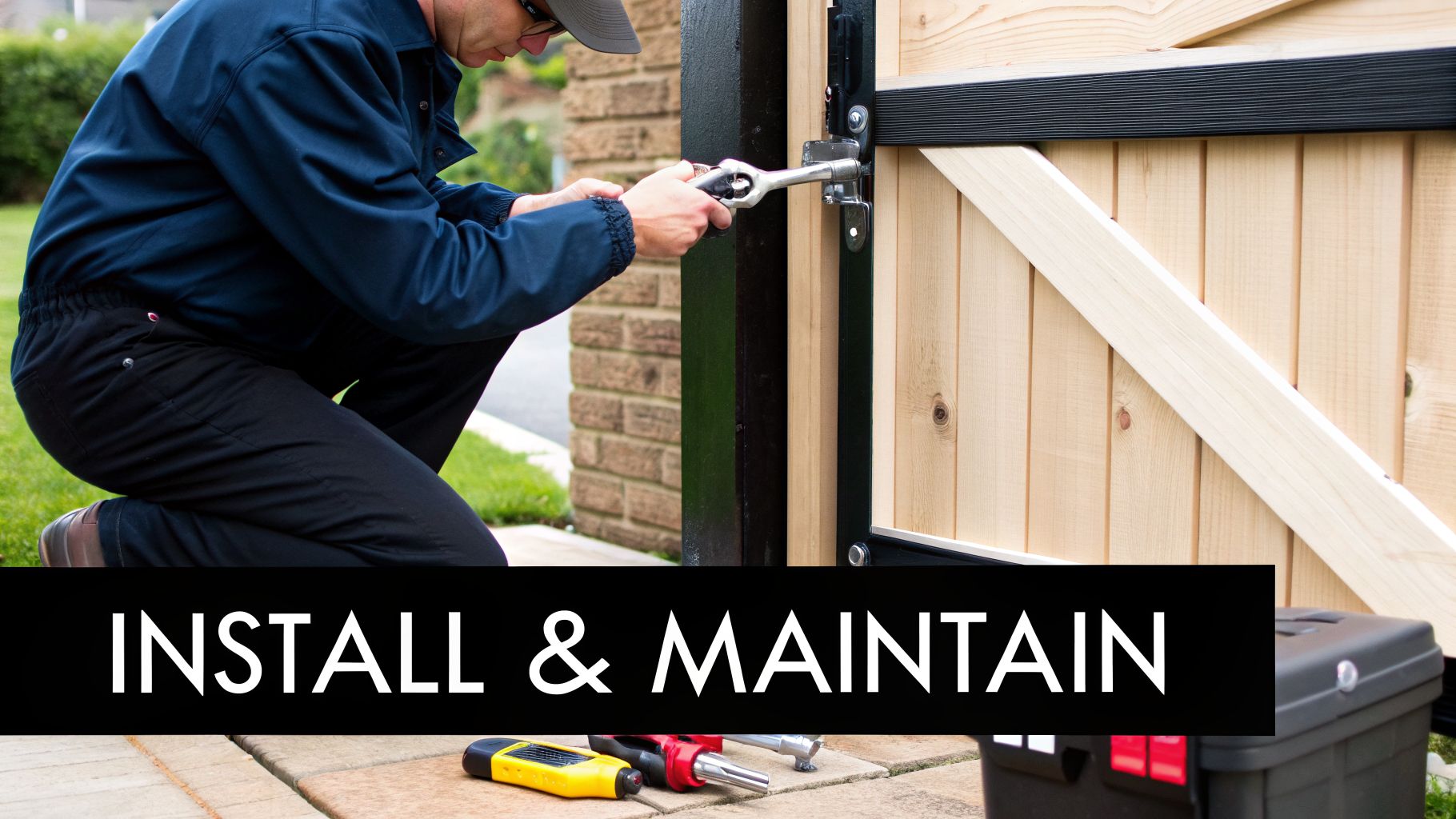
The difference between fence hardware that lasts a season and hardware that lasts a lifetime often comes down to two things: proper installation and regular upkeep. Get these right from day one, and you’ll ensure your gate swings smoothly for years, side-stepping common headaches like sagging or misalignment before they even get a chance to start.
The absolute cornerstone of a solid installation is alignment. A gate that isn’t perfectly plumb and level will put constant, uneven stress on its hinges, which is a fast track to premature wear and that dreaded sag. Always use a level on both the gate and the post to get everything straight before you drive a single screw.
From there, it's all about securing the hardware firmly. Your choice of fasteners is a make-or-break decision. We carry a wide range of rugged options, from heavy-duty deck screws for wood to carriage bolts for a through-post connection that offers unbeatable strength. Make sure you’re using fasteners rated for exterior use—it’s the only way to avoid those ugly rust streaks down your fence.
Troubleshooting Common Gate Problems
Even the best-installed gates can run into trouble over time as the ground settles and wood shifts. The good news is that most of these problems are an easy fix.
If your gate suddenly refuses to latch, it’s almost always due to minor settling. You can usually tweak the position of the catch or adjust the hinges slightly to bring everything back into alignment.
For self-closing hinges that have lost their spring, look for an adjustment mechanism. Most models let you tighten or loosen the internal spring with a simple tool to dial in the perfect closing speed. For more stubborn sagging or alignment problems, our https://xtremeedeals.ca/fence-gate-kit/ might be the all-in-one upgrade you need to get things working like new again.
A simple maintenance routine, performed twice a year, can prevent over 90% of common hardware problems. Think of it like changing the oil in your car—a little proactive care is the key to long-term performance.
A Simple Maintenance Checklist
Keep your gate swinging freely with this straightforward maintenance routine. No matter what kind of outdoor gate you have, a little proactive care goes a long way. For more tips on getting your hardware ready for the harshest weather, you can also check out some general advice on winter door maintenance.
- Lubricate Moving Parts: In the spring and autumn, hit all your hinges, latches, and closers with a silicone-based spray or white lithium grease. This keeps them moving smoothly and quietly.
- Check for Corrosion: Give all your hardware a quick inspection for any signs of rust. Catching small spots early and touching them up with a rust-inhibiting primer and paint will stop corrosion in its tracks.
- Tighten All Fasteners: Walk your fence line and check that every screw and bolt is still tight. Wood expands and contracts with temperature changes, which can gradually loosen hardware over time.
Your Gate Hardware Questions, Answered
Choosing the right hardware for your fence and gate can feel like a last-minute detail, but getting it right is what makes a project truly last. It’s the difference between a gate that swings smoothly for years and one that sags and sticks after just one season.
With the U.S. fence construction market valued at a booming USD 9.1 billion in 2024, it's clear a lot of people are building and upgrading. And when installation can eat up 30-40% of your total budget, you don't want to be re-doing work because of a failed hinge or rusty latch. Getting the hardware right the first time is just smart planning. This growing demand for quality is why reliable online suppliers are becoming go-to resources for DIYers and pros alike. For a closer look at market trends, you can dig into this detailed industry report.
Below, we’ve answered some of the questions we hear most often to help you pick your hardware with confidence.
How Do I Choose the Right Hinges for My Gate's Weight?
This is probably the single most important question. Always start by checking the weight rating on the hinge's packaging or online product description. Don't just guess.
As a solid rule of thumb, plan on using at least two hinges for a standard gate—something up to 60 pounds and about four feet high. The moment your gate gets heavier or taller than that, add a third hinge in the middle. This isn't just for show; that centre hinge is crucial for distributing the load and preventing the gate from sagging over time. All of our product pages clearly list the weight capacity to make this an easy decision.
What Is the Best Hardware Material for a Fence Near the Coast?
If you live anywhere near the coast, salt spray is your hardware’s worst enemy. You need materials built to resist that constant corrosive attack.
Your best bets are stainless steel (look for 316 grade for maximum protection) or a high-quality, powder-coated aluminum. These materials are far superior to standard galvanized steel in a salty environment. Choosing one of these will save you from the headache of dealing with premature rust and component failure.
Can I Make My Existing Gate Self-Closing?
Absolutely, and it's often an easier upgrade than you might think. In most situations, you can simply replace your gate's current hinges with a set of self-closing spring hinges.
These are specifically designed to pull the gate shut automatically after it's been opened, which is a fantastic feature for general security and a must-have for pool safety gates. We carry a variety of self-closing models that can be easily retrofitted onto many common wood and vinyl gates.
At XTREME EDEALS INC., we stock all the durable, high-quality hardware you need to get your project done right. Explore our full collection of fence and gate hardware at https://www.xtremeedeals.ca.




Leave a comment
You must be logged in to post a comment.